Go Into The Story Interview: Roberto Bentivegna
My interview with the writer of the 2012 Black List script The Eel.
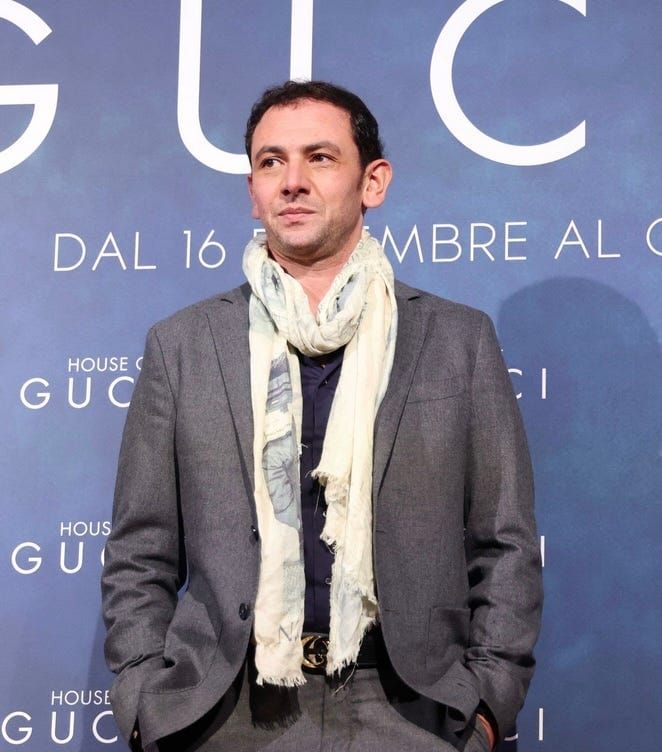
My interview with the writer of the 2012 Black List script The Eel.
Roberto Bentivegna’s original screenplay “The Eel” landed the writer on the 2012 Black List. Combining elements of noir and dark humor, the script offers an entertaining tale featuring compelling characters in the quirky subculture of a town on the border of Texas and Mexico.
Here is my interview with Roberto.
Scott Myers: Let’s start with your personal history. As I understand it, you were born in London.
Roberto Bentivegna: Yes and I was brought up in Italy- both my parents are Italian. I grew up speaking English and Italian. I was exposed to a lot of different cultures when I was young and of course movies were number one on the list, always. My dad was one of those people who would just take me to see anything and everything at any age, including David Cronenberg’s “Crash” when I was 11. That has to be a new record of depravity inflicted on a child.
I moved to London when I was 16. I went to a very old English school there. I came to America when I was 19. I studied at Emerson College and did a Master’s at Columbia in Film.
Scott: When did you first start to think you might want to be involved in the film business?
Roberto: Probably around six.
Scott: Six years old?
Roberto: Yes. I actually found a creative writing book from when I was a kid. The teacher asked us what we wanted to do when we were older, and I wrote, “Movies.” I don’t think I understood exactly what that meant, but the concept of making movies, the magic of movies was definitely there. Actually, the movie that opened that idea up for me was “The Adventures of Baron Munchausen.” When it came out at the cinema, it just did something. It was very inspiring, and just a great spectacle.
Scott: Highly cinematic.
Roberto: Very much so.
Scott: What were some of the films other than “Baron Munchausen” that influenced you?
Roberto: I would say definitely Scorsese, all the 70s guys. Then Kubrick, Peckinpah, Hitchcock, Powell. Altman’s “Short Cuts”. I saw “Pulp Fiction” when it came out. That was a huge one. “Trainspotting.” A lot of the Italian comedies from the ’60s. Noir. Lots of noir.
I love American film. But I also love the Europeans, the slightly more ethereal work that isn’t as concerned with structure and operates more subconsciously. I’m still trying to figure out where I fit, as a matter of fact. Probably on a raft in the middle of the Atlantic.
Scott: You attended Emerson. Were you in the film program there?
Roberto: Yes, I was studying film and English.
Scott: Were there any particular classes or experiences there stuck with you all these years?
Roberto: There was one, actually. It was a class called “theater into film”. The idea behind the class was we studied plays that had been turned into films. We looked at how the director either let the play “be”, and shot it almost as though it was theater, or how he managed to visualize the piece and really create cinema out of something that perhaps was not so cinematic. It was a very interesting idea. I think it showed me how cinema truly is its own language.
Scott: Also, too, wouldn’t that have been interesting- to look at the idea of adaptation, transforming something that would be a play into a film?
Roberto: Oh, absolutely. Adapting anything is this mysterious process. I don’t think there’s much of a method to it, in a way. You just have to let the original text grow in another form, in another medium, and still retain its original intention. I feel like those are the best adaptations.
I was actually thinking about Jim Thompson, the 50s author. His adaptations are really interesting. Most of them don’t quite capture his essence. But the best one for me is “Population 1280” which was adapted by Bertrand Tavernier. The movie version is called “Coup de Torchon” with Philippe Noiret and Isabelle Huppert. Originally it takes place in Texas but Tavernier set it in French-occupied Algeria. Anyway, the point is by adapting the novel and putting it in a completely different place he actually preserved the grit and the intention of the novel more than any of the faithful adaptations- which is amazing. He completely retained the original soul of the novel.
Scott: When you write, are you thinking of yourself as screenwriter or screenwriter-director?
Roberto: I think I’m splitting it down the middle right now. “The Eel” is something I want to direct. But I just finished a new spec that I am totally happy handing off. The next spec I write, again, I want to do something smaller that I can direct. I think in an ideal world I will dip in and out of it. Some people do that very efficiently. John Sayles, Paul Schrader. I love Paul Schrader. He is an amazing model to follow because as a writer he’s brilliant. And as a director he’s very interesting and quite underrated. Billy Wilder is another hero. At the beginning he was writing for… who did he write for? Lubitsch?
Scott: Wilder wrote quite a bit in Germany. Then when he came over to the United States, he did connect with Lubitsch early on including Ninotchka. Wilder has got over 70 writing credits, I think, so yes, he wrote quite a bit.
Roberto: Right. I will always feel that my heart is in the writing. To me writing is the key to everything- even to directing. There are exceptions of course. There are some directors who I think are incredibly unique and visual, and even if the scripts are not 100 percent there all the time, their visual ideas are just so captivating that they manage to compensate for it. Most of the time I’ve always thought a director should be a very good writer or at least surround himself with really, really great writers. So for me it was always about building my writing and really getting to a point where I knew what I was doing or at least I was fooling myself into thinking that I knew what I was doing, and then translating that into images.
Scott: You’ve had experience as a director on five original short films. Were those mostly through Columbia?
Roberto: They were all done at Columbia. They were very small, very low budget. One of them is completely silent without any dialog in it. Even now I think my approach a lot of the time is to try and tell moments visually. I love dialog, but I love seeing things happen on screen just as much.
Scott: That’s a nice segue into your script “The Eel.” You make the 2012 Black List with this original script. A terrific read, and it’s got a deft balance between the visual and dialog. Here’s a logline for the script that accompanies it on the Black List.
“An escaped convict is ensnared in a plot by a corrupt sheriff to kidnap the young heiress to an oil fortune, complicating his quest for freedom.”
How does that sound to you as a description of the story?
Roberto: I think it’s pretty good. I’m glad that they said he’s an escaped convict as opposed to an escaped murderer because we’re not really clear on what it is that he did. I wanted to be ambiguous about that. I’m letting the audience fill in that blank as to what it is that he’s done.
Scott: When I read the script, it brought to mind movies like “Red Rock West” or “Blood Simple.”
Roberto: Yes.
Scott: Desperate characters, desperate situations in a rural environment. Were there any movies that inspired you in writing “The Eel”?
Roberto: Well, I think you hit it on the head. I love “Red Rock West.” I think it’s Nicholas Cage’s finest moment, and it’s so underrated. In terms of influences, essentially it boils down to noirs and westerns. Those were the two. Those were the two genres I was looking at. For noir, it’s definitely “Out of The Past” — the Robert Mitchum, Kirk Douglas movie — and things like “Detour” and “Double Indemnity” and all the classics. On the western side I was looking at some really weird little westerns like “Terror in a Texas Town” where Sterling Hayden plays a Swede with a harpoon. It’s a weird movie, but…that sort of surrealism, I love. “Bad Day at Black Rock” is another big one.
Scott: Did “The Eel” originate with this idea of wanting to do a western noir film? Did you start off with a character? Did you have a concept or an idea? What was the genesis of the story?
Roberto: I was reading a lot of Jim Thompson and learned to love his crazy, violent fantasies. Then from there I was thinking a lot about movies, about what movies captured Thompson, either as adaptations or movies that were influenced by him. They say “write what you know”, and I wrote what I loved. I wrote what I really always wanted to see in movies or at least what I wanted to see at that time which was this weird mix of dusty western landscapes and double crossing and amoral characters. I think it started off in a genre exploration way.
Then as I got writing, it became quite emotional. The relationship between Fred and Lorna and Veronica. I always try to inject emotion into what I write. Make us care, you know? I think in the end it became less genre and more human. But it definitely started out as an exercise in blending genres.
Scott: There’s also another element in the mix. There’s quite a bit of humor in the script. Is that a reflection of also wanting to add that to the mix or more your natural instincts as a storyteller?
Roberto: I just find almost everything funny, especially desperation. I think actually that’s it. Desperation can be hilarious. It goes back to the days of Chaplin. I think generally if humor comes out of character you can get away with anything. I’m not as interested in coming up with a funny line or creating a funny situation just because I’m trying to grab laughs. But if it feels organic to the character and to the plight then I always feel like you should go for it.
Scott: I love movies that explore unique subcultures, and the locale in which your story takes place, Purgatory, Texas, is certainly that. A small town on the Mexican border right on the Rio Grande river. Indeed one of the earliest images of the town is a group of men betting on chickens in a game called “chicken shit bingo.” Is that real or something you made up?
Roberto: It’s actually a real thing. I was reading about different Texan traditions, and this one was definitely the most bizarre. I just thought it was a great scene, a great moment.
Scott: Yes, it’s obviously funny. But because it’s so early in the script, it really sets a tone, communicating to the reader they can expect some oddball sensibilities at work here. Also it introduces the issue of gambling which is one of the main character’s issues, so it services the plot, too, not just a gratuitous thing.
Roberto: Exactly. It does set the tone. That’s something that’s really important to me. I wanted to make sure that the script was a bit “off”. Not just to be weird, but I needed those moments of slightly bizarre, surreal things going on, whether it’s that, or the Mexican clowns, or the eel slithering out of the cooler. Those little specificities are a big thing.
Scott: The name of the town is Purgatory. That’s got to be intentional.
Roberto: Definitely. I’ve noticed some of these Texas towns- the names are so strange. There’s a place called Gun Barrel City. In Texas. If you wrote that in a script people would say “Well, that’s ridiculous. Why would you call it such an obvious name?” I thought, well that’s the Texas tradition to name towns in weird and obvious ways. I thought Purgatory would work. There’s also a place called Hell. But that’s in Michigan.
Scott: Yeah, my mom’s from Texas. She was raised in a little town called Rising Star.
Roberto: Rising Star? See?
Scott: You have four primary characters in the story. The protagonist is Fred Abernathy, a convict who’s managed to escape and made his way to this town. Where did that character come from in your imagination? How did he develop and what was so compelling about him that you thought, “This is a guy’s story I really want to tell”?
Roberto: I think the theme came to me first. The theme of really putting your past behind, running away from your shadow, and not really being able do so because it’s always there. The character came out of that idea. I love bad dudes who have a have a heart of, not necessarily gold, maybe more like aluminum. They have emotion in them, they feel, but they have a façade. There’s something else lurking beneath that. I thought this guy was a really good throwback to the ’70s, to the McQueen, the Eastwood thing.
I actually was thinking of adding a little beat when he beats the preacher up. I was thinking that Fred should kill the preacher and tell the little girl that he’s going to be OK. That to me, it just shows that he does have the potential to go crazy, but he obviously manages not to when he’s around her. It’s that fine line between the good guy and the bad guy. I always thought it was interesting to walk between it a little bit.
Scott: Just hearing that idea, Roberto, I think that’s a great idea, that he kills this guy but then tells her, “Oh, he’s going to be OK.” I think it’s terrific because the audience sees Fred’s violence, but not the girl.
Roberto: Yes, I think I’m going to go with that.
Scott: The other three characters that round out the quartet of main ones, Earl Grey, the local sheriff gone bad who’s desperate because of these gambling debts; Lorna, teenage niece of a local millionaire who Earl Grey wants to kidnap; and then Veronica, a waitress Fred meets. How did all these characters evolve in your process?
Roberto: For Veronica? I love going to diners. I think she just came out of my obsession at looking at waitresses in diners, and that melancholy they carry inside. They’re not all melancholic. But some of them do have that world-weary, weathered look. I was actually looking at…do you know the movie “After Hours”, the Scorsese movie? The Teri Garr role. In fact, I love that character. Then for the other characters you mentioned…
Scott: Earl Grey and Lorna.
Roberto: With Earl Grey you have a really awful human being who uses his authority and his arrogance to manipulate someone into doing something terrible. Usually the bad guy is not a cop or a sheriff. It’s the other way around if anything. I thought switching that up and having it be a mirror would be good. I also love his name. I love Earl Grey. I love drinking the tea, and I always thought it would be a great name for a character, especially in Texas because there are a few Earls down there. I thought it would be fun.
The little girl, I always loved movies with relationships between kids and adults, and what they can teach each other.
Scott: You were talking about how the script evolved and finding some emotion in the story during the writing process. My take on the relationship that Fred had with Veronica, then with Lorna is both of them were connected to his emotional development. Veronica starting out, then almost like handing the baton to Lorna, a progression.
Roberto: You’re right on. It is a progression, they’re growing. He’s communicating more than he probably has in the last five years. The little girl, I think, allowed that opportunity because she’s very mature. She’s very insightful. I think she sees something in him that he doesn’t even realize he possesses.
Scott: After the title page of the script you have a prologue page typed in all caps, “Sometimes you have to swim through the mud to get to the sea.” Then later on Fred is explaining about the tattoo that he has of an eel and why he’s known as the eel. He says about an eel, “It’s got oil in its skin that keeps it moist so it can wriggle its way through mud to reach open water.” I won’t give away the ending, but Fred certainly does his share of swimming through mud, both literal and figurative. Then this idea of purgatory. It’s like this story reflects a process Fred has to go through, like he’s got to go through the mud symbolically speaking to clear out the misdeeds of his past in order to come out on the other end. Does that seem like a fair assessment?
Roberto: It’s a cleansing process, almost like a baptism. It’s a redemption story. I’m Catholic, so inevitably I injected a lot of guilt into Fred’s mind and the idea that he has to repent of his sins. He’s given an opportunity. Ironically the sheriff is like the Judas character in a way. His betrayal really give Fred an opportunity that he wouldn’t otherwise have of doing good and of getting his next chapter in life. I think in the end if he had just gone to Mexico, he probably would have fallen into crime again. He probably would have been one of those American ex‑pats who do their dirty little gigs on the side at a local bar or something.
Whereas here I think he does actually have an arc of growth. I would hang out with Fred after the credits roll. I don’t think I would hang out with Fred at the very beginning of the movie. [laughs]
Scott: How long did it take you to write the script, and how many drafts did you write?
Roberto: It took me about six weeks. Then I developed it with my managers, and that took a few months. The development was really interesting because it was more about exploring different possibilities and opening up a few doors. It’s always nice to try things — as opposed to sticking to something and then wondering what would have been, could have been or whatever.
It was a fairly straightforward process. I outlined it very carefully. I wrote a treatment, a pretty long treatment.
Scott: You’re at CAA and Madhouse Entertainment. Is that right?
Roberto: Yes.
Scott: How did that happen?
Roberto: I met my agent, Craig Brody, when I was at Columbia. I was a semi‑finalist in the Nicholl Fellowship, and I won a few other awards- the Sloan, the Columbia Screenwriting award. He was an assistant at the time, actually. He called me to discuss one of my scripts and we really hit it off. A few months later he was promoted and we’ve been working together since.
Then with Adam Kolbrenner and Chris Cook at Madhouse, that came about last year. They read a very early draft of “The Eel” and they responded positively to it. They decided they wanted to work on it with me, so I moved out to Los Angeles from New York really motivated by the fact that I wanted to physically be in LA while “The Eel” was taking shape.
Scott: What was that experience like for you, working with managers? They’re all different, obviously, but it sounds like you did do a fair amount of development with the script back and forth. How was that process for you?
Roberto: I think my experience has been excellent. Adam and Chris are great. Generally, it’s important to be open minded to different ideas but also know what you want. They have a very good barometer of what works and what doesn’t. “The Eel” was a little bit different though, because I wanted to direct it. We weren’t developing the script necessarily to sell it. But out of the development some new things popped up that I hadn’t thought of.
For example, the preacher thing. That was an idea that I developed with Madhouse and I actually think it’s one of my favorite sequences in the script.
Scott: Where were you, and what was your reaction when you discovered “The Eel” made the 2012 blacklist?
Roberto: I was at home, and I was looking at these Tweets and going completely mad. [laughs] Franklin Leonard is a sadist. I was tweet number 78 of 78. It was all out of order so I didn’t have any idea of what was next. All I knew was, I was checking boxes. I was keeping a tally on my computer. I had my station set up. I hadn’t slept because, obviously, I was very anxious about it. But I kept a tally. When you get to 30, 35 you’re thinking, “OK, now we’re at the half way mark.” Then when I got to 70 I was like, “Oh, that’s it,” but, no, 78 out of 78. I was very pleased. I had been on the Hit List and the Young and Hungry list as well, but this was the big kahuna and I really hoped to be on it.
I think it’s so hard to know when you do something right in any creative field. The fact that people like what you do is, in itself, a big achievement. People who hopefully know what they’re talking about and who have an influence. I think that’s really what I got out of it- the fact that I did something that people really responded to. That feels great. That’s why we do what you do.
Scott: The Black List happened in early December and the town basically shut down. But you’ll be following up with meetings I’m sure.
Roberto: The main thing for me is to get the movie going. That’s number one. To push through and get this film cast and financed.
Scott: You’re trying to put the package together to make it?
Roberto: That’s exactly right. I have a producer- Scott Aversano. I’ve met with a few actors. It’ll be interesting to see what happens in the next few months.
Scott: You mentioned you’ve written another spec that was a little different, one that you’re not planning on directing. Is it a similar genre or different?
Roberto: No, it’s different. It’s an adventure film.
A lot of the time if I come up with an idea, or if I read material that might make a good movie, the only criteria I have is to find movies in that genre that I really love. If you’re doing a romantic comedy, look at “The Apartment”, “Annie Hall”, “When Harry Met Sally” and say, “OK, those movies are amazing. I love those movies. I’m going to try and do something that…you know, hopefully lands in the same zip code.”
For this one I was looking at a lot of ’80s movies like “The Goonies”. It was really fun to look through those movies again.
Scott: There’s about 10 movies people in Hollywood will always throw out in meetings. “Man, if you could do something like ‘The Goonies’…”
Roberto: I’ve definitely heard that.
Scott: I’d like to switch gears and ask you some craft questions. First, how do you come up with story ideas?
Roberto: I read a lot. I read as much as I can, whether it’s novels, stuff on the Internet, newspaper articles, or whatever I can get my hands on. Obviously I watch a lot of movies. Some people go to museums. I love museums, but I don’t really find that paintings inspire a story, at least not to me. They inspire me visually. I think if you’re directing, then you can definitely take stuff from paintings.
The biggest things for me are theme and genre. It’s about trying to do something different with those things, so marrying different genres together or exploring different characters that might have come out of a news story, for example. There’s always these amazing news stories, these weird crime stories. So many great movies have used real crime stories- and a lot of time we forget it because the movies exist as separate realities. Movies like “Badlands” and “Psycho”, or “Dog Day Afternoon”. All based on true crime.
I think you assimilate as much as you can. Then see what sticks, what moves you, what makes you want to watch the movie you’d be writing. That’s a big one, right? What movie would you watch? What movie would you totally love to see?
Scott: It’s important to think about the market and track what’s selling, but I tell people at the end of the day, you’d better make damn sure that you are really passionate about your story because that’s not only going to be what gets your ass back in the chair to actually write it, but that’s what lifts the words up off the page to come alive in the mind of the reader. It’s your passion for the story that empowers that dynamic.
Roberto Absolutely, and you can tell. You can read through the lines. You can tell when something has been written with passion as opposed to intellectualism or commercialism or whatever it is. When you manage to do both, when you manage to do something with passion that’s also successful commercially… I think when that happens, then you have found the golden unicorn. And I don’t think you can plan for it, or break it down. I really don’t. Who could have predicted that Pulp Fiction was going to be an enormous hit? Nobody, it was such an unexpected situation. On the other hand, when Hollywood puts out these humongous films that flop, there’s no reason why they should flop. They check all the boxes. But then they fail. That’s proof that you can’t rely on arithmetic and algorithms. Human beings are way more complex than that.
You’ve got to believe you can connect with people. Whether the story is inspiring, or whether it’s dark. Look at the “Girl with the Dragon Tattoo.” The novel’s success was just amazing. That was a really dark thing. Or even the “Fifty Shades of Grey.” phenomenon. I think those novels prove that sometimes people want to escape into darkness. They want to read about stuff they don’t necessarily want to do, but maybe fantasize about doing. Darkness can be very cathartic.
Scott: Like the author Roald Dahl. Critics would complain about, “Why do you have all these terrifying characters in these children’s stories.” His point was, where else are children going to learn how to deal with and prepare for the scary things in life? That’s one of the functions of story, it’s a safe place for us to go to experience the full range of emotions.
Roberto: If you look at fairy tales…The Grimm stories, the original Pinocchio- those are so, so dark. I think there’s ways to move people in so many different ways and in different genres. Really it’s about doing something that people are going to respond to. That’s the magic of any art form. You can’t calculate it. It is what it is.
Scott: How much time do you spend on prep-writing… brainstorming, character development, plotting?
Roberto: I love treatments. I don’t know a lot of people that love writing treatments, but for me it’s where things really come out because I’m telling the story. I’m just writing it out as though I were telling someone. Paul Schrader said in an interview once that before he writes a script he sits down with somebody, usually at a bar or something, and he tells that person the whole movie, like “Once upon a time there was a guy. He was a taxi driver.” He just tells the whole thing. If the person gets bored or if they order another drink or if they don’t respond to something in that session, then he knows what to cut out and whether it’s worth pursuing.
My variation on that is basically the treatment. I write a 10 to 20 page treatment. A lot of it is going to be character. A lot of it will be describing the situation, but it’s a pretty good map of what’s going to happen.
After that I start plotting. I come up with a decent outline which is usually beats, although I tend to get carried away. I think that’s my biggest problem, I get carried away. Beat number one — “he walks into the hotel” will end up being four pages long. Then it’s like, “Oh shit, if I keep going with this I’ll have a 300 page thing.” I have to really be very, very disciplined.
By the time I get to the writing of the script itself it usually doesn’t take very long. I would say about six weeks for a solid first draft. I know where I’m going when I’m writing a script. I have a pretty good idea of what’s happening and everything.
Scott: Is your outline literally a scene by scene type of thing?
Roberto: It depends. I give myself big signposts for the main beats in the story. Although I actually tend to fluctuate between different methods. One method I was looking at a lot was the sequence method. You break the story down into eight pieces and build each one as mini movies, with arcs and everything, which I think can work really well when you have a single protagonist and he’s pursuing a simple goal. That is perfect for that. But if you try to do something that is a little less black-and-white, then you run into trouble.
I think different methods work differently for different types of stories. It’s actually really healthy to apply them depending on what you’re trying to write as opposed to trying to really force a paradigm onto a story that doesn’t necessarily work with that paradigm.
Scott: That’s a really important point. I tell people there’s no right way to write a story.
Roberto: I was just going to say, the main thing is either something works or it doesn’t. I think students probably don’t want to hear that, but if it works, it just works. It can go against the grain. It can go against the rules. But if something works, it just does. If it doesn’t, it doesn’t. One guy can follow all the rules in the world and have something that’s really boring and lifeless, and then another guy just walks in with pages of great dialog that maybe are not so structurally sound, but the dialog is great. And you’re smiling, and you’re grooving with it.
Scott: I really enjoyed your characters in your script “The Eel.” How do you go about developing them?
Roberto: I usually write bios for them. I don’t go crazy about it. I don’t do the Lajos Egri thing where he breaks characters down and he has all sorts of questions that you have to answer about a character. I did that for one, and they felt like dead pages. It seems like you’re not going to use that stuff in the script. You’re never going to refer to how big the protagonist’s shoes are unless they play a part in the story or in the way he walks. Then again, maybe it works subconsciously to give you a better idea of who the guy is.
For me it’s about knowing my characters’ overall physicality, their speech pattern, what their story has been until now, what ticks them off, what kind of people are they like to be around. It’s like if you asked me to describe my dinner last night with three friends and I told you in detail who they are, what they do and I repeated a story they told us at dinner about themselves. A story that they feel represents them in some sort of way.
Character work is just a basic understanding of why people act the way that they do, what their agenda is. Observing people in public, for example- without giving away that you’re doing it, otherwise you’re probably going to get your ass kicked. [laughs]
Some characters come to life more easily than others. I try to match them with people in my life- either intentionally or not. Usually they have traits that I can connect to people in my life that I’ve come across.
Scott: How about dialog? Is that something that you think a writer is just born with, or can it be developed? If so, what techniques would they use to do that?
Roberto: I don’t think you’re born with it. I think you develop it. I think it’s like any craft, it’s like practicing musical scales. The more you do it, the better you become at it. Get behind who the characters are and what the situations are, let yourself go, and just write, even if you think you’re overwriting, just let them speak, just let them go off. A lot of the time, that dialogue is going to sound better when it’s spoken than dialogue you’ve rewritten 50,000 times, because people don’t rewrite their own lines.
Scott: It’s interesting to hear you talk about embracing this idea of theme up front in your process. I know that a lot of writers I talk to say that’s something that they don’t even think about or it doesn’t come out until much later in the process. They would prefer to muck around in the story for awhile until themes start to emerge. What I’m getting from you is that the theme actually energizes the process and helps you develop your stories.
Roberto: It depends on how strong and how big of a theme it is. In this case, it was very simple… escapism or redemption. Those are big themes- they’re basically genres, really. Redemption is a genre in itself. For me it was easy. I had an easy one. But I think where you can trip yourself up is when you make it your mission to know what the theme is before you’re writing. You come up with something extremely specific. And then you freeze and you start to worry that you’re betraying whatever specific theme you’ve set out to write if things don’t fall exactly into place.
You have to let yourself open different doors and walk through them. Even if they’re the wrong ones, at least you’ve done it.
For example, “Goodfellas,” what’s the theme in “Goodfellas”? Gangsters fuck each other over? “Crime doesn’t pay”. OK, let’s go with “crime doesn’t pay.” That’s such a big theme, lots of wiggle room there. If the movie had been about something else, something very specific, the movie probably would have lost a lot of its freedom and its vibrancy. It would have had an obligation to stick to the road, to the ultra-specific theme, and might have ended up being too moralistic. Instead it’s about people dealing with their temptations, betrayals, career aspirations- people who happen to be gangsters. There are so many movies that perhaps have a clearer theme than “Goodfellas”, but are half as interesting. So theme is just a signpost- it is not a set of directions that you absolutely have to follow from beginning to end.
You pick a simple theme, you run with it, if it sticks in the end, great. But it doesn’t necessarily mean that you had it all figured out from the beginning. It’s a push-and-pull.
Scott: You said something there that I found quite interesting. We can look for a theme. It’s like hoping that it will allow us to have some sense of clarity on the story about what’s going on and what the meaning of the story is. But it sounds like what you’re saying is, you’ve got to pair that up with the fact you’ve got to have the freedom as a writer not to have the theme override everything else. A balance point between clarity and freedom.
Roberto: Oh, absolutely. That applies to everything, though. It doesn’t only apply to theme. It applies to letting yourself have fun with the writing and putting the rules away a little bit, like I was saying earlier about letting your characters do their talking. That’s something that I have to remind myself of all the time, that balance between structure and creativity… structure and improvisation. It really is a little bit like jazz. You learn your scales, you learn the theme, the motif, and then you go off and you improvise. But by then you are building on some very solid foundations. So if you fall, you’re going to be alright.
I think it’s very dangerous when you get bogged down in rules, because that’s when movies get boring. Rules should not be limitations. You’re hanging things on a skeleton, but you don’t want the skeleton to be all there is. Otherwise, it’s like, well…it’s nothing. It’s dead. Literally.
Scott: Yeah, formulaic writing.
Roberto: Formulaic, exactly. But back to the theme question real quick- when I start something new, I’m definitely sitting there and I’m thinking “What is it that I’m trying to say? What is the theme?” and it’s only natural because you want that as a writer. You want that easy answer. You want to just have something on your desk and look at it every morning and say, “Oh, that’s what it is.” But you can’t do that every single time. I can’t do that. What about you? Do you have a theme worked out from the beginning?
Scott: No, I’m very character orientated. That’s what I start with and end with, but themes can emerge pretty quickly depending upon the nature of the characters. I always start with characters, you know?
Roberto: Do you think it’s more complicated than people think it is or are they right to be worried about theme?
Scott: Actually it’s perhaps the one conceptual area of the craft I think is the most confusing to people.
Roberto: Yes.
Scott: First of all, what is it exactly? Like, for example, as Egri says, “Theme is premise.” That’s great, fine. I tend to look at it as theme is meaning or, more specifically, what’s the emotional meaning of a story. Then I feel like I’m zeroing in. I also don’t think there’s one theme. I think there’s like multiple themes.
Roberto: I agree.
Scott: Like in music composition. You don’t just have one single theme. You have many themes. I see it as a way of enhancing our understanding, hopefully, of what we’re writing and not feeling like we need to come up with the moral of the story or the premise, and that’s it as far as theme is concerned.
Roberto: It does dilute the thing. If you’re coming up with those easy answers, you are reducing it to the point of it becoming something too simple and too straightforward. You’re robbing your audience and your reader of the opportunity to continue the story in their heads and to open up questions and things. That’s really what it is. I think theme, the problems that we’re talking about with theme, are more generally the problems with people have with art, with understanding it, interpreting it. The fact that it’s subjective and the fact that if it was as easy as just saying “This is what this movie is about, and this is what this story is about” then movies would not be an art form- which they are.
I like big, loose concepts for themes. “Taxi Driver” is loneliness. “The Godfather” is family. “Carrie” is high school awkwardness. I think that’s good enough for me, personally. I think that’s a good enough starting point.
Redemption, betrayal, lost love- these are great, inspiring ideas for stories. And then if something else comes up to reinforce it half-way through, fantastic. If not, let the piece stand on its own without forcing a theme onto it.
Scott: What about your actual writing process?
Roberto: I would say that if I am not writing every day, I think about writing every day. I’m reading, watching, worrying. If I’m doing something else, I’m feeling guilty about it and I’m always thinking about what I’m going to write tomorrow.
When you actually sit down to write, you get a lot of stuff done, but the problem is getting to that point where you have enough material in your head or on paper, enough confidence in the idea, that you can just take the six weeks or whatever, the two months, and write a whole script. And then of course re-write it several times.
The moment leading up to that can take a while. It can take weeks. It can take months. Ultimately it comes down to being 1000 percent sure that you’re going to be excited and that it’s going to work. You have to at least believe that it’s going to work, otherwise the whole time you’re going to be like, “Oh, shit, this is going to suck.” [laughs]
Scott: I post writing quotes all the time, basically obsessed with them.
Roberto: Me too, by the way.
Scott: Paul Rudnick said that 90 percent of writing is procrastination…
Roberto Only 90 percent?
Scott: Writing isn’t just sitting on a chair and pounding away on a keyboard. Obviously you’ve got to get there, but it’s also everything else that leads up to that.
Roberto: I can’t write at home, and I get very distracted at coffee shops. The place that I’ve found that’s most conducive to me is a writing space, a writing room. I go in, I pay a monthly fee. I was a member of one in New York City. It’s called The Writer’s Room. It was phenomenal. You go in, and there are all these serious novelists and journalists and screenwriters. Some of them were actually pretty big names. There was an inherent pride when you were sitting down at the computer and not having Facebook open and not being on YouTube looking at lasagna recipes because you knew that Sapphire, the author of “Precious”, would be walking around. Lawrence Block would be walking around. And they’d take a peak at your screen. So then I would think, “OK, I have to write. I have to show off that I’m writing and not looking at recipes.” But for me that’s been the best place to write because you’re with other writers. There’s a great energy in the room, there’s this communal creativity that’s going on. It’s a sanctuary.
You’re also not being distracted by people. You’re not talking to people. If you want to talk to people, you go to the kitchen, you have coffee, and you socialize. For me that’s been wonderful. It’s like going to the office every day. That routine is so important because our craft risks being very unstructured.
Scott: Have you found a place in LA that is comparable to the place in New York?
Roberto: There’s a couple of them on the West Side. The best work I’ve done in LA has been at these places, and for us writers, being in a conducive environment is everything.
Scott: I’ve got one last question for you, Roberto. It’s the obvious one for all those aspiring screenwriters out there. What advice would you offer to people, who want to be doing what you’re doing, who want to work as screen writers?
Roberto: All right. I will say this: always remember how much you love movies. Always remember the movies that you grew up on, that you obsessed about, that you watched over and over again. Remind yourself of those movies when you’re writing your own movies and when you’re struggling to get your stuff out there, to get it read. Because the people who made those movies were in your shoes at one point. They were probably looking at the movies that they loved and it’s a vicious circle of inspiration and of motivation, and I think that that’s true of any creative endeavor. Look at The Beatles and Elvis. They were obsessed with Elvis. John Lennon used to say that’s why he got into rock ’n’ roll: because as a kid he watched Elvis on TV in Liverpool. I think you have to let yourself breathe a little bit and not get too bogged down with the business and all that.
There’s going to be up and downs, but the main thing is always go back to those movies that you loved as a kid, the movies that gave you the bug, and remember that ultimately you’re trying to do something that’s almost impossible, and you’ve got to love it. Extinguish the self-doubt with passion. I think most people who actually get there, they do it because they keep reminding themselves of how much they love movies.
Scott: It’s something I don’t hear referenced very much, but it’s a really good point. Remember your cinematic roots, those touchstone movies, where it really just moved you to fall in love with the whole narrative form.
Roberto: The Scorsese film, Hugo, did you see that film?
Scott: Yes.
Roberto: I was crying like a two year old in that movie. That long flashback of Melies when he was a young filmmaker, filming with his wife at their huge glass studio.
The magic of filmmaking, the innocence of his dreams. It moved me because it’s something we can all relate to as filmmakers. Remember that crazy idea that you had of announcing “I’m going to make movies” to the world. Keep reminding yourself of that to keep you going through the tough times. And don’t skip dessert.
For my interviews with dozens of other Black List writers, go here.