Go Into The Story Interview: Sallie West
Sallie West: Nicholl Fellowships in Screenwriting winner.
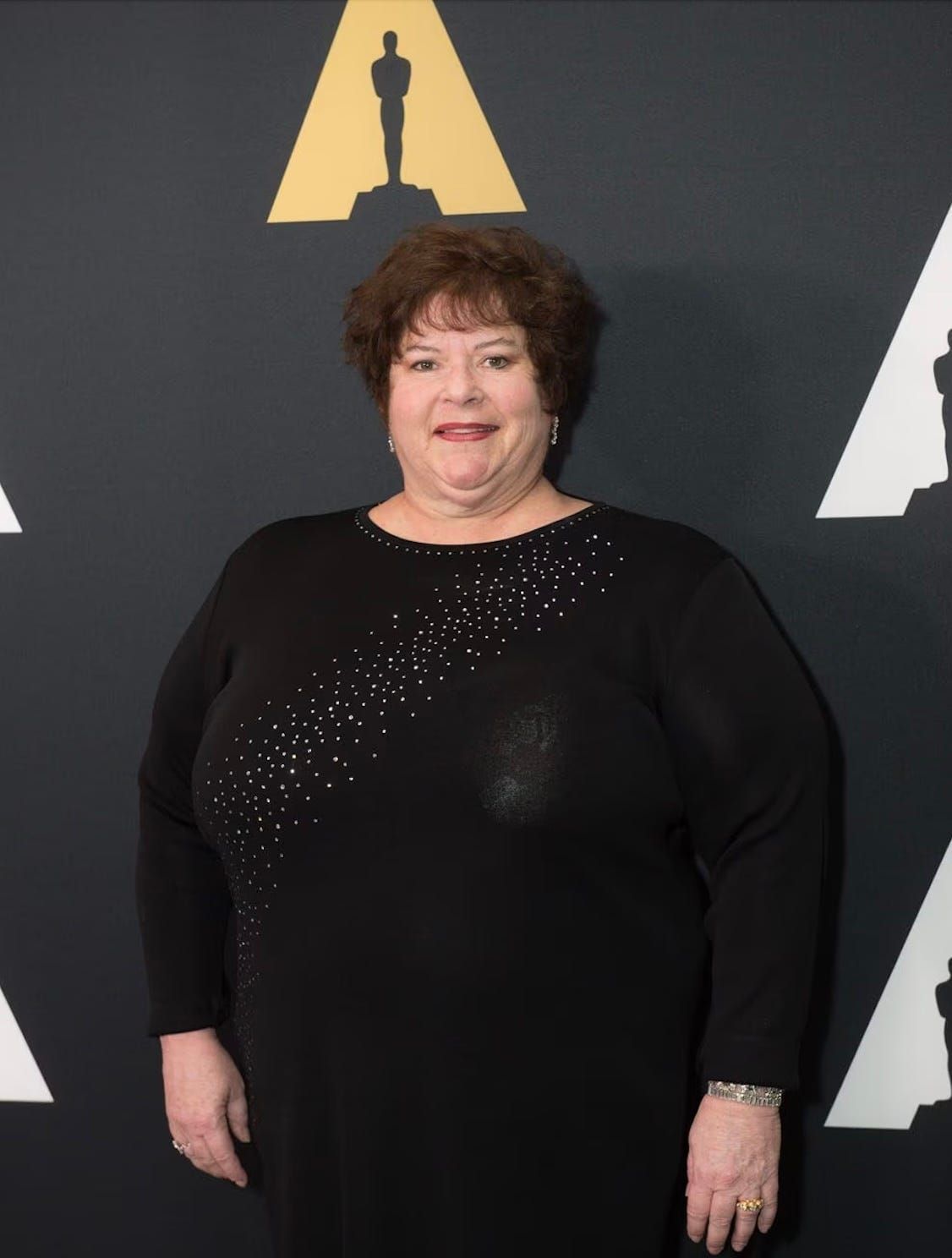
Sallie West: Nicholl Fellowships in Screenwriting winner.
Sallie West wrote the original screenplay “Moonflower” which won the 2014 Nicholl Fellowship in screenwriting. Here is my conversation with Sallie.
Scott Myers: I understand you’ve been a science writer for most of your adult life. How did you get into that line of work, and explain to us what does science writing entail?
Sallie West: Science writing involves the production of printed communications used in technical fields such as electronics, engineering, chemical, defense, manufacturing, medical, and related industries. After I graduated from college, I went to work at Battelle Columbus Labs, a contract research organization.
Later I worked for Research Triangle Institute when we moved to to Chapel Hill. Both organizations had divisions in defense, environmental science, software, biotechnology, energy, and other fields, giving me experience working with a variety of disciplines and nomenclatures. I also worked in health care sciences research at the Durham VAMC/Duke University.
In Charleston, South Carolina, I worked for a number of contractors connected with the U.S. Department of Homeland Security.
Scott Myers: In college, were you into science, writing, or both?
Sallie: I was an English major. At the time, technical writing was one of the main avenues for securing writing jobs, so I gravitated to that. I liked being part of research teams, and I learned a lot.
I worked on different kinds of documents — marketing materials, speeches, peer-reviewed journal articles, reports, proposals, user manuals — many documents you might not associate with technical writing. Everything was great until the economy tanked. [laughs] Thereafter funding, especially government funding, began to evaporate, and it became harder to secure permanent positions. The quality of documents has fallen off.
Scott Myers: What was your focus in English?
Sallie: Contemporary literature.
Scott: At the recent Nicholl Ceremony at the Academy in Beverly Hills, you started out your acceptance speech by saying, “Last year, having at this time, a secret security clearance, I was writing a communication manual for Air Force One.” How did you go from that to writing a screenplay?
Sallie: It was actually the presidential motorcade, “Limo One.” I was going for a joke relevant to the movie industry! I thought everyone would get I was joking. Having never given an address before, I Googled tips for delivering a speech, and beginning with a joke seemed to be de rigueur. Now everyone’s saying, “Really? Did that really happen?” It did, but it was the other presidential vehicle, and I certainly didn’t breach national security! The point being that I completed “Moonflower” in the days that followed that job.
Scott: Let’s jump back a bit. Were you much of a movie fan growing up?
Sallie: I was, but I never thought I had a talent for screenwriting. And I didn’t! It has taken me 30 years of working with the language to get to this place. When I began to write Moonflower, I did my due diligence in terms of research to learn the craft. I studied conflict and subtext and formatting; I had a story in my mind, but it took awhile to figure out the right approach, because I didn’t know what I was doing.
But it turns out it really wasn’t unlike other writing jobs: you follow the rules of the genre, you work within a framework, you know your audience, and you figure out where you’re going. For me, the writing piece is easy. Coming up with the creative ideas [laughs], was hard.
Scott Myers: I remember reading an interview with you in a local newspaper. You said, “I had to do my homework about how to write a screenplay.” How did you do that? And did you go through various drafts?
Sallie: Seriously, I went to the Internet and read everything I could find on the topic, and bought books on screenwriting. Naturally, it helped that I had 30 years of writing experience.
Moonflower evolved, the way it came about. I started on page one and worked my way through, revising it as I went. I read that some other writers did this too. They start on page one and work toward the end, revising the whole thing as they progress from the start to finish.
So, there weren’t really separate drafts. It was updated constantly, improved, and finessed, until it was finally done.
Scott: I saw an interview with Eric Roth who wrote Forrest Gump among many other movies. He said the exact same thing. He always starts at the beginning, any writing session. No matter where he is in the draft, page 30, or 40 or 50, or whatever. He starts on page one, so he’s constantly revising as he goes through.
Sallie: That’s exactly what I did. I knew what my milestones were. For instance, “X” must happen around page 60; at page 75, I need a setback, et cetera [laughs].
I basically plugged it together that way, using that. I don’t know how anyone could sit down and just free-form a screenplay. For me, I have to know where I’m going.
Scott: In that same article, you were quoted as saying about writing “Moonflower” that it was, “Fun and frustrating and maddening and nuts, all at the same time.”
Sallie: It was. I would go into a zone, which I’d never experienced when writing. But it was this Zen place, where I’d be for hours, without noticing really. And it might go on for a few days, so I actually lost track of the day. Was it Wednesday or Thursday? And I’d show up for appointments a day or two early or late. This happened several times with my shih tzu’s groomer, Jackie. Finally, she’d see me walk in with my dog, and she’d just laugh and say, “Have you been writing again? It’s TUESDAY.” Friends were worried. One said I needed Life Alert! But those periods were massively productive.
Then I’d hit some writing road block, which was frustrating, and I’d start second-guessing myself and think, “This is ridiculous. Why am I doing this?” I’d stop writing until I figured out how to solve the problem.
But I had little control over these periods. The screenplay was in control. Which is why I said it was maddening and exhilarating at the same time.
Scott: How many months do you think it took you to get the script to the point where you had the draft you submitted to the Nicholl?
Sallie: In total, a year and a half, but part of that time I spent learning the craft and reading other screenplays.
I had no idea if it was any good. With the Nicholl competition, I would’ve been happy to score in the top 50th percentile. [laughs] That would’ve been a success to me. I was really surprised that it did as well as it did.
Scott: Then you got in touch with me? We had a call on the phone.
Sallie: Yes. You had recommended some readers, because I wanted someone to go in there and look for problems. I’m used to having my writing reviewed by people. It doesn’t cause offense, it’s always a good thing. I incorporated one or two small changes and sent it off to Nicholl.
Scott: You must have known about me through the blog, right?
Sallie: I did. I found you on the Internet doing my early screenplay research.
Scott: It’s amazing all the resources that are available online now.
Sallie: But I tell you, I was stunned that you lived in Chapel Hill. That really blew me away, I had lived there for 20 years.
Scott: [laughs] I know, it’s funny. I tell people I’m more connected in Hollywood now than I ever was when I lived there.
Sallie: [laughs]
Scott: Let’s talk about your script, “Moonflower,” which I really enjoyed. It’s equal parts dramatic, funny, romantic, bittersweet.
Sallie: Thank you. Those are all nice words.
Scott: The plot summary I found, I guess it was on the Academy site:
“Although temporally separated, a luthier and a cellist find the means to enhance one another’s virtuosity and engage in a rather outré September passion.”
Sallie: I took some grief for that. I didn’t know what a logline was or its purpose. I wrote a bad one! I would manage something better now, hopefully.
Scott: What was the inspiration for “Moonflower”?
Sallie: I knew I wanted to write about things I love. One was classical music. I wanted to write something requiring research that was of interest. I had taken piano lessons, but I didn’t know anything about the cello, and the topic interested me.
I wanted to spin it into something romantic and beautiful and funny. When you’re crafting a plot, you need to invent barriers to move the action forward. So I came up with this age (temporal) barrier and Muriel’s social anxiety disorder. The idea that two people fall in love, but in separate decades, was wonderful to explore.
Scott: Given your background with science writing and technical writing, I would imagine it’s a lot of research. So I’m guessing you must have enjoyed immersing yourself in the world of cellos.
Sallie: I did. That’s what made it pleasurable. That was the payoff. The screenplay I’m writing for my Nicholl Fellowship year requires a lot of research as well.
Scott: Did that extend also to the craft of being a luthier?
Sallie: I bought books and watched videos. I did enough research to make it work at the screenplay level.
Scott: I’ll say this. One absolutely essential thing you need to do in a screenplay is gain the confidence of the reader that the writer understands the story universe they’re trafficking in. You’ve got the classical music thing. You’ve got the luthier thing. The cello thing. I have a musical background myself and I completely bought in.
Sallie: Wow. That’s the nicest thing you could say. It was very important to make it credible. Even though I really didn’t know much about cellos, I learned a bit about it, and I appreciate the work that goes into making one.
The Stradivarius mythology was of interest to me, especially since empirical research now shows that there is no difference in the sound of Strads and well made contemporary instruments. The myth that has been propagating for three centuries in the end has to do with study bias, not sound!
Scott: I definitely read that.
Sallie: That’s a recent event. It only came out within the past five or so years.
Scott: Let’s dig into your script “Moonflower,” specifically the two lead characters, beginning with Muriel, the 60 year old protagonist of the story. From a writing standpoint, what where some of the key aspects of her persona that you found yourself working with the most?
Sallie: Her standoffish nature. She’s kind, but uncomfortable with most people. The depth to which she believed in her work and how she crafted her instruments, each one as a masterpiece. Her level of dedication. She’s an atypical protagonist, in age, personality, and looks, but I found her compelling.
Scott: She has, I guess you’d say, a social anxiety condition. Is that fair to say?
Sallie: Yes.
Scott: What do you think the roots of that are?
Sallie: It was a technical device I used to create a barrier, but it’s not hard to imagine that there are people with certain characteristics that prevent them from connecting to others in traditional ways. Muriel’s method for surmounting this barrier takes a kind of valor that moved me.
Scott: The line of least resistance in terms of creating a sympathetic protagonist, certainly she comes across as that. She’s also extremely introverted, and I’m imagining that in some ways is tied in with this social awkwardness.
Sallie: It’s her world. She’s in her own world, and she’s really happy to be there. She doesn’t care to leave it, but she does find herself wanting to reach out to someone in a very tender and meaningful way. Seeing Gabriel’s cello performance changes her. A conventional relationship wouldn’t work, it would be antithetical to her nature. Does that make sense?
Scott: Yes, absolutely. She’s also got a couple of other things going on, which is she’s prone to these profound flights of fancy and has a very vivid imagination. When you’re saying she lives in her own world, is that what you’re talking about?
Sallie: Yes. The beneficiaries of all her time and effort are music and her cello shop. She keeps her physical world quiet and small, whereas her mental world is colorful and complex. It’s who she is.
Scott: Well, by the end we do learn that she had achieved a level of…
Sallie: Mastery, professionally, and, personally she becomes a bit less disenfranchised.
Scott: Yeah. She even has that heightened hearing ability.
Sallie: She had that from a young age. It’s partly demonstrated by the peculiar hearing competition she has going on with her dog — very endearing, I thought!
Scott: My wife’s done a lot of work on this. People of an elevated IQ, oftentimes they do have introversion, powerful imaginations, and can be socially awkward. They say they have over-excitabilities. Their brains work at 110 or 120 percent in terms of experiencing reality, like hearing. They call them ‘profoundly gifted’. As I got to know Muriel, I was thinking that she probably would fall into that category.
Sallie: It’s interesting that you bring that up, because Muriel has nearly savant characteristics, which may be what you’re describing. She’s fully functional, but she certainly has those leanings. I thought about that too.
Scott: You mentioned this TV performance she sees of this cellist. That’s really a call to adventure on her heroine’s journey. I have literally written down, it rocks her world. In fact, here’s a description from the script:
“Muriel is thrown back, incredulous. The best cellist she’s ever heard. Fate has catapulted him into her small world. She is assaulted with lust for the first time in her life.”
Could you go into that distinction or not between love and lust as it relates to Muriel’s connection to music and in particular over time this cellist.
Sallie: He would probably have a strong effect on most people, he’s really that charming and dynamic. But neither love nor lust had been in her realm of experience before him, I think it’s safe to say she was affected by both.
And the fact that she admired his technical brilliance on the cello certainly played a big part of it, but even before that, if you recall, his speaking voice caught her attention from the very start.
When she discovers that the charming Scots being interviewed on tv is the same person playing the Caprice, that is what calls her to action. That coincidence rocks her world.
Scott: That is a big coincidence, because she sees him and…
Sallie: She hears him.
Scott: She hears him, and she’s got this great ear. She’s deciphering where he’s from, and the lilt of his language and stuff. Then she sees him doing this performance.
Sallie: On the cello, which is her thing, and it just knocks her sideways.
Scott: They have a saying in Hollywood. I don’t know how true it is, but it’s something I learned when I first got there. You are allowed one coincidence per script. If you’re going to do it why not have a big one, and that’s a big one.
Sallie: [laughs] I hope it wasn’t over the top or whatever. I hope it worked.
Scott: It felt like fate. You said it right there, “Fate has catapulted him into her small world.” And we’re talking about a fellow by the name of Gabriel Moon. You introduce him this way. “He has an imposing frame, russet hair, resonating baritone and a Scottish accent. His face is unremarkable, but his charm and wit captivate.” What was your inspiration for Gabriel Moon?
Sallie: Billy Connelly a bit. I think he’s hilarious. And brilliant. His accent and his mannerisms. He and Gabriel have the same kind of Gaelic charm.
Scott: You mentioned that she was assaulted with lust the first time in her life when she sees him playing this cello. He’s got his own lustful nature?
Sallie: Yes, but it’s not someone that you’re going to like at the beginning.
Scott: With the call girl?
Sallie: Yes. When he is just really offensive, the whole thing. It’s funny, but it’s offensive. The whole way he treats his Grace Ann when he goes to the auction later. He’s not likeable at times. But that’s part of what makes him an interesting character. Neither he nor Muriel are conventional protagonists.
Scott: It’s interesting, his name. Gabriel, of course that’s associated with an archangel from both the Old and New Testament. Moon is also an astral connotation. I was wondering, were you going for anything symbolic there, Gabriel Moon.
Sallie: I gave him the name Gabriel Moon to tie in with the flowering vine called moonflower, a dramatic white blossom that opens only at night. The imagery was so beautiful. Muriel carves one into the cello and then names it “Moonflower.”
Scott: In Act One of your story, you introduce us to Muriel, who is this 60‑year‑old, socially awkward luthier in South Carolina, and Gabriel, a 40‑year‑old, bawdy cellist living in Scotland, which creates this great dramatic question: How in the world are these two ever going to intersect?
Sallie: Thank you. Yes, and they’re completely different personalities.
Scott: That’s the next question. Even if they did intersect, how could they possibly get along? I am gathering that that contrast and separation between these sort of parallel worlds, that was pretty early in the process of your coming up with the story?
Sallie: Yes, it was. I thought long and hard enough about what is going to draw these two together. I don’t believe they could have made it work in conventional way.
Scott: Yes, you’ve got several key narrative devices you use to intersect these two characters, even though they never actually, physically…
Sallie: They never meet.
Scott: They never meet.
Sallie: Face to face..
Scott: The first is this inspiration that Muriel has where she sees that Gabriel, who is this incredible cellist, who is playing a substandard instrument. So she decides, being a luthier, and fate and all that, she’s going build him a quality instrument. How early on, and how do you remember that idea surfacing in your process?
Sallie: From the very beginning. I knew she would make him the perfect cello, and he would love it, and I knew they would never meet. It took a while to come up with the journal as the means through which they would interact. Her feelings come out here, her ideas and impressions about him. All of his playing and his style and what he needs to improve, and all of that comes out through the journal. She shares this as well as all of her own ideas and fantasies.
Scott: Let’s talk about that because there is this interesting synergy that you’ve got going on. She gets this journal and she starts writing in it. Though you’ve already introduced that active imagination, she has this fantasy relationship with Gabriel that we basically enter into her mind’s eye and see the evolution of this romanticized fantasy. How did that idea come into being where you were going to actually visualize this aspect?
Sallie: From the start. It occurred to me that people who have social inhibitions or poor social skills would have to turn inward in this way. It being their only outlet. And then through her observation and imagery, we come to know him. She pegs him right on the dot. She understands, and through her fantasies, we come to understand him.
Scott: That brings us back to the instrument, because it’s not just a musical instrument, is it? It’s more almost like a talisman, in a way, for her.
Sallie: The cello is personified. But think about the cello itself: it’s naturally sensual. Everything about it. From its shape to the way it is held and played, not to mention it’s fulsome sound. Of all instruments, the cello is said to most closely replicate the human voice.
Scott: I’m jumping way ahead in the story. After he’s made this connection about the cello and who did it and found the journal, which had been basically lying hidden for 20 years, there’s this wonderful scene in Act Three. He had a Stradivarius, but that’s now second fiddle to this cello that he’s been playing for decades.
He describes his feelings about the cello Muriel built. He says, “I’ve enjoyed exploring its mysteries, its heartbreak and sonority, its fire. I’m still sorting out its many voices. It’s willful, Muriel, and compliant, and so finely wrought, playing it is more like riding dressage, a power exchange, intimate, trembling here under my heart, sometimes barely purring other times. I’ve never felt such tonal sweep.”
He’s not only describing the cello. He’s describing her.
Sallie: Rather seductively.
Scott: Let me ask you a technical question here about the notebook, the journal that she’s keeping, because she could have this active fantasy life and she could build this cello without having to write it down. Did you decide that you needed to have that journal in order to facilitate that complication where he doesn’t see it and only then later on finds it?
Sallie: I needed it as their conduit. Their means for interaction and intimacy, because I knew from the beginning that Gabriel and Muriel would never actually meet face-to-face. That he didn’t find it for twenty years was part of the barrier I constructed to keep them apart and delay Gabriel’s emotional involvement.
Scott: That opens a door for discussion here. The story is not just about Muriel and Gabriel. You create a richly detailed world. She’s got a sister, an adopted brother, nephews, nieces, this music academy the family’s had for a while.
How did that place and those people evolve into shape?
Sallie: They just showed up in my head and I went with them, they felt real. But they also support her expositionally. Her past failures are in part demonstrated through them as well as the family’s financial reverses. Their interactions reveal character and enrich the story.
The money difficulties propel the conflict with, especially, her sister. Then, they react to her redemption when Gabriel publicly proclaims her cello the best in the world. It turns around the family circumstances. After all, she helps his career by giving him this perfect cello, and he helps her career by validating it so publicly.
Scott: Yeah. The music academy, it’s in a rather precarious financial strait. Then, due to some actions that Muriel…
Sallie: Muriel was partially responsible, but with Gabriel’s televised endorsement that turns things around.
Scott: You have a young filmmaker named Ryan. Again, I’m thinking of putting my writing hat on. He exists in order to facilitate this thing…
Sallie: His documentary is how Gabriel learns personal details about Muriel.
Scott: Right.
Sallie: Yes, that’s it.
Scott: What’s nice about it is, he’s a narrative device, yet he comes across as a very flesh and blood character. Muriel does not at first want to do this, but he says to her something that would connect with her. He says, “Ma’am, my theme is breaking artistic paradigms, conventions.” In a way, that speaks to her personality.
Sallie: It does. Victor thinks so, too, when he says that. But she’s reluctant because of her social anxiety issues. Victor shames her into it. Then it turns out that they have a good relationship.
Scott: There’s another character in the story I want to talk about. That’s Johns Island itself. It’s such a very specific sense of time and place. You’ve got accents and local jargon and eating habits and these little moments around the community.
It feels like that was important to you, to really convey that specific sense of place. Is that right?
Sallie: It is. I don’t know if you’ve lived here long enough, but Johns Island and the other sea islands are home to the Gullah culture. You hear a creole patois among some of the African American people here. It’s distinctive, very beautiful, I wanted to honor their history here, the Gullah Geechees, living here and down through Savannah and beyond.
Scott: There’s one scene I want to talk to you about that was just so fascinating, where Gabriel shows up at her house. Here they are, they’ve been inhabiting these parallel worlds. He’s there, she’s inside, and they still persist in that parallel thing.
I’m wondering what you were feeling when you were writing that scene, because it’s such a great scene.
Sallie: Oh, thank you.
Scott: Do you remember writing it for the first time what you were feeling when you wrote it?
Sallie: Yes, it was challenging to make it believable, and it took me a long time to get it right. I hope I succeeded: that she was so disturbed at having to confront him, that she became physically ill. Also, she was at at her life’s nadir at that very moment.
Scott: Yes. But he sees her eyes.
Sallie: Yes. And of course, he hasn’t read the journal yet, so he doesn’t know anything about her.
Scott: She assumes that he has read it.
Sallie: That’s right. Also, we assume he’s read it. He has not read it. He hasn’t even played the cello yet. By the way, my favorite scene is when he finally plays the cello. There’s no dialogue at all. It’s just his physical reaction to hearing the cello for the first time.
Scott: Why is it your favorite scene?
Sallie: Because the sound is heavenly. It’s the payoff, after everything leading up to it; moreover, it is the point that he begins falling in love. It changes his life.
Scott: The script has a bittersweet yet poignant and satisfying ending. What were your feelings when you typed those last few paragraphs and then, “Fade out,” that last time?
Sallie: I thought to myself, “What now?”
Scott: Let’s talk about the Nicholl Fellowship. What were you doing when you received the call you’d won?
Sallie: I was cooking dinner.
Scott: I guess you probably didn’t finish that.
Sallie: I tried desperately to keep my composure, because they had me on speaker phone. All of those talented Hollywood people were sitting right there listening, and I was trying to hold it together. But I wanted to scream into a pillow. I was alone, but it was really hard to maintain decorum. [laughs] Nobody enters the Nicholl Fellowship expecting to win.
Scott: Did you get contacted by managers and agents?
Sallie: Yes, I’ve been contacted by a lot of people, and I’m getting a crash course in the Hollywood machine.
Scott: In your speech in LA accepting the 2014 Nicholl Award, you talked about, of all the things it’s meant to you, the validation was perhaps the most important thing. Could you explain what you mean by that?
Sallie: I haven’t had job security since the economy tanked, just “temporary” contract positions for the defense industry. Each year the contracts are subject to re-award, so technical writers in Charleston have to chase the money around town as projects move from contractor to contractor. It’s very demoralizing when you do your best work and are rewarded with a pink slip, and particularly difficult for people over fifty.
Scott: And then to have Hollywood give you a big “Yes.”
Sallie: It meant more than I can describe.
Scott: Let’s jump to some craft questions here, if you don’t mind. How do you come up with story ideas?
Sallie: What a great question. I don’t know. I think of things that interest me and wonder if they could possibly be saleable. That’s what I’m trying to figure out now. Do you have any ideas? [laughs]
Scott: I think everybody’s different on that front. There’s always room for stories that have compelling characters and richly drawn characters that have heart and emotion and depth to them.
Sallie: I hope so.
Scott: Yeah. Let’s talk about prep writing, because you said 18 months you spent on this process. Do you do outlining at all?
Sallie: Yes, I do. That helps me to get things plugged in where they need to fall. I tend to write so lean that I struggle to populate 100+ pages.
Scott: Of all the people I’ve interviewed, you may be the best to ask this question. How do you do research?
Sallie: With the Internet, you can find anything you want in about four clicks.
Scott: Just using the Internet?
Sallie: Don’t say that?
Scott: [laughs]
Sallie: No, I read books, as well. I’m sure film school is the best approach, which is why I didn’t know what the hell a logline is! I started with the Internet and bought books — that doesn’t mean that’s how it should be done.
Scott: Your characters are so wonderfully drawn. How do you go about developing them?
Sallie: I invent people I like, people with whom I would like to spend time. People with depth and humor and humility, hopefully.
Scott: That’s an interesting point. It’s like if you do that, then you’re more likely to finish the thing.
Sallie: Right. If you didn’t like your people, it’d be hard to spend time with them. You’d want to whack them. [laughs]
Scott: That also extends to dialogue. I would think that if you actually enjoyed the characters and liked them, given their faults and everything else, that you’d be much more likely to find their voices. Is that fair to say?
Sallie: I think so.
Scott: How about theme? Do you have a take on that?
Sallie: I think Moonflower touches on: Excellence in one’s artistic vocation; Redemption; avariation of romantic love; Autumn romance; the Stradivarius mythology.
Scott: I thought there was something interesting going on with this moonflower idea. It blossoms at night, is that what you said?
Sallie: They do, they bloom at night.
Scott: So in a way, isn’t that symbolic of what emerges? They kind of miss each other. They have this experience in an almost transcendental way, but not in the daylight, the daylight of real life. You know what I mean?
Sallie: Yes, I was drawn to the imagery it evokes. It is a vine and not only does it bloom at night, the blossoms are large, white, and round, they look like the moon. They are mysterious and sensuous. And most important, of course, Muriel named the cello for Gabriel Moon.
Scott: You can run with that from now on.
Sallie: [laughs]
Scott: You can just ibid. me.
[laughter]
Sallie: Thank you.
Scott: What do you think about when you’re writing a scene? Do you have any specific goals in mind?
Sallie: You have to figure out what needs to happen in that scene. I would probably proceed from a list drawn from one’s outline and then play with it and redo it and redo it and redo it. It doesn’t just roll right off. It’s not easy, it takes a lot of doing to get it right and then to get it pared down so that it, I don’t know, resonates properly.
Scott: What’s your actual writing process?
Sallie: I write at home. Sometimes I play music. A lot of times music helps me get into that writing zone.
Scott: Here’s a fun question I like to ask writers. What’s your single best excuse not to write?
Sallie: I’m not in the mood. No. But you know what? I’ve been writing long enough to know that there’s really no writer’s block. You just sit and you make yourself do it. You sit down until you do it.
Scott: What do you like most about writing?
Sallie: Oh gosh. Getting the words right. When you get it right, it’s so satisfying, but it takes quite a bit of crunching to get there. It’s worth it.
Scott: So in an ideal world, Sallie, what are you doing in 5 years, 10 years?
Sallie: Hopefully, I’m still vertical and writing screenplays that somebody wants to buy.
Scott: Finally, what advice can you offer to aspiring screenwriters out there about learning the craft, working the craft, breaking in?
Sallie: Don’t listen to that negative voice on your shoulder that says you’re wasting your time because you’re not good enough. Every writer in the world is visited by that same voice. When it shows up, brush it to the floor and squash it.
Here is Sallie with her Nicholl Fellowship acceptance speech.
For my interviews with every Nicholl winner since 2012, go here.