Go Into The Story Interview: Seth Lochhead
My conversation with 2006 Black List screenwriter.
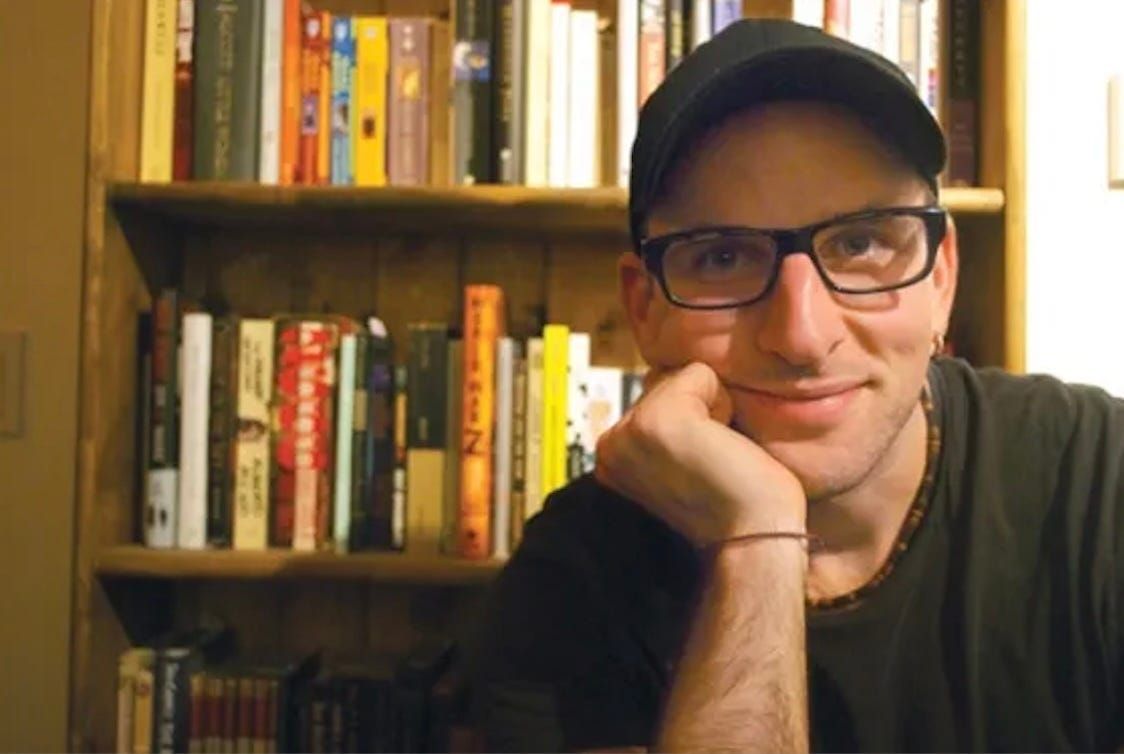
My conversation with 2006 Black List screenwriter.
Seth Lochhead’s original screenplay Hanna made the Black List in 2006 and was produced, then released in 2011, the movie starring Saoirse Ronan, Cate Blanchett, and Eric Bana. Seth’s background is an interesting one, so I was pleased to do this interview with him.
Scott Myers: Where did you grow up and how did you find your way into writing as an interest?
Seth Lochhead: I grew up in various parts of Canada (BC and Ontario) with a one-year sentence to that gulag archipelago known as Hawaii (I am pale and it was torture and whenever I went snorkeling fish with human teeth tried to eat me).
We moved around a lot so I became a painfully awkward and quiet human being whose interests tended toward watching hours and hours of television and movies (most memorably Magnum P.I…. the only solace of my prison sentence in Hawaii was that I might run into Magnum at any moment and ask him, “What you in for?” and we would become best friends and I would take over the helicopter piloting business from T.C. and finally be able to escape back to the mainland and start my life over. I was 6 or 7 at the time… I had big dreams).
Reading wasn’t my bag for the longest time. I was so awkward and quiet it was thought by some that I had a learning disability. It was just that I stuttered and tremored whenever they made me read out loud (you should see me pitch!). So I avoided it — reading in general — as much as possible. By the time I was 17, I had read 5 books (independent of English class) — one by Stephen King (Bag of Bones), 3 by Dead Koontz (Watchers being the most memorable because Corey Haim was in the movie and to me Corey Haim is awesome). And A Clockwork Orange. That was a fucking stupid choice since it wasn’t even written in English and my reading comprehension, if it wasn’t obvious, was lacking. I did get through it though (using the glossary) and that was the most satisfying thing I’d ever done, outside of playing football and, you know, kissing a chick for the first time on New Year’s eve about ten minutes after she’d vomited (she wanted a kiss and as an upstanding gentlemen I obliged). Anthony Burgess taught me a lot. He taught me words have power, but context is a language everyone understands.
Scott: What about your educational background including college? Any writing or film classes there?
Seth: Officially, I’m in my 13th year of a 4-year university program. I take one class a semester or try to when I’m not bogged down with work. I haven’t been back for a year or two now so I’m not sure I can keep claiming student status (I do use my student card and get discounts wherever they can be had).
I attended a writing program at Vancouver Film School in 2003 or 4. I’m not sure it’s right for everyone. You’re not going to go there and walk out their doors and be a screenwriter. You can, however, use that year and walk out of their doors with a script (if you plan right and don’t give a shit about grades). That was my plan. I was going to get a student loan and I was going to take a year and give writing a shot. I did it and the result was HANNA.
Although I’ve had some great mentors in my life, my main source of learning has been my OCD. I pursue the things that interest me even if they don’t seem applicable or advisable. Reading is a fucking miracle. After my wasted youth, I had no time for fluff so I learned quickly to go to the original thinkers. Why read Vogler when you can read Campbell? I’ve read all the screenwriting books out there (it was apart of the VFS curriculum), but they pale when they’re held up to the works that inspire them. To my benefit, and my ultimate — happy! — suffering, I always knew that to be in this business, to exist and last, you can’t think about writing as a checklist. You have to accumulate knowledge and then shove it, artfully, into the confines of the format (even if you have to split the seams, from time to time).
Scott: What are some of the most important or memorable movies from your youth?
Seth: I’m not the most emotionally literate human being (from an experience perspective). I’ve had very few life traumas that, you know, build character. I almost killed myself with stress and lack of sleep when we got our puppy last year. For the first week, I stayed up all night, every night, because I thought the puppy was going to die. It was unintentional experiment in sleep deprivation. The first 3 nights I forced myself to stay awake. The next 4, I couldn’t sleep no matter how hard I tried. I got sores on my mouth and I had emotional eruptions that covered all the spectrums — tears and joy — in a matter of minutes. The good news, the puppy lives! The bad news, because I believe Pavlov applies in this instance (to me, not the dog), I am forever conditioned to overreact to life’s obstacles. Long story short, I am this way because most of my youth was filled with life and death scenarios that lasted less than two hours.
The Never Ending Story still fucks with me. Spoiler: Atreyu is dead. Artax is dead. They’re all dead. The nothing consumes all!
Apocalypse Now. It was my Dad’s favorite movie and so it became my favorite movie (I’d watched it once a year until Coppola released redux and ruined everything — I haven’t seen it since). It was the first time I’d experienced something so raw and covered in sweat. It was the first time I experienced Brando and Hopper and Sheen. It was so realistic to me, but I had no prior knowledge of Vietnam, or Heart of Darkness for that matter. It was, to me, a heightened reality that spoke truths I still can’t articulate (nor, me thinks, would I want to).
Return of the Jedi. It was my first star wars movie and it was awesome. Watching it in isolation, out of context of the other pics was a blessing in disguise. Luke’s face was all fucked up. Leia in a metal bikini. Han frozen. I had no fucking idea why this was happening, but, damn, did I want to find out. Sometimes it’s nice not knowing.
Magnolia. The first time I watched it, I watched it three times back to back. 9 hrs plus in one day. I’m not sure it holds up, but there was something that drew me in. Anderson was a young dude and he was putting it on the line. He was trying, pretentiously/ambitiously (I believe pretention and ambition live in the same part of the brain), to say something. I think it was that scene with Donny (William H. Macy) in the bar when Thurston Howell says, “It’s dangerous to confuse children with angels.” (No, I didn’t pull that off the top of my head. Behold, the wonder of YouTube). That one line and Donny’s response to it, to me, sums up the entire picture. Each thread, each character was dealing with his or her past — dealing with the experience of their childhoods and how that builds to create the person in the present, how it influences choices and actions. As Donny sums it up, “…we may be through with the past, but the past ain’t through with us. And, no. It’s not dangerous to confuse children with angels.” That was pretty revelatory to me. It’s something I think about a lot.
Shakespeare in Love. Dude, this movie made so much sense to me. A writer uses the magic of his words to get laid. It was at that moment I knew what I wanted to do for the rest of my life: Gwyneth Paltrow*.
Scott: Are there writers or filmmakers who have been especially strong influences on you?
Seth: So this is a hard question because 1. Everything influences me! And 2. I only discover certain influences as I’m writing. Meaning, if I read a book or I lift some weights or I get sick — if I’m writing at the time — it usually, in some form, makes its way into my work. Sometimes I’m aware of it, sometimes it’s only in hindsight. For example, I just finished a draft of SHADOW OF THE COLOSSUS and I can tell you my influences included but were not limited to Eisenstein’s Andrei Nevsky, Tarkovsky’s Ivan’s Childhood, the Samurai film Sword of Doom, The Neverending Story, the trailer for Come and See, my tumblr stream full of photos (Buffalo and vast landscapes and abandoned architecture), my sleep deprivation, my travels, any intense physical activity (I love to lift weights and sweat hard because I tap into the more visceral side of myself, something film has the ability to do on certain occasions — see: There Will Be Blood, don’t see: Transformers 2).
But, again, I must emphasize, all of these influences come in hindsight. As I’ve gained experience, I really try not to be too conscious of my influences because I don’t want them to stifle whatever thread I’m trying to explore. I need to be open to everything and the more you’re influenced by any one source (a film, a how to guide, a personality), the more closed off your world becomes, the more you become a missionary for someone else’s ideas**.
* A joke, yes. But I was 16 years old and my brush with New Year’s eve vomit had not yet come to pass. I would also discover later that Woody Allen — one of the best screenwriters ever! — had similar aspirations (to get laid) and, as it does, it brings me comfort to know that I am not alone.
** By “you”, I mean “I”.
Scott: Let’s shift over to Hanna, an original spec script that made the 2006 Black List, then was produced into the 2011 movie starring Saoirse Ronan, Cate Blanchett, and Eric Bana. Here is a logline from IMDB:
“A sixteen-year-old girl who was raised by her father to be the perfect assassin is dispatched on a mission across Europe, tracked by a ruthless intelligence agent and her operatives.”
How did you come up with the central idea for the movie?
Seth: It started with an image of a girl running through the forest hunting a deer. I’m not sure if it was a dream or some image I was exposed to, some advertisement or some subliminial alien messaged beamed to my brain, but I was at VFS and we were under pressure to come up with a feature idea. I had two ideas I liked, one was HANNA, the other was a teen sex comedy ala Woody Allen (or, that was my inpiration anyway). I called it LIAM FORTHWRIGHT’S GREAT AMERICAN TEEN NOVEL. It was about a herpes outbreak in a high school where all the cool kids get herpes (because, you know, all the cool kids have sex) and all the losers don’t get herpes but are willing to risk infection for, you know, sex. There was a werewolf in there, I believe, and a cult that worshipped at the altar of Buffy the Vampire Slayer. Oh, and one of the characters, Liam’s younger brother, spoke only nasdat ala A Clockwork Orange. It was 80 pages long. And it’s a fucking masterpiece!
So after handing that sucker in and being demolished by my peers, HANNA became my main pursuit and my only hope for a commercial breakthrough. I took that initial idea — the girl in the forest — and I began to progress through the story discovering each beat, one beat at a time. Why was she there? Her Dad took her there. Why did he take her there? To protect her from the outside world, etc. We wrote treatments (25 pages or so) but I didn’t really start answering these questions until I dug into the script pages. My style has changed quite a bit since those early days, but style (and character) seemed to be one of my strengths. I handed in the first 16 pages and my mentor, Rick Drew, read it and acknowledged something special was going on (positive reinforcement is a very good thing!). As I got deeper into the script, as I first experienced the horror of that white abyss (it must be fed or it will eat your living soul and give you sleepless nights), I threw whatever I could at it. I clawed out every squishy bit of experience and knowledge my 24 years of life had accumulated (it was like that VW Bug sized clog of fat they found in a London sewer — I scrapped and scooped out every crevice and sinus and cavity, emptied it all out, and forced it to conform to the confines of the screenplay format).
One breakthrough was a memory of a psych class I took and something B.F. Skinner said, “Give me a newborn and I’ll shape it into anything.” This led to an exploration of my own “shaping”, what was it like for me to interact with the strange and the new — feeling emotionally alien to others, my exposure to the world through travel, not being able to communicate even with the people to whom I shared the same language, violence and anger and frustration with my own inadequacies and the inadequacies of other human beings to understand me.
Scott: Were there any specific movies that inspired you as you developed and wrote the script? If so, what were they and what about each informed your creative process?
Seth: Consciously, The Bourne Identity was important. I think it was the first time I’d seen an existential spy thriller like that (where I actually understood it was existential). Unconsciously, Leon. It became the reps’ pitch, Hanna is Leon but in reverse (silly, but sort of accurate… sort of). Both of those films treated their characters as human beings, as opposed to vessels hell bent on bombast. There was action and consequence. The filmmakers respected each character as morally complex and didn’t compromise from making them do things an audience may perceive as “bad” or “unlikeable”. In fact, it seemed, they took it as a challenge. To create characters that you can understand, empathize with even if they do things you may not like (which, of course, makes them more human and therefore more likeable).
Scott: Hanna is a smart action genre movie with great detail paid to its characters. Is that balance — action, character — something you were strongly conscious about as you wrote the script or were they more a result of you simply trying to write a good story?
Seth: Sure. I always come at it from the character. I think about their choices — how A leads to B leads to C. I like to call myself an intuitive screenwriter, but what I actually am is a linear screenwriter. I cut a path through the forest one tree at a time and I only cut down the tree that’s directly in front of me or off to one side or the other (if I don’t, I quickly lose the path and, well, I get really fucking lost).
Wedding action and character wasn’t a conscious choice per se (but it might have become that way in my subsequent work after Hanna found success; I pigeon holed myself… which sounds really dirty). That initial image of the girl in the forest evoked something visceral in me, something that could only be hinted at with words and definitely not expressed through dialogue. I’m positive, when discussing it with my mentor and peers, Action as a genre was quickly applied. But my action (I think of it more as violence, because it was explosive and short) serves a dramatic function; the action/violence has a consequence on the character moving forward, it affects their choices, who they are and how we, the audience, and the other characters perceive them.
Scott: From the moment you conceived the idea until you were ready to send the script to market, how long of a time period was that? How many drafts do you think you wrote during that time?
Seth: I wrote 50 or so pages at VFS and 50 or so pages after graduation. It was, in total, approx. a 6 month process. I wrote one draft and that’s the draft that eventually sold to Focus. It took a while before it reached Focus and in the meantime, on a parallel track, I did an Americanized version of the script at the request of a producer (I changed the locations to suit an American audience, you know, because they don’t know where Europe is or that it even exists! J). By fulfilling that request, unknown by me, those producers became attached to the project which made things a bit complicated when Focus expressed interest (leading to almost a year of contract negotiations). It all worked out in the end, but baby writers beware!
Drafts in total (from the time it sold to the time it got made)? I wrote 3 drafts before David Farr was brought on. He did two drafts. There was a production draft done by another writer when Joe first signed on, but I’m not sure anyone has read it but Joe. Then Joe (and one of his friends) did a pass and then I came back and did the final draft (on set!! A continuous process that lasted for almost the entirety of principal photography). So 7 drafts in total (plus one mystery draft that I very much want to read).
Scott: Rumor has it that in order to get your script in front of potential Hollywood reps, you basically carpet-bombed hundred of managers and agents with emails, some which were simply this: “A girl is trained to be an assassin; would you like to read my script?” Is that true and what were the specifics of your outreach process? How long did it take for you to land a Hollywood rep?
Seth: Yup. I did it. And it was almost completely, utterly futile. But I learned a few lessons: 1. Be succinct with your letter writing (it took me a long time to realize Hollywood wasn’t interested in me as a person, they’re only interested in my ideas, so keep your query on point — tell them the idea and sign it so they know where it came from). 2. I wouldn’t have had to email so many folks if I had just done a bit of research into the companies I was approaching. After a bit of research, I found a small handful of companies that suited my needs and, lo, I got two and only two responses (both within a week of each other, both toward the end of my carpet bombing cycle). One was from a kindly direct to video producer who made pulpy action movies and the other was from a kindly intern, Kemper Donovan, at Circle of Confusion (a company that represented some of the best A-list pulpy writers in the business). This all happened within 6 months of finishing the script. I signed with Circle, Kemper was promoted, and within three months Focus expressed interest. Three months after that I signed with WME (née WMA). And I’ve been a professional writer ever since (8 years… yikes!).
Scott: You mentioned you’ve read Joseph Campbell and certainly Hanna feels like a Hero’s Journey. We meet Hanna in her Old World, the remote, snowbound area where she lives with Erick, who she believes to her father. Then a Call To Adventure when she flicks the switch of the transmitter, alerting Marissa and the powers that be of her location. With her capture, escape and intersection with Sebastian and Rachel’s family, Hanna separates from her Old World and enters a New World, and so on. How conscious were you of the Hero’s Journey in crafting the story for Hanna or is the narrative structure and are the story’s themes more reflective of the Hero’s Journey in a sort of organic, innate way?
Seth: I’ve never read Joseph Campbell as prescriptive per se. I think he was examining certain aspects that are innate and organic to human story telling across cultures and time periods as opposed to saying, like some gurus, that he’s discovered THE way — the precise formula — to tell stories. He’s just pointing out that this, for the most part, is the way human beings, when left to their own devices, tell stories that other human beings can relate to and understand. Our lives, and the minutiae of our lives, can easily be funneled through this filter: we are born into the world, we face obstacles, grow, have mentors and enemies (some inhabiting the same person), we learn and then return to some semblance of our former lives, wiser and changed. We’re all the heroes of our own journeys — no matter how short or how long those journeys may be — and therefore it is easy for us to sympathize/empathize with the heroes in the stories we consume (it’s also easier
for us to tell stories in this way, it’s a fundamental, innate structure — we “write” what we know).
I feel like Campbell’s influence over me was less compelling than the influence of, say, Return of the Jedi or Bourne or Hamlet. If I had not been exposed to him, I think HANNA would’ve turned out the same way only because I put her through the filter of my own experience (as, I’m sure, Homer did with Odysseus and Lucas did with Luke). I find Campbell– and all literary criticism — to be utterly fascinating, but I always stop short of searching for formula in their words.
Scott: Going beyond Joseph Campbell, the story feels like a fairy tale. When asked where she comes from, Hanna replies, “The forest,” an archetypal image. Erik can be seen to be the Good Father, Marissa the Evil Stepmother. Looked at symbolically, the character Hanna would seem to fall into the shadow of Grimm’s fairy tales and figures like Little Red Riding Hood. Are you a fan of fairy tales and if so, did they have any bearing on the story as you developed it?
Seth: The Brothers Grimm played a huge role in a how I imagined the story and, also, how I came to understand how Hanna understood and interacted with the world. I keep talking about how I am who I am in this moment, right now, because of the experiences and influences my life has collected and I think of all human behavior in this way — fictional or otherwise. Hanna is a human and when we meet her she is the sum of her experiences and her influences and there are only a few tangible realities that she understands — her father, how to hunt, violence, the simplicity of life and death, the cold, the warmth of the sun. And then there is her imagination influenced by the abstract — her encyclopedias, her fairy tales, and the stories her father tells her. Both the tangible and the abstract play off her biology and give her the tools to survive in the present (because to survive is to understand the world, as best as you can, with what you have available, in each moment you are faced with it).
I’ve always thought of HANNA as a fairy tale, something you could literally rip from the pages of the Brothers Grimm. But I did not push the influence too far, I did not let any one fairy tale inspire me, and I did not weave in any extra-textual references to fairy tales (outside, of course, of the book of fairy tales Hanna covets and the character of Knepfler aka Wilhelm Grimm). It wasn’t until Joe got involved that he began to fill the frame with fairy tale images. I’ve said this before in another interview: Joe incorporated the archetypal symbolism to the design and look of the film (and the look of the actors). He wanted to make the fairy tale literal and not leave it entirely to subtext. I think, in hindsight, it was a good choice.
Scott: There’s yet another way to look at Hanna and that is from a more psychological viewpoint, and for me a Jungian one. It strikes me that Hanna has all these disparate aspects of her psyche: she’s a youth who has been trained to be a killer; she’s been drilled with all this book knowledge, but is virtually an innocent when it comes to the ways of the world; she thinks she has a father, but she’s really an orphan; as she has now reached adolescence, she has a natural instinct to want to explore and live her own life, and yet she is tasked with gaining revenge against Marissa. How much did you think about Hanna from a psychological perspective and how did that inform your understanding of her character and where she needed to go in terms of her personal journey?
Seth: It’s all psych 101, baby. I like the idea of Jung and he and Campbell seem to be coming at things from very similar places (even if it is for different reasons), but I found a lot of his writings to be too fanciful for my tastes (he never made things tangible for me). That whole collective unconscious thing-a-ma-jig was weird (not that it wasn’t a genius idea — Wikipedia is the collective unconscious!! Jung created the internet! — it was in the explanation that he lost me). Give me E.O. Wilsons’ super-organism and then, and only then, does the collective unconscious begin to make a modicum of sense. It’s weird that Jung doesn’t work for me because there’s an existential psychologist that has had a huge influence over me — R.D. Laing — and, I believe, Jung has a great pull over his work. Jung to me is like Freud to everyone else, I’ve only been exposed to the colorful tip of his work and not the good stuff below the surface.
B.F. Skinner, Pavlov, and behaviorists in general, inform a lot of what I do. They taught me that all behavior has subtext.
Scott: When Hanna contemplates flicking the switch on the transmitter, something she hesitates doing at first, then eventually does, what do you think is her overriding impulse compelling her to commit that act, willfully putting herself in harm’s way?
Seth: This was interesting sticking point for some, something that a lot of the audience seemed to push back against. I’m not sure if it was because a lot of my contemporaries have delayed adolescences (most of my friends were still living at home at 25), but it seems a lot of people couldn’t empathize with her decision (they were only looking at the micro consequences not the macro). She has a seemingly good life, she’s loved, has a warm place to sleep at night, why change? Why do any of us change? We grow bored, we begin to wonder if the grass is greener, and we feel that pull towards adventure (small and large). I get the sense from my friends that they stayed at home until they were ready to go out on their own, have a bit of money saved up, protect themselves from any potential falls and, I suppose, I understand this instinct (it’s a practical logic; why pay for things when you don’t have to? Why take risks when you’re seemingly safe?). But there’s something scary and life affirming about having to figure it out on your own, to take risks. I’m not saying it’s a common choice in the modern era, but I am saying it was Hanna’s choice.
Scott: The family with whom Hanna intersects creates an interesting subplot. In a way, don’t they represent what a ‘normal’ family might be, giving Hanna a chance to model that kind of life?
Seth: I think you’re right from an audience perspective: here’s a normal family for Hanna to interact with, this is the way things should be. But from my perspective, they’re society. Her exposure to them (to society at large) creates a level of self-consciousness Hanna has previously not experienced. Her “culture” in the forest, her “self” identity, if “self” is defined by the people around you, was a reflection of Erik’s pride (he was the only human being she could see herself reflected in). This new “self” in our world, the one defined by “normal” society, is the beginnings of something we’re all exposed to when we first enter the social environment. So it’s less a model of hope — here’s a family she can be “normal” with — and more a quiet tragedy — here is a society that looks upon her as abnormal, therefore she begins to believe she is abnormal. This group, this family, will never be able to understand and love Hanna for who she truly is and, I think, we all, to some extent, know what that feels like.
Scott: More particularly the teenage daughter Sophie, isn’t she a kind of Hanna in reverse: soft, urban, chatty, caught up in contemporary culture, again someone against whom Hanna can measure herself?
Seth: Again, this analysis is more accurate from a hyper-textual view (from the audience’s perspective). We can compare and contrast Sophie and Hanna and measure their differences (Sophie’s obsession with Hermes vs. Hanna’s obsession with rabbits). What I think is happening with them, on an inter- and intra-personal level (the micro vs. the macro of society at large) is a melding of personalities (something I think happens between two intimates, BFFs, what have you, as they fall in love). So it’s less Hanna or Sophie consciously measuring themselves against the other and more about Hanna and Sophie becoming connected through the influence each has on the other. Now, as a viewer (not as the author; this is an important distinction every writer must make once he/she releases his/her work upon the world), I see Hanna and Sophie each as the products of the worlds in which they were raised. But they’re clay and they are constantly being shaped by every new experience. Hanna shapes Sophie. Sophie shapes Hanna. Life is lived.
Scott: There is a funny moment that is actually pretty revealing where Hanna has the opportunity for her first romantic adventure. And when asked by the boy if she’d like to kiss, Hanna says, “Kissing requires a total of 34 facial muscles, and 112 postural muscles. The most important muscle involved is the orbicularis oris muscle, because it is used to pucker the lips.” That demonstrates her book knowledge and lack of street knowledge. But instead of going, say, the Disney route whereby she would kiss the boy and that would somehow become a transformational moment, instead Hanna flips the guy over and flops him to the ground, responding like the trained killer she is. How do you interpret that moment?
Seth: At some point in the development of the script, someone decided that Hanna should kiss a boy and that this would some how turn her “sexually feral” (which is really fucked up on so many levels). It went entirely against: 1. My stylistic thesis (behaviorism — an act must be rooted in a precedent), 2. Implied a subtext I didn’t want implied and 3. Was contrary to who Hanna was as a human being. So I said fuck that shit (or a polite equivalent there of) and started my campaign to change it. I was in luck when Joe and Saoirse signed on, because they agreed with me and that was the end of that.
But, as we dug back into the script, it became apparent that, sure, Hanna might be intrigued by the romance of some of her fairy tales and the science of kissing. What she lacked, and what we see in the scene described above, is the cultural influence that tells a young girl that she must, when a boy desires it, especially at a campfire, suck his face. So, even if, intellectually, she knew what the boy was doing, instinctually (based upon her experiences up to that point), he was assaulting her. And once that happened, I figured if Hanna was going to kiss anyone, it would have to be on her own unique terms, removed from too much cultural influence, and with someone she loves (Sophie in the tent).
Scott: Two more things about Hanna. The first line of the movie occurs after Hanna fires an arrow into a reindeer who runs away, Hanna chasing the wounded creature. When the animal collapses, Hanna says, “I just missed your heart,” then calmly shoots the reindeer dead. The last line of the movie occurs after Hanna has wounded Marissa, and paralleling the opening, she says, “I just missed your heart,” then shoots Marissa. What layers of subtext do you think are at work in that line? Why do you think that line is so effective as a bookend?
Seth: If I haven’t disclaimed it already, let me disclaim it now: my answers to these questions are as relevant/irrelevant as anyone’s analysis of HANNA would be. I get a lot of discomfort in having to explain or analyze my own work (not because I don’t enjoy it — I do — but because my analysis has the tendency to be read as gospel). I am not the final word on this, neither is Joe, or any one person — or corporation — associated with HANNA the movie. I am happily (if anxiously) only a viewer now. So what follows is just my reading (to be discussed and debated ad infinitum)…
It was all a dream. ☺
Scott: The second thing: Was it always a girl assassin?
Seth: Yes.
Scott: Were you aware of the conventional wisdom and predisposition against female leads in action movies?
Seth: Not at first, but I was made aware later in the process (by managers and requests from producers).
Scott: At any point along the way did anybody suggest changing it to a teenage boy?
Seth: Yes. But notes like those, that fundamentally fuck with my intuition, I tend to ignore.
Scott: Assuming it was important for you for Hanna to be a girl, why is that the case?
Seth: It’s what was in my head. It’s what felt right. The more I thought about it, the more people were opposed to it (managers, producers, etc.), the more I became aware that it irritated a cultural prejudice. Unfortunately, boys and violence is a natural context for film (a cliché even). It’s something people expect and are comfortable with. By accident, her gender/sex added a layer to the film, just a little something extra to make the reader/audience uncomfortable/intrigued and something, if they so chose, to examine deeper (why can’t a little girl be strong?). I think it’s a dangerous thing to answer questions in your written work, but I think it is imperative to always ask the questions. That’s our job, to spark curiosity and emotion from an audience, to allow them to discover what’s going on inside their own heads.
Scott: Some craft questions. How do you come up with story ideas?
Seth: Lately, they’re sent to me in the mail. Previously, it starts with different motivations. I’ve been inspired by great films and wanted to homage them in someway (I turned The Searchers into a Zombie movie). I’ve been inspired by great books (I turned Turn of the Screw into an action movie and wondered what would happen if the creatures in the Island of Dr. Mareau spawned and became a sub-class of humanity). I’ve been intrigued by news items and then there’s just the stuff that comes to me in my sleep: a kid’s fingers playing the piano at a recital, his dad’s hands covered in blood. Or a bot fly impregnating someone’s forehead. And then there’s music. Sometimes music creates a feeling and I am compelled to capture that feeling. In all instances, it’s not necessarily a concrete idea. It’s more like a starting point, a drive to articulate something that could not possibly be articulated.
Scott: How important do you think the story concept is to the overall strength and commercial viability of a screenplay, specifically a spec script?
Seth: I think story concept is important to the commercial viability of a screenplay because we all say it is — that’s the culture of Hollywood. Concept is king because we perpetrate and support its absolute monarchy. People can’t sell complicated, but they can sell “It’s Leon, but in reverse.” I think, in the long run, quality has more value (at the screenplay level and at the film level). It’s what I’ve based my career on and the fact that I’ve had a career (no matter how modest it has been, and it has been quite modest) speaks to a quiet resistance in Hollywood (a counter-culture where quality is king). Of course, saying this now, I can see how HANNA’s simple concept opened doors and, I suppose (a simple concept coupled with inspired work — not perfect, mind you, inspired work that put its heart on its sleeve- will open doors and keep them open).
Scott: How much time do you spend in prep-writing (i.e., brainstorming, character development, plotting, research, outlining)?
Seth: All of the time. None of it. I tend not to write shit down unless it’s requested (and for a job, it’s always requested). I do a lot of my work on the page, within the script, scene by scene. It’s the only way I can ‘see’ it and ‘hear’ it and ‘feel’ it. I’m that writer that keeps rewriting the first page over and over and over again. And then the next page. And the next. I re-read what came before and continue on. My first draft is usually my thousandth revision. Research, character… that comes as I move. I will remember a little piece of something I read or I saw and it gets absorbed into the work. For example, I saw a trailer for a film called COME AND SEE and that had a huge impact on how I wrote SHADOW OF THE COLOSSUS. Plot comes from the characters’ pursuits of their own end goals (whatever those may be), conflict can be found in those pursuits. I try not to be conscious of my end goals (outside of the fact that I am chasing something to its logical — emotionally logical — conclusion).
Scott: Which of the aspects of prep do you tend to devote the most time and focus to?
Seth: It’s just exposure really. I try to expose myself to life, to a multitude of experiences. My brain and my body take notes, I hope, and then I use them in some way (consciously, unconsciously). Now, this might seem a little whishy-washy, a new age-y way to think about writing, but it’s what I learned, through trial and tons of error. After I sold HANNA and I began to believe my career was set, I shut down the experiences of my life, my exposure to the world at large, and tried to focus just on the work (on generating sellable product). It was stifling. I became Charlie Kaufman, in a bad way. I was climbing a Penrose staircase, going nowhere. My world became a 400 sq foot space, a double bed, and 800 cal. muffins my girlfriend would bring me at lunch. I grew a very long beard, I gained 100 lbs., and I tried my best to isolate myself inside my tiny apartment. The brain, without the outside world, without experience, is not a pleasant place to live. Left to its own devices, it becomes a cannibal. And then something changed. I can’t put my finger on it, but, at some point, I realized, for my work to flourish, I needed to expose myself to the world again, to people. I realized it was my job, as a writer, to see the world and to report on what I saw.
Scott: How do you go about developing your characters?
Seth: It starts with behavior. Specific ticks and eccentricities. We all have them and we can all relate to them (no matter how specific, we’ll always find a corollary to our own experience). These, as well as appearance, build up the outward persona (and the outward persona is truly how we get to know each other — the only way, in my opinion, you can understand someone — people telling you who they are on the inside parts is boring, if you give me enough time, I’ll figure out who you are just by watching you… that sounds creepier than I intended… so be it!!).
The character’s depth comes as you begin to layer in these specific traits and from these traits, as you get to know your characters, you, as the writer, can anticipate how they will react to certain stimuli. Action, reaction. Cause, effect. A fireman will put out a fire a lot differently than a waitress. A schizophrenic, as R.D. Laing would say, can see the cracks in reality the rest of us are unwilling to see. And from understanding this, you can build an entire world through their eyes.
Scott: What about dialogue? How do you go about finding your characters’ voices? How can a writer develop their ability writing dialogue?
Seth: You find their voice as you find them. I know, not helpful. But it’s true. Human language is a finite spectrum. There are only so many ways to communicate something and most of us learn from an early age to communicate in a way that other people can understand us. It’s social programming with, of course, variation. Like Hanna, we’re all clay. The outside (language in this instance) pushes in on us, forms us. But that doesn’t mean we’re not pushing back. It comes down to the character you’re writing. How did he/she push back? How did his/her language become specific (subjective) as they were exposed to different stimuli? There is variation and, of course, there is innovation (I always think of Milch or Mamet) but it is all based on a core (objective) idea of communication (I may or may not be alluding to Plato right now… mother fuckers). Start with simplicity (communicate what needs to be communicated or what’s trying to be communicated). Each character might have his or her own way of saying the same thing, like us all.
Scott: How would you define theme? How important is it? Do you start with themes or do they arise in the context of developing and writing the story?
Seth: I leave theme to my subconscious (I’ll let it come out as I pursue the more tangible elements of the story — although according to my previous answers, tangible doesn’t seem to be one of my writing pursuits). If I’m obsessed with something, if I’ve noticed something, some illness in the world, some crack in reality, I let it in and if it wants to come out in my work so be it.
Scott: What do you think about when writing a scene? What are your goals?
Seth: My main goal is to get it all down. In any shape or form. David Milch uses this writing exercise (one of the few I still use on regular basis): You take two voices and you start a clock for 20 minutes, and you write a dialogue. At the end of the 20 minutes, you seal the dialogue in an envelope. There’s only two hard rules: 1. Do not think about what you’re going to write before you write it and 2. Never ever open the envelope. There’s a few things at work here. Milch is compulsive. Left on his own, he can spend months revising a single page. So he does a few things to remedy this — he doesn’t write alone or with a keyboard or pen (things he can fiddle with), he narrates to an audience while a fellow writer types up his work, and he works to a hard, no look back deadline (up until the crew is sitting and waiting to shoot the scene). He controls his compulsiveness by being forced to let go. As for the rest of us, we have the symbolic envelope. That’s how I write a scene. I write it like it’s going to be shot in 4 hours and when those 4 hours are up I seal the envelope and don’t look back. Or, like all good religious folk, I try to be good, but the demons come and I am forced to grab my letter opener and, sometimes, I get sucked into the fire pit of hell. A good example of this would be this here Q and A. I’ve been working on this section for three weeks. :/
Scott: When you finish a first draft, you are faced with the inevitable rewriting process. Are there some keys you have to rewriting your scripts and if so what are they?
Seth: Once I write the end, it’s the end for me. I follow my instinct, I seal the envelope, I open the envelope, I lose months, and then I write ‘the end.’ From there, I find it hard to even think about the script. I have a physical revulsion to it. If it’s commissioned work and people read it within a week of me finishing it and they have “thoughts”, I’m fucking useless. I need time away. Months in some instances. Luckily, I’ve worked with a few busy cats with schedules that accommodate my queasiness (whether they’re aware of it or not). Once I have the distance, I get “audience eyes.” I’m not quite objective, but I’m also not nauseous anymore. And that’s the trick to rewriting I think. It’s to get yourself into a state where you can approximate the emotional journey of someone who has never experienced this story before. And based on that, your best instinct of what fresh eyes might see, subjective objectivity, you get to work. Someone told me once, in regard to Sitcom writing, to mark down where you laughed. That’s pertinent to the rewrite process (not only for the writer but for his and her collaborators who will be reading the script dozens of time). Mark where you laugh (cry, get angry, aroused, intrigued, etc.) and, at all cost, protect the laughs (even 12 reads in, when it all feels crusty and everyone who’s read it 12 times thinks it’s stale, it’s your job to protect the laughs).
Scott: What is your actual writing process? Every day? Sporadic bursts? Work in private? Go out to coffee shops? Music? Quiet? How do you write?
Seth: All of this. Tony Gilroy said it best, be able to write anywhere (and if you can’t, and you’re David Milch, figure it the fuck out).
Scott: What is your single best excuse not to write?
Seth: Going to the gym. I work out a lot.
Scott: What do you love most about writing?
Seth: Writing is the closest I’ve ever got to ecstatic trance. It asks you to be extraordinarily present. You have to concentrate so hard, sometimes, that all else (worries, loved ones) falls to the wayside. It’s oddly primitive. Fight or flight, baby. It’s like you’re a tiny monkey being chased by a jaguar and you’re leaping through the trees and you feel like you’re going to die and two hours later, sweating, having escaped that bastard jaguar, you realize your four shot latte has gone cold and you have to go and get another one. And a muffin while you’re at it (to reaffirm life!!). And then, when you’re full of espresso and chocolate chips, and you’re sleepy, and you’re having a hard time remembering what that bastard jaguar looked like, and all you can remember is the hard work and the sweat and the disappointment of that cold latte and the exertion it took to get another one, you do your best to avoid the ecstatic trance and, instead, watch movies or surf YouTube or stare at a light bulb (to reaffirm life!!). That’s writing in a nutshell.
Scott: Where do you see yourself in 5–10 years? In an ideal word, what are you doing?
Seth: Living in Vancouver or LA or Paris or New York or Berlin, writing shit, eating muffins and drinking lattes, working out, watching an over abundance of good TV (it’s getting to the point now that I can’t keep up… and I love it!), experiencing new shit, walking off cliffs, buying shoes (I have a problem), did I mention eating muffins? Hot air balloons!
Scott: Finally, what advice can you offer to aspiring screenwriters about the learning the craft and breaking into Hollywood?
Seth: Try.[1]
1 Damn, son! Profundity…. Did I ruin it?
For my interviews with dozens of other Black List writers, go here.