Go Into The Story Interview: Stephanie Shannon
Stephanie Shannon’s original screenplay “Queen of Hearts” won a 2013 Nicholl Fellowship in Screenwriting.
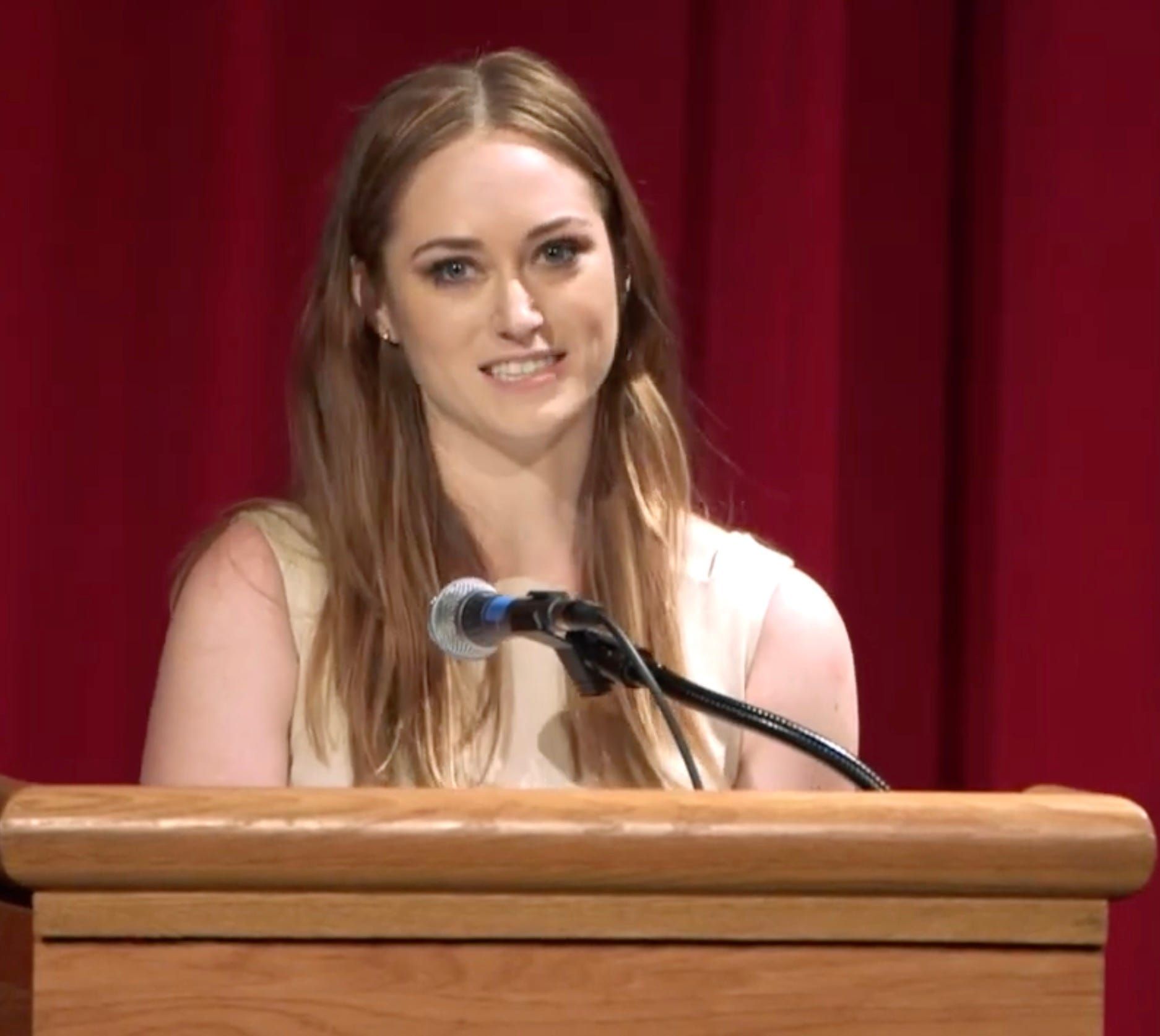
Stephanie Shannon’s original screenplay “Queen of Hearts” won a 2013 Nicholl Fellowship in Screenwriting.
Stephanie Shannon not only is one of five recipients of the 2013 Academy Nicholl Fellowships in Screenwriting, she did it with her very first full-length screenplay: “Queen of Hearts.”Not only that, the script landed on the 2013 Black List. Therefore, I was pleased to have the opportunity to talk with Stephanie about her background, the script and her take on the craft as she has developed as a writer.
Scott: How are you doing?
Stephanie: I’m doing well! I wanted to say, first of all, I’m a really big fan of Go Into the Story. I read it all the time. It really inspires me, so I’m excited to be a part of this.
Scott: That’s great to hear, thanks. Let’s jump into it here, dig into your background. In the speech you gave accepting your 2013 Nicholl Fellowship, you talked about your childhood and spending time with your grandmother watching her favorite movie, Gone with the Wind. Is it fair to say that is a key movie that steered you toward a love of films or were there others?
Stephanie: For me, it was combination of movies. I grew up, like most people in my generation, loving Spielberg movies, especially Jurassic Park and Indiana Jones. Braveheart was another big one for me. But, I think the definitive moment for me, when I knew what I wanted (I started off wanting to be a director) was in the seventh grade when I first saw Schindler’s List. It was the first time I saw just how powerful and impactful film could really be. I knew that’s what I wanted to do.
I was an only child, so I would watch my VHS tapes until they were just worn out and wouldn’t play anymore. Growing up without brothers or sisters, I sort of felt like movies were my companions. That sounds pretty sad now that I say it out loud [laughs].
Scott: So you were thinking movie director when you went off to film school?
Stephanie: Yes. I went to NYU Tisch’s Undergraduate program. They start you off right out of the gate directing several black and white 16 millimeter shorts. You do a lot of hands on directing and editing on a very basic level. You even start off learning how to cut your films with razors and tape on those old Steenbeck machines before you can move onto digital editing, which I think does foster an important perspective on the whole process.
Going through that program, as I came out of it, I realized I was more suited to writing. Being on set and being under the time pressures, and having to order people around, that wasn’t for me. I realized writing was a better fit for my personality. That’s not to say that I won’t ever direct, but it wasn’t something I felt I wanted to tackle right away. Writing is still very high pressure, but it’s not as in the moment.
Scott: You graduated high school in Texas. Did you do any filmmaking there?
Stephanie: When I was in high school, they had a program called the Dale Jackson Career Center where you could go off campus for half-days during your junior and senior years to take classes at a vocational center. It was basically this career center where you could take anything from Carpentry to Hospitality to Audio and Video Production.
I ended up being really involved in the Video Production class there. We would do things like learn how to coil cables and handle camera equipment, put on a local cable access show and tape high school basketball games. I was just so excited to be around the cameras, I couldn’t get enough of that class. It was my first introduction to the bare bones of the production world.
I used to stay all night in the editing suites there, editing little movies for hours on end. I was just always there. I’m pretty sure my parents thought I was out running drugs or something. I ended up making a short film there, just this little five minute horror movie. It went to a statewide student video competition and won Best of Show in Texas. When I applied to NYU, I used that video as my portfolio. That’s how I got into Tisch. I just took the leap and went to New York.
Scott: Texas to New York. That must have been quite a transition.
Stephanie: I had never been to New York. I just showed up alone in a taxi with a suitcase — it was pretty cliché. I remember I literally didn’t talk for three days because I was petrified and all I could think was “What am I doing here? What did I get myself into?”. It was a huge culture shock, but I’m really glad I stuck it out. I feel like it made me a stronger creative person.
Scott: Then you made your way to Los Angeles?
Stephanie: After I graduated, I stayed in New York for five more years just doing any job I could find. When you graduate film school you’re like “What? They didn’t hand out Oscars at graduation? I guess I need to get a real job”. I did a lot of PAing on film sets: everything from commercials to indies to reality TV to big studio movies. I did a lot of art department work, which was a lot of fun. I got to run around film and TV sets wearing a tool belt and pretending I knew how to use it. I did production design, props, set decoration and construction. I was a personal assistant to a few directors. I was a receptionist for a while at a production company. I even drove a cube truck, which, in midtown Manhattan when you’re 5’6’’ is pretty terrifying. I just did any kind of odd job I could find to stay in the industry and figure out how to make a living. It was a lot of long hours and really stressful at times, but it was such a good learning experience to see how a set runs and how the industry works from that angle.
After about three years, I ended up getting sick of the production thing. It felt like I was working in a factory where everything was assembled, and I wanted to be on the other side of that. A friend of mine from NYU who worked as an assistant at William Morris Endeavor told me there was an opening at Brillstein [Entertainment Partners] for the head of the New York office.
I was kind of scared because I knew how tough being an executive assistant in Hollywood is. But I wanted to be more involved in that side of the industry because I felt like I wasn’t learning what I wanted to in production.
I ended up working for the head of the New York office of Brillstein for about two years. I learned so much on that job. I really feel being an assistant is grad school for film students. You just learn so much about the industry, from a perspective you can’t get doing any other job.
I read a lot of scripts on that desk. When I was reading, all I could think was that I wish I had tried harder to be a writer. I just felt like I could write something better than half of what I was reading. I talked to my boss and told her I wanted to move out to LA.
She and Brillstein were really great in helping me to transition. I was very fortunate because I came out here with a job. I started working for another manager at Brillstein out here who is now my manager.
Scott: When did you start picking up the screenwriting again in that process? Was it when you went to Los Angeles?
Stephanie: When I got out here I decided I wanted to give it a real shot, because I hadn’t allowed myself to before. Ever since I graduated college I had kind of put it out of my mind as something that I couldn’t realistically do. I was afraid that if I really tried to go for it, I wouldn’t be able to, that I would prove to myself that I couldn’t do it. That was just a fear of mine, I think.
When I got out here I was like, “I’m going to be 28. I need to do it now if I’m going to do it.” I started talking to some friends in the industry who put me in touch with their writer friends. So I started setting up coffees with several TV writers. They were all so gracious to meet with me and give me advice. It was really eye opening to talk to so many people who were my age who had made it as professional writers. I thought, “Wow, this is really possible.”
I made a promise to myself that I would write a screenplay that year and enter the Nicholl. This was around November of last year. I started researching in December. Then I started writing in February.
Scott: Assistant gigs, from everything I’ve heard, a great way to learn the business, but they’re notoriously challenging, especially hours. How did you carve out time to write?
Stephanie: I just became really singularly focused. I was determined I wasn’t going to let another year go by without finishing a feature. I told myself there was no way I was going to miss the Nicholl deadline. I have never been more determined to do anything in my life.
It was a pretty isolating time for me, though. I’d work all day as an assistant, I’d get home at night, and I would write. I’d wake up and work a little in the morning, then go to work. Sometimes I’d just pull out my laptop and write at my desk while answering phones, or in my boss’ office while he was out at lunch. Then on Fridays I would go home after work, and I wouldn’t really reemerge until Monday. I was so into the story that it didn’t feel like I was torturing myself. I was excited, and I looked forward to working on it, which was a really great feeling.
Scott: I’d like to talk to you more in depth about the script, but let’s cover the fun part. You write the script “Queen of Hearts,” and it wins the Nicholl competition. How did you learn you had won? What was that feeling?
Stephanie: It was amazing! They notify you throughout the summer via email saying, “You’ve advanced to the quarter finals. You’ve advanced to the semi-finals.” I tried to put it out of my mind, because I didn’t want to obsess.
What was actually great about my situation was I had given my boss the script to read the day before I submitted it to the competition. As his assistant, I was like, “I’d really appreciate it if you took a look at this. I’m going to turn it into this competition. I’d love to know your thoughts.”
I was really scared to do this because I didn’t want to be that assistant that’s like, “Hey boss, so I’ve got this script…” I was always hesitant to be that person, but I felt like I had worked for him long enough and I really wanted his opinion. I remember the day I gave it to him, I went into his office after he left for the night and noticed that the script wasn’t on his desk. I literally checked the trash. Turns out he had taken it home and read it over the weekend. He was really, really great.
On Monday morning he brought me into his office and told me to shut the door. I literally thought I had done something terrible and was about to be fired. I kept trying to figure out what I had screwed up. He sat down and was like, “I read your script. It’s really good. We’re going to put this out there and get you an agent”. He asked me if I was ready to start my writing career. It was just the most beautiful thing I’d ever heard.
So, because of that, over the summer, while the competition was going on, I signed with CAA and my boss became my manager. I was leaving my assistant desk pretty frequently to go on general meetings around town. I was coming out of a meeting on the Disney lot when I got the call that I was a Finalist. It was just very surreal, to look down at your phone and have a missed called from The Academy (I had the number because I had all my boss’ contacts saved on my phone). I think I said this in my speech — the voicemail was in between like 15 missed called from debt collectors, which I thought was so ironic. It’s just a very surreal moment. You think that there are over 7,000 other people that didn’t get this call. You just feel very, very lucky. I held my breath until a few weeks later. Then they called me that I had won.
I was at work, it was lunchtime. I got the call, and I went into my boss’s office to take it. And they have everyone on speaker phone when they call you: Gale Anne Hurd, the whole Fellowship committee, and all the judges. Eric Roth is on the phone and Robin Swicord, these legendary writers that I’ve spent my life worshipping. It was so amazing to hear those people clapping for you on the phone, one of the best moments of my life, to be recognized by people of that caliber, for my first script, too. It was just incredible. I’ll never forget it.
Scott: Let’s talk about your script, “Queen of Hearts.” Here’s the logline. “Inspired by true events. This is a story of ‘Alice in Wonderland’ and ‘Through the Looking Glass’ author, Lewis Carroll, AKA Charles L. Dodgson, and his relationship with the real Alice Liddell and her family may have inspired one of the world’s most beloved pieces of children’s literature.” Let’s start right at the beginning. What was the inspiration for this story?
Stephanie: I’ve always been a big Anglophile from a very young age. My whole family is from Texas. I grew up in Dallas, so there’s no reason for me to be so obsessed with England, but I was. My mom and I had never been out of the country. We had never traveled, but as a gift to me, I guess it was eighth grade graduation, she and I went on a mother-daughter trip to England.
We went to Oxford, which is one of the places I had always wanted to see. I just fell in love with it. While I was there, a groundskeeper showed me where the graves of Alice’s sisters were. It was the first time that I knew that they were real people, that the story was based on a real girl. I just thought that was such a cool story. When I went to film school, I did a study abroad program in Prague where I had to direct a 35 millimeter short, and I decided to make that the subject of my short. The short was about Lewis Carroll attending a tea party in the dean’s garden, and it turns into the mad tea party. I thought it would be really interesting to make that into a feature. The more research I did, I found so many interesting paths through the story. One of the things that really fascinated me was that Charles’ diary has all these gaps in it where people have razored out certain sections, but no one really knows who did it.
There was this mysterious break in his relationship with the family. No one really knows what happened. I read a theory that he was having an affair with her mother. I thought that was such a cool idea, so I took that and ran with it.
Scott: I would like for you to describe, if you could, real briefly in a couple lines or whatever, each of the key characters in terms of the personality and maybe in terms of what their function is in the story. Charles Dodgson, a.k.a. Lewis Carroll, how do you think about that character in terms of the story?
Stephanie: If you read about him historically, a lot of people think he was shy, had a stutter, could only talk in the company of children. I wanted to make him a little bit more confident, a likable, approachable person. I think he’s a really interesting contradiction, because he was a mathematics professor. His whole professional life was centered around his love of logic and math, and yet he created the first example of nonsense literature.
He really pioneered a new form of children’s literature that embraced the nonsensical and just the complete opposite of what you would think a mathematics professor would come up with. In a different way, it makes perfect sense, because he was so great at puzzles and word play.
His mind worked in such a fascinatingly different way, that the fact that this great piece of literature came out of this reserved mathematician’s mind is really cool to me. I just wanted to explore who that character was and what would have motivated him to have that burst of creative genius.
Scott: I was struck by that too, because I did some research in reading your script. He did have this seemingly bifurcated thing going on. There’s the professional academic life in terms of teaching math and logic. Yet, like you say, the stories, he was the progenitor of this whole idea of nonsense literature.
It sounds like the point of connection you made there is that he liked puzzles. He was good at that sort of thing, and then that was kind of a common ground between those two aspects of his personality?
Stephanie: Yeah, I’d like to think that, at least in my story, that he always, inside of him, was more creative and spontaneous and special than he or his Victorian society allowed him to be on the outside. The Alice books are a way for him to, through what he was already doing professionally, which was math, was a way for him to express that side of himself that otherwise people wouldn’t have understood.
The society he was in was this very rigid, structured, Victorian society with all these expectations. Imagination, especially in children, wasn’t necessarily encouraged as much as it is today. A lot of that is thanks to him.
It was like this amazing, nonsensical, magical world of Alice was always inside him, but it required a combination of falling in love and breaking free of his expectations and allowing himself to be who he really was to let it truly come to fruition.
I think there’s something of that in everybody. Like with me, I wanted to be a writer, but I thought it wasn’t practical. But, turns out it was something I could do. If you really embrace who you are, these amazing, wonderful things can happen. For him, he wrote this amazing piece of literature. For me, I was able to write a script that opened a lot of doors. I think everyone has that potential if they’re willing to let go of fear and expectation and tap into that part of themselves.
Scott: It’s interesting because he [Charles Dodgson] has these two female influences, Lorina and Alice Liddell. They are both ied to his emotional development, yet they go down different paths in a way. Could you maybe talk about the mother, Lorina, and Alice, the daughter, and how you were working with them in terms of their influence on the Dodgson character?
Stephanie: With he and Lorina, she was similarly trapped in her social standing in the Victorian society and by her marriage. He was giving her something that she had never had before. At the same time, she was allowing him to really open up and express who he was.
Then the same with Charles and Alice: he was allowing Alice to really play and to have an imagination and to feel like it was OK to have fun. At the same time, she was encouraging that part of him that no one had ever encouraged before.
By having all those separate relationships work together, I wanted everyone to, by the end, grow in some measure. Even though the love affair didn’t work out, because, as we know, relationships don’t always have a happy ending in real life, I wanted the happy ending to be what came out of it. I feel like even if Charles didn’t win, we won as a society because we got this great piece of literature.
Scott: Yes. It’s interesting because, at first, Charles sees Lorina as the White Queen. Then he colors in that drawing, doesn’t he, and makes her the Red Queen. So there’s a transformation in her character. Yet, on the other hand, Alice remains true to him in a way, because Lorina creates this break, in effect. Did you always know there would be that twist, that split between Charles and Lorina and the cementing of the relationship between Charles and Alice?
Stephanie: Yes. I always thought it was interesting that all of his female characters were really dark…not dark, but just very grotesque and unpleasant and violent. I think when he was writing, later in his life someone asked him how he came up with the Queen of Hearts character. He said to him it was the embodiment of ungovernable passion.
I just liked that idea. I thought what could have happened to this man that made him feel that way about women? I wanted Lorina to start off as a positive image in his life, as this white, pure character and, by the end of it, kind of transform into that darker, more manipulative, controlling character that we see predominantly in most of his work.
As far as his relationship with Alice, I wanted that to remain true. I think what was in it for me was thinking about father daughter relationships and how important it is to be the father and make children feel like it’s OK to be who you are and have that imagination and to trust in yourself. That was an important theme for me. I was hoping his relationship with Alice would kind of highlight that in the end.
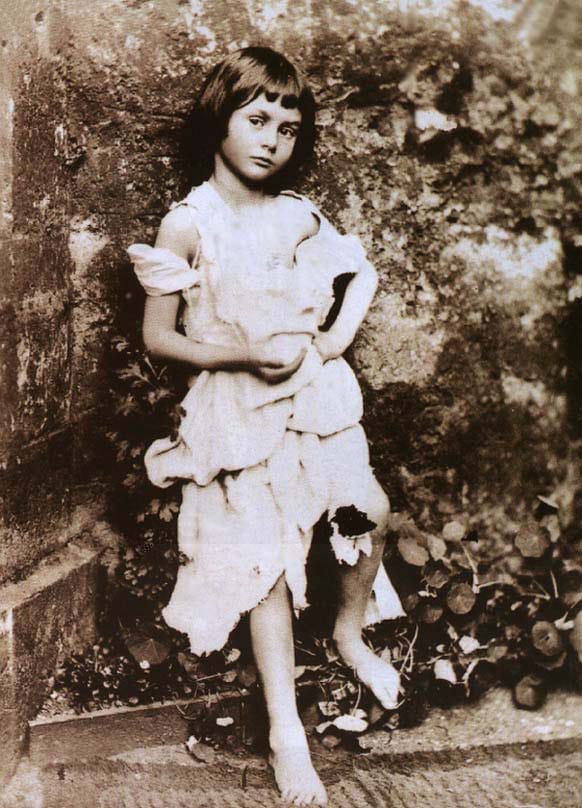
Scott: That, of course, is in contrast to Alice’s actual father, Henry. How would you describe him? He’s a pretty cold, stuffy kind of guy, a distant kind of father.
Stephanie: Yeah, exactly. I think a lot of fathers at the time may have even been like that. What I felt was interesting about Alice In Wonderland is that before it came upon the scene, most children’s books were very routine. They were all based around morals and lessons and kind of talked down to the child, making them feel like they weren’t allowed to have fun. I think Lewis Carroll is the first person to make the child the hero of the story.
I wanted Alice, in the end, to kind of feel like the hero of the story. That’s the feeling that her father never gave her. I wanted also to show that it’s a lesson Lorina didn’t learn. She’s still allowing herself, in the end, to be controlled by a man that didn’t make her happy. I wanted Alice, the next generation, to kind of learn that lesson and to learn to believe in herself.
Scott: There’s one aspect of the script that’s a lot of fun. It’s similar to that Shakespeare in Love thing where Will Shakespeare looks around the world and sees all these things that he then incorporates in a story. There are a lot of moments like that in your script. How much fun was it for you to look for opportunities, to find those moments of inspiration for both “Alice in Wonderland” and “Through the Looking Glass” in the context of the story you were constructing?
Stephanie: That was the most fun. That was the best part for me, and that’s really the original reason I wanted to tell the story.
I love movies where we can look at historical figures that we think we know and see them from a different angle, as real human beings. And then, to see what ingredients came together in their lives to culminate in a product that changed the world, be it “Alice in Wonderland” or another one of my favorite movies, Amadeus. That’s really fun.
The fantasy sequences aren’t based on anything historically true. It’s just me thinking about Oxford at the time and imagining what they may have been doing and thinking “Wouldn’t it have been cool if, when they were playing croquet for the first time, he helped her learn by imagining it was a flamingo?” and things like that.
The fantasy sequences were the most fun to do, because I had so much freedom. My script wasn’t purely fantasy, but it wasn’t a strict biopic either. I could oscillate between the two. I set it up in a way that it wouldn’t be crazy or jarring to incorporate the visuals into their everyday activities. It was a lot of fun, because I had so much freedom in that way.
Scott: The presenter for you at the Nicholl ceremony, Peter Samuelson, is a Brit. He was surprised to discover you were from Texas and has said what you’ve managed to accomplish in your script is magic when “a writer happens to inhabit a culture, a time, a place, a set of characters they are not, themselves, a part of.” When he read it he thought, “This is a great British writer.”
How much of a challenge and how fun was it for you to inhabit that specific place and time for the script?
Stephanie: It was a lot of fun. I’m always really flattered and surprised when British people tell me that. I’ve had a lot of British people say that. It was definitely a concern of mine. When I wrote it, I literally was petrified that the first British person that read it was going to laugh at me.
I felt better when I sent it to a friend of mine in England, and she had no critique. I think what helped was doing enough research and getting to know the characters enough to feel like I knew them personally.
I think the best kind of writing is when you feel like you’re taking dictation because you know what the characters would say, even if it isn’t necessarily what you would say in your own head. I kind of knew how they would talk, their mannerisms. I didn’t really study the dialects, per se.
Scott: In thinking about your script in its entirety, what you accomplished is very difficult. You’re dealing with real life characters. You’re trying to construct a story that takes this conceit, this idea that he may have possibly have had this affair with this woman. In the midst of that you run with some pretty substantive thematic things. Fantasy, reality, as well as playing around with the actual visual experience of seeing these fantasy moments, and stuff. And it’s a period piece. And you have flashbacks. Even at one point you have a flashback within a flashback.
Stephanie: [laughs] As soon as I did that I was like, “I’ll fix this later.”
Scott: You had a lot going on there. I think you did an admirable job with it.
Stephanie: Thank you so much! That’s great to hear.
Scott: So “Queen of Hearts” makes the 2013 Black List. What was that experience like?
Stephanie: I had no idea if I would make it or not, and I was beyond thrilled to see my name up there. When The Black List announces the official list, they tweet the scripts in random order, one script every minute for about an hour. They didn’t tweet my script until the very end of the hour, just when I figured I hadn’t made it. It’s such an incredible honor, as a new writer, to be recognized alongside so many great talents in the industry, both emerging and established. It also gave the script a little more heat, along with the Nicholl and the sale to Odd Lot, which happened around the same time. I felt like I had hit the spec trifecta, or like a parent whose kid makes it into Harvard. I’m just so grateful to the industry for recognizing it in the way that it did. Like the Nicholl, the Black List is such a wonderful organization, giving lesser known writers the chance to break out of obscurity and make a name for themselves. I’m just incredibly grateful to both for giving me that chance.”
Scott: Let me ask you a few craft questions if I may. First one. How do you come up with story ideas?
Stephanie: I don’t have a set method. I’m trying to be better about actively looking, reading articles and listening to NPR, that sort of thing. I know people do that, and I want to do more of that.
I find that if I try to think of ideas like it’s a job, then it’s more difficult. That’s one of the things I want to work on, being more attuned and open to ideas and paying attention to potential stories around me.
Scott: When you’re prepping your story, which of the aspects of prep do you tend to devote the most time and focus to?
Stephanie: For “Queen of Hearts,” it was pretty fast, relatively. I researched for about two months. I researched the whole time, but I didn’t start writing, just purely researched, for about two months. Then I did a preliminary outline. I didn’t get too detailed into it. This was my first feature I had completed, so I wasn’t sure exactly the correct process. I just did whatever I thought necessary to organize my thoughts.
I think what really helped me was actually just sitting down and writing. Once I typed “fade in,” it was like all of a sudden it just stated coming together. I think it’s important for me to at some point just start and then adjust the structure as I go.
Scott: You mentioned earlier about how important it was to know the characters, that that was key to the authenticity of the writing experience.
Stephanie: Oh, for this one it was really important for me, especially with the main character, with Dodgson, to read enough of his letters and diaries and the biographies on him to know enough about him where I felt like I would want to sit down and have a drink with this person. When you have it in your mind that your character is a separate entity that’s not just something abstract in your head, that’s a good place to start.
The supporting characters, I think it’s really important to know if they do something, why are they doing it. You have to think about what would be going on in their head and why they would make a decision as opposed to any other decision they could make and how that relates to their personality. I think just thinking of them as real, living, breathing people that exist somewhere outside of your imagination is really helpful for me.
To me, writing is a lot like playing God. You’ve got these people down there with free will. And you don’t want to tell them exactly what to do per se. But you can know their minds and tendencies and orchestrate certain events in their lives that nudge them in the direction you want them to go, to fulfill a greater plan. If I look at the relationship between plot and character in that way, I think the result becomes much more organic.
Scott: How about theme? When you wrote this script, did you have an idea before you started writing it about some of the key themes, or did those emerge as you were writing? How did that work with you?
Stephanie: Theme is really important to me. They emerged in my research — learning about what made “Alice in Wonderland” different from other children’s stories and learning about what was really special about Lewis Carroll and what was going on at Oxford at the time.
In my research I found so many interesting things to mine in the story. I think I ended up embracing the themes that also meant something to me personally. Father/daughter relationships are an important theme with me. I think it was important to me that the theme not only serve the story but also was something that was close to my own heart personally. I think those are always the stories that I want to tell, that I’ll end up telling the best.
Scott: To harken back to the comment you made about how you would hunker down on weekends and just write this thing at night and in the mornings, how important is it, do you think, for a writer to have a real, specific passion for the story they’re writing?
Stephanie: I think it’s extremely important. Writing is so hard. To force yourself to sit down and face all your fears and doubts and just dedicate yourself to something that may never end up being anything is a really scary, difficult experience.
I think unless you really are having fun, and not just fun but unless you really feel like what you’re doing excites you…. In my experience, I knew it was the right story, because I would constantly be thinking about it and constantly walking around and seeing the scenes in my mind and coming up with new ideas.
It was almost like once the switch got turned on in February it didn’t turn off until I finished it. There was no moment where a large part of my brain wasn’t thinking about the script. I think if you don’t care about your story, if you’re not writing something that is personally important to you, that you really feel like you can tell well, then you’re not going to be able to dedicate the amount of mental energy it takes to really complete something.
Scott: What do you love most about writing?
Stephanie: I love how there are endless possibilities. At the same time, that can be very intimidating, but…if I can create a world that’s real enough that it invites complete strangers in and they want to stay, I think that’s the most beautiful thing and exciting thing I could do with my life.
Scott: That’s a really wonderful way of looking at that, inviting complete strangers into the world you create. I’ve never quite heard it said like that, but that just makes so much sense.
Stephanie: I think that’s also something that Lewis Carroll felt later in his life…That was one of his desires, too. In my script it even says he regretted he wouldn’t live to see the generations of children that would take their own journeys down the rabbit hole.
That’s what’s beautiful about storytelling. It’s ageless. It’s a way to affect the lives of people that you’ll never even know their names, but you know that you have.
Scott: That’s terrific. One last question for you now that you’ve gone to the other sided here. You’ve broken through the membrane of a working writer, or what not, you’re going to get this question all the time. What advice can you offer to aspiring screenwriters about learning the craft and bringing it into Hollywood?
Stephanie: I think it’s important to just sit down and to do it. That was my biggest obstacle I had to overcome, was that it took me years to actually have the courage to sit down and believe that I could actually do it, and to put pen to paper.
I think that’s really the key, is to just write, because even if you think it’s going to be bad, or you don’t have any ideas, you never know. When you actually start, the things that come to you, they constantly surprise you.
On a general level just learning how the business works. Doing different things. Not just writing, but maybe working on set in different departments or working as an assistant. Really getting dirt on your hands in the industry, learning how it works from the inside and actively getting to know as many people as possible. I did all those things and I’m very glad I did. And then, of course, carve the time out to actually write. It’s a combination. I don’t think it does much good to write in a vacuum hoping someone in Hollywood will read your script, no matter how good it is.
Scott: Reminds me of the speech that you made when you accepted the Nicholl, the conversations you’d have with your mom where you were complaining about your script, feeling like you were lost. She would keep saying, “Just keep writing.”
Stephanie: Yeah, I was so mad. I was like, “That’s it?” [laughs] But it was so true.
Besides all of that, what I would say is most important, at least for me is… don’t write a movie that you think people will want to see. Write the movie that you want to see. The rest should take care of itself.
Here is Stephanie’s acceptance speech at the Nicholl ceremony.
For my interviews with every Nicholl winner since 2012, go here.