Go Into The Story Interview: Timothy Ware-Hill
Timothy Ware-Hill: Nicholl Fellowships in Screenwriting winner.
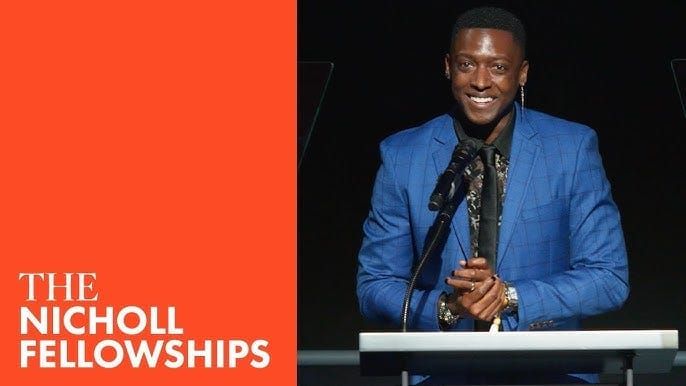
Timothy Ware-Hill: Nicholl Fellowships in Screenwriting winner.
Timothy Ware-Hill wrote the original screenplay “Tyrone and The Looking Glass” which won a 2022 Nicholl Fellowship in Screenwriting. I had the opportunity to chat with Tim about his creative background, his award-winning script, the craft of screenwriting, and what winning the Nicholl Award has meant to him.
Scott Myers: Congratulations on winning the Nicholl, Tim..
Timothy Ware-Hill: Thank you so much. It’s been an exciting season.
Scott: I’d like to learn a bit about your background and then talk about your Nicholl-winning script, “Tyrone and The Looking Glass,” but first let’s learn a bit about your creative background. As I understand it, originally, you’re from Montgomery, Alabama.
Tim: Yeah, born and raised in Montgomery, Alabama. I was there until I was 21, until I finished undergrad. I went to Alabama State University and studied Theater Arts. I got my BA in Theater Arts under the tutelage of Dr. Tommie “Tonea” Stewart.
Scott: Let’s jump back a little bit. When did you start finding an interest in theater and acting?
Tim: I’ve always have a love for the arts, in general, since I was a kid. I started writing poetry when I was a child. My parents allowed me to explore different art forms as I was growing up. I eventually went to a performing arts junior high school called, Baldwin Junior High School in Montgomery, where I took drama and dance at the school in my seventh‑grade year.
My drama teacher, Miss Melanie Boulware, told me about an audition at the Alabama Shakespeare Festival, which is a major equity theater in Montgomery, for production of “Big River” when I was 12. I went into the audition and that was my first audition that I ever had outside of auditioning for the performing arts school.
I sang the Negro national anthem, “Lift Every Voice and Sing.” I ended up booking my first professional gig at 12. I got my first paycheck at 12.
From there, I did two other shows as a kid at the Alabama Shakespeare Festival, including “Peter Pan” and “A Midsummer Night’s Dream.” In Peter Pan, played one of the Lost Boys. Tootles was the Lost Boy than I played. Then in A Midsummer Night’s Dream, I was the changeling boy for Titania and Oberon, the fairy king and queen.
I loved performing. I continued to perform and explore other art forms throughout junior high school and high school, from show choir, to marching band, to creative writing. Like I said, if it involved the arts, I participated in it. Ended up at Alabama State University, an HBCU. Montgomery is where I did my undergrad.
I was the first person to ever have a full theatrical scholarship in the history of the program. They had never given a theater scholarship to a student before. That was largely in part to Dr. Stewart, and to a musical that I had written at the time called “A Taste of Chocolate,” which I was allowed to as a freshman.
The first freshman to ever write, direct, and star in a full production on the main stage as a freshman. That was my introduction to college.
Scott: That’s impressive. When you say musical, did you do the whole thing?
Tim: Music, book, lyrics. Yeah, I did the whole thing. Like I said, because I dabbled in so much of everything, when I see something, I see it. I always try to find a way to make it happen. Certain things speak to me. I have a strong vision for what comes to mind. When I’m able to collaborate with other wonderful artists, I’m able to really pull those ideas out into something real and tangible.
Scott: You said, undergrad. Could I infer from that that you did some graduate work?
Tim: Yeah. I got a full scholarship to UCLA for their MFA Acting Program. I left Montgomery and moved to Los Angeles. It’s a three‑year MFA program, but I only did a year because I was itching to work. Everyone thought I was crazy for dropping out of school with a full ride.
It was a wonderful program. I didn’t leave because I wasn’t having a good time or a great experience. I left because my gut was like, “OK.” I felt like the rest of what I needed to learn would only come from being out in the world and just pounding the pavement.
I dropped out. I completed a full year. I dropped out. I think it was two months after I left school, I booked a show at the Mark Taper Forum in LA. That’s where I actually got my equity card at that time. A show called “Like Jazz,” L‑I‑K‑E J‑A‑Z‑Z.
There was an open call for dancers and singers. I went to the open call. I ended up booking this gig with no clue of the amazing people that I was about to work with. I was so green. I didn’t know who I was surrounded by until later. I’m so grateful because it allowed me to just be myself.
There was no pressure to perform or to impress. I just never felt the pressure or the nerves at that age. I was what, 23, 22. 22, maybe. Still had a fearlessness about me, which I wish I still had. I have to work on it now. The older we get, the more worries we have, because the more responsibilities we have.
It was a Cy Coleman musical. I got to work with Cy Coleman, the Cy Coleman. I didn’t realize who I was working with until I started my doing research. “Oh, my God, ‘Sweet Charity?’” I was familiar with Sweet Charity, but I didn’t connect the dots that he had done Sweet Charity.
I got to work with him, rest his soul before he passed away. It was one of the last original musicals that he had produced. Right after that, he worked on the revival of Sweet Charity with Christina Applegate, I believe, theater on Broadway. Shortly after, he passed away.
I was with the likes of him, Larry Gelbart, who wrote “M*A*S*H.” Did the book. I was in the room with him every day. Alan and Marilyn Bergman, who wrote “The Way We Were” and many other Academy‑winning and nominated songs. Stars like Tony winner, Lillias White. Music artist, Patti Austin. Harry Groaner. Cleavant Derricks.
It’s so many spectacular people that I was working with that I had no clue until a little later. I was learning about them and they were very kind. They took me under their wings.
They guided me through the process and becoming a part of such a wonderful theatrical community. I booked that right after I dropped out of grad school. I kept working after.
Scott: You were in Broadway for a number of projects. How did that happen?
Tim: I’ve done four Broadway tours and I’ve only done one show on Broadway Properties. I was in the original cast of “Kinky Boots” on Broadway, along with my husband, who’s an actor as well. Barry Hill or his stage name is Eugene Barry Hill.
The very second gig that I booked after the show at the Taper was the Broadway, the first national Broadway tour of “Jesus Christ Superstar,” which was cast out of LA. We toured North America, including Canada. That’s where I met my husband because he was already a part of the cast, and I came in as a replacement for the last leg of the tour.
From there, I did other regional theater gigs at the Pasadena Playhouse in LA and the Goodman Theatre in Chicago, and all over. Then moved to Vegas and did “Mamma Mia!” in Las Vegas at the Mandalay Bay. I did Mamma Mia! In Vegas for a year in The Ensemble, and I was moved into the principal role of the character Sky for the first national tour of Mamma Mia.
I ended up touring for a year after that. I’m the first and only Black person that ever owned that role in any professional production of the show, which is great and unfortunate at the same time that there hadn’t been more prior to me or after me.
I did the national tour of “Dreamgirls.” The Broadway tour of Dreamgirls and the tour of Kinky Boots was the last Broadway tour that I did where I owned the role of Lola. When I was on Broadway, in the original cast on Broadway, I was this Lola standby.
Whenever Billy Porter was out, I was on and I did the role on Broadway over 200. It was 296 or something like that was my final count. I felt like I claimed that I owned the role on Broadway as well because I got to go on so many times. That’s how the Broadway thing happened.
Scott: It’s amazing that basically from the age 12, you’ve had consistent work or involved in education.
Tim: Yeah, because this is an education or something in the arts field. I started performing even before 12. Of course, in church. I grew up in the South, so I had to go to church whether I wanted to or not. I would sing in church or do…There was always some Easter program that I had to recite a silly little poem at.
I started dancing at this place in Montgomery. I danced at a couple of locations. My first foray into dancing, piano, music, and all that stuff was at a school called the House of Arts. It was in downtown Montgomery.
Then eventually I took dance at Alabama Dance Theatre, which was in Montgomery as well, under the…I can’t think of her last name, but I knew her as Ms. Kitty. She passed away a few years ago. She was a wonderful dance instructor there.
Forgive me for jumping all over, but while I was doing Kinky Boots on Broadway, I decided to go back to school because I would have a recurring nightmare that I was in school, and there was always one class that I didn’t complete. I couldn’t graduate. I said, “Well, let me go back to school. I dropped out of grad school, maybe that’s why I’m having this dream.”
I said, I was too old and too far in life to go to a brick‑and‑mortar college with a bunch of 20 something. I found online MFA program called National University run by Bettina Moss and got my MFA in professional screenwriting from there. The nightmares stopped once I got my degree.
Scott: I was going to ask how you learned screenwriting because in reading your script, “Tyrone and The Looking Glass,” clearly you know the craft well.
Tim: The MFA was a great program. I guess because of my background, my journey was slightly different than many of my classmates, because of my theater background. I understood story. I understood character. In some ways, it gave me an advantage in the way I grabbed onto the craft of screenwriting.
There are certain parts that I had to work on. I can be very wordy because of my poetry background. I’ve written plays and things of that nature before, but it’s a lot of exposition. Unlike film, on stage, you can’t show everything so you have to tell it. The opposite is for screenwriting. It’s like, “No, show it. Show it, show it, show it. Don’t tell me. I don’t need exposition all the time.”
That was an adjustment for me as far as my craft was concerned. As far as character and dialog, as an actor, that’s what I know. I know when I hear and I know when I read bad dialog or when characters just feel incomplete.
I didn’t necessarily understand what a three‑act structure was but I knew what it felt like. I knew that innately, I was writing in that way but I didn’t know how to define it. I’m grateful for all the steps that I took prior to finding my way into screenwriting because it really helped inform and enhance this new craft that I was trying to master.
Scott: Let’s jump into your script. As I say, it’s just a really imaginative adventure and quite compelling. Here’s the plot summary:
“In Birmingham, Alabama, 1963, during the height of the Civil Rights Movement, a Negro boy goes on a quest to find the four magical treasures he needs to wield the looking glass, the only weapon powerful enough to defeat a three‑headed dragon that seeks to destroy him and his loved ones.”
Let’s go all the way back to the beginning. What was the inspiration for “Tyrone and The Looking Glass?”
Tim: “Tyrone,” it started out as my thesis project for grad school. It’s a very different version than the version that started out. I was very inspired by Guillermo del Toro’s “Pan’s Labyrinth.” Now I was able to take his historical event and make it the backdrop of the story about this young girl who believes that she’s a princess.
I said, I tend to gravitate towards films that have a magical realism or fantasy element, because so often the movies that I loved watching as a kid, I didn’t see myself in. I wanted to tell stories that would allow little Black kids to see themselves in imaginative worlds.
In particular with “Tyrone and the Looking Glass,” I wanted to tell stories that I connected to from my home Alabama, and that connected to my family and their stories, our history. My parents would tell me stories about the civil rights movement. They were kids during the Montgomery bus boycott.
My grandmother who I lost this year, would tell me stories about what it was like for her growing up in the Jim Crow South at the time. She had many jobs. One of them did include being a housekeeper for White people. My grandma, she didn’t take no shit, though.
She ended up quitting those jobs. She’s like, “They can’t talk to me that way.” I appreciate her strength and her courage to do that at such a time that it was dangerous to have such audacity. The adventure films…Because I cannot think of Tyrone as a coming‑of‑age adventure story.
The ones that I watched, like “Goonies” was one of my favorite films growing up as a kid. It was all White leads, with the exception of a token Asian kid.
I’m like, “I want to be a hero. When can I be a hero? When can someone that looks like me be a hero, go on a quest, and save the day?” What most people don’t realize or fail to remember or acknowledge is that in most great movements, the movements are led by the youth, [laughs] including the civil rights movement.
We often think of Dr. Martin Luther King because he was a great leader. He was also, in all honesty, a kid when he started leading that movement. He wasn’t the only leader of the movement. Particularly in Birmingham, Alabama, at that time, 1963, what took place was the children’s march, is what it was called.
We’ve all seen the photos of the fire hoses that were set upon Black people and the German shepherd dogs. It wasn’t until I really started doing my research for Tyrone and The Looking Glass that I realized, “Wait, these were children.” When I saw these photos as a kid, everybody looked older than me, so I thought they were adults.
I didn’t realize, no, these were kids who were in middle school and high school, who took to the street to march because their parents were either afraid to do so or they couldn’t do so out of fear of losing their work, their places of employment as a form of punishment for standing up for their civil rights, for their human rights.
These kids took to the street. They faced water hoses and the attack dogs. [laughs] Kids that were heroes. What is that story? What is the story about those kids that were brave enough to walk through the fire, to walk towards their dragon, and to face the fire? Which is what Tyrone and The Looking Glass is.
My protagonist, Tyrone, was tasked by his father to be the first to integrate an all‑White high school. After watching his father be lynched, be burned to death, he still felt a responsibility to fulfill his dad’s wishes. How can he win? If three White men can lynch his father, what will they do to him, who’s only a child when they don’t want him in their schools? What is that courage? That’s what I wanted to explore with Tyrone.
When we first meet him in the story, we meet this kid who’s afraid of the world. We don’t quite know why at the beginning. We don’t know that his father has been murdered and that he witnessed it. We just know that he’s afraid of the world. The world, in his mind, is filled with White people who don’t want him to exist in their world.
Through going on this journey, we leave with a kid who knows that he can face and conquer anything. I just wanted to know, what is that? How does one find that courage to do such a thing? Brown versus the Board of Education was 1955, where the Supreme Court deemed it unlawful to have segregation in the public school system.
My parents were some of the first to integrate all my high school in Montgomery, Alabama, but that wasn’t until 1970. 15 years after Brown v Board of Education. What is it for a Black parent at that time to send their kid in such dangerous spaces?
You think of the movie, “Till,” that just came out, which I haven’t seen yet. I think of Mamie Till. His mother, she sent her son away to visit his family. He never came back. My husband and I are in the process of adopting a child or children. We hope to expand our family someday.
I look at my peers who already have kids. I see their first‑day‑of‑school photos. They’re like, “My kid’s first day of school.” They hold up the sign. “Bobby’s first day of school.” I smile at the pictures, but then I’m just covered in fear.
I don’t know what it takes for a parent today to have the courage to drop their kid off at a school, go to work. Pray that when they get off work, they will have a child to pick up and bring back home. What kind of courage does that take today?
Knowing that there’s a possibility that every time you drop your kid off in a place that is supposed to be safe, a place that is supposed to enrich, not take away, what kind of courage does it take to do that day after day, year after year when we see tragedy after tragedy of babies who’d never make it home?
This is why Tyrone and The Looking Glass is so relevant to today. Take that. You go, “Well, what kind of courage did it take a Black mother or a Black father to send their Black child into a school knowing, not wondering if, but knowing that they will be in danger?” Knowing that they are walking into danger.
Not whether or not they might have a harrowing day, but knowing that, “I’m sending my kid through the gauntlet of just venom and hate. I have to do it because it’s the only way that our people can move forward in this country that often doesn’t want us to progress.” I wanted to find that in Tyrone’s mother.
Scott: Maxine.
Tim: Maxine. I didn’t want to make her that same Black woman that we see in every civil rights movie, where she’s just supportive. “I’m just supportive. I’m supportive of my husband. He’s a great leader. I’m going to support him. I’m not going to question his willingness to fight for our rights.”
I wanted her to ask the questions that many of us had at the time. We look at Martin Luther King through rose‑colored glasses, but not everybody believed in Dr. King’s movement. Not every Black person. Let me be more specific. There are many who thought he was an agitator. They wanted him to just let things be, not rock the boat.
With Maxine, I wanted her to ask the question. “Why do I have to put my child at risk? I’m only doing this because my husband wanted this, but he’s gone. Now, I’m left to raise my son, a Black man. A Black young boy, not a man. A Black boy, who the world wants to see as a man, as a threat. A Black man, but he’s still a boy. I’m left to raise them by myself?
“My dead husband wants me to send him into the school with all of these White people who don’t want him there? What the hell? Dr. King is telling me I need to do this, too? Who the hell is he? He’s not sending his young kids into these schools.” These are the things I wanted her to say.
I wanted her to have some real moments where she’s like, “I’m questioning this movement. I understand why we’re doing it, but why does it have to be me and my child?”
Scott: Later on in the script, Maxine says, “Raising a Black son in this world is a scary thing. Being a Black woman is just as scary. Sometimes I don’t know if I can do both, but I do. Being brave don’t mean you ain’t scared. Looking at what we scared of in the eyes, that’s what makes us brave.
“You have to hope to face it.” She’s talking to her son. “Hope is a treasure you shouldn’t trade for nothing in the world.” She has her own arc in this, right?
Tim: She has her own arc. She has to come to that moment. She really has to come to that moment. When we meet her, she’s not there. That’s not where she is at the beginning.
She is just trying to make it day to day and not break down in front of her son while trying to mourn her husband. That’s her arc. She has to come to that realization, not just for her son’s sake but for her own sake so that she can survive.
Scott: You’re talking about it being at the beginning. When we first meet him, he’s got these RC Cola bottle caps, which he is putting in front of the windowsills and the door before he goes to sleep. Of course, he’s got this one special one that has some significance to him.
He is afraid. As we find out, it is a mystery. We don’t learn about what happened to his father until much later. There’s a mystery element there. That unlocks a lot of what that fear is about.
First of all, where did the RC Cola come from? Is that from your youth or is this just from your imagination?
Tim: No, it’s from my parent’s youth. My parents, when they were growing up, they would collect RC Cola bottle caps. For every six, you could see a Saturday matinee at the movie theater. When my mom told me that, it instantly became this magical element for my story, as a way to tell the story because the bottle caps were admission into the theater.
They act as admission into Tyrone’s journey. The bottle cap unlocks each door to the treasures that he has to grab in order to fulfill his task, which is to defeat this dragon.
The “Alice in Wonderland” element of into the looking glass, I was like, “Well, what if the looking glass is an actual glass that you can look into and it is the only thing that allows us to see this invisible, three‑headed albino dragon?”
The RC Cola bottle came out of my parent’s childhood. Then the RC, instead of Royal Cola, it became Real Change…
Scott: I don’t know how much you may have studied Joseph Campbell’s the Hero’s Journey. It’s become part of the nomenclature for screenwriting due to George Lucas, Star Wars, and all that.
Campbell literally talks about slaying the dragon. Were you cognizant of that at all? Or was that just you’re going to do a magical adventure and weren’t even thinking necessarily about that Hero’s Journey symbolism?
Tim: I wasn’t necessarily thinking of the Hero’s Journey. Like I said, just from life and the love of cinema and the love of plays, there are just certain things that through observation and osmosis, [laughs] we take on and maybe not always understand the root of certain structures or certain tropes.
They take shape through our own lens but they’re still connected to the root of where it came from.
Scott: I wanted to ask about the girl, Carol. Could you just talk a bit about her, how she came into being, and the function of her in terms of the story? This is a friend of Tyrone’s.
Tim: Carol Robinson is based on a real girl. She was one of the four little girls that was killed in the bombing of 16th Street Baptist Church.
Scott: September 1963.
Tim: Yep. There were actually five girls in that explosion. There were many other injuries, but there was a fifth girl that survived. I forget which girl she’s related to. She ended up losing her eye. She didn’t lose her life, she lost her eye.
It’s a fictional take on Carol. It’s not based on real life for her as far as relationship with Tyrone. Tyrone does not exist in the real world. I don’t know if she ever had a friend named Tyrone. It’s possible that she had a friend named Tyrone.
I wanted to honor her and those four little girls, who continued to ignite the movement for civil rights, voting rights, and freedom. The way I wrote her, I wanted her to be one that represented a person who had courage, who wasn’t afraid to fight. Who saw the world, not as a scary place, but a place of possibilities just a posed to Tyrone, who was afraid of it all.
Who Carol is who Tyrone becomes in the end. I wanted to write this fearless little Black girl who wasn’t afraid of anything. Who not only stood up for her people but stood up for herself? You got to stand up for yourself first. You can’t stand up for everybody else till you find the courage to stand up for yourself.
I think that was the lesson that Carol left, of Tyrone and The Looking Glass. I think that’s the lesson that she left for her friend, Tyrone.
Scott: In the script, that’s the dramatic Act One end, is the bombing. Then this magical journey becomes not only about slaying the dragon, but also, this ticking clock. He’s got X amount of days in order to try and save Carol.
Tim: Save Carol.
Scott: Of course, there’s the fire, which brings you right back to the dragon stuff. There’s another character, who I imagine maybe your grandmother may have been a little bit of inspiration, Jemima.
This is someone who knows her mind, knows who she is. She’s making that point to Tyrone, “You got to know yourself.” Maybe you could talk a little bit about Jemima’s character.
Tim: Jemima is based on Aunt Jemima, or as we say in the South, Aunt Jemima, [laughs] the woman from the pancake box and the syrup bottle that we’ve all grown up with. I didn’t want to write her like the stereotypical nanny that many perceive her to be because she was a real woman.
The woman who portrayed the figure of Jemima was a real woman in the real world. First, this guy came up with this idea of instant pancake mix, and he hired her to make pancakes during the world despair. That’s how Jemima came to be. I didn’t want to make her subservient. I wanted to make her the woman that I think she probably was in real life.
A woman who probably didn’t take no shit from anybody. We have the character Jemima, who’s literally larger than life because when we meet her, she’s a giant. She takes up space, and she’s OK with taking up space. She sits on her throne basically saying, she knows who she is, and it doesn’t matter how anybody else perceives her.
She knows who she is, and she’s going to fight to have the life she knows that she deserves in this world. There is a little bit of my grandmother in her that fire, in spite of how the world may see her. She was a woman of strength, courage. When she was in a room, you felt her in the room. [laughs] That’s my grandma I’m talking about, not Jemima.
Scott: She strikes me as a mentor figure. She’s this profane figure, but she knows what she’s about.
Tim: She knows what she’s about. She’s also in this Alice in Wonderland structure. She’s like the caterpillar in the story that says, “Who are you? Who are you?” That’s the question she asks Tyrone. When she sees him she says, “You’re him. You’re the prince. I know you’re him.”
He says, “I’m who?” She said, “Shit, if you don’t know who you are, then you must not be him.” That’s life. Like Maxine Waters say, reclaim your time. We got to reclaim who we are. We got to stand strong in who we are, stand strong in our power, in our conviction, and be assured.
I think of the “Roots,” the movie Roots and Kunta Kinte. He say, “What’s your name?” He whips him and say, “What’s your name?” He says, “Kunta Kinte.” “No, your name is Toby.” He whips him again. “What’s your name?” Kunta Kinte. He holds onto that. He holds onto his name. He knows who he is. He holds onto it as long as he can, until it’s beaten out of him.
I feel like through the slave trade and through Black people being enslaved here in America, we’ve had our name beaten out of us so that when somebody says, “You’re him. I see you’re special.” We’re like, “No, we can’t. What are you talking about?” We have this humility that we always have to be humble and subservient.
We can’t claim, “Yes, I am him. This is me.” Jemima, she’s like, “No, I don’t care. I’m Jemima. Now you need to learn who the fuck you are.” That’s what she tells Tyrone, because without knowing who he is, he doesn’t know that he has the power already to do the things that he has been tasked to do and to do the things that he doesn’t even know are possible to do beyond that.
It’s a love letter to my people. It’s a reminder or a revelation for those who didn’t know that yeah, everything you need, it’s already there.
Scott: That reminds me of Glinda the Good Witch in The Wizard of Oz: “Dorothy, you’ve always had the power to go home.”
Tim: Always had the power. Exactly. You’ve had the brains, you had the courage, you had the heart. I need to remind you of that. You need to see it. That’s Tyrone and his journey.
Scott: I’m very pleased in a way that you weren’t like, “I’m approaching this, this is the hero’s journey and structuring.” That there’s that instinctual, understanding of story and humanity because it does. That’s what Campbell talks about is that, the external journey.
You’ve got an incredible thing where Tyrone’s got to accomplish several things, tests along the way in Act Two in order to burrow down deeper. That’s what Campbell says, that the exterior journey is incidental, it’s the interior journey that’s what the story is about. What I’m hearing you say right there aligns with that.
Tim: That’s absolutely right. It’s the interior journey. Everything else informs or affects what’s going on inside. When we tell stories, see films, or read books, we don’t want our character to be in the same internal place. They start out at in the beginning when we get to the end of the story.
We want to see a change in them, because that change in them in many ways as the observer as the viewer, it’s the change in us or the hope that that change is possible.
Scott: RC, real change.
Tim: Real change. RC.
Scott: Let me use that as a segue here. How has the Nicholl experience changed your life?
Tim: The Nicholl ceremony was an amazing, out‑of‑body experience, to actually go to the Academy Museum for the presentation and stand on the stage, receive an award, and to have the words come out of my mouth, “I would like to thank the Academy.”
[laughter]
Tim: Is pretty damn amazing. It’s pretty damn amazing. Put that in quotes three times. It’s pretty damn amazing. Then to have these amazing actors perform a scene from my script. It was Mr. Solid South. That’s the scene they did.
Scott: I always thought that was symbolic of the Jim Crow test that they had for voting.
Tim: It’s very much the poll tax test. It is based on that. The other amazing part of the Nicholl win is meeting my cohorts, the other winners, and to realize that there are five‑winning scripts.
To know that there were other writers going through this experience at the same time with me, because there aren’t many people who know what this feels like, because out of the hundreds of thousands of entries over the decades of the Nicholl, there are only a handful of Nicholl winners.
I was just talking to Callie [Bloem] and Chris [Ewing]. We Zoomed a week and a half ago. To know that we can check on each other and be like, “What’s your experience like? Where are you in your journey with your script? Are you getting it made? Are you working on getting it made? Do you have representation yet? Do you have this? Do you have that?”
It’s nice to have that company to be able to relate to. Then the amazing Nicholl committee and Joan. Joan, who’s over at the committee. So many other people. Just to know that they’re there and to have them as resources, it’s pretty damn amazing. It’s pretty damn amazing. Thankfully, I have wonderful representation.
Scott: The Gotham Group, right?
Tim: The Gotham Group, who I’m repped with. I was so glad that I had them prior to this win. They were able to help keep my feet on the ground because it can feel quite overwhelming. When the announcement came out about the Nicholl winners, my email was inundated with messages from everybody, from producers, to managers, to agents.
As exciting as it was, started to feel overwhelming as well. I was grateful for The Gotham Group and my managers, Ellen Goldsmith‑Vein and Matt Shichtman, who I was able to lean on and say, “Hey, I need to filter this through you because it’s a lot.”
I’m grateful for the a lot part. I’m even more grateful that I have my team behind me through this process and to take this journey with me.
Scott: Congratulations again. A few craft questions for you. What about your writing process. Do you break story? Outline? What’s your prep process like?
Tim: I tend to outline all my scripts. I use it as a roadmap. I want to know where I’m starting and where I’m trying to end. Sometimes I know the ending before I know anything else. I’m like, “That’s where I want to get to.” Now the fun part is how do I get there? I’ll outline the script first. The outline is literally just suggestion.
What I mean by that is I can go very detailed within my outlines, but once I start writing, my characters tell me what direction they want to go in. I have the template, the outline there as a reference to go. These are certain bits I need to hit, but I don’t always stay on the same path. I think of it like a GPS. When I was living in LA, I…
Scott: The Thomas Guide?
Tim: I just missed the Thomas Guide, but the Thomas Guide isn’t a good example. I was there for MapQuest when we used to have to print out our directions. You type it in and you print out the map on your paper and you drive down the street like this.
The thing is that like Thomas Guide or as they were figuring out GPS at that time because half the time the directions were wrong on MapQuest, there’s more than one way to get to the same destination. I’d like to have the freedom to do that.
Like I said, I write a very detailed outline but I don’t want to be beholden to just that. I want my characters to tell me which avenue, which street, which lane they want to go in. Do want to go left? We can still get there. It might take a little longer, or we can go to the right. It’s a little shorter, but it might not be as fun.
Scott: It reminds me of Neil Simon had that thing. He said, “I used to outline on the yellow legal pad really specific. After a while, the characters would just start to wander off the page.” You have to have the freedom to do that, which leads me to…
Tim: You have to have the freedom.
Scott: You have an acting background. You say, because of that, you really understood characters and dialogue. How do you go about developing characters and how does your experience, say, having been an actor for so many years, inform that process?
Tim: Like acting, you have to go beyond what’s on the page in developing character. You’ve got to know who they are, really know who they are. Not just what they do. [laughs] Not just their occupation or what they’re trying to achieve in your film.
You’ve got to understand a little bit of the psychology of them. What are their fears? What are their wants? What are their desires? What are they afraid of and why are they afraid of it? Whether or not you ever mention it, it’s going to inform how they…
If they have anxiety, they might pick up a pencil and write in their journal. They might write life is so wonderful in their journal or in the notes in class, but you see that there are bite marks on their pencil. It’s telling me, “Oh, you’re not being honest right now. You’re not happy. You’re anxious. What are you anxious about?”
It informs the deeper you dive into the character’s psychology. That’s also in part to years of therapy for myself. Look, therapy is a great investment, especially if you’re going to be a writer or an actor. It’s great for life. If you’re going to be a writer or an actor and you think your life is great, great. Still see a therapist.
They will help you to dive deeper into who you are, which gives you the tools to dive deeper into your characters. When you understand deeply who they are, it truly informs how they move about the world that you’re creating for them.
Scott: I’m gratified to hear how you approach that. It’s like a series of questions. With my students, we do tons of character development and brainstorming. Literally, one of the exercises is you’re the psychiatrist. You’re in a room with your character. You just reframe what they say as a question. Just get them answering and get them engaged in the conversation.
Tim: Questions are important. Questions, for me, is curiosity. I think in order to be a writer, you have to have a lot of curiosity. You need to be curious about the world and things in the world.
When you think of a child, “What’s this? Oh, what’s that? Oh, how do I do this? Let me try that. I’m going to put that in my mouth. I’m going to stick that in my nose. Oh, I don’t want to do that again.”
There’s a question. Why did that hurt? Why did that make me laugh? What is that on the ground? I remember walking through Central Park with my friend years ago and her child, who was maybe two. It was the fall. There were leaves on the ground. She stepped on her first leaf. She felt the crunch beneath her feet.
Her eyes went, “What was that?” Then she found another leaf. Did it again and was like, “Oh, that’s what that was. Let me do that again. That was cool.” That’s the curiosity. That’s the questioning. I think that’s an important part of the process, is this curiosity. The questions and to ask the questions and to explore the answers of things that you’re even afraid to explore.
Scott: That’s great. I want to talk about the dialogue. Your dialogue in the script is terrific. I was reminded of the great playwright, August Wilson, who was asked once, “You write such great dialogue. How do you do that?” His answer was, “I don’t. They do.”
I think he taught at Yale toward the end of his life. He’d be walking along in New Haven. All of a sudden, the character he’d written 25 years ago would pop up. He’d catch up with them. I would imagine it may be something like that for you, where you get to know the character so well, the dialogue spills out.
Is that an accurate appraisal of how you…?
Tim: It is. You know the character so well that the dialogue spills out. You start to hear their voice. You hear their cadence. I’m a very musical person, so I hear the rhythm of which they speak as well, not just the language that they speak. I hear the rhythm of it.
Each character has a different cadence, as well as what they say, what words they choose to use, and how repetitive they are in those words. Like that. There are certain people, they can’t go through an entire sentence without saying, “You know what I mean?”
Based on where they grew up, they go, “Like. But you have to move around the world like, like there’s nothing going on. You know what I’m saying, like?” That’s a part of it. The other part of it is listening to people, real people. [laughs] Just listening, observing. Shutting your mouth, sitting back, and just observe how people talk to one another.
I still have to be careful of that. That’s where the rewrite’s coming in. The poet in me can be very poetic in my dialogue sometimes. Then my husband is like, “That don’t sound like a real person in this moment.” Then I have to go back and go, “Damn, I love what I said, but since I’m not writing prose, I need to rewrite this.”
I could still say it in an eloquent way, but I need to make sure it’s grounded in some reality. Then there are moments when you stylize, and it has to be on purpose, where you purposely stylized a character’s language. You want that poetry to come out. You want them to be philosophical, metaphorical, and all the isms.
That comes in, once again, to who is your character? [laughs] Who are they? Why do they speak this way? Tyrone has a little bit of his father’s language, but he has a slightly elevated and more educated way of speaking than his father as well.
We establish that he’s a smart kid, which is why he was asked to integrate the school. He could represent the Black community in a light they wanted to be representative in.
Scott: I’ve got one last question for you. What advice do you have for someone who’s trying to learn the craft, and hopefully, break into the business as a film or TV writer?
Tim: Just write. [You don’t have to know the craft to start. You don’t. You don’t have to know the craft to start. You can learn the craft. You should learn it, but that shouldn’t stop you from writing because you still have a story to tell. We all have different ways of telling it.
The way one person tells their story is not necessarily how you have to tell your story. My advice to any writers or aspiring writers. There were two guys that came to me at the end of the Nicholl ceremony. They were like, “We’re aspiring writers. I’ve written a few things. What advice do you have for me?” I said, “Well, first, stop calling yourself an aspiring writer. Call yourself a writer. That’s number one.
You say you’ve written something. If you’ve written something, you’ve already done more than most people have because most people are too afraid to put a pen to pad or a finger to key, or a voice to phone to dictate. Most people are afraid of that.
If you’ve already done that, then you’re not aspiring. You’re not an aspiring writer. You are a writer. You may be aspiring to have your work produced or aspiring to have it seen or aspiring to have it made, or what have you, but you are not an aspiring writer. You are a writer. That’s the advice I would leave people.
Here is Tim with his Nicholl Fellowship acceptance speech.
For my interviews with every Nicholl Fellowships in Screenwriting winner since 2012, go here.