Go Into The Story Interview: Will Simmons
My conversation with the 2012 Black List writer.
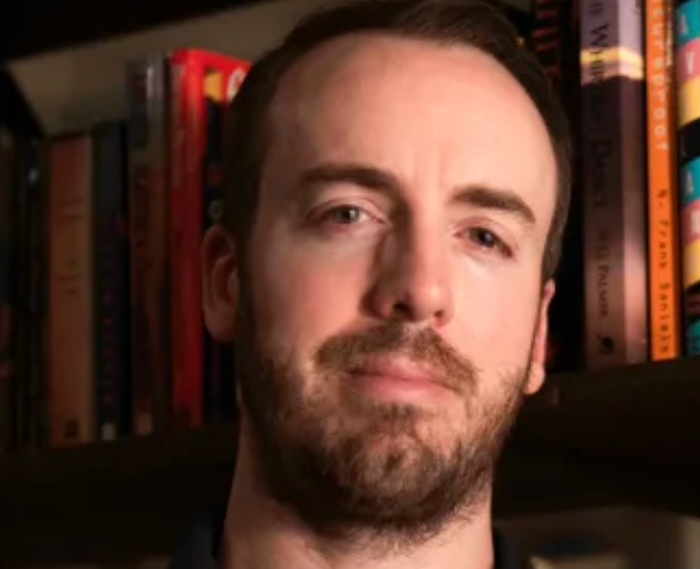
My conversation with the 2012 Black List writer.
Will Simmons made a splash when he wrote the 2012 Black List script “Murder City” which was subsequently acquired by Aldamisa Entertainment. Here is my interview with Will.
Scott Myers: How did you find out there were actual people who wrote these things called ‘screenplays’?
Will Simmons: I suppose the Academy Awards telecasts were my first exposure to the discipline of screenwriting and the notion of a division between writers and directors. Before that, I’d always assumed that one person was the driving creative force behind every movie, which is often the case, but the Oscars helped to demystify the collaborative process of filmmaking. When I was a kid, I found it infuriating that a movie could win best screenplay but lose best picture. To me, it was unfathomable that there could be such a disconnect between the written page and the finished frame. I guess to some extent that sparked a subconscious interest in the craft of storytelling.
I remember combing through Leonard Maltin’s review anthologies in search of hidden gems from bygone eras, and I spent countless hours at the local video store reading plot descriptions on VHS boxes. But more than anything I was drawn to movies that evoked an emotional response. My parents, who are avid movie buffs, fed me a balanced diet of formative cinema; everything from A Few Good Men and The English Patient to Jurassic Park and Star Wars.
Scott: Were there some other movies you remember being important to you as a youth?
Will: I remember feeling absolutely shellshocked after seeing The Usual Suspects. It’s a film that I continually revisit, and it’s probably the most influential theater-going experience of my adolescence. On a surface level, the narrative plays as an elegantly crafted magic trick, but the true brilliance of McQuarrie’s screenplay is the dynamism of its characters. He creates an emotional investment that not only justifies the film’s major plot twist but also enriches our understanding of every event that precedes it.
Beyond the fact that it’s a supremely entertaining film, The Usual Suspects is a masterclass in how to create redeemable anti-heroes and how to execute nonlinear structure. There’s a seamless quality to the time-shifts that never feels disorienting. You’re always comfortable that Verbal Kint has a firm grasp on his recollection of the past. He lulls you into a state of complacency, and that’s the beauty of it; the unreliable narrator is presented as an insecure pushover but in reality he’s a master manipulator.
For me, The Usual Suspects is part of a holy-trinity of seminal films that every screenwriter should study. The other two are Blade Runner and Chinatown.
Scott: There’s a similar atmospheric feel running through each of those three films, isn’t there?
Will: In my opinion, atmosphere is one of the most essential and least heralded aspects of filmmaking. It’s also the most difficult thing to capture on the page. I try to use settings to reflect and reinforce my characters’ moment-to-moment mindset. And with sparing restraint, I’ll use unfilmmables to evoke a specific mood or tone to help shape the reader’s experience. Recently, there’s been a bit of a paradigm shift, where executives seem more willing to accept novelistic flourishes in screenplays. You can expose a character’s psychology through description as long as it’s also emphasized in dialogue and action. Ultimately, this affords the writer more leeway to reveal intentions through subtext and organic conversation rather than writing something on-the-nose just for the sake of clarity.
Scott: What was the very first screenplay you wrote?
Will: When I was a teenager I wrote a few story documents that were intended as screenplays but truthfully they were just hot-messes. My first legitimate foray into screenwriting was this deranged, whodunit serial-killer thriller called “Ruse,” about the black market organ trade.
Scott: When was this?
Will: During my senior year of high school, I convinced the headmaster to let me pursue an independent study in screenwriting. I had an English professor who was supervising my progress, but essentially I was left to my own devices. Despite the library’s worth of screenwriting books I’d eventually read, the foundation of my writing skills was established through trial and error. You can study every structure-paradigm under the sun, from Field to McKee to Vogler, but in the end a writer is responsible for creating memorable moments. It’s a knack more than an analytical skillset. Sure, it’s useful to be versed in the rules of storytelling, but now more than ever audiences crave “the unfamiliar”. Taking risks is crucial. There’s a great quote by Robert Altman who said “To play it safe is not to play.” As a writer you have to operate from a place of vulnerability — pour your soul onto the page, soak it in blood and sweat, because in the end a screenplay is a reflection of you in written form.
Writing my first screenplay was a transformative experience, but at the time I was also extremely passionate about music, so I attended the University of Miami with the intention of studying jazz composition. But after a year, I returned to my dramatic roots and enrolled in the creative writing program. From a cultural standpoint, Miami was an amazing place to live as a fledgling writer. I’d grown up in Boston, so the South Florida melting-pot was an unfamiliar but welcome change of scenery. I drew inspiration from my surroundings, and I cut my teeth writing short stories, but soon thereafter I transitioned into film studies. Due to a bureaucratic technicality, I wasn’t able to officially enroll as a motion-pictures major, so instead I aggressively solicited the film professors to make exceptions so that I could attend their classes. The perseverance paid off, and I ended up directing two 16mm shorts in advanced production courses.
Scott: So you’re at the University of Miami, you get your degree. How did you wind your way to Hollywood?
Will: After graduating in 2007, I knew I wasn’t ready to move to LA. My chops as a writer weren’t sharp enough to survive the Hollywood meat grinder. I needed time to hone my craft, so I moved back to Boston and worked at an Italian restaurant delivering pizzas. The best part about living at home was that my expenses were minimal, so every cent I earned went toward my wagons-west-fund. I wanted to make the most of this interim period, so I dove headfirst into writing feature specs. I wrote nonstop. Most of the scripts never saw the light of day, but my skills evolved with each completed draft. I was finding my voice.
During this time, I also made five short films. It was startling how much my directorial endeavors informed my writing. Listening to actors breathe life into your dialogue is a humbling and instructional experience. You start to understand how conversations translate from the page to the set, and how to craft dialogue with a naturalistic ear, while still retaining the narrative thrust essential to story progression.
I’d strongly encourage every writer to make a few shorts. The film festival circuit is a great place to test your mettle as a storyteller, so if you can cobble together a budget, good for you, but if money’s in short supply, then just grab your iPhone and some local actors and create a piece of cinema. Shoot basic coverage and evaluate the strength of your writing from a production standpoint. There’s really no excuse not to do it. The availability of cheap and intuitive editing software means that anyone can make a movie.
Scott: How did you get your first writing gig in LA?
Will: Moving to LA is a monumental step in itself. And while I don’t think the success of any writer is necessarily predicated on their physical presence in Hollywood, I do think it’s crucial for young and emerging writers to be available for meetings. This is an industry of relationships and trust. Executives aren’t just buying your scripts, they’re buying you, and everything you represent. Face to face interactions are a far more effective means of conveying your personal and professional qualifications than phone-conferences or Skype calls.
As for my first writing gig, it didn’t come right away. I ventured to Hollywood with a nest egg of cash and a recently completed short film, which was by far my most accomplished work to date. But I only knew one person in the industry — my good friend, Nicki Cortese who’s the current VP of Production at Akiva Goldsman’s production company, Weed Road.
She was an important early supporter of my work, and she believed in me enough to introduce me to several of her contacts, which snowballed into meetings with Brett Gursky, a fellow writer repped by Energy Entertainment, and Scott Carr, who at the time was a junior agent at UTA and is now a manager. They saw potential in my writing sample and introduced me to my manager, Brooklyn Weaver.
Brooklyn has been a fierce advocate for my work and an incredible collaborator. He’s someone who not only has preternatural intuition for creativity, but also goes above-and-beyond for his clients. I can’t overstate the importance of finding representatives who share your creative taste and are in sync with your long-term goals. Geoff Morley at UTA is also a pivotal voice of my corner. He’s been a staunch proponent of my writing, along with Jason Burns.
Scott: That speaks to the importance of A, writing a bunch of material, and B, nailing something that at least serves as a writing sample, conveys your voice, right?
Will: No question. A writer’s currency is a finished screenplay. And there’s no better way to master your craft than by buckling down and writing pages.
Scott: Let’s talk about “Murder City”. Here’s a description from the trades: “A crime thriller following an ex‑con who uses his former law enforcement connections to protect his wife and child when he becomes the hunter and target of a ruthless Detroit gangster.” What was your inspiration for writing this script?
Will: The inspiration came from a concept-riffing session with Brooklyn. We tossed around a few basic ideas about tone, characters and a rudimentary story arc, and then I immersed myself in research for the next four weeks. Admittedly, I’m a bit of a research junkie. Authenticity is such a crucial component of storytelling, especially when you’re writing in the world of law enforcement and organized crime. If you haven’t done your homework, the writing will come across as disingenuous and false.
“Murder City” was born from the plight of its protagonist. It all started with that character, and his fall from grace. The narrative events are a function of his destructive decisions, and for me that’s the most essential tenet of storytelling; make sure your character is driving the action, not the other way around.
Scott: There’s such a visceral sense of place in “Murder City,” a real gritty urban atmosphere, Detroit, a city in major decline. It’s almost as if you approached the place as a character. I was wondering how important it was for you to convey that sense of “world” in the script. How much research and what type of research to find that feel?
Will: I’ve always been fascinated by the “nature vs nurture” debate; are we a product of our environment or are we doomed or blessed despite our surroundings. Detroit’s reputation as a rough-and-tumble city made it an ideal location to search for truth. It’s a city of such immense beauty, even in the rundown neighborhoods with abandoned factories and warehouses. There’s something tragically romantic about the urban decay. All of these buildings were once thriving places of commerce and now they’ve been left to rot. Standing inside them, you can feel an almost spectral sense of energy. I wanted to infuse “Murder City” with that essence, where the city’s burden was shared by all of the characters. They’re victims of their environment, and they’re forced to make a choice between embracing the ingrained culture of crime or breaking the cycle and facing the consequences.
Scott: There is a sense in the script there are these ghosts in individual people’s lives, particularly, the protagonist, Neil. He’s got this whole back‑story and a series of connections where there’s stuff that’s gone on in the past that’s definitely still playing out and lingering, and overshadowing him.
Also, too, I’m wondering whether that void that exists in Detroit, where all these things have gone on, it’s like the crime element has filled that void, so there’s a double way in which that kind of emptiness, the ghost part of it and the void part of it comes across in the script.
Will: The shadows of the past weigh heavily on the characters.
Scott: Yeah, precisely. That whole idea of shadow, you’ve got that in the script itself. There’s a prologue that establishes some key dynamics that occur basically two years before the present in the life of the protagonist, Neil. But then you did something interesting. The story takes place in a compressed time frame, it’s basically just a couple of days after the prologue.
Was that a decision on your part to write a story with that narrative construct? If so, what are some of the advantages you found in working with a compressed‑time frame story?
Will: Most crime films fall into one of two categories; they’re either epic “Godfather”-esque sagas where we’re observing an ascendancy and an entire lineage of crime, or you can focus on a condensed, climactic time-frame where stakes are heightened and lives are radically altered in a matter of days or hours. Most contemporary crime films fall in the latter category, primarily because television has become a more suitable medium for long form or generational storytelling.
The compressed narrative was a natural fit for “Murder City”. Urgency mixed with desperation is a recipe for earned and effective character transformation. I wanted to put my protagonist under as much pressure as possible to test the limits of his resolve, and see if he would rise to the occasion or crumble under the stress.
Scott: You’ve got this small story in terms of time and physical space, or this small slice of urban world, but you’ve got this larger complex web of connections. You’ve got Neil and his father, Graham, with whom he has a troubled relationship. You’ve got Neil and his wife Molly, and they have a problematic relationship. You’ve got Neil and his adolescent child, Trev. Neil and the relationship with his former cop partner Laz. Then there’s this nemesis Bishop, and a whole host of secondary characters.
How did those characters come to life for you?
Will: The process of creating three dimensional characters starts in the outlining phase. I write exhaustive character biographies and fictional histories, so when I’m in the trenches of my draft I have a wealth of material to draw from.
In terms of the specifics for birthing original characters, I think you have to operate from the mindset of a chameleon. You have to be willing to disengage from your own personality and align your voice with someone else’s. And this especially applies to writing villainous characters, because if you cast judgment on them, then they immediately become caricatures.
As for the ensemble chemistry in “Murder City”, I wanted to explore every perspective and faction in the criminal underworld. We have all of these disparate personalities set on a collision course that doesn’t feel contrived or pre-ordained, but instead retains a natural consistency and progression given the context of the world our characters inhabit.
Scott: Initially you get all these different characters, each with their distinctive worldviews and experiences. Yet, from a writing standpoint, that must have been quite challenging, because you have to deal with every single one of those subplots.
Will: The challenge is lessened by meticulous and extensive preparation. I know everyone has their own process, but for me, pre-production is essential for effective storytelling. Characters and plot dynamics can evolve throughout the draft, but you need to have control over your narrative before you begin scripting. No architect would ever construct a building without a blueprint. The same goes for screenwriting. I always start with paper notebooks because I like to physically connect with the page. I go through a stream-of-consciousness phase where I’ll fill up these notebooks with a hodgepodge of ideas from disconnected portions of the story, and then I’ll transcribe and rearrange my notes into a Scrivener document. By going through this process, I’m able to track each character and ensure that their arcs are properly developed and integrated into the narrative.
Scott: Bishop, the nemesis, is a really interesting guy. He plays all of the angles. He’s kind of a lowlife Moriarty in a way in this crime world.
Will: I love that.
Scott: Even the name, Bishop, the religious connotation, hierarchical. He’s like a man of high authority only in a way that his congregation is definitely comprised of sinners. I was wondering how did you go about developing this really interesting bad guy?
Will: Bishop is first and foremost an expert manipulator. He’s a man with an uncanny knack for imposing his will on others. I wanted him to have a larger-than-life reputation, a folklore presence, fostering a sense of unpredictability in his actions. That said, he ascribes to a very specific code of ethics, which have kept him alive and atop his throne. Because he abides by this set of rules, he’s managed to stay out of the law’s crosshairs, and he continues to grow his business to the detriment of those in his debt. He’s the reaper of Detroit’s misfortune.
Scott: You’ve got him, the bad guy, obviously, but even your protagonist, Neil, is a deeply flawed character. In the beginning, the prologue, he’s a cop who’s not above shaking down drug dealers for a little extra cash. Later on, he has an opportunity with Bishop to do something to clear some old debts from his father and also set himself up. He commits a really gruesome crime.
How important was it for you to work with, I guess you could call it, metaphorically from a theological standpoint, a sinful saint in the way of a Protagonist? Were you worried about the conventional wisdom in Hollywood, about always creating a “sympathetic protagonist?”
Will: Much like Bishop, Neil operates in accordance with his own code of justice. He’d rather rough-up a drug dealer to teach him a lesson than bust him. Neil’s acutely aware that system is broken, and he’s accepted that living by the rigid letter of the law isn’t the same as serving justice.
I’ve always been drawn to deeply flawed anti-heroes, mostly because they tend to be more dynamic characters than your generic brand of cookie-cutter protagonists. Tortured souls make for more believable heroes, in my opinion. I’ve found that externalizing a character’s inner demons is an effective method for creating memorable redemptive storylines.
Scott: Let me read some dialogue that Neil has that really gets at the core of his world‑view. Neil says, “I watched the law gun down my brother yesterday. There are no sides. That badge on your chest is just scrap metal. You’re no different from me or the guys you put in cuffs. And all that bullshit they teach you about cleaning up the streets, serving justice; it’s just white noise fuckin’ with your head, keeping you blind while your bosses fleece the nobodies. In the end, it’s you against everyone else, and that’s the only thing that matters. ’Cause no one gives a shit if your guts are spilled in the street, as long as they don’t have clean up the mess.”
What’s your reaction when you hear that dialogue?
Will: That perfectly encompasses Neil’s philosophy. As the story progresses, he comes to the realization that the futility of law enforcement is enabling this culture of violence, and the only way to break the cycle is to stay true to his own personal credo.
Scott: Neil goes through this series of events, particularly toward the end that are generally a deconstruction, even physically. Is that a way, thinking either thematically or symbolically, for him to pay for his sins?
Will: It all stems from the sins of his father. Neil is under the burden of his old man’s debt, and his only path to a clean slate is through Bishop’s absolution. The trials and tribulations of Neil’s journey are riddled with moments of brutality. Those gruesome scenes serve to emphasize Neil’s moral unraveling and the toll it takes on his physical health.
Scott: The screenwriter Jeffrey Boam, who wrote Lethal Weapon 2, Lethal Weapon 3, Indiana Jones and the Last Crusade, here’s a quote from him. He said, “Critics have said that Lethal Weapon is brainless, but that’s not the point. I try to bypass the brain and go right to the senses. I want emotion reaction, no intellectual engagement. An audience wants to be wound up because it enjoys the ‘pop’ at the end, when it’s liberated. People go to movies because they have a deep‑rooted need to see a heroic figure go through physical torture, and come out victorious.” I was reminded of that when I was reading Neil’s journey in “Murder City.”
First of all, do you agree with that? If you do, why do you think that is, that audiences resonate with that type of narrative spark?
Will: If the hero’s life isn’t at risk, physically or emotionally, then the value of his or her heroism is drastically reduced. There needs to be a legitimate threat that he or she might die throughout the course of the story. Without that, everything becomes predictable. This fast-food style of storytelling is bad for movies. Catharsis comes in many forms and we don’t need a manufactured or formulaic third act for the conclusion to feel satisfying.
I look at a film like District 9 where the protagonist experiences a physical death of sorts, but while the final frame is somber and heartbreaking, there’s a visceral sense of hope. I wish more movies would embrace bold and unconventional endings. Audiences crave surprises, and the best way to keep them off balance is by opening the door to the possibility that the protagonist might perish. As soon as you take that away, the audience disengages. The ending becomes a foregone conclusion, and now we’re just going through the motions storytelling. It’s too mechanical. There needs to be spontaneity.
Scott: No knock on any of the superhero movies because they’re obviously super successful, but if you go in knowing that this is Iron Man 2 or 3 out of a series of four, five, or six. Knowing that they’re not going to die, or, if they do die, that they’re going to have a way to come back to life somehow. There’s a whole experience of violence that’s different than what you have going on with “Murder City,” where it is a very real possibility that the protagonist could die. Wouldn’t that somehow inform the way that the audience member experiences the violence?
Will: It certainly enhances the realism. Superhero films can transcend the genre as long as you cultivate an atmosphere of unpredictability. Chris Nolan basically wrote the playbook for making contemporary superhero movies, but even so, the genre is burdened by the safety-net of having franchise characters who are too valuable to kill off.
In “Murder City”, I wanted to avoid any semblance of cartoonish or exploitative violence. Bloodshed is a narrative tool that needs to be treated with the utmost respect.
Scott: So last December, “Murder City” makes The Black List. What was that like?
Will: That was an amazing moment for me. It was validation of years of quiet and steady work. As with any screenplay, you always want to make a lasting impression on the reader, and I was honored that so many of the voters were affected by “Murder City”.
It’s impressive how the Black List and your GITS blog have opened doors for emerging writers. You and Franklin are advocating for underdog scribes in a way that no one has before. It’s exciting to see all of these fresh voices finding the exposure they deserve.
Scott: Then, in March, the script got set up. How did that deal go down?
Will: We’d flirted with a few buyers but eventually sold “Murder City” to Aldamisa Entertainment. Their head of development, Michael Kupisk, read the script and sparked to it. His passion for the project is unparalleled, and he has an intuitive understanding of the story’s thematic layers. His vision for the movie is in tune with mine, and I’m thrilled to be working with him and the entire team at Aldamisa.
Scott: Let’s talk about the two other projects you’re involved in. “Romeo,” a modern day re‑imaging of Shakespeare’s classic play, where Romeo is an undercover DEA agent infiltrating a Miami crime syndicate controlled by Juliette’s father. You’re also a co‑producer on that. How did happen and what’s the status?
Will: We sold that project as well, and recently attached a director, but we’re still waiting to make a formal announcement, so I shouldn’t talk too much about it yet.
As for the genesis of “Romeo”, it started with an idea Brooklyn had for an urban re-telling of Shakespeare’s play, and throughout the development process it evolved into an original story that’s more of an homage to the source material than a contemporized adaptation.
Scott: Did you write that on spec?
Will: Yes.
Scott: Then just this month, a preemptive pitch deal. Warner Brothers acquired a sci‑fi thriller that you pulled together, “Defenders,” based on an upcoming novel by Hugo Award‑winning author Will McIntosh. How did that happen?
Will: “Defenders” started out as a short story, which was given to me by Donald De Line and his vice president, Jacob Robinson, during a general meeting. Out of dozens upon dozens of short stories, graphic novels and articles I’d read over the course of several months, “Defenders” was the first one with a “why hasn’t this been done before”-factor. The premise is so utterly fresh and cinematic, coupled with a thematic richness that’s increasingly rare in mainstream sci-fi cinema. At its core, the story is about defining “humanity” and all of its permutations, but it’s set against a highly-commercial backdrop of an alien invasion and robot uprising. I’d encourage everyone to seek out the short story by Will McIntosh, which is available online.
After reading the source material, I extensively developed my pitch with Donald and Jacob, who have been a dream to work with. Once we were satisfied with the status of my outline, we took the pitch to Warner Brothers, where we paired-up with a fantastic team of executives, Niija Kuykendall and Chantal Nong, who believe wholeheartedly in our vision for the film.
Scott: So you’re living the dream, right?
Will: You know, people ask me that quite often, and while I’m extremely grateful for the successes I’ve had, I’m never satisfied. Complacency is the death of creativity. Maybe I’ll celebrate when the movie is greenlit, knock on wood, but at the moment I’m focused on writing a bulletproof draft.
Scott: Let’s jump into some craft questions. How do you come up with story ideas?
Will: Story ideas usually begin with a burning question or a visual motif. If you’re about to spend months writing and developing a script, you want to be certain that the central concept is worthy of your time. So I look for ideas that haunt me and keep me up at night. If you can find a question that gnaws at your creative subconscious and refuses to fade away, then you’re primed to write a story from a position of strength.
This is a profession of obsessions. As writers, we’re stalkers of the written word, always hunting for the perfect combination of ideas and phrases to express images flickering in our mind’s eye. After I’ve settled on an idea, I use a methodical approach during the initial stages of development. I try to be a ruthless and objective evaluator of my own writing, which probably stems from my work as a film editor.
Scott: You worked as a film editor in LA?
Will: Yeah, when I first moved to LA, I earned my rent money working as a freelance film editor; cutting short films, music videos, commercials. The process of cataloguing hours of footage and then selecting the best takes is grueling but also quite informative. You search for moments of honesty and truth, and from a writer’s perspective you can deconstruct the mechanics of each moment to find the origin point on a basic story level.
Scott: Do you consciously think that you bring your editorial capabilities to your screenwriting?
Will: Definitely. Transitions between scenes are absolutely essential to a script’s pacing. There should be a rhythmic quality to the writing, where each scene follows an intentionally composed cadence, and then flows or smashes into the next scene with purpose. Once again, it’s about exerting control over the narrative, and allowing readers to lose themselves in the story and engage on an emotional level. Without cohesion, you run the risk of writing a script that comes across as a divergent collection of vignettes.
Scott: How important do you think the story concept is to the overall strength and commercial viability of a screenplay, specifically a spec script?
Will: It’s more important than ever, especially in this current culture of mass entertainment consumption across multiple platforms. For feature films, you have to find a balance between commercial viability and creative integrity. Unfortunately, marketability usually trumps creativity. The rate of change is startlingly fast. Production models and story formats that worked a decade ago are antiquated today. If you can’t accurately express your concept in 30–60 seconds, then you need to go back to the drawing board. Or you can cater your story for television, where narratives are afforded a chance to develop at a more normalized pace. Exceptional writing will always find a home, but it’s important to understand which entertainment medium best suits your story.
Scott: Let’s talk about prep writing. You already referenced it a couple times. What do you do and how do you approach research?
Will: I try to become an expert on whatever subject I’m writing about. It’s a fun part of the process. I’ll consume everything from biographies and memoirs to archival news clipping and documentaries. It’s about mastering a field of study, so that you can write with confidence and verisimilitude. After you’ve thoroughly researched a topic, the writing becomes second nature.
I also use visual and auditory stimulation to shape my writing process for individual scenes; whether it’s colored light bulbs to set a specific mood, or a music playlist to establish the right tone.
Scott: “Murder City” has some terrific dialogue. You talked about it a bit, about how to do that. I’d like to see if you can dig down a little bit more. How do you go about finding your characters voices and how can a writer develop their ability to write dialogue?
Will: Dialogue is an enigmatic part of the craft. As strange as this sounds, I think the best way to approach dialogue is by embracing your alter egos. On a fundamental level, screenwriting is about devising provocative questions and answering them on your own. So you need to be able to hold a conversation with yourself. You need to empathize with characters whose perspectives are drastically different than your own, and then you need to channel their voices through your mind.
Scott: How about theme? How important is it? Do you start with themes, or do they emerge in the context of developing and writing story?
Will: Theme is the nucleus for every screenplay. Each scene should be an exploration of the thematic undercurrent. A poignant theme will lend itself to a variety of interpretations, which the characters can embody and externalize. It should grow in complexity as the story progresses and characters struggle to survive the journey.
Scott: When you write a scene, do you have any specific goals in mind?
Will: Scenes are mini-movies. They should push the narrative forward, but also retain an intrinsic entertainment value when isolated from the whole. In referencing a piece of cinema, we usually think of a specific scene that defined the movie; whether it’s the Deer Hunter roulette scene, or the Normandy invasion in Saving Private Ryan, or Travis Bickle talking to himself in a mirror, you want to incorporate special moments that are singular to your screenplay and your vision. Well-crafted scenes are always structurally sound, but also leave room for spontaneity. At some point, you have to abandon the tried and true conventions of cinema and forge your own path. That said, I never write anything unless I’m confident that what’s on the page is worthy of the final draft.
Scott: That speaks to coming from a perspective of someone who does a lot of prep writing, right?
Will: Indeed. Most of the creative exploration is done during my outlining phase, so when I’m writing a draft, the narrative events and subtexts are already firmly established in my mind.
Scott: What’s your single best excuse not to write?
Will: I have sort of an old-school, blue-collar mentality when it comes to work ethic, so instead of making excuses I just write nonstop. There are million reasons to procrastinate, but none of them are worth indulging. We all encounter moments of doubt and indecision, but to every problem there’s a solution. Sometimes you just have to work harder to find them.
Scott: Let’s approach it from the other angle. What do you love most about writing?
Will: The surprises. I love those moments when you’re in the middle of scene and you’re struck by this eureka idea that elevates the story to unexpected heights. Writers are dreamers; we want to see our words translated into images. So when you can take off the writer’s hat and find excitement in your story from a pure audience perspective, you know you’re on the right track. The endgame is to create emotional resonance with the viewer through the expression of visual ideas. Enthusiasm and optimism are key ingredients during the writing process. Your passion will always be apparent in the finished product.
Scott: Finally, what advice can you offer to aspiring screenwriters about learning the craft and breaking into Hollywood?
Will: Be prepared to sacrifice. For the most part, writing is a solitary endeavor, and you have to embrace the long hours and lonely nights. If you want to devote yourself fully to the craft, it’s often prudent to isolate from friends and family for extended periods of time. Some people will support your professional ambition, others will resent you and fall by the wayside. This isn’t a job for the timid or easily-deterred. Perseverance is the only path to success. You build a reputation on consistently delivering scripts of the highest quality.
My other major piece of advice is to take risks. Your writing should be personal and dangerous. Reveal yourself on the page. Don’t hold back.
For my interviews with dozens of other Black List writers, go here.