How They Write A Script: Ernest Lehman (Part 1)
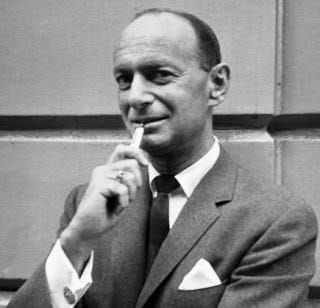
Ernest Lehman was one of the most critically lauded and commercially successful screenwriters in Hollywood. In a writing career that spanned three decades, Lehman wrote many notable movies including Sabrina (1954), The King and I (1956), North by Northwest (1959), West Side Story (1961), The Sound of Music (1965), and Who’s Afraid of Virginia Woolf? (1966). Lehman was nominated 4 times for the Best Writing Academy Award and was the recipient of a lifetime achievement award in 2001. Lehman died on July 2, 2005.
These excerpts, taken from “Conversations with the Great Moviemakers of Hollywood’s Golden Age,” edited by George Stevens, Jr., are divided into two parts. The first part today covers a broad range of subjects including Lehman’s history and approach to screenwriting. I thought Lehman’s comments re his work with Alfred Hitchcock on the movie North by Northwest deserved its own post, so Part Two will cover that tomorrow.
HOW HE BECAME A SCREENWRITER
“I was a short-story writer in New York. A couple of my novelettes, including Sweet Smell of Success, brought me to the attention of Paramount Pictures. Their New York office contacted my agent and asked if I was interested in writing for film. I was very interested, and Paramount brought me and my family out to California. I’ve been out here ever since.”
WHAT HIS SCREENWRITING PROCESS IS
“Usually I do some sort of outline for myself. Sometimes I write a long treatment before going into the screenplay. Quite often I take filing cards and I write out a scene on each one. I tack them up on a wall and step back and sort of look at the movie. I may notice that I’ve got twenty-four cards in act one and six cards in act two and fifteen in act three, and I realize that something is a little out of balance. Sometimes I take a card and say, ‘Wait a minute, this scene would be better over here.’ I just move the cards around. it’s a way of getting a visual look at a film when I don’t even have a film. It has always helped me to use these cards.”
HOW DOES HE GO ABOUT ADAPTING A BOOK INTO A SCREENPLAY
“The first thing I do is put on the hat of a studio head or the head of a distribution company and say to myself, Is there something about this that might grab audiences? Motion pictures are an art form but also a business. Then the second thing that comes to mind is whether there is something about this that appeals to me as a writer? The third thing I think of is, Do I believe I have the ability to do this? Can I bring this one off? Do I have what it takes?
So I look for these things first of all, because many projects from prominent producers or producer-directors or heads of studios come into my hands. I read the material and think, What the hell do they wan to make that for? It doesn’t have a chance. Either it can’t be dramatized and they don’t know it because they’re not writers, or no one is going to see the movie. I don’t tell them that. I just say that it doesn’t seem to be right for me. But I’m always astonished at the decisions nonwriters make. Some of them don’t realize that the projects they have fallen in love with are probably unlickable.”
HOW HE SURVIVED WORKING WITH DEMANDING DIRECTORS
“The screenwriter winds up for the most part in an antagonistically cooperative or cooperatively antagonistic relationship with everyone he’s working with: the producer, the director — even the actors, if they’re intellectual types like Paul Newman or Burt Lancaster. Almost everyone unconsciously feels he knows as much about writing as a writer. It would be unthinkable for a writer to tell a director how to direct or a producer how to produce or an actor how to act or a cinematographer how to light a scene. But it is not at unthinkable for anyone to tell a writer how to write. It comes with the territory.
Now that is bound to produce problems, unless you have a superlatively integrated psyche so that you can take anything and always remember that it’s the picture that counts. But your ego, your sense of professionalism, comes into play, and you often notice a glaze coming into the eyes of the director and the producer when the script is finished. You get the subtle feeling that they would not weep if you got hit by a truck. I’m not exaggerating. Somehow the mere fact that the director didn’t write the picture — he’s only directing it — is very difficult for him to take, and some of them have never learned to take it… After you’ve struggled with the script, done some of the casting, and somehow it has been your picture, in comes the director. Once that picture starts shooting he’s the captain of the 747, and it’s pretty tough to move to the back of the plane and just sit there, particularly if you see things you don’t like in the dailies. Sometimes it gets to be an antagonistic relationship, to put it mildly.
The only way that a writer can have the upper hand is to write something that is so unfailingly, unarguably perfect that there’s just no way that anybody can take any objection to it. The problem is, who the hell knows where it’s that good, including the writer? It’s a very inexact science. Everybody has an opinion. My advice is to be smart enough or lucky enough in all these creative battles to lost the right battles.
You have to understand that people feel threatened by a writer. It’s very curious. He knows something that they don’t know. He knows how to write, and that’s a subtle, disturbing quality that he has. Some directors, without even knowing it, resent the writer in the same way that Bob Hope might resent the fact that he ain’t funny without twelve guys writing the jokes. The director knows that the script he is carrying around on the set every day was written by someone, and that’s just not something that all directors easily digest.”
ON ADAPTING MUSICALS
“I’ve adapted The King and I, The Sound of Music, West Side Story, Hello, Dolly! Usually I see the show three or four or five times and I begin to get ideas as I’m watching. I think, why the hell did they put that number there? I know it’s working, and this is a famous Broadway musical, but I wonder if they realized that it would have been so much more effective there! For example, “Gee, Officer Krupke,” in West Side Story. That’s a hilarious number. But on stage, “Gee, Officer Krupke” took place in the second act, after the rumble had happened. To me that was totally out of dramatic context.
Apparently it was perfectly all right for a Broadway audience to break into laughter at this funny number, even though the audience was supposed to be caught up in the terrible drama. But I don’t think it would have worked in a movie. It may be immodest of me to say so, but I think “Gee, Officer Krupke” fit perfectly where it was placed in the movie. The Jets were quite nervous, they were going to meet the Sharks in the candy store, and all it took was a policeman coming aloing and telling them to get off the street to get them into a bitter, defiant, funny number.
In The Sound of Music I did a lot of changing around of musical numbers. There, again, it seemed somehow inappropriate for the moter abbess to be singing ‘My Favorite things.” I felt how much more appropriate it was for Maria to try to pacify the children, who were frightened by the thunderstom, and to tell them what she does when she gets upset. She thinks about some other favorite things, and before you know it you’re into the number. Much more appropriate. But musical numbers are what you must get to, and they shape your work in that way.”
PART TWO — tomorrow. And some amazing revelations about working with Alfred Hitchcock on North by Northwest, the only original script Lehman ever wrote.
[Originally posted May 25, 2009]