Interview (Dan Fogelman and David E. Kelley)
Writer-producers of “This Is Us” and “Big Little Lies” in conversation.
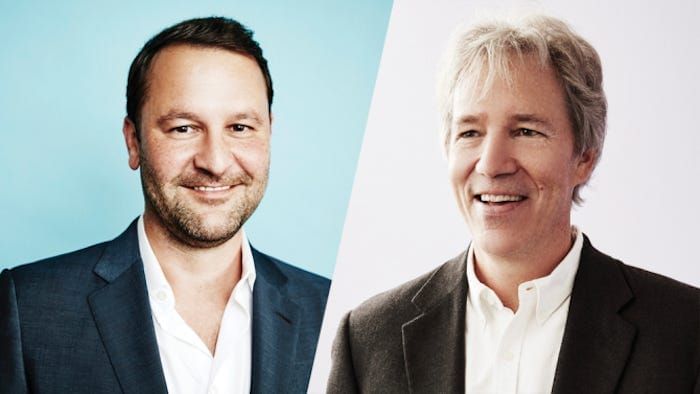
Writer-producers of “This Is Us” and “Big Little Lies” in conversation.
Variety sat down with two prominent writer-producers: David E. Kelley whose TV credits include L.A. Law, Picket Fences, Ally McBeal, The Practice, Boston Legal, and the HBO limited series Big Little Lies. Dan Fogelman’s credits include the movies Cars, Crazy, Stupid, Love., Danny Collins, and the TV series Galavant, Pitch, and NBC series This is Us.
Both of your shows involve lots of intricate plot twists. How do you tease those out over the course of the season? How do you strike that balance to keep viewers engaged over the course of the show?
Kelley: That was pretty easy because going back to the book, a lot of those twists and turns were there and laid out in an architecture that was easy to adapt. There were a few extra surprises that we added, but it has played out in writing, it’s evident, so it conveniently and
neatly worked out that there was a twist or unexpected zig in each episode. Usually it accomplished two things: it fueled the plot and the suspense of the story line, but also was a mechanism for exploring characters. I give great credit to Liane Moriarty who wrote the book because she gave me a pretty good blueprint.
Fogelman: Just because we’re going so fast — we’re going, I think, 13 episodes without a production break right now so we’re literally just shooting and writing as we go — it requires a real plan made ahead of time I think. We’ll have a line of dialogue in episode two that’s going to play in episode 15 that we’ll be shooting four months from now and we’re not able to get ahead of the script, so it requires at least a really big roadmap. The writers in our writers room are incredibly smart and the big part of their job is figuring out that roadmap in a really interesting way because we can’t figure it out on the page. We have to kind of know where we’re going. We start big picture, and I come in with what the shape is going to be, and then we hone that, and then we start writing and try to hold to our plan. It’s a bit of “If something adjusts in episode three and you love it, it means you might have to adjust those things in episodes nine, 12, and 16.” Time is just not your friend in network television sometimes and it should be.
We hear a lot about peak TV, with nearly 500 scripted series on the air. What do you think it takes for a show to stand out?
Kelley: I’m not sure any of us will really be able to answer that question. If you could reduce it to some kind of science, then every show would be a hit. My best guess is that we are guessing and taking our best guess every time we launch a show. For me, I try to gravitate towards material that excites me and just hope there’s a constituency out there to support it. But there’s no question the universe of television has expanded so much that it’s a greater burden. Twenty years ago, if you made a good television show, you had a good chance at success and you’d find it. Today, there are so many good television shows. There’s such great product out there and some of them don’t get discovered because there is so much product. It’s tougher. On the one hand, it’s great for the storyteller because there’s a need for product and with all these different networks and outlets and now streaming devices, there’s a need for good storytelling. As a writer you get excited by that. There’s different avenues to go down. But the daunting or the challenging part of it is, is it is a sea and it’s easy to get lost at sea. When you’re creating your monster or your beast you do have to be mindful that it’s got to be one that attracts attention to itself because you might not get noticed.
Fogelman: I think that’s exactly it. I’ve been getting asked a lot why is the show succeeding because it’s on network right now and how the metrics are measured. Honestly, I have no clue. I remember finishing the pilot and saying, “I think this might be really good. I think this might be one I’m incredibly proud of, and I think people might really like it,” but if you had asked me is the show going to become this thing that it’s become, who the hell knows? I’ve done ones that I thought were going to be ones like that and then they’re critically massacred and fail. I wish we always knew. I’m in the midst of finishing out a film right now that I think might be really special but I’m always prepared for the universe where the reaction is not at all what I expect or hope it’s going to be. I think at this point, there’s so much stuff out there — as David was saying — that you better have a really specific kind of vision for whatever it is you’re trying to say. That’s to even start with a fighting chance with all the material that’s out there. I think something that’s attempting to be a lot of things but doesn’t have a really specific voice or vision. There’s just too many things out there, so it’s just going to get lost. Who knows what’s going to work? But what’s not going to work probably is something that doesn’t have that specific thing to it — whatever that thing might be.
For the rest of the interview, go here.