Interview: Richard Linklater
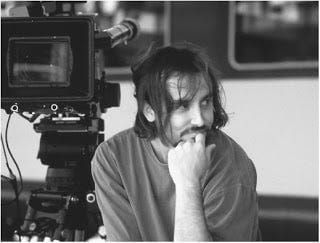
This is cool: Interview in a ‘time capsule’ with writer-director Richard Linklater as he was prepping Dazed and Confused (1993) for release.
Here is Part 1.
And here is Part 2.
Here are a few choice bits with interviewer Jon Lebkowsky:
(Linklater and I talked after “Dazed and Confused” had been wrapped and previewed. We were at Austin’s Flight Path, 51st and Duval, a laid back coffee house with 50s boheem ambience. I was drinking Latte, Rick was drinking IBC Root Beer.)
Rick: After the last big preview, which we had at Marina del Rey, the head of Universal called “Dazed and Confused” “the single most socially irresponsible movie in the history of Universal.” I thought, “Wow, that’s GREAT!” That’s a long history. That’s 77 years of movies, including “The Last Temptation of Christ,” and :”Do the Right Thing.” That was quite a compliment. We should have put that on the poster. You know, it’s amazing when you get anything done in a studio system. If you say anything you meant to say, that’s kind of an accomplishment.
—
JL: My perception, as an outsider, is that once you get into the studio system in Hollywood, they’ll try to lock you in.
RL: Yeah, it’s really subtle. I think they do it without even knowing…it’s not conscious on their part. There’s this system that’s in place in a very firm way. That’s why I live in Austin.
If you live in LA…there’s a lot of people there who talk about “living in the belly of the beast” and how the studio is evil, but they become a part of it, by definition. Like if CAA is your agency, and they’re packaging deals and putting you in (“You need to do this movie, careerwise.”) No thanks!
But I come back to Austin and all that shit just kinda like peels off. I was in L.A. for months finishing the movie, but I wasn’t doing anything in L.A. that I couldn’t have been doing in Austin. I wasn’t dealing with the studio, they never came to the editing room. I didn’t have meetings with them…it’s like I didn’t exist to them, which is good, actually. We were so small, and they didn’t have much faith in the film, or they didn’t think that much about it.
So I could have been doing it here, but I was there because that’s the way it’s set up. On the next movie, I’ll do everything here. Saves money, actually.
The whole system is a real mediocrity machine, it has nothing to do with ideas. I’m getting a lot of scripts, just because they know I’ve finished a film for the studio. They haven’t even SEEN the film, but they hear it’s good. Producers are sending me scripts everyone there is excited about, and I’ll read ’em and I can’t believe it. I think, “this is terrible!” But the whole movie system, the way it’s set up, is so many different things. It’s a huge business to some people, and to other people it’s still a means of making their own films. I’ve never shot a frame of film that wasn’t my own doing or worked for anybody else. I intend to keep that going.
It’s a great interview — and interesting to consider in light of the movies Linklater has directed since then. They include Before Sunrise (1995), SubUrbia (1996), The Newton Boys (1998), Waking Life (2001), The School of Rock (2003), Before Sunset (2004), Bad News Bears (2005), Fast Food Nation (2006), A Scanner Darkly (2006), and Me and Orson Welles (2008). He was involved in the writing of all those projects except The School of Rock, SubUrbia, and Bad News Bears. So it looks like he’s taken the route of directing the more ‘commercial’ movies, then writing and directing the more ‘indie’ type films.
What’s your favorite line from Dazed & Confused?