Profile: Akira Kurosawa (Part 2)
Trevor Hogg at FlickeringMyth.com has posted Part 2 of his profile on famed Japanese writer-director Akira Kurosawa. An excerpt:
“After the Pacific War, a great deal of noise began to be made about freedom of speech, and almost immediately abuses and loss of self-control ensued,” recollected acclaimed filmmaker Akira Kurosawa of life in Post-WWII Japan. “A certain kind of magazine took up flattering readers’ curiosity, provoking scandals with shamelessly vulgar articles.” The prevailing sensationalist mentality had to be addressed. “I felt that this new tendency had to be stamped out before it could spread,” remarked the director. “This was the impetus for Skyandaru (Scandal, 1950).”
A tabloid newspaper falsely reports that artist Ichiro Aoye (Toshiro Mifune) is having a love affair with a famous singer, Miyako Saijo (Yoshiko Yamaguchi); he sues the publication only to be betrayed by his lawyer Hiruta (Takashi Shimura). “While I was writing the script an entirely unexpected character began to take on more life than the main characters, and I ended up being led around by the nose by him,” revealed Kurosawa. “This fellow was the corrupt lawyer Hiruta (“Leech Field”). He goes to the defendants to sell out his client, the plaintiff, who is sincerely attempting to battle the gangsters in court.”
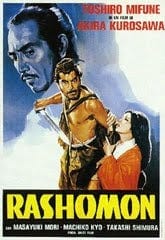
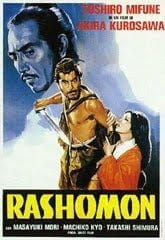
“Since the silent film gave way to the talkie, sound appears to have overshadowed image,” observed the Tokyo-native. “At the same time, the flood of sound has made sound itself meaningless. In motion pictures both image and sound must be treated with special care. In my view, a motion picture stands and falls on the effective combination of these two factors.” By combining two short stories Rashomon and Yabu no naka (In a Grove) about medieval Japan by countryman Ryunoske Akutagawa, Akira Kurosawa produced a picture that harkened back to the old days of cinema. “Rashomon [1950] would be my testing ground, the place where I could apply the ideas and desires growing out of my silent film research.”
“When I took this project to Daiei [movie studio], I told them the only sets I would need were the gate and the tribunal courtyard wall where all the survivors, participants, and witnesses of the rape and murder that form the story of the film are questioned. Everything else I promised them, would be shot on location.” Akira Kurosawa went on to say, “There were only eight characters, but the story was both complex and deep.” The director observed, “Human beings are unable to be honest with themselves about themselves. They cannot talk about themselves without embellishing. This script portrays such human beings — the kind who cannot survive without lies to make them feel they are better people than they really are.” Pressured to disclose whose account is the most accurate, the moviemaker slyly replied, “Probably the person closest to the truth was the woodcutter but he’s lying too.”
For more, hit the link above. Part 1, go here.