Profile: Francis Ford Coppola (Part 1)
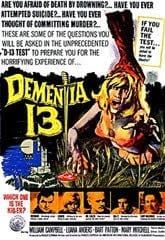
Our friend Trevor Hogg is back at FlickeringMyth with the first installment in a 5-part profile of Francis Ford Coppola. An excerpt:
“I used to have synchronized movies,” recalled filmmaker Francis Ford Coppola of his industrious childhood. “Most of them I cut together from home movies my family had shot.” Charging admission for the neighbourhood screenings, the cinematic venture proved to be a lucrative enterprise for the young Coppola. “When I was about eighteen, I became very interested in Eisenstein. I read all of his work and went to see his films at the Museum of Modern Art,” stated the Detroit, Michigan native. “Taking my example from him, I went to theatre school and worked very hard.” After directing a number of plays, Francis Ford Coppola was drawn back to moviemaking. “In my third year at Hofstra, I sold my car and bought a 16mm camera…I went out to make a short, which I never finished. It was a subjective piece about a woman who takes her children out for a day in the country and she shows them all of these beautiful things [After falling asleep in an orchard she awakens to discover that her children have vanished].” Earning his Bachelor of Arts degree, Coppola attended the film school at the University of California at Los Angeles.
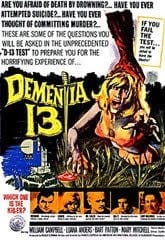
“While I was going to UCLA I became one of Roger Corman’s assistants. He’d called me when he wanted cheap labour. I was the dialogue director on the Tower of London [1962] and I was Roger’s sound man on The Young Racers [1963].” Francis Ford Coppola took advantage of the legendary B-movie producer’s shrewd inclination to get the most of his travel expenses by having his film crew make two pictures rather than one. “I talked Roger into putting up $20,000,” recalled Coppola who sought out other investors. “I met an English producer in Dublin and he heard we were making a movie — which we weren’t, really yet — and he was willing to buy the English rights… With the $20,000 he paid me and the $20,000 Roger put up, I was able to direct my first feature film — based on a script it had taken me three nights to write. I shot it with a nine man crew and some of the actors who were in The Young Racers. At the time, I was twenty-two and still a student at film school. Some people — including friends of mine — paid their own way to come over to Dublin and work on the film. That’s how I met my wife [Eleanor Neil served as the assistant art director]. Dementia 13 [1963] was meant to be an exploitative film. Psycho [1960] was a big hit; William Castle had just made Homicidal [1961], and Roger always makes pictures that are like other pictures. So it was meant to be a horror film with a lot of people getting killed with axes and so forth.” Reflecting on the movie which stars William Campbell (Blood Bath), Luana Anders (The Last Detail), Bart Patton (Gidget Goes Hawaiian), Mary Mitchel (A Swingin’ Summer), Patrick Magee (A Clockwork Orange) and Eithne Dunne (No Resting Place), the director mused, “I think it showed promise. It was imaginative…In many ways, it had some of the nicest visuals I’ve ever done. Mainly, because I composed every shot. In the present circumstances, you never have the time so you just leave it to others. Dementia 13 got very good reviews and I made money on it. In England, it was released as The Haunted and the Hunted.”
For more, go here.
I remember staying up late one night in college and seeing Dementia 13. Below is the entire movie online for free albeit with Spanish subtitles: