Profile: Hayao Miyazaki (Part 3)
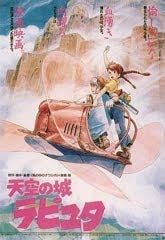
From our friend Trevor Hogg at FlickeringMyth.com, a profile on the legendary writer-director-animator Hayao Miyazaki. Today an excerpt from Part 3:
“At Studio Ghibli we currently conduct what we call “product study meetings,” where we select a scenario and all read it,” stated Japanese filmmaker Hayao Miyazaki in reference to the animation company he formed in 1985 with colleague Isao Takahata and producer Toshio Suzuki. “Anyone in the studio, regardless of job title, can participate, but they absolutely must read the scenario. Everyone can voice opinions on it at the meeting, taking into account three issues: if the scenario was made into the film, would the film be interesting, worth making, and possibly profitable?”
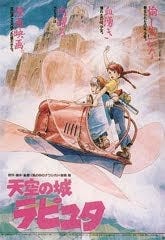
For the debut production of the fledgling animation studio, Hayao Miyazaki wrote in the original story proposal dated December 7, 1984 that, “If Nausicaä of the Valley of the Wind [1984] is a film for older audiences then Pazu is targeted mainly at elementary school-aged children. If Nausicaä of the Valley of the Wind was designed to be cool, clear, and vivid, then Pazu will aim to be a fun, intensely thrilling classic action film.” The project was rechristened, Tenkû no shiro Rapyuta (Laputa: Castle in the Sky, 1986) in honour of the “floating island in the sky, depicted in the third part of Gulliver’s Travels.” Summarizing the story which takes place around the time of steam engines, the animator stated, “A man [Muska] schemes to get hold of the levitation crystal, becomes the head of an empire in the sky, and thus lords it over the world. A girl [Sheeta], a descendent of ancient Laputa royalty, finds herself pursued by the man. And a boy [Pazu], an apprentice mechanic who dreams of becoming an inventor, becomes entangled in the struggle over the mysterious levitation crystal.”
To research the setting of the tale, an international scouting expedition was deemed necessary. “Isao Takahata said that if we were going to set the film in the days of the Industrial Revolution, we probably should go to England. We got all exited about the idea of going to see the coal mines in Wales and the apple blossoms in Sussex along the coast south of London, and we decided to actually go.” The trip occurred while Britain was engaged in an infamous mining strike under the reign of Prime Minister Margaret Thatcher. “In the film there is a somewhat forced scene showing Pazu’s boss and Charles getting into a fight and involving the whole town, and I don’t think we would have included a scene like that if we hadn’t visited the area. I felt a real sense of solidarity with the mine workers!”
“I personally find airplanes cool and I love flying scenes. But despite Castle in the Sky being set in the sky, it really has few real flying scenes,” acknowledged Hayao Miyazaki who has himself a major supporter in John Lasseter, the Chief Creative Officer for Disney and Pixar. “In all of his films he gives us an incredible sense of scale,” admired Lasseter. “Castle in the Sky, especially, is a masterpiece in this way. Take another look at those flying ships. There is no question that they’re huge. And you can just tell that they weigh an enormous amount too. I mean, look at them, you can feel their weight. It’s not just perspective. It’s movement, it’s size, it’s weight.”
“I wanted to show the military as large-as-life as possible, because no matter what Pazu tried, there was no way he could ever have won against them,” said Hayao Miyazaki. “We had to draw them as solidly as possible. Even Dola and her gang could never have beaten the military head-on. Pirates don’t argue with the military, and besides, in this case our pirates only had flaptors. I don’t like the military, so I drew their nastier side.” As for the portrayal of robots in the picture, the animator observed, “Humans make machines the extension of their own hands, but at the same time we make something that will give us unlimited devotion. It’s too simplistic to consider them living beings, but I feel that we are making things that could be prototypes for living creatures.” Miyazaki added, “I think that honour and bravery are very important in the relations of people. But I’m sure that these qualities are not exclusive to human beings.”