Profile: Martin Scorcese (Part 3)
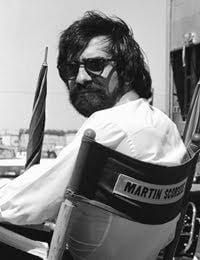
Our friend Trevor Hogg has another profile at Flickering Myth, this one on Martin Scorcese.
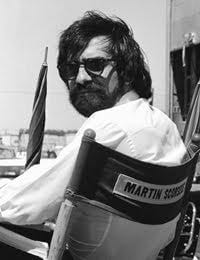
Noted as one of America’s most distinctive directors, Scorcese also has 14 film writing credits including Mean Streets, Goodfellas, and Age of Innocence. Here is an excerpt from Part 2 of the profile:
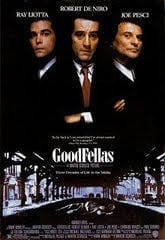
Returning to feature filmmaking, Scorsese helmed a project that proved he could make art and money. “I read a review of Wiseguy back when I was directing The Color of Money in Chicago, and it said something about this character, Henry Hill, having access to many different levels of organized crime because he was somewhat of an outsider,” remarked Martin Scorsese who hired the author of the book, Nicholas Pileggi, to co-write the screenplay about the rise and fall of three gangsters played by Ray Liotta (Narc), Robert De Niro (Once Upon a Time in America) and Joe Pesci (Home Alone). “I knew from the beginning that I wanted Ray Liotta to play Henry Hill. Mike Ovitz [his agent at the time] was helpful in protecting the work and working it out so that the studio and I each got what we wanted. We’re not talking about a blockbuster. We’re talking about something which, if handled properly, can make some money.” Scorsese could relate to the character played by Liotta. “Henry [Hill] says that as far back as he can remember he wanted to be a gangster. From the moment I enrolled in NYU film school, I knew I wanted to be a director. Within a year I was planning my first feature.” Because a television series and a movie by Brian De Palma (The Untouchables) shared the same name as the source material, the cinematic adaptation was renamed Goodfellas (1990). “I was more concerned with showing a lifestyle and using Henry Hill as basically a guide through it.” The filmmaker saw the film as an opportunity to utilize a different perspective. “I liked the everyday banality of it; daily life in the Mafia on the lower echelons as opposed to the bosses of the crime families.”
“I wanted Goodfellas to move as fast as a trailer,” stated Martin Scorsese. “I usually put notes on the sides of the script, how the camera should move. I wanted lots of movement and I wanted it throughout the whole picture.” The man behind the camera was mentally editing as he was filming. “The shots were designed so that I knew where the cuts were going to be.” Freeze frames were used for dramatic effect. “Images would stop; a point was being made in his [Hill’s] life.” Commenting on the lifestyle being portrayed on the big screen, Scorsese remarked, “I always quote Joe Pesci, who pointed out that wiseguys have a life cycle — or an enjoyment cycle — of maybe eight or ten years, before they either get killed or go to jail and start that long process of going in and out like a revolving door.” The famous restaurant scene where Pesci states, “What’s so funny about me?” to Ray Liotta was inspired by real life. “It’s based on something that happened to Joe. He got out of it the same way — by taking the chance and saying, ‘Oh, come on, knock it off.’ The gentleman threatening him was a friend, [but] a dangerous person.” Performing with Liotta, Pesci, and De Niro in the $25 million production are Lorraine Bracco (Radio Flyer), Paul Sorvino (The Cooler), Frank Sivero (The Wedding Singer), Tony Darrow (Small Time Crooks), and Catherine Scorsese.
For more of Part 3, go here.
For Part 1, go here.
For Part 2, go here.