Go Into The Story Interview (Part 6): Omar Al Dakheel and Elie El Choufany
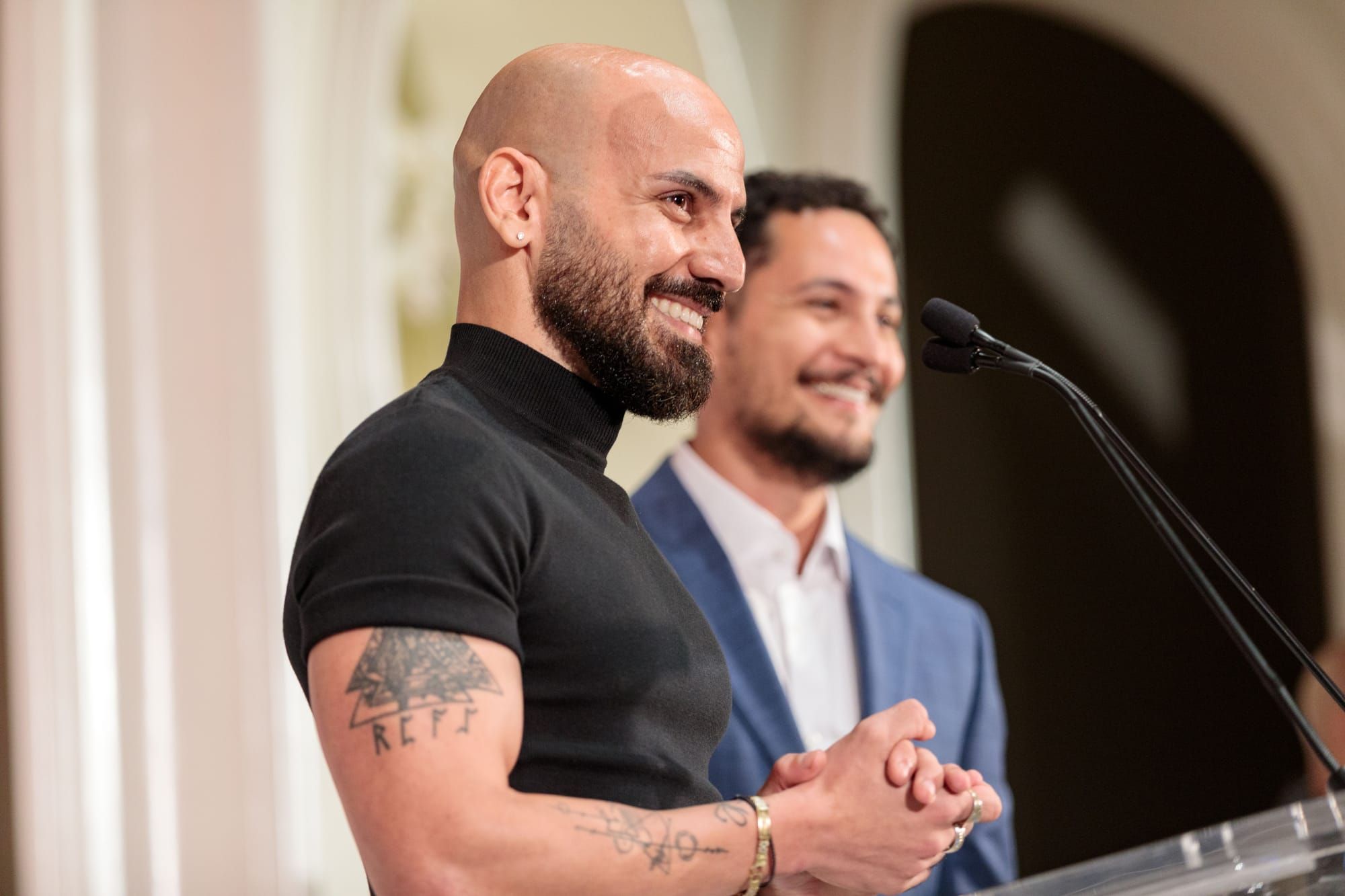
Omar Al Dakheel and Elie El Choufany wrote the original screenplay The Washroom which won a 2025-2026 Nicholl Fellowship in Screenwriting. I had an hour-long conversation with the pair exploring their creative backgrounds, analyzing their Nicholl-winning screenplay, and a discussion of key aspects of the screenwriting craft.
Today in Part 6, Elie and Omar answer some questions about their approach to the craft of screenwriting.
Scott: Let me ask a few craft questions starting with this: How do you come up with story ideas?
Omar: For me, ideas often come during late-night walks. Usually there are several things sitting in the back of my mind, and then something suddenly clicks. Elie is usually the friend I call and say, ‘Okay, I think I have something.’
I also come from a documentary background, so sometimes it starts with something real like a headline, an event, or person, that provokes a strong reaction in me. If something keeps bothering me or keeps me up at night, I try to follow that feeling and see what's underneath it. Usually there's a story there.
Elie: For me it always starts from my lived experience. I go to cinema wanting to understand something about myself or the world that I am struggling with. And I think the most compelling stories always hold contradictions in them. Oftentimes I look at what I'm struggling with and the two truths that I'm holding. Like for example, how can I love my family but also I can't be with, myself with them? How can I love other people but I don't love myself? And there are so many contradictions, and I think the most compelling stories always start from a character who is struggling with two truths that don't align. And I go from a character always. And I put some of my lived experience in there, not necessarily the actual experience but the emotional truth, right? Which is a great starting point because if I know what the emotional truth is, I know my theme, I know the end. And it's easier, for me it's easier to reverse engineer than it is to move chronologically.
Scott: In your script The Washroom, you’ve got a Nemesis character Arshad. You've got a Trickster character in Christopher. How do these characters end up in your script? Do they just bubble up naturally, or are you thinking "Oh, we need to have characters who provide this function"?
Elie: For me, supporting characters are almost always a reflection of the Protagonist and the journey that they’re going on, but it explores a different aspect of that journey.
That's how I can explore a theme fully. Because you know, like Noor, like Arshad, like Christopher, they're all trying to belong. They're all trying to find themselves. They're all trying to cement their identity. They're reflections, a different side of the coin. And to get the full picture you need to see both sides. So, all these supporting characters are reflections of Waleed and different aspects of the theme that make it rich and make it whole, otherwise it would be one-dimensional.
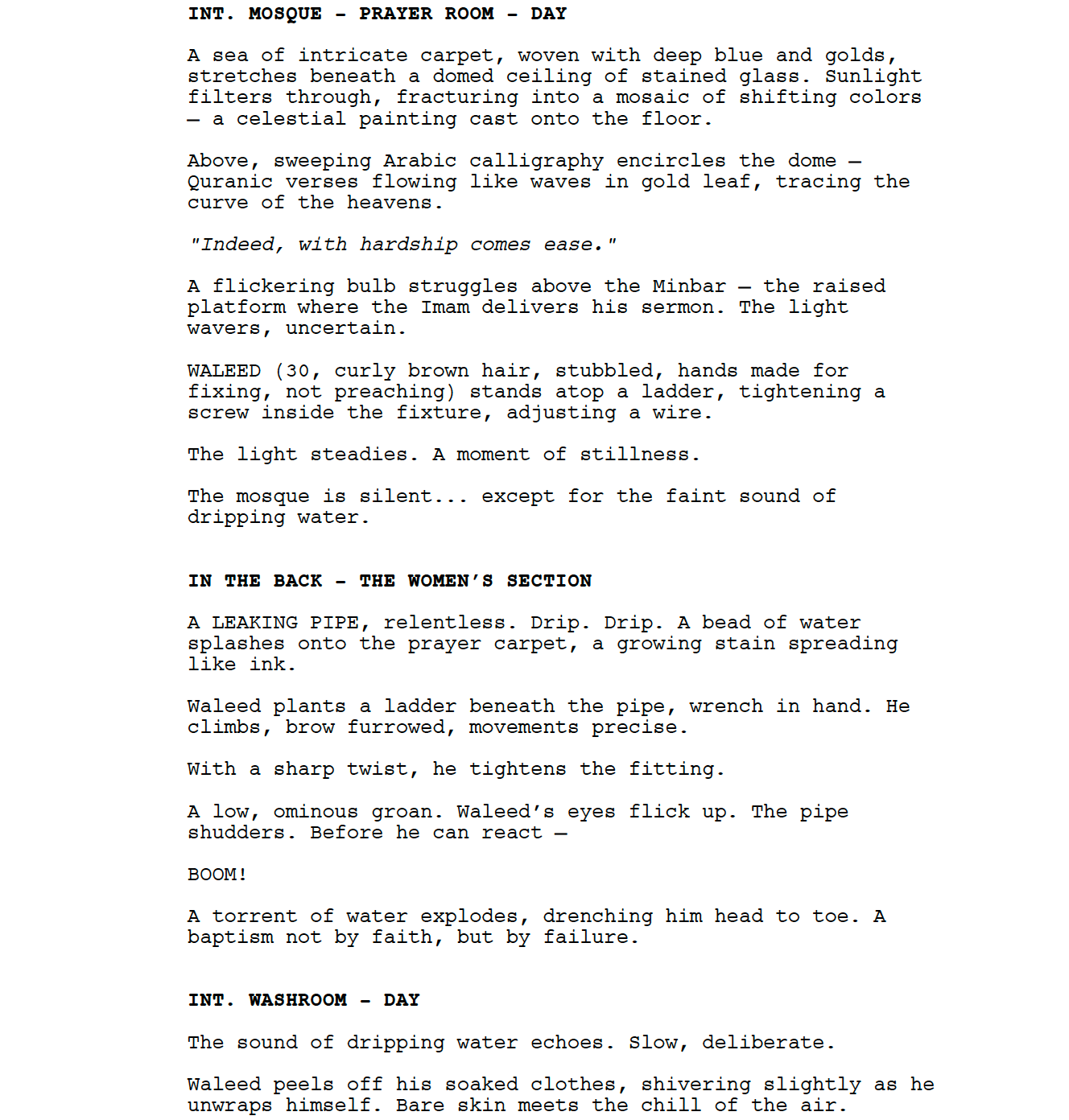
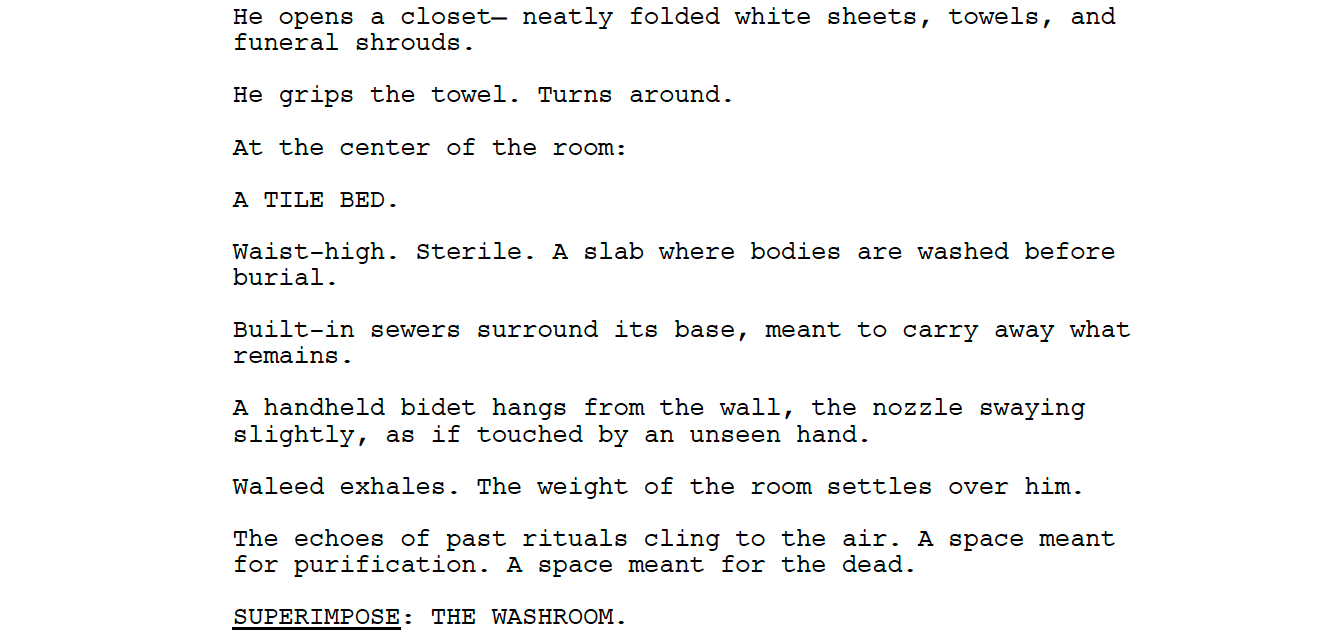
Scott: Let's talk about theme. This is one of those questions I ask, and a lot of writers say they don't think about it, themes just emerge. Then there are other writers who need to know the key themes of the story right up front. What about you, your thoughts about theme?
Omar: From the beginning, as soon as you're telling a story about people being denied the space to simply be, you're already talking about belonging. You can't tell Waleed's story —a gay Muslim man trying to remain within the community he loves—without confronting identity and the cost of being seen. So, I think it was very clear from the beginning what the theme is just by the world.
Elie: I would also say that a lot of our work almost always centers around identity and belonging and home.
Omar: Yeah.
Elie: It is second nature to always tell stories about identity, belonging, and home. It's actually the thing that drives us in a way because it's the thing that motivates a lot of our struggles in life.
Scott Myers: You think of The Wizard of Oz. That's what Dorothy's journey was about. She doesn't feel like she belongs in Kansas, and she has to go on this journey to come back to a place she now calls home. Does that feel like an apt comparison to The Washroom?
Omar: I love it. Put that in the interview. Belong, that word, like The Wizard of Oz, there's a belonging. What a great comparison. Thank you for mentioning that. That is such an honor that we're compared to a classic like that.
Scott: Okay, last question: What single piece of advice do you have for people who are trying to grow as writers and storytellers?
Omar: Don't overthink it. Just write. We put so much pressure on the first draft to be good, when its job is really just to exist. Write the scene you see. Write the idea down. Keep going. Eventually you have sixty or seventy scenes and you realize, ‘Oh, I have a movie.’ Then you can make it better.
The advice I'd give my younger self is to pay attention to what scares you. Pay attention to what provokes you. Don't worry too much about what the market wants or what you think might happen if you tell the story, because the market changes constantly and most of the consequences you're imagining probably won't happen the way you think they will.
Follow your heart and write the story that nobody else can tell.
Scott: Elie?
Elie: I was going to say, if you're afraid, you're in the right place. But what I would also say is, I'm a big fan of intuition and that gut feeling. I think we tend to over-intellectualize and overthink. What I've been learning is to listen to that gut feeling and trust my intuition, even if it feels like I am moving in the dark. I'm definitely going to discover something new. Follow your gut feeling, follow your intuition wherever that takes you. And hopefully it takes you to a, a scary place that, that's a double whammy.
For Part 1 of the interview, go here.
Part 2, here.
Part 3, here.
Part 4, here.
Part 5, here.
I have interviewed every Nicholl winner since 2012. You may read those interviews here: LINK.