Profile: Stephen Spielberg (Part 1)
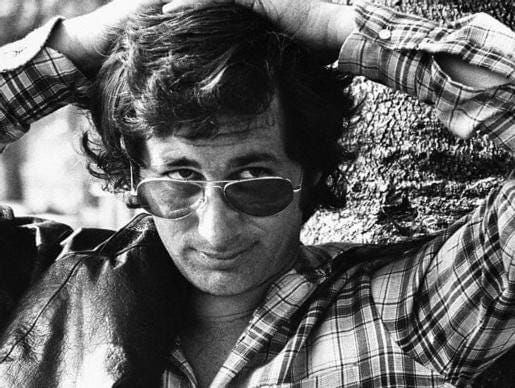
Our friend Trevor Hogg is back at FlickeringMyth with another profile, this one on Steven Spielberg. Here is an excerpt from Part 1:
Steven Spielberg“My childhood was bad and it was good. It was chaotic; it was noisy; it was real loud. I have a big family, with three younger sisters,” stated American filmmaker Steven Spielberg whose reserved father, Arnold, was an electrical engineer for General Electric and his doting mother, Leah, a former concert pianist. “My dad was of that World War II ethic. He brought home the bacon, and my mother cooked it, and we ate it. I went to my dad for things, but he was always analytical. I was more passionate in my approach to any question, and so we always clashed.” Leaving behind his hometown of Cincinnati, Ohio, the young boy found himself and his family being transplanted to New Jersey and then to Arizona. Certain rules had to be followed in the Spielberg household. “My parents rationed television and motion pictures. I could only see films in their presence and usually pictures that appealed more to them, which today you would call of the General Audience nature, like Danny Kaye [White Christmas] pictures, musicals like The Court Jester [1955] and Funny Face [1957] with Audrey Hepburn [Roman Holiday], and Disney films.”
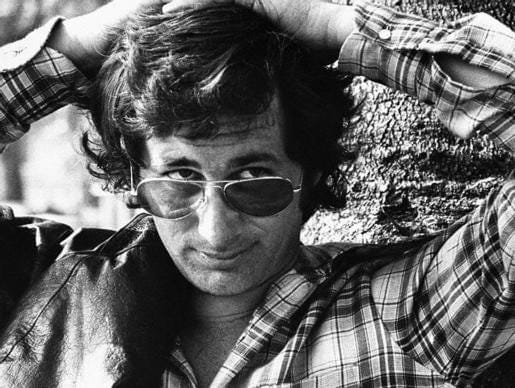
The desire to become a filmmaker came out of necessity for the legendary Hollywood director. “It developed because my father would take a lot of home movies on our camping trips. I had an outdoorsy family and we would spend three-day weekends on outings in sleeping bags in the middle of the wilderness up in the White Mountains of Arizona. My dad would take the camera along and film the trips and we’d sit down and watch the footage a week later. It would put me right to sleep.” To correct the situation Spielberg produced his first theatrical productions. “I began to actually stage the camping trips and later cut out the bad footage.” Spielberg’s interest in the cinematic craft accelerated when he took a novel approach to achieve a childhood goal. “I was a Boy Scout who wanted to get a merit badge in photography. The prerequisite was that you had to tell the story with still photos. Rather than shoot stills, I took my movie camera and made a little Western three minutes long, using friends of mine from the same Boy Scout troop. I cut the film in the camera [didn’t do any splicing when I got home] and showed it to the Boy Scouts a week later. Not only did I get my merit badge, but I got whoops and screams and applause and everything else that made me want to do it more and more.” Wanting to recapture the moment, the twelve year old was soon at work creating a follow-up to The Last Train Wreck (1957). “It influenced me enough to want to go off and make another Western, seven minutes long — using two rolls of film. It [The Last Gun, 1959] was a little more sophisticated.”
“I made a war film next called Fighter Squad [1961], because I was inspired by those 8mm Castle Film capsule documentaries of the Forties,” recalled Steven Spielberg whose cinematic ambitions fueled his ingenuity. “They were in black and white and they had great gun camera shots of tracer bullets flying out and Messerschmitts catching fire and plunging to earth and tanks and trains exploding. I’d buy seven or eight of those films and pull out all the exciting shots and write a movie around them.” The resourcefulness of the aspiring filmmaker did not end there. “I used young people in the neighbourhood, friends of mine from school. If I needed a shot of a young flyer pulling back on the stick of a P-51, we’d go out to the Skyharbor Airport in Phoenix and climb into a P-51[after our parents got us permission] and I’d shoot the close-up of the stick being pulled back. Then I’d cut to a piece of stock footage of the airplane going into a climb. Then I’d cut back to a close-up of a fourteen year old friend of mine grinning sadistically. Then another close-up of his thumb hitting the button. Then another stock shot of the gun mounts firing. I’d put the whole thing together that way.”
When it came to making a movie which people would want to see Steven Spielberg set about mastering the art of storytelling. “Most of my scripts were written on the backs of graded arithmetic papers, in loose-leaf notebooks, anywhere I could find something to write on. Most of the time I would write the scripts, commit them to memory and then tell people what to do. It wasn’t until much later that I would sit down at a typewriter, write a shooting script, make Xerox copies and hand them out. But it was one of the best lessons I ever learned. I learned to keep a film in my head, then dole out what was needed to be told to people who were performing and who were being the technicians.” Recognition for his flourishing cinematic talent was beginning to go beyond Spielberg’s residential neighbourhood with the release of his forty-minute war picture Escape to Nowhere (1961). “One of my films won first prize at an amateur film festival, the Canyon Film Festival in Arizona, and the prize was a 16mm camera…I was fifteen. But I knew I couldn’t afford 16mm processing…so I traded the camera in on a Bolex-H8 8mm movie camera. It was very fancy equipment at the time. At the same time, with a little help from my dad, I got a Bolex Sonerizer, which was the first piece of technology capable of recording sound directly onto 8mm film with a magnetic coating down the side. Now I was able to make pictures, send the cut footage to Eastman Kodak and have them put the magnetic stripe on and send it back to me. Then I would post-sync all the dialogue, sound effects and music in our living room.”
For the rest, go here.
Next week, Part 2 of this 5-part profile of Steven Spielberg.