Profile: Steven Spielberg (Part 3)
Our friend Trevor Hogg is back at FlickeringMyth with another profile, this one on Steven Spielberg. Here is an excerpt from Part 3:
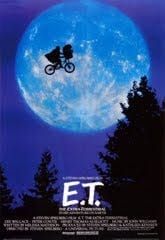
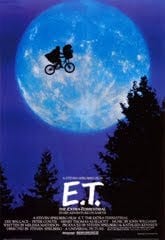
In the screenplay Night Skies drafted by American filmmaker John Sayles (Passion Fish), a violent space creature has the ability to kill with a touch of its boney finger. One of the alien visitors befriends a farm boy and gets accidentally left behind. When director Steven Spielberg decided to lighten the tone of the story, Sayles left the project and the writing responsibilities fell to Melissa Mathison (Kundun). The end result was E.T. The Extra-Terrestrial (1982) with the hostiles being the human scientists seeking to capture the benevolent title character that possesses an endearing child-like curiosity. Featuring a family with an absentee father, Spielberg has readily admitted that the tale provided him with the means to address an emotionally painful event from his teenage years. “My parents got divorced when I was fifteen. The whole thing about separation is something that runs very deep in anyone exposed to divorce, especially when you’re cognizant of what it means not to have a routine — no matter how stressful or antagonistic that routine may have been. The breaking up of the mother and father is extremely traumatic from four up. All of us are still suffering the repercussions of a divorce that had to happen.” The Ohio born native added, “E.T. is a film that was inside me for many years and could only come out after a lot of suburban psychodrama.”
“I wanted the opening of E.T. to be that Mother of the Night,” explained Steven Spielberg. “You come down over the trees, you see the stars, and suddenly you think you’re in space — wow, you’re not, you’re in a forest somewhere. You’re not quite sure where; you might be in a forest on some distant planet. It was Melissa’s idea to use the forest; at first, I thought of having the ship land in a vacant lot. But she said, ‘A forest is magical…there are elves in forests.’” The movie production costing $10.5 million starred an aninamatronic extra-terrestrial cast alongside child actor Henry Thomas, whom Spielberg discovered playing Sissy Spacek’s (Carrie) older son in Raggedy Man (1981). “I asked him to do an improvisation with Mike Fenton, the casting director. The improvisation was so heartfelt and honest I gave him the part right there. You can hear my voice on the videotape before we turned off the camera, saying, ‘You’ve got the job, kid.’ I was blown away by this nine year old…He’s a very controlled, methodical performer who measures what he does and feels what he does and yet broadcasts it in a totally subtle way.” The filmmaker had a tricky time handling his young performers which included his precocious goddaughter Drew Barrymore (Boys on the Side). “I think kids tend to look at adults as just melodramatic excuses for people,” reflected Spielberg. “A lot of kids look up to look down. And I found, even when I was giving Henry Thomas direction, that if I was out of touch with his reality, he would give me a look that seem to say, ‘Oh brother, he’s old.’”
Avoiding his normal tradition of constructing storyboards turned out to be an asset for the director. “Winging E.T. made it a very spontaneous, vital movie,” said Spielberg. “It was much better to start with the personalities and let the personalities suggest where the camera goes as opposed to setting the camera in cement and instructing the actor where to sit, stand, and move because that’s what the doodles suggested.” The technique helped to emphasize a critical cinematic storytelling element. “To me humanity always comes first. If there wasn’t any humanity, nobody would like my movies. I think that every movie that succeeds, succeeds on a humanistic level. You have to like the people of your story; it’s very important, and if you don’t like the people, no matter how technologically superior a film is, it’s just not going to succeed.”
Success soon followed as the picture grossed $717 million worldwide and was awarded Best Sound Effects Editing, Best Visual Effects, Best Original Score, Best Sound at the Oscars while contending for Best Picture, Best Cinematography, Best Director, Best Editing and Best Original Screenplay. The BAFTAs lauded E.T. The Extra-Terrestrial with Best Score as well as nominating it for Best Cinematography, Best Film, Best Director, Besting Editing, Best Makeup, Best Screenplay, Best Sound, Best Visual Effects and Most Outstanding Newcomer to Leading Film Roles (Henry Thomas and Drew Barrymore). The Golden Globes presented the movie with Best Picture — Drama and Best Original Score along with nominations for Best Director, Best Screenplay and New Star of the Year (Henry Thomas). The Writers Guild of America handed out the award for Best Original Screenplay to the science fiction tale while it also received nominations from the Directors Guild of American and the American Cinema Editors. The movie was a four-time winner at the Young Artists Awards for Best Family Feature — Animated, Musical or Fantasy, Best Young Motion Picture Actor (Henry Thomas), Best Young Supporting Actor in a Motion Picture (Robert MacNaughton), and Best Young Supporting Actress in a Motion Picture (Drew Barrymore).
“I think I am taken quite seriously as a director,” observed Spielberg. “I feel like I’ve already been accepted, with over forty nominations in technical and creative categories.” Questioned about E.T. The Extra-Terrestrial being overlooked at the Oscars by Ghandi (1982), the director answered, “I think people read too much into that. They think it was more of a blow than it was. Of course it means a lot, winning anything, being recognized for your work — anyone who denies that isn’t speaking from the heart. An Oscar would be wonderful, but for me, not the last goal.” In 1994, E.T. The Extra-Terrestrial was inducted into the National Film Registry and for its twentieth anniversary in 2002, an extended version with altered special effects was release; at the premiere of the new edition John Williams conducted a live performance of the score and the stars of the film appeared on stage.
For the rest, go here.
Go here for Part 1.
Go here for Part 2.