Profile: Walter Murch (Part 1)
Our friend Trevor Hogg is back at FlickeringMyth with another profile, this one on famed film editor and sound engineer Walter Murch. Attentive readers know that I am fascinated about the relationship of editing and screenwriting, and in particular Murch’s ideas, as evidenced by previous posts here and here. How we, as writers, ‘cut’ shots, scenes, and transitions in script form can be a critical component in how the narrative flows, pace, visuality, and so forth.
Here are some excerpts from the first part of the profile on Walter Murch:
After the sound for The Rain People had been mixed in San Francisco in May of 1969, Murch was given an assignment to adapt a short student film into a feature length version. “I worked with George on the screenplay of THX 1138 (1970). The basis of THX was a treatment that Matthew Robbins and I had written as students. George, who by his own definition was not a writer, needed a script for a class he was taking, and had asked us, ‘Aren’t you going to do that underground thing?’ When we said no, he took it, renamed it THX 1138, and made it much more wonderful than our two-page outline.”
With the script completed during the summer, George Lucas started the principal photography in September. “I began to record sound effects. George, after directing, also edited the film himself. We were working out of a little house in Mill Valley, where George and Marcia Lucas [Taxi Driver] lived. There were three of us doing post-production: George doing the editing, Marcia working as George’s assistant, and me doing the sound. I would arrive on motorcycle at nine o’clock, start working, and at the end of the day go back to the houseboat in Sausalito, where Aggie [Murch’s wife] and I and Walter [Murch’s son] were living.”
Major troubles ensued when the major studio hierarchy, responsible for funding the project, got to screen the movie. “When the executives at Warner Bros. saw the director’s cut of THX in June of 1970, they were so distraught they cancelled the development deal they had with Zoetrope. All of the projects that were slated — Apocalypse Now [1979], American Graffiti [1973], The Black Stallion [1979], The Conversation [1974] and others — were abandoned. Not only that, they demanded all the development money back. It was out of this crisis that Francis considered directing The Godfather [1972], as a way of making ends meet.” Released at the Cannes Film Festival in May of 1971, the science fiction tale THX 1138 starred a free-spirited Robert Duval [Tender Mercies] fleeing from an emotionalist society; the picture won over the hearts of the film critics but not of the general public.
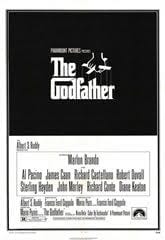
Though reluctant to direct The Godfather, the Italian gangster saga won the Academy Award for Best Picture and proved to be Francis Ford Coppola’s financial salvation. “The movie really set Zoetrope up as a professionally recognized production company,” stated Murch who worked on the sound for the film. “Initially it was exactly the kind of big Hollywood film he [Coppola] wanted to get away from. But as he worked on it, he saw that he could infiltrate it, make it resonate with his interests, include personal details about Italian-American life, and draw on his own style of filmmaking to turn it into a more European kind of American film.”
Based on the novel by Mario Puzo, the movie revolves around Michael Corleone (Al Pacino) who reluctantly takes over his father’s organized crime empire. Acknowledging that a number of the major scenes, such as the killing of Michael’s brother-in-law Carlo, are played without music, Walter Murch remarked, “When music makes an entrance in a film there’s the emotional equivalent of a cutaway. Music functions as an emulsifier that allows you to dissolve a certain emotion and take it in a certain direction. When there’s no music, the filmmakers are standing back saying simply, ‘Look at this.’ without appearing to comment.”
For the rest of the article, go here.
Next week, Part 2.