Profile: Walter Murch (Part 2)
Our friend Trevor Hogg is back at FlickeringMyth with another profile, this one on famed film editor and sound engineer Walter Murch. Attentive readers know that I am fascinated about the relationship of editing and screenwriting, and in particular Murch’s ideas, as evidenced by previous posts here and here. How we, as writers, ‘cut’ shots, scenes, and transitions in script form can be a critical component in how the narrative flows, pace, visuality, and so forth.
Here are some excerpts from the second part of the profile on Walter Murch:
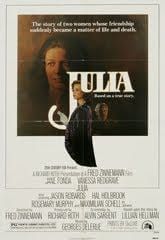
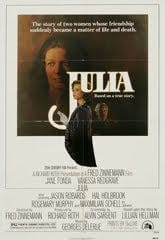
“I try to choose projects that dovetail my own interests,” remarked New York-native Walter Murch. “That’s a significant part of the process — where you are really casting yourself, in much the same way actors cast themselves for a role. In an ideal situation, such as Vanessa Redgrave in Julia, an actor chooses a part that represents an emotional truth to her as an individual, which pushes her somewhere she has not gone before.” Sharing the same name as his painter father, the sound designer established himself as a film editor with the 1977 picture about a young woman (Jane Fonda) who risks her life aiding her childhood friend (Redgrave) help the French Resistance by smuggling money during WWII. Still considered a rookie at the time, Murch was not the only newbie involved in the production as an up-and-coming actress was making her feature film debut — Meryl Streep (The French Lieutenant’s Woman).
“Matthew Robbins phoned me and told me that Fred [Zinnenmann] was asking who had edited The Conversation [1974],” stated Walter Murch, referring to the conspiracy thriller which saw him co-nominated for Best Sound at the 1975 Academy Awards. “I was out of work at the time, so I wrote a letter to him saying I’d heard he was making Julia, coincidentally I had just read Pentimento [the fictional memoir the movie is based upon], Lillian Hellman’s book, and I’d love to edit it if he would like to meet. So I flew to New York, in the spring of ’76, and we hit it off. He was shooting Julia in England and France, so for the first time I would be working outside the country on a studio project with people I didn’t know beforehand.”
Working with a filmmaker from a different age group was a pleasant change for Walter Murch, who saw it as “a great privilege for a young person, as I was then, to link up professionally with someone as talented and experienced as Zinnemann (From Here to Eternity).” Murch added, “Zinnemann’s nickname among the English crew on Julia was “The Iron Butterfly”; he was courtly and polite, but he had a strong idea of who was in charge and from whom the ideas should come. There was a particular struggle between him and Jane Fonda [Barefoot in the Park], who was used to more give-and-take between the director and the star. On the other hand, he had the documentary side to him, that wild element, and he did set things up so that a rawness would occasionally happen.”
Concerned about the prow of the camera barge entering into view on a particular shot, Walter Murch approached his director in regards to fixing the image; to his dismay Fred Zinnemann decided to leave the picture unaltered. “That was very characteristic of Fred’s approach,” admitted Murch of the mistake which went unnoticed by preview audiences, “but for the life of me I couldn’t see what advantage there was in having this thing come into frame.” Murch remembers fondly the three-time Academy Award winning moviemaker; their working relationship resulted in him receiving a co-Oscar nomination for Best Editing with Marcel Durham (The Odessa File). “We remained friends after Julia, seeing each other when I was in London or he was in Los Angeles…Although there were parts of him that were mysterious to me, I feel a special kinship with Fred. I do love control. And I do love randomness.”
Part 1 of the profile is here.