Profile: Walter Murch (Part 5)
Our friend Trevor Hogg is back at FlickeringMyth with another profile, this one on famed film editor and sound engineer Walter Murch. Attentive readers know that I am fascinated about the relationship of editing and screenwriting, and in particular Murch’s ideas, as evidenced by previous posts here and here. How we, as writers, ‘cut’ shots, scenes, and transitions in script form can be a critical component in how the narrative flows, pace, visuality, and so forth.
Here are some excerpts from the fifth and final part of the profile on Walter Murch:
On the matter of returning to the director’s chair, American filmmaker Walter Murch remarked, “I’ve thought about it and I tried for a number of years to get projects off the ground and just ran out of luck and went back to what I love, which is film editing.” Describing the criteria he uses to determine what will be his next assignment, Murch stated, “When I am considering a project, I read the script, take notes, type them up, and give them to the director. I would include both what I think is good about the script — what attracted me to it — and where I think there may be room for improvement.”
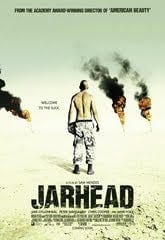
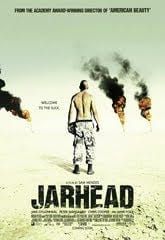
For Jarhead (2005), which is based on the 2003 Gulf War memoir by U.S. Marine Anthony Swofford, Walter Murch served as a film editor and re-recording mixer for British moviemaker Sam Mendes (American Beauty). “This was such a very different film from any Sam had shot before,” observed Murch. “He was shooting handheld multiple-camera stuff. If you’ve seen his other films, they’re much more classically composed, whereas in this, there are scenes where he just let things happen. He had an overall sense that he’d gotten the coverage he wanted, but seeing it cut together gave him the confidence to continue and to be even more adventuresome in that direction.” Walter Murch is keenly aware of the major advantages that cinema affords storytellers. “Film is really a kind of theater of thought. “You’re watching people think in movies, which is the fascinating and completely unique experience of film versus other kinds of theater where the thoughts have to be expressed in words. In film, of course you have words, but mostly you have thought and attitude, and that attitude is mostly expressed in the eyes of the characters.” The New York native added, “How much detail I see around the eyes of the characters subconsciously determines my choices. The lower the resolution, the more I tend to use close-ups. With higher resolution, I feel confident using a wider shot, or a longer shot, because you can clearly see what a character’s eyes are doing, which is to say what the character is thinking.” At the Satellite Awards Walter Murch contended for Best Editing, while the Hollywood Film Festival lauded him with the Editor of the Year trophy.
For Part 1 of the Murch profile, go here.
For Part 2, go here.
For Part 3, go here.
For Part 4, go here.
For the rest of Part 5, go here.