Reader Question: Is it okay to include an image in a spec script?
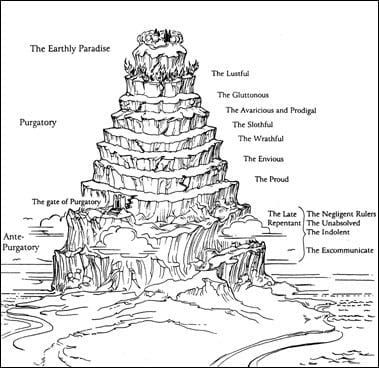
Yesterday’s script for the 7 Days of Screenplays (Thriller) challenge was Se7en. In comments, Chris Drzewiecki said:
Did anyone else notice the use of the diagram on page 32? I believe this is copied straight from “The Divine Comedy”… Scott are there any specific rules when it comes to including something like this?
In one of my screenplays I describe a unique headstone that plays a significant role in my story and would love to include a diagram similar to this one for almost the exact same purpose. But I don’t think it would help me sell the work, mostly due to a rule infraction… Just an observation, this is an amazing piece of writing, thanks for including it in this weeks readings…
Screenplay style is a moving target. There are lots of people who will claim that you must write this way or that. And there are certainly some choices a writer can make that will be perceived as a sign of an amateur such as including a script’s WGA registration number on the title page, writing an opening credit sequence, and so on.
While it is important to know the conventional wisdom re screenplay style, I have a more important bottom line: A writer must do whatever they think is necessary to best tell their story.
Your reference to the image in the script for Se7en (actual script: P. 29) is a case in point. I couldn’t find the exact image on the web, but here is a similar one:
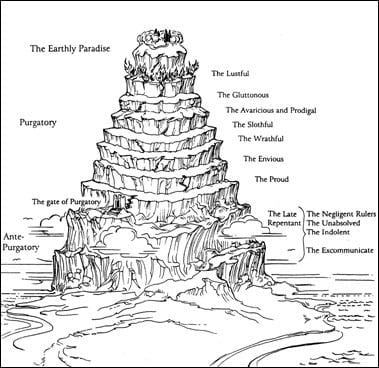
The conventional wisdom is that a writer should not include visual references like this in a script. Why? I suppose two things. First, there is a supposition that a writer should be able to convey everything in a story through words because they are… you know… a writer! Second, there’s the Shane Black Phenomenon. After he sold The Last Boy Scout for a boatload of money, a script that broke the fourth wall several times — Black, the writer, using scene description to ‘talk’ directly to the script reader — it seemed like every other spec script that cycled through the submission process for months featured writers breaking the fourth wall. Grew quite tiresome to script readers. So if a spec script were to sell that featured one or more images in its pages, there lurks an unstated fear that the floodgates might open to a zillion spec scripts filled with photos, drawings, icons, and so on.
But obviously Se7en screenwriter Andrew Kevin Walker got away with it. Now I don’t know if the purgatory image was in the original spec script that sold to New Line in 1991, but obviously it’s in the draft we read dated November 1, 1994 which had to be around the time the movie went into production (it was released in 1995). Why is the distinction important? If the studio has already bought your script, then the issue of whether you include an image is a moot point because once you have their money, you can pretty much do what you want per style. Before purchase when your screenplay is being circulated as a selling script, that’s when you run up against conventional wisdom as script coverage is critical.
To my bottom line point: Obviously Walker thought he needed to put that image in the script in order to tell the story the way he wanted.
So what’s my answer to Chris’ question? If you’re an outsider to Hollywood or a non-pro writing a spec script, I would avoid inserting an image. If you think that you must include it to tell your story, then go ahead. But only if you’re absolutely sure it’s necessary.
By the way, Walker’s Wikipedia page provides some interesting background on Se7en:
Shortly after completing his education, he moved to New York City and began a career in retail at Tower Records. During that time, he worked on several projects, but Walker was unable to find much success until 1991, when he completed the script for Seven. Walker decided to move to Los Angeles to sell his screenplay. There, he personally contacted screenwriter David Koepp, who showed the script to executives at New Line Cinema, who ended up purchasing the rights to it. The film, however, took nearly three years to begin production. While the project was ongoing, Walker found other work as a screenwriter, including a short stint with HBO’s television series Tales From the Crypt, as well as writing two other films, Brainscan (1994) and the novel adaptation Hideaway (1995).[1]
Seven began production between his two other films, headed by David Fincher as the director and starring Morgan Freeman, Brad Pitt and Kevin Spacey. At one point during production, the studio proposed several changes — which would later become a recurring theme throughout Walker’s career — deeming it too dark for its target audience; both Fincher and Freeman backed Walker’s original script, and it eventually went unchanged.[1] The film was met with critical acclaim and enormous box office success, earning $327,311,859 worldwide.[2][3] It would allow Walker to make a name for himself in the movie industry, as well as make stars of then-relatively unknown actors Brad Pitt and Kevin Spacey.
Also per Wikipedia, Walker apparently did an uncredited rewrite on Fight Club.
By the way, tomorrow I will open up our next round of reader questions, so if you’ve got something about screenwriting you want to see discussed here, please submit your questions in comments here or there. Or email me.
Comment Archive