Reader Question: Tips for writing a ‘big’ story ending?
An open forum question from Darren:
Hey Scott,
one of my biggest struggles in writing is finding my ending. I usually know what the end result must be (A must be happy, B must have been foiled, etc), but determining how to do it stumps me. I’ll usually go through about many, many different endings and never be satisfied with it as being “big” enough or strong enough.
Do you have any tips on writing a successful conclusion?
Darren, it depends on what you mean by “big.” And you have to include the story’s genre in there as well because ‘big’ in an action movie could be entirely different than ‘big’ in a drama. Plus one other dynamic currently at work: With CGI now a part of virtually every movie combined with the emerging 3D format, movies can have really big endings. I mean gargantuan, epic battles that blow your mind endings.
Which puts writers in a bind: How do you top those type of endings in a spec script?
There are certain narrative elements you can add to an ending to try to make it bigger. Create a ticking clock where something awful will happen if the Protagonist doesn’t achieve this in that amount of time. Increase the odds against the Protagonist through the sheer numbers against them and/or the impenetrable nature of the physical surroundings. Add complications, roadblocks, and reversals. And so forth.
But what if the issue isn’t what happens in the plot? What if the problem is what is not happening below the plot?
My first piece of advice is to break down the story’s climax into two parts: The External World of what happens in the Plotline through characters’ actions and dialogue, and the Internal World of what happens in the Themeline through characters’ intentions and subtext. You can have the greatest set of events imaginable happening in the plot, but if they don’t mean anything on an emotional, psychological, and/or spiritual level, then no matter how ‘big’ of a Final Struggle you create, it will likely fail to deliver the goods.
Moreover it probably behooves you to spend more time thinking about what’s going on in the Internal World of your story, especially in what the events of Act Three and the Final Struggle mean, because the greater the emotional impact on a script reader, the ‘bigger’ their experience of the ending.
Indeed this may be a way for writers to combat the “how-can-I-top-the-latest-Michael-Bay-CGI-bombastic-ending” syndrome — by focusing more on what the ending means on an emotional level to primary characters and less on what the pyrotechnics are.
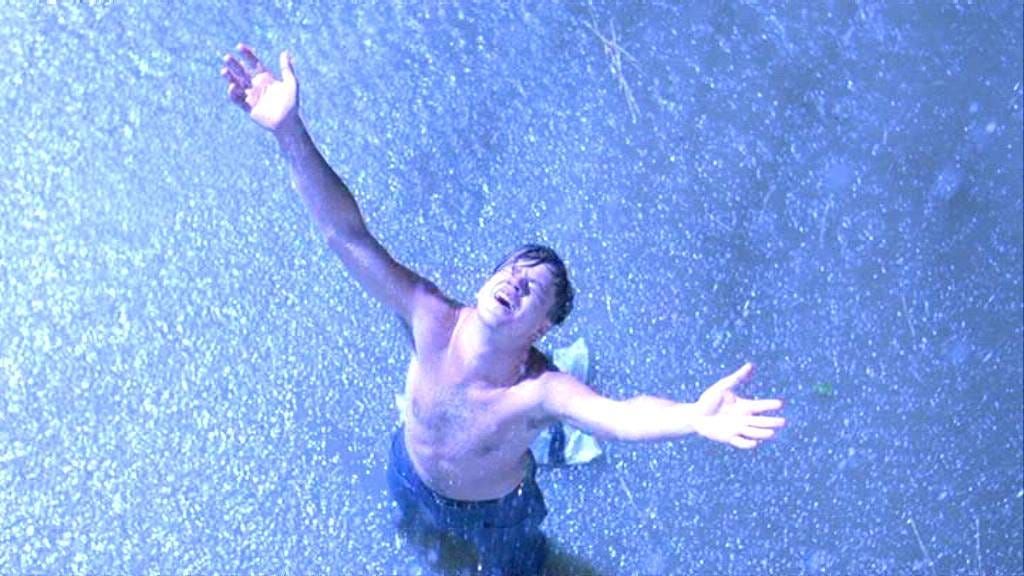
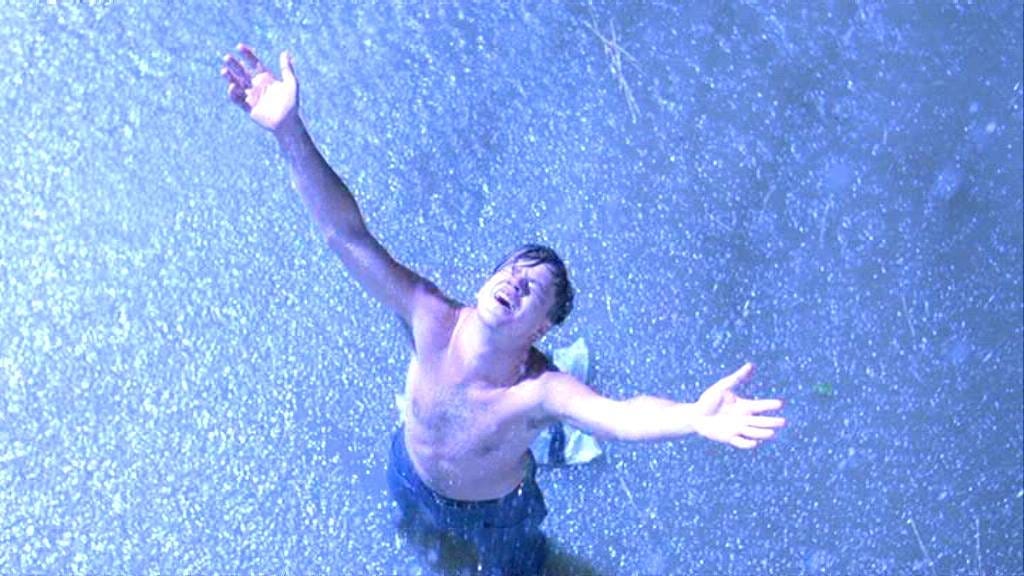
A great example of this is The Shawshank Redemption. [For background, you can read my analysis of the movie as a Dual Protagonist story: Andy as Protagonist here. Red as Protagonist here]. Since there are two Protagonists in the story, that means the movie has — in essence — two endings: The first is Andy’s Final Struggle where he ends up escaping from prison (you can see that clip here).
The second ending is Red’s Final Struggle where he chooses not to follow the course of his Dark Mentor Brooks, who committed suicide, but rather to heed Andy’s wisdom — “Get busy living’, or get busy dyin’” (you can see that clip here).
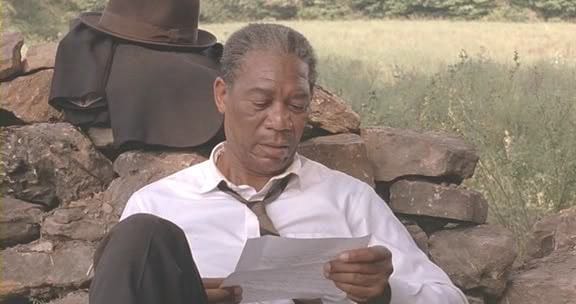
Now which is the ‘bigger’ of these two endings? In terms of scope, you’d probably have to say Andy’s escape. But what about in the Internal World? Andy’s escape is a wonderful surprise and we feel great for him that he’s finally free. But Red’s struggle is in its own way perhaps even more powerful because of his metamorphosis at the beginning of the movie from a cynical “institutionalized” man to someone who claims hope. Indeed the very last words of the movie, as Red strides across that beach in Mexico to see Andy, are “I hope.” While the scope of what Red does isn’t as ‘big’ compared to the heightened action of Andy’s escape, it delivers a huge and satisfying emotional wallop, sealed by the visual of the two friends reconnecting.
There’s another way of looking at a story’s ending, again tied to the External and Internal Worlds of your screenplay universe. Often a Protagonist progresses out of Act One into the world of adventure with a specific want in mind, a conscious goal. But there is something else going on inside, a need that dwells in their unconscious mind or a repressed part of their psyche. Throughout the course of the story, this need emerges — as it should — in order for the Protagonist to achieve any sort of authentic life or sense of wholeness or unity.
If you can identify what that need is in your Protagonist, something that they hold quite close to a core part of who they are, but have as yet refused to acknowledge it openly or allow it to see the light of day, you can craft an ending in which that need does erupt to the Protagonist’s psychological surface — and in theory at least, that should elevate the emotional resonance of the story’s conclusion.
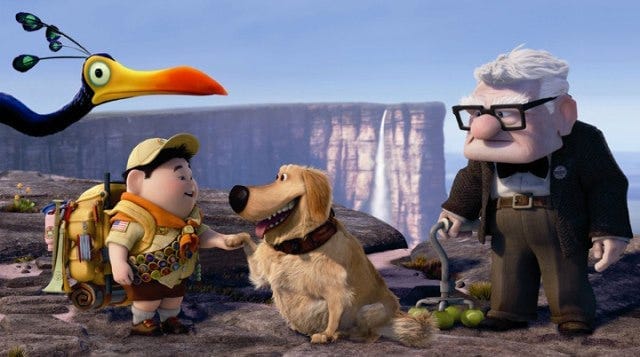
A great example of this is Pixar’s brilliant movie Up. [For my complete analysis of the movie, you can go here]. Focusing on the story’s Protagonist Carl Frederickson, what is his want and what is his need?
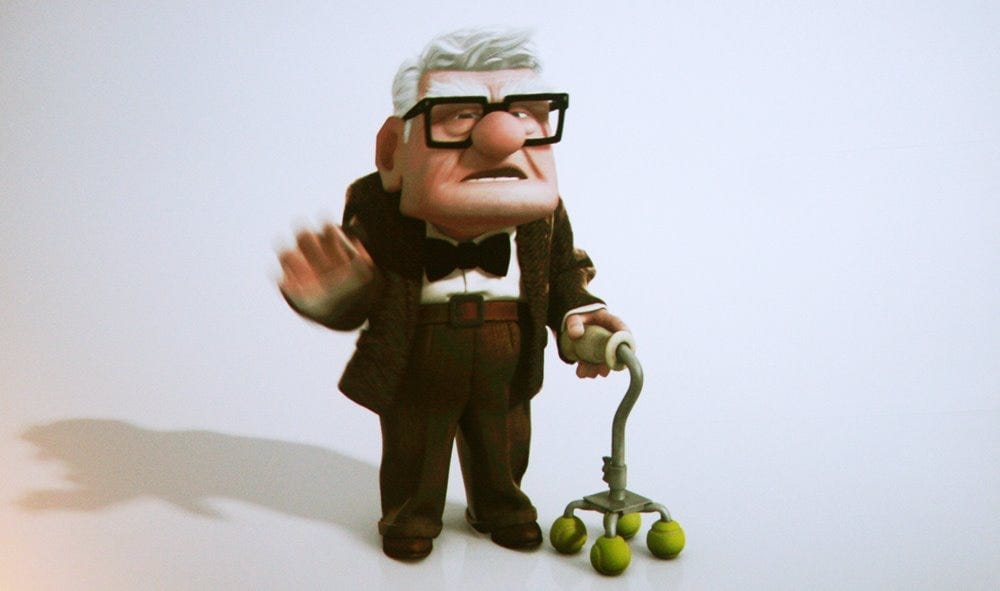
Want: To float his house to Paradise Falls in order to fulfill a promise to his deceased wife Ellie.
Need: To save Kevin, Russell, and Dug, and thereby seal a relationship — and a ‘resurrected’ life — with his new ‘family.’
If you will recall, Carl achieves his conscious goal (want) by getting the house to the top of Paradise Falls. But it is a pyrrhic victory. Kevin has been kidnapped by Muntz, Dug is with Muntz as well, and Russell is moping and angry outside the house . And as the script notes [P. 79]:
Carl sighs. He managed to bring the house to the falls, but Ellie never made it.
Then Carl opens up Ellie’s ADVENTURE BOOK and turns to the page marked “STUFF I’M GOING TO DO.” He’s surprised to see that it is filled with photos and memorabilia of Ellie’s married life with Carl. Then he reads a final message to him from Ellie:
“THANKS FOR THE ADVENTURE! — NOW GO HAVE A NEW ONE!
LOVE, ELLIE.”
Carl heads out the front door only to see Russell floating in the air with some balloons tied around him, powered by the leaf blower, and declaring, “I’m going to help Kevin even if you won’t!” And as Kevin zooms away, Carl’s new adventure begins — saving Kevin, Russell, and Dug, in other words realizing his need.
It’s interesting to note how much emotion is involved in both Shawshank and Up in each of their ‘dual’ endings, which brings me to the takeaway from this post:
Make sure your ending is tied directly to the emotional life of your primary characters, and especially your Protagonist. You can write ‘big’ in terms of action, but if it doesn’t mean anything on an emotional, psychological, or spiritual level, then it will likely be a less than satisfying ending. Conversely if you identify what the key emotional dynamics are re your primary characters, most notably your Protagonist’s want and need, you can imbue your ending with more psychological richness, making it a ‘bigger’ experience for a script reader.
Comment Archive