Reader Question: Why do main characters in movies always almost die?
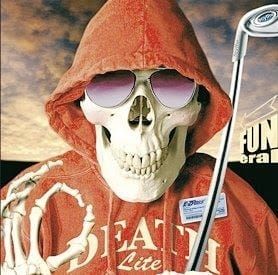
That was a question my son Luke asked as we were out on an errand. The specific references in his mind were the two movies he’d most recently seen Get Smart and Wall-E. And, indeed, both of those movies’ Protagonists do more than brush up against death — Maxwell Smart somehow avoiding getting plastered by a speeding [no spoiler — you fill in the blank] and Wall-E, well, I won’t spoil that for you either, but can you say “death and resurrection?”
Luke and I started going through movies we’d seen together this summer — Prince Caspian, Indiana Jones 4, Iron Man — and in all of them, the Protagonist, as well as other “main characters,” were thrust into death-defying circumstances. Of course, those are all action movies, so I suppose brushes with death goes with the territory. Still Luke’s question does give one pause: What is the inherent psychological power at play between the audience and movie characters when the latter are in danger of dying?
One thing goes back to a core value of stories themselves, how they function as a ‘safe place’ in which the reader / listener / viewer can experience what it would be like to be put in a deathly situation (or any other circumstance for that matter). That’s one of the reasons why Roald Dahl’s stories are so compelling for children — as opposed to shielding youngsters from mean people, scary circumstances, even brushes with one’s own demise, stories which incorporate those type of elements become a helpful tool in allowing a child to explore issues, concerns, even emotions that would otherwise be difficult to confront.
Another reason, also quite fundamental, is that it’s exciting for the audience to ‘participate’ with a movie character as they butt up against death. Our own lives may be rather drab and dreary, however when Indiana Jones swings across a gorge via his whip or Iron Man plunges through the sky toward what seems like an imminent (and terminal) crash, to the degree that we ‘enter’ the movie, we get a vicarious buzz from those thrills and spills.
That participatory dynamic, or as Joseph Campbell referred to it — “participation mystique” — takes the question to an even deeper level. Campbell believed that the roots of storytelling and mythology itself is humanity’s attempt to try to understand the fact of death. For it’s perhaps the greatest mystery of all how we wake up every day and go about our business, knowing that we are going to die. So one more psychological value of movies is that we can go to a theater and ‘participate’ with the movie’s characters in life-threatening scenarios and escape. And that experience, that release is a good feeling. We dodged that bullet!
I’m sure there are other reasons why ‘brushes with death’ are popular in movies. I asked Luke why thought screenwriters used that element so often and he replied, “Because it makes the story more interesting.”
I guess that’s true, too.
How about you? Any thoughts why main characters in movies so often almost die?
[Originally posted 7/3/08]
Comment Archive