“Script Coverage: A Few Awful Truths”
For those of you who may get tired of hearing me go on and on about Hollywood’s “similar but different” mentality, and how important it is to work with a great story concept when writing a spec script, and how critical script readers are in the script submission and acquisition process…
Not another word from me.
Nope, instead I’ll let Billy Mernit (“Living the Romantic Comedy”) lay it down with this must-read post: “Script Coverage: A Few Awful Truths”. Some excerpts:
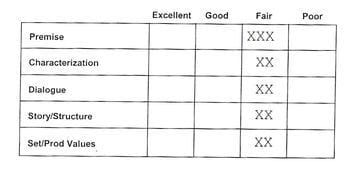
I usually cover 8–9 scripts a week (the average is two a day). How often do marks enter the “Excellent” column? Maybe once or twice a year. How often am I X-ing into “Poor?” At least 2–3 times a week. About half the spec scripts one reads earn a box score like this:
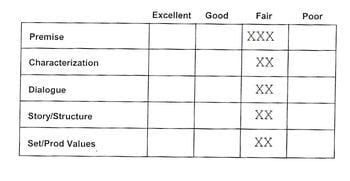
Now here comes the truly abhorrent truth: the most important line is the first one. High marks for characterization and dialogue can serve a writer well (i.e. even if the script doesn’t sell, the reader may recommend that writer for a studio assignment). Poor Story/Structure marks can give a buyer pause, and high ones will definitely help; same goes for Setting/Production Values. But solid “Good” for Premise (aka Story Concept)? If the log-line appeals, the exec may read the coverage. She may even read the script.
— —
I put this before you by way of advice. Given that what the buyers want is “the same, only different,” you must look at your spec script with the harsh, cold glare of the The Grid’s little boxes, and ask: What makes the idea of my movie competitive (i.e. distinct from all the others in its genre)? And if the story concept itself is not genuinely distinctive, what in the execution — the telling of it — makes it seem unique, and will provide a hook?
As promised, not a word from me. Except this: Read the post.