Sleeper Films: “Tampopo”
I thought it might be interesting this week to bring to the attention of the GITS community favorite movies of ours that might have slipped beneath the radar. They could be indie features, foreign movies, or older films, but while they may not have achieved much in the way of notoriety, something about them clicked with you — memorable characters or scenes, compelling plots or dialogue. What are some of your favorite ‘sleeper’ films?
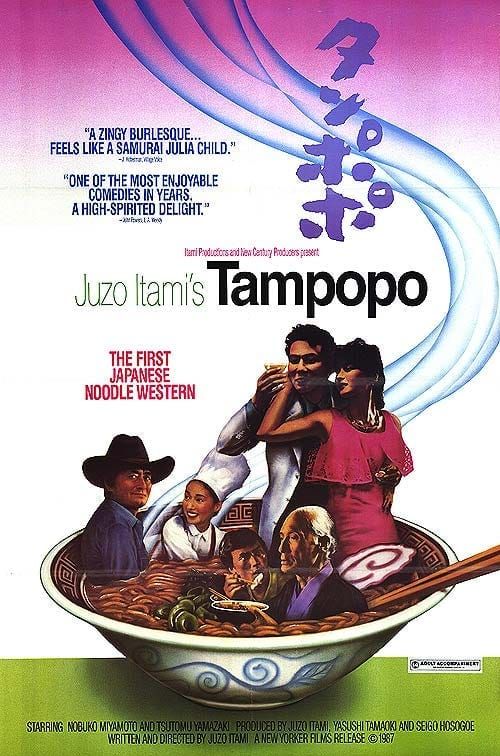
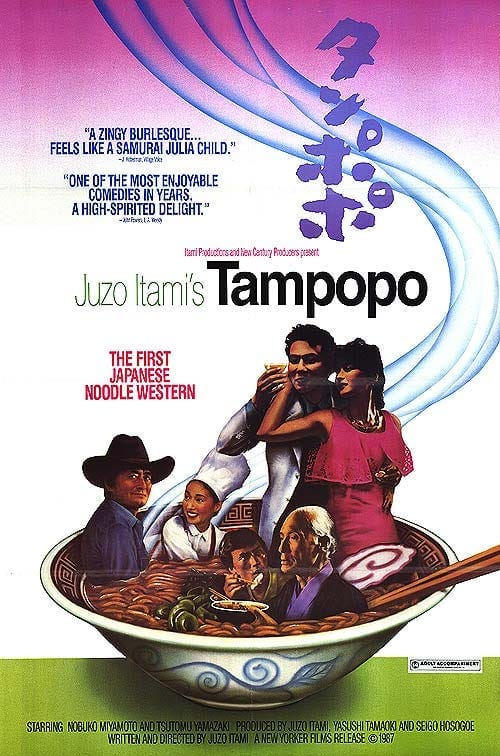
My recommendation today is the 1985 comedy Tampopo. Written and directed by Juzo Itami, it is a wonderfully entertaining movie that cross-cuts between several subplots, each woven around this central Plotline:
In this humorous paean to the joys of food, the main story is about trucker Goro who rides into town like a modern Shane to help Tampopo set up the perfect fast-food noodle restaurant.
From 1987 review by film critic Hal Hinson:
Juzo Itami, the director of the Japanese film “Tampopo,” may be the most impenitent hedonist the movies have ever seen. As a filmmaker, he revels in sensual pleasure, and the spirit of his film is exultant, orgiastic. The movie has been described elsewhere as “Zen and the Art of Noodle-making,” but its spirit couldn’t be less Zen-like. Itami isn’t interested in detachment. He’s a zesty, immoderate connoisseur of pleasure-taking in all its forms — food, sex, movies — and he jumbles them all together here into a hilarious concoction. It’s half movie, half dessert-topping — a film gourmand’s lusty dream.
— —
A compulsive talker, Itami doesn’t restrict himself to the telling of only this one tale. Folded into his central narrative are a half-dozen or so supplementary ones, side courses, and Itami slips back and forth among them with slinky, unfussy ease. Itami keeps up a steady head of steam throughout, and the momentum he establishes enables him to veer off wildly in unexpected directions. Though it’s only his second film — his first, which he made in 1984 at the age of 51, was titled “The Funeral” — he has already developed a free, fluid storytelling style that allows him to free-associate his way effortlessly in and out of his various vignettes.
As it turns out, Itami’s approach, which reminded me of the deft grace that Buñuel achieved in his later films, provides the perfect jokey structure for his gags. The secondary object of his attention is another couple, a slickly dressed gangster (Koji Yakusho) and his fetching moll (Fukumi Kuroda). These two are the pleasure principle’s most ardent advocates; indulgence is their way of life. In one sequence, inside their hotel room, they wriggle on the bed, like sensation-crazed toddlers gone mad, applying whipped cream and whatever else room service will provide to heighten their delirium. In pursuit of even higher-flying thrills, they execute the film’s kinkiest stunt — a long, soulful kiss in which an egg yolk is passed seductively, gently, back and forth between them until it breaks, spilling the yellow all over their clothes.
Here is the egg yolk scene:
And the movie’s trailer:
Sadly Itami’s life had a tragic end:
After a string of successful hits such as A Taxing Woman (1987) (A Taxing Woman) and its sequel came one of Itami’s most intriguing films to date in Minbo also commonly held as Minbo no onna (1992) (The Anti-Extortion Woman). It was scathing attack on the pride of the Japanese Yakuza through the film’s story of a spirited female protagonist skewering and training feeble men to fight back against the criminal elements through courage and determination instead of resorting to violence. The film’s realistic content apparently hit a sore spot with real gang members who waited outside of Itami’s home and slashed him across his face that left him in the hospital. During his recuperation at the hospital, he found material for his next feature in Daibyonin (1993) about a dying film director accepting with his illness amidst an uncaringly cold healthcare system with an ironic look at infidelity and suicide that was a precursor to the rest of Itami’s life. Still haunted and suitably outraged by the attack following Minbo, Itami’s final film in 1997 was the black comedy Woman in Witness Protection (1997). It was his ode to freedom of expression that revolved around an actress witnessing a cult murder and becomes a target, both in the media and for hired guns.
On December 20, 1997, the 64-year-old Itami was found seriously injured on the street below his office and later died in the hospital. A suicide note was left behind by Itami that expressed innocence to a tabloid’s accusation of his infidelity with a younger woman. Itami’s energy and aversion to jadedness in his long career in films would have no doubt been still at use to this day if he was alive.
All of Itami’s early films are excellent, but if you have to choose just one, make it Tampopo.
Comment Archive