Stories from Terry Southern, Part 2 (U.K. days)
More from screenwriter, novelist, essayist, and screenwriting instructor Terry Southern. After the success of Dr. Strangelove, Southern spent time in the U.K.:
You spent a lot of time going back and forth to London during the height of the British film boom.
After Strangelove, I started working pretty quickly on an adaptation of [the novel by John Fowles] The Collector [Boston: Little, Brown, 1963].
Did you stay in England for that?
Yeah, although I quit before the shooting began. The two American producers [Stanley Mann and John Kohn] insisted on finding a way to save the girl [at the end of the story]. At the end of John Fowles’ novel, the heroine dies of pneumonia after trying to escape in a rainstorm. Changing that didn’t even seem like a possibility. It sounded like a stupid idea. I was not comfortable changing the ending, because of my admiration for Fowles’ novel. I even wrote a letter to the London Times protesting this change, and it had some effect on the producers, which gave me a bit of satisfaction. Then they said, “We’ve been thinking about it. Maybe the real message is that art can triumph over an asshole like the collector.” After showing his complete nerd-jerk-nowhere-man creepiness, I contrived to have her escape by outwitting the collector through her art [the girl is an art school student] and ultimately to prevail. So I wrote a couple of scenes where Samantha Eggar was working with a papier mâché sculpture in her cell. I set up a pattern whereby Terence Stamp would open the door of this room and look in very cautiously to make sure she wasn’t trying to escape, because a couple of times when he opened the door, she tried to dart out. He would say, “I want you to stand where I can see you from the other side of the room.” She created this papier mâché likeness in such detail that it deceived him. He would open the door and look across the room and see “her,” when she was, in fact, just behind the door. Because the sculpture was so artfully done, he fell for it. The scene was like Hitchcock. Then she locked the door behind her and [locked] him in her former cell. Years later, she would be seen having a picnic on a lovely day. “It’s so lovely here in this pastoral sylvan setting; I can understand why you like to come here,” her companion would comment. The camera would then pull away to reveal they are having a picnic just a few feet away from the cellar door. By this stage, they had gone too far back toward the original premise for them to use the new ending that I proposed.g
The making of Casino Royale was a fairly acrimonious affair with all the directors from John Huston and Robert Parrish to Joseph McGrath. You spent a fair amount of time as an uncredited writer on the film.
I received a call from Gareth Wigan, a famous British agent, who was representing me at the time. He had this call from Peter Sellers saying Peter wanted me to write some dialogue for him on this movie. Wigan said, “I think you can ask whatever you want, because the producer, Charles Feldman, wants to make it a blockbuster.” There was a lot of heavyweight on that movie because of Orson Welles and Woody Allen. However, Woody Allen and Peter were such enemies on that film that I didn’t really associate with anyone but Peter. An extraordinary thing happened. Because Woody Allen was having such a bad time on the picture, his agent came over to the Dorchester Hotel to speak to him one day. When he came into the lobby, he was dead sure he spotted his client Woody Allen at the newsstand reading a paper. The agent came over and said, “Hey, Woody, we’re gonna fix that fucking Sellers, and he’ll be off this picture.” But it was actually Peter Sellers he was talking to. Sellers immediately realized that it was a case of mistaken identity and of course went right along with it, apparently giving a masterful impersonation of Woody Allen. He used to repeat this imitation with the grimace and glasses. The agent kept ranting for three or four minutes how Sellers should be fired and some specific things like “I’ve seen his contract, and I know how much he’s getting, blah, blah, blah,” and then he split. Peter was so irate — later he was amused — that he walked straight out the door and flew home to Geneva and announced he was taking a few days holiday. So this multimillion-dollar movie came to an abrupt halt. It was an incredible situation costing thousands a day. They tried to shoot around Peter in his big confrontation scene with Orson Welles in the casino. Welles was furious. They didn’t even have all the actors in the master shot, just some stand-ins, and each day, they would shoot around whichever star didn’t show up.
There were a lot of writers involved on that project. Can you remember which scenes you wrote?
Just the Peter Sellers stuff. I rewrote all his dialogue in the scenes he was in. I just rewrote with an eye to giving him the best dialogue, so that he would come out [of the film looking] better than the others. I earned an enormous amount for work which I essentially did overnight.
Where would you stay in England when working on a film?
I was staying at the Dorchester during Casino Royale. I stayed at a number of hotels. Writing on a contract for a major studio, you get the very best. I would go back and forth on these over-the-Pole flights, where you would go from LA to London. I wrote a lot during those flights.
You spent a fair amount of time socializing with the Beatles, the Rolling Stones, and others in the scene associated with Robert Fraser’s London art gallery.
I knew about Robert Fraser’s gallery because friends of mine like [artists] Claes Oldenburg, Jim Dine, Larry Rivers, and others would show there. Robert Fraser was an extraordinary guy. Kenneth Tynan lived on Mount Street near the gallery. He used to take me to a lot of places like that. Fraser’s gallery became very common knowledge in the industry. One day, Tynan said I had to meet this friend of his, Colin Self, who had done this extraordinary piece of sculpture which was like the Strangelove plane. They wanted me to pose with it at Fraser’s gallery. That was my first actual trip there. While I was there, Michael Cooper, the photographer who took some pictures, said, “You must come over [to my place] for drinks. Mick and Keith are going to be there.” Robert used to have this very active salon at his flat. So I went over and got to know them in a very short time. Christopher Gibbs, the antique dealer and production designer for Performance [1970], was part of the crowd at Robert Fraser’s. Then there was Tara Browne, who was killed in the car crash John Lennon wrote about in “A Day in the Life.” Sandy Lieberson, who was an agent who optioned Flash and Filigree and produced Performance, was there a fair bit. He was involved with the American film industry in London. I wasn’t around during the actual shooting of Performance, but I heard a lot of talk about it from James Fox and his father, [the film and theatrical agent] Robin Fox.
Wasn’t your old Paris buddy [the novelist] Mordecai Richler still living in London then?
He was in fact living there and so was [the director] Ted Kotcheff. We had these great poker games.
Did you meet the Beatles around the same time?
I met the Beatles at exactly the same time, because Michael Cooper was doing several of their album covers. He had that market sewed up.
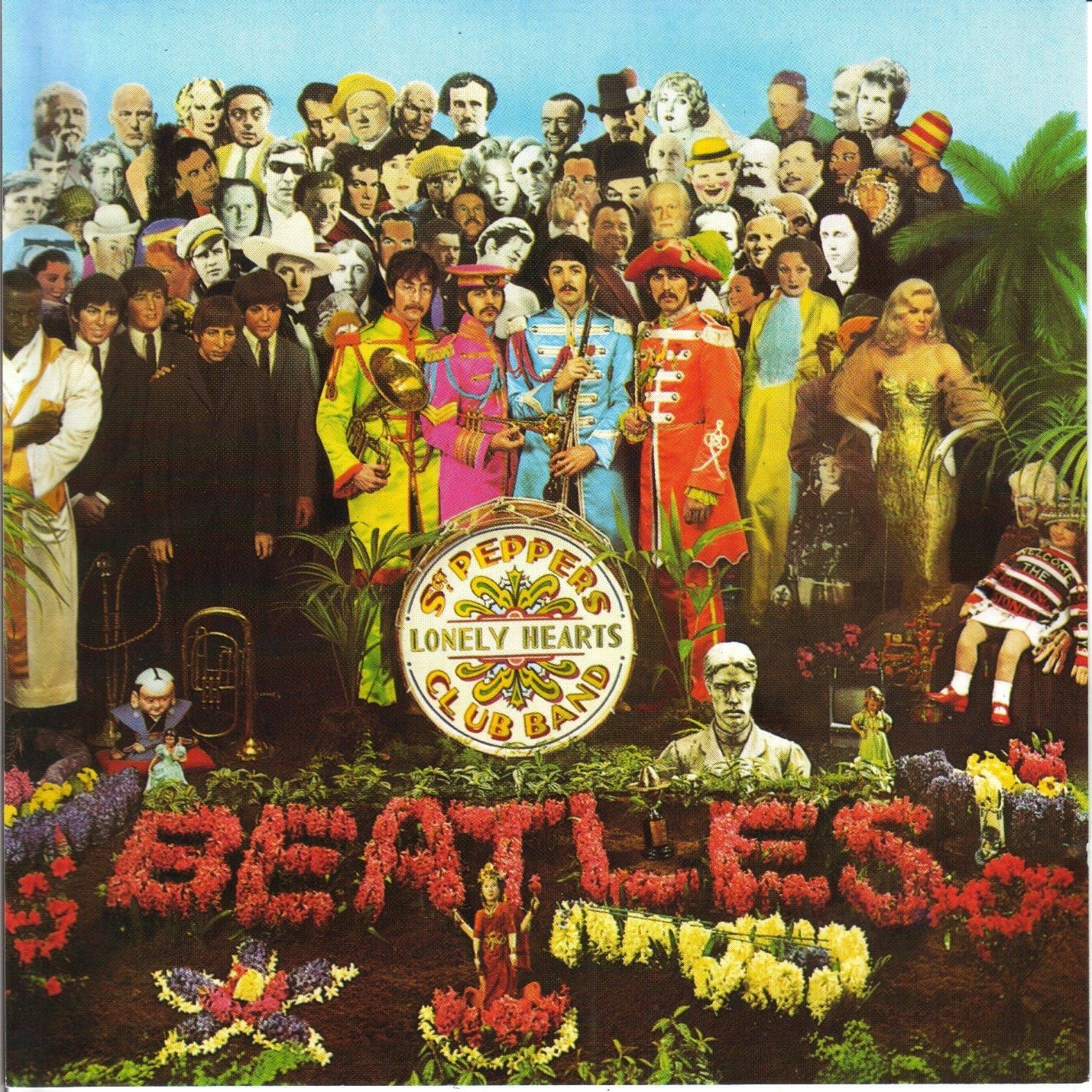
Do you remember how they decided to choose your face for the cover of Sgt. Pepper?
I was probably one of the few people they knew who wasn’t an icon of a sort. Most of the other faces on the cover were historical choices. [Of all the Beatles] I am closest to Ringo. Ringo was a very good friend of Harry Nilsson. Through Ringo, I met Harry, who I became grand good friends with and later worked [with] on scripts like The Telephone for Hawkeye, a company that we formed.
Hanging out with the Rolling Stones and the Beatles. Even has his face on the cover of “Sgt. Pepper,” arguably the most famous album cover of all time.
Tomorrow more stories from Terry Southern.
Comment Archive