The New Hollywood Movie Thing: “Requels”
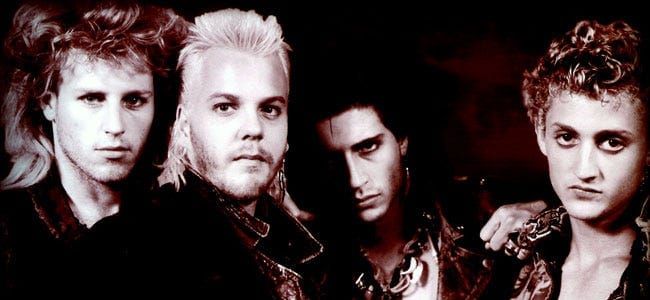
It’s 1989. My writing partner and I are meeting with director Joel Schumacher about a sequel to the movie The Lost Boys, a surprise hit which he directed. As I sit listening to his ideas, I am thinking, “This isn’t a sequel. It’s a remake.” With one difference: There are girl vampires.
Assured that Warner Bros. has signed off on Schumacher’s take, we go off and write the script. It’s an awfully lot like the original — but with GIRL VAMPIRES! — yet the message we keep getting from Herr Director: It’s okay.
These are vampires… but they are GUYS!
When we turn in the script, it’s not okay. The big note? “This feels more like a remake than a sequel.”
Guess who throws the writers under the bus? “I don’t know what they were doing. Those ideas never came from me.”
And so another casualty of Development Hell.
But here’s the thing: Turns out we were about 25 years too early. Because what we were writing was a requel.
What the hell is a requel? Thanks to an article in yesterday’s Hollywood Reporter, we now know:
Hollywood’s done the remakes, reboots, prequels and threequels. The latest obsession: the “requel,” a movie that’s both a reboot and a sequel, blending old with new in an effort to extend the life of a franchise and, in the best cases, reinvent it for a “universe” of follow-up movies.
That’s precisely what our version of The Lost Boys 2 was: A reboot and a sequel, blending old with new — WITH GIRL VAMPIRES!
God knows, we would have been heroes with that script in today’s world!
More from THR:
When it works, it’s a potent combo. During the March 25–27 weekend, Batman v. Superman: Dawn of Justice — a reboot of the Batman franchise in the post-Dark Knight era that’s also a sequel to Zack Snyder’s Man of Steel Superman movie — debuted to a March record $166.1 million in North America and $422.6 million globally, making it the №1 superhero launch to date.
— —
Unlike BvS, most “requels” revive franchises that have been dormant for years, if not decades. Steven Spielberg struggled for years to bring Jurassic Park back from extinction but couldn’t find a way in. Finally, Spielberg, producer Frank Marshall and Jurassic World director Colin Trevorrow embraced the 1993 original and returned the action to the fictional Isla Nublar with new dinosaurs and stars Chris Pratt and Bryce Dallas Howard. Jurassic World roared to $1.67 billion globally.
Six months later, an even bigger requel arrived in Star Wars: The Force Awakens, J.J. Abrams’ love letter to 1977’s Star Wars that shrewdly paired new actors with original stars Harrison Ford, Carrie Fisher and Mark Hamill. The Disney/Lucasfilm movie has earned a mammoth $2.06 billion globally and, more importantly, set the course for a series of follow-ups and spinoff movies. “With Star Wars or any project that revisits a world or characters that are known and beloved, it’s essential to remember and honor what made the original resonate with people in the first place — otherwise you wouldn’t be going back — but it’s equally important that you bring something fresh and relevant,” says Walt Disney Studios chairman Alan Horn. “There has to be a way in for today’s audience.”
The emergence of the requel is nostalgia — one part of the New Four-Quadrant Movie Model — meets the fear of greenlighting movies to the max. It is ‘similar but different’ with the axis tilted far toward similar. Similar as in ‘Safe’.
And audiences seem to be eating it up.
Which means this is your immediate future, movie fans: Requels. Who knows? Maybe you have The Lost Boys 2 — WITH GIRL VAMPIRES! — to blame.
For more of the Hollywood Reporter article, go here.