What I Learned Watching 125 Student Films
Storytelling tips from my 8 day immersion in cinema… university style.
Storytelling tips from my 8 day immersion in cinema… university style.
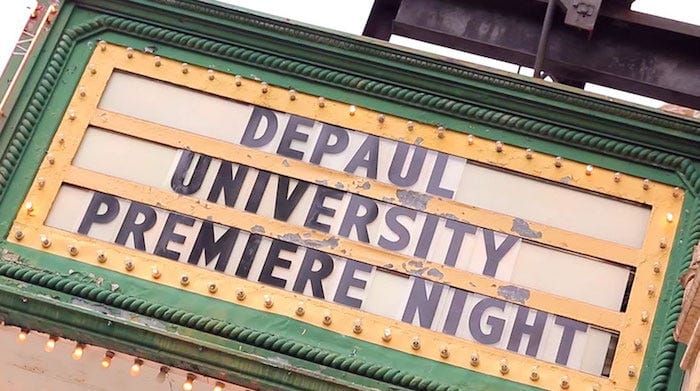
Deep into my first spring quarter teaching at the DePaul University School of Cinematic Arts, I along with several of my colleagues were tasked with screening 125 films created by our undergraduate and graduate students for consideration for the 12th annual Premiere Film Festival. The awards ceremony is scheduled for June 2nd at the venerable Music Box Theatre just a few miles away from the even more venerable Wrigley Field.
Watching that many movies in 8 days proved to be quite an experience. The good news is there were many fine films and the selection committee had no problem filling out the ceremony’s program. In fact in our daylong meeting to decide the winners, we spent most of the time debating the relative merits of dozens of movies before ending up with 16 selections including fiction, documentary, animation, and experimental.
I jotted down some notes along the way, some key takeaways and I thought I’d share them here.
You can’t have a good movie without a good story.
This seems obvious. And it is. However given modern filmmaking technologies, it’s easier than ever to add all sorts of cinematic bells and whistles to any film project. It’s also easier to get sucked into the technical aspects of the process and lose sight of the need for a narrative.
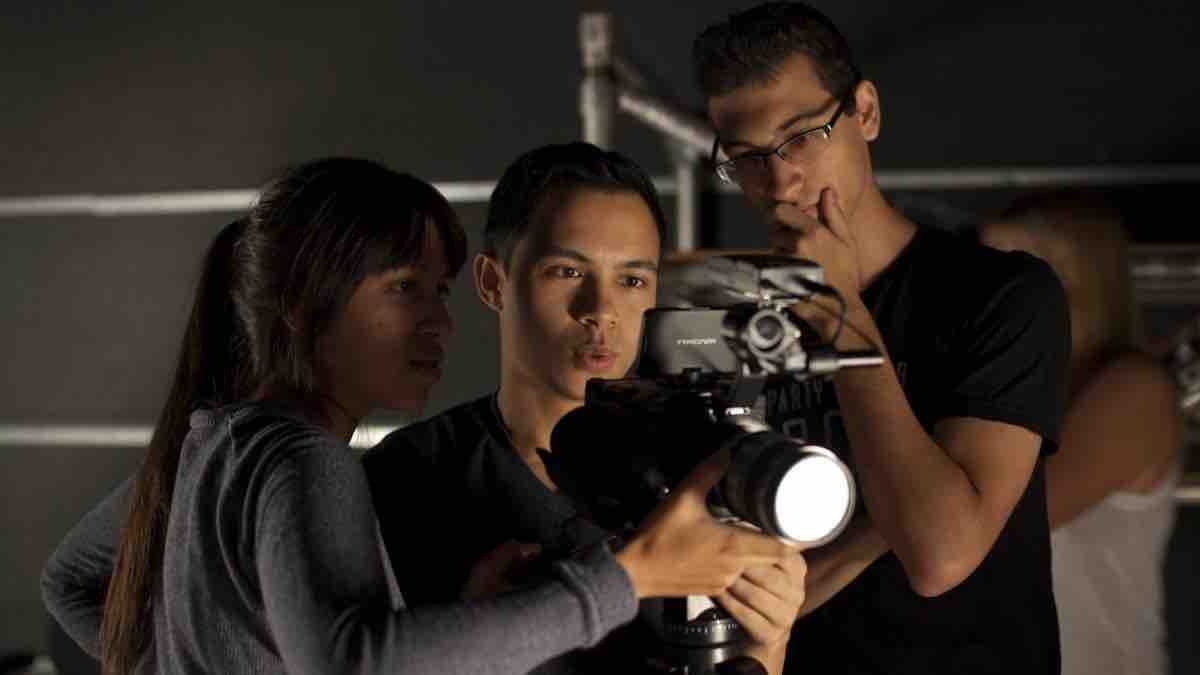
The School of Cinematic Arts is fortunate to have access to amazing cameras and gear, as well as two entire soundstages at the Cinespace Chicago Film Studios. That’s awesome. I’ve got sophomores who have already made two or three short films. But no camera shot, no digital effect, no gussied up location is going to be as engaging as a well-told story. If story-crafting takes a secondary position to the technical part of the filmmaking process, nine times out of ten that’s going to lead to a flawed final product.
This is not just an issue with student films. Hollywood suffers from the same condition, seemingly focused nowadays more on spectacle than story.
Takeaway: Focus on your story first and lock it down in the script before you move into pre-production, production, and post. Let the technical support the narrative.
Character. Character. Character.
Every single student movie I saw to which I gave a high mark featured interesting and engaging characters. It didn’t matter if the movie in question was an animated comedy or a live-action drama, if the characters on screen had something interesting about their personalities and/or life circumstances, that pulled me into the story.
The documentary films, by and large, had a pretty firm grasp on this front, and I guess that makes sense. Why would any filmmaker decide to do a doc unless they were inspired by individuals who had something uniquely interesting going on in their lives?
That led me to ponder if this is a good question for someone writing a fictional piece: Would I consider my characters worthy of doing a documentary about them? That doesn’t mean the characters have to be larger than life, however they DO need to have something distinctive and compelling, as well as offer a universal point of connection with potential viewers.
Beyond that, the characters who had an unusual voice or way of looking at the world, who had complexity to them, who surprised me with their actions and dialogue, who had some points of emotional resonance, it was those characters who captured my attention.
In fact, some of the movies which didn’t make the final cut because of story or production issues had characters who were so compelling, I gave them high marks anyhow.
Takeaway: Characters are the primary conduit for a viewer into the story world. Again, this is something that is best addressed in the script stage.
Less is more.
If there is one critique that was pretty much across the board, it’s this: The filmmakers would have benefited by doing less, than more.
They could have trimmed the run times by 25–50%.
They could have cut dialogue in favor of visual storytelling.
They could have used less overt emotion and more subtle emotion.
Of course, these are student films, so a major point of these projects is to experiment and test out potential cinematic chops. Still as a storyteller, we need to develop a kind of narrative discipline.
Each scene has to have a point.
Each character has to have a narrative function.
Each line of dialogue has to reveal something about character or move the plot forward.
Takeaway: With a desire or instinct to make an impression on an audience member, we may default to going BIG and showing MORE, when in fact that tack can oftentimes shine a bigger light on the weaknesses of the underlying story. So yet again, I come back to the importance of working out much of this stuff in the script stage.
That said, I was pleased with the overall quality of the 125 films I screened in 8 days. I was also reminded with every single movie I saw the absolute primacy of story in the filmmaking process.
Story first. Story last. Story always.
I look forward to attending the 12th annual Premiere Film Festival on June 2nd. If you’re in the Chicago area, check it out. It’s free and there’s a fun program with a couple of energetic student hosts, working with a script I co-wrote. Should be a good night of entertainment.