Written Interview: Aline Brosh McKenna
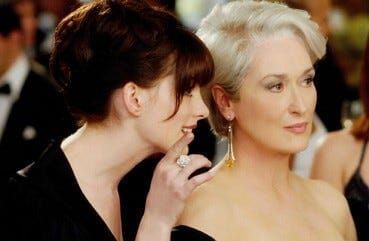
Today’s interview is with screenwriter Aline Brosh McKenna. Her writing credits include Three to Tango (1999), Laws of Attraction (2004), The Devil Wears Prada (2006), 27 Dresses (2008), and the upcoming Morning Glory (2010).
Here are some excerpts from the Films42.com interview about The Devil Wears Prada:
Jan: Yes, the excesses — the way people in positions of power and control threw money around in ways that seem absolutely ludicrous now to the uninitiated. I know from experience that it happens because people are working 24 hours a day, 7 days a week, 365 days a year, so they have no perspective on what they’re doing and no appreciation for anyone else’s time and effort.
You captured it all, so please tell me about it: tell me how you created Miranda and the extra scenes that you wrote for her; tell me how you created Nigel from a composite of characters in the book. What were your goals when you create these wonderful characters.
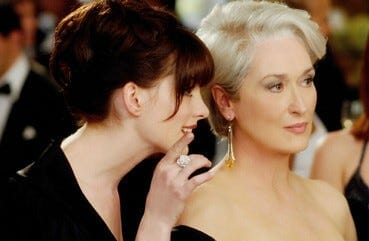
Aline: We wanted to take Miranda her work very seriously, and make sure the audience got a sense of what she does and why she’s so accomplished. She’s not just inspiring that behavior in the other people around her because she’s “scary,” but because she’s so accomplished and she’s achieved such a high level at work.
I wanted to make sure the audience understood why she had so much power in her world; then understand that there was a cost for her, because we wanted Andy to walk away from a life as opposed to walking away from a person. She sees how much Miranda has sacrificed in her personal life, that’s just not what Andy wants to do. Miranda’s held to a different standard than male executives might be held to, and she lives under a microscope.
The movie sees Miranda’s life from her perspective. Obviously, her priorities are a little different from most peoples, but basically, Miranda’s a working mother. She’s trying to do the best she can, she’s trying to keep her personal life afloat, this is the only way that she knows to live her life — completely devoted to her work. Ultimately, Andy decides it’s not for her.
— —
Jan: Great! So now let’s talk a bit about Nigel and how you created him.
Aline: The main thing with Nigel was not to do “a fairy godmother” character. We felt like it would be phony for Nigel to take Andy under his wing for no reason. He’s sort of horrified by her, and as Andy says, he finally makes her over just because he’s tired of looking at her.
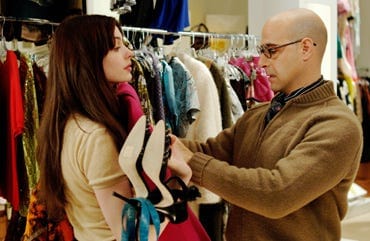
So we wanted Nigel to become “the mean mentor,” the mentor who tells Andy what she’s really doing wrong; it’s an important thing in your 20s to recognize when you’re failing. Andy’s making this mistake of blaming everything on Miranda instead of just understanding that a boss is boss, and part of what you need to do is figure out how to work around the boss. And then Nigel’s also the character who in some ways is sacrificed. He captures the guy who’s made some of these sacrifices, so he makes Andy wonder: Is it worth it?
He’s also the one who really understands the artistry of their work. Nigel feels like he has “a calling,” which is to appreciate and disseminate the work of these [fashion] artists.
Notice how McKenna talks about both Miranda and Nigel in terms of their function in relation to the story’s Protagonist Andy:
“I wanted to make sure the audience understood why she had so much power in her world; then understand that there was a cost for her, because we wanted Andy to walk away from a life as opposed to walking away from a person.”
The focus is on crafting Miranda in a way that is tied directly to the Protagonist’s metamorphosis.
So we wanted Nigel to become “the mean mentor,” the mentor who tells Andy what she’s really doing wrong.
Again the focus on Nigel — the “mean mentor” — as he’s tied to the Protagonist’s story.
For the rest of the interview, go here.