Written Interview: Ben Hecht
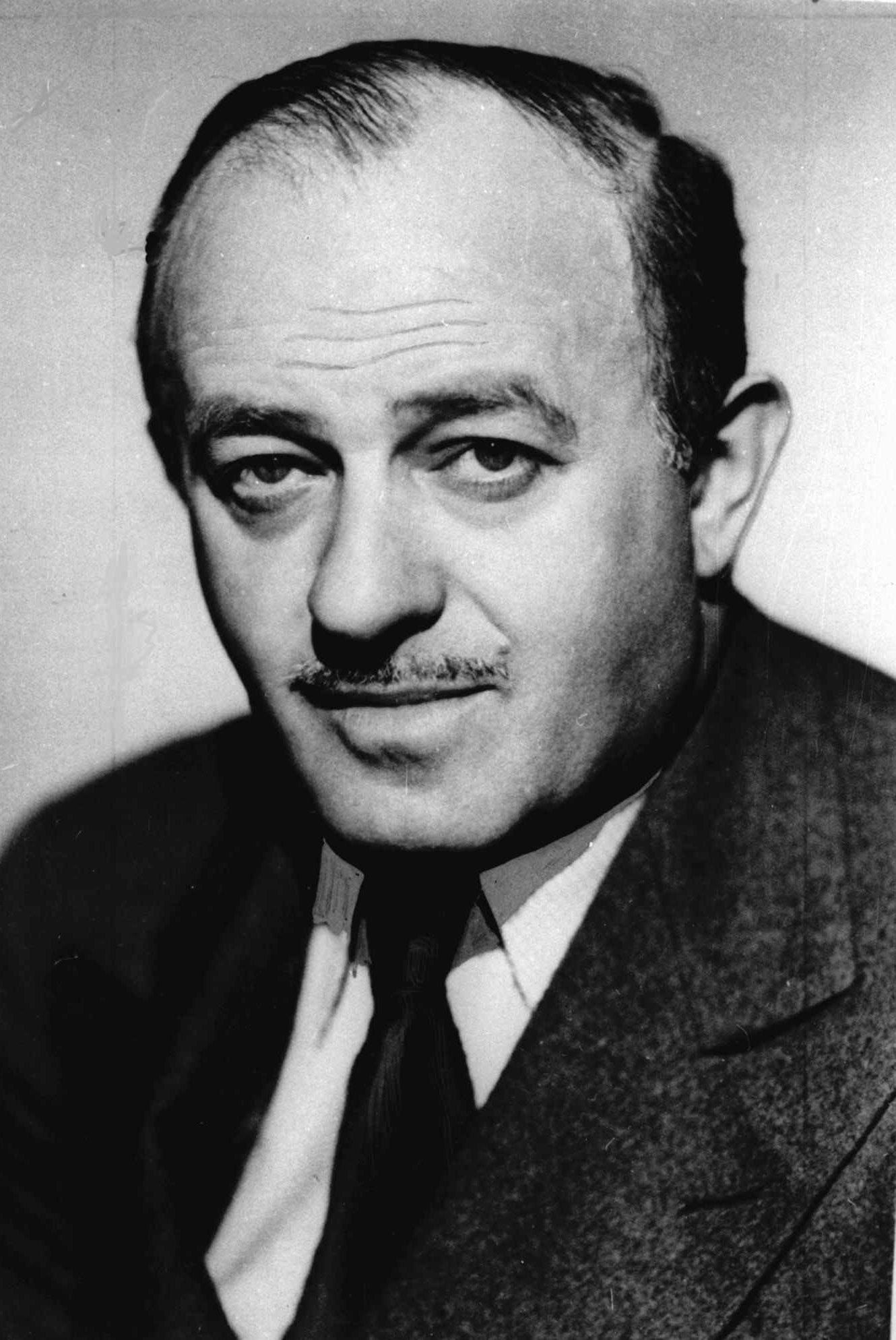
Ben Hecht was one of the most prolific screenwriters in Hollywood history, most of his work as an uncredited writer. In fact, here are just a few examples of movies he worked on for which he received no writing credit: The Prisoner of Zenda (1937), Stagecoach (1939), Gone with the Wind (1939), The Shop Around the Corner (1940), Lifeboat (1944), Gilda (1946), Rope (1948), Guys and Dolls (1955/I), The Man with the Golden Arm (1955), and Mutiny on the Bounty (1962). In all, 156 movies on which Hecht worked from 1926 until his death in 1964.
Hecht was an irascible figure. Here is one of his notable quotes about Hollywood: “I discovered early in my movie work that a movie is never any better than the stupidest man connected with it. There are times when this distinction may be given to the writer or director. Most often it belongs to the producer.”
His combination of talent and personality made him something of an American celebrity, so much so that 2/15/1958, Hecht was the subject of a live television interview with host Mike Wallace. Here is an excerpt, following up a comment by Hecht where he called most movies nothing more than “trash”:
WALLACE: Well now, I think that’s unseeming modesty. You say you have no interest in them — you have sufficient interest to call them trash, to say that they have lamed the American mind — retarded Americans from becoming a cultured people.
HECHT: The rest of that quote was “the reason they’ve lamed the American mind” and when I speak of the American mind in the book you’ve quoted from….
WALLACE: Uhmmmm
HECHT: I was talking of what used to be called the “Intelligencia,” high class thinkers — uh — people haven’t been lamed by the movies, they’ve been helped by them. They’re helped by all mass entertainment, it diverts them, but in my day a man would rather be caught dead than be seen reading a dime novel or a Western classic about “Stormy’s Horse” and this superiority snobbery which made the “Itelligencia” was — washed away by the movies. People started going to the movies that were made out of dime novels, written from the same point of view they’d had for their objective mass success and I think the reason their literate — literacy — literary side collapsed considerably, was that the snobbery left us — the superior intellectual attitude, left us.
WALLACE: Oh, Ben, but you’re suggesting that all movies are trash and that’s not so. Take a look at movies like “Marty,” or “On the Waterfront,” or “Hatful of Rain,” “The Bridge on the River Kwai.” Now these are all Hollywood or Hollywood oriented products.
HECHT: I’ve written some that weren’t trash myself. Maybe out of seventy, I’ve written about eight or nine movies that I could tolerate if I were a member of the audience.
WALLACE: Like for instance, which ones?
HECHT: I wrote a movie called “Wuthering Heights,” “The Scoundrel,” “Viva Villa.”
WALLACE: You also wrote — you also wrote “The Iron Pettycoat” and the New York Times said about this….
HECHT: How do you know I wrote “The Iron Pettycoat”? I took my name off it.
WALLACE: I know you did. For reasons best known to Ben Hecht, the New York Times said, “He declined to have his name mentioned in the credits. A witness to the finished picture may readily figure out why.” Uh — why — why do you get involved in such trash?
HECHT: Well, uh, it wasn’t trash when I started. You see a movie begins like most things with an idea and then it turns out that the inventor of the idea who was usually the writer is a stowaway. He has the privileges of a stowaway. He has no powers to assert himself and about ten or fifteen villains including his own incompetence usually corrupts that he — the reason he thought of — in this particular case, “The Iron Pettycoat,” the corruption came through the recutting of the movie and the movie was written for a lady, Miss Katherine Hepburn, and ended up instead as a role for the hero, Mr. Bob Hope, Miss Hepburn was removed from in by fifty percent. I got irritated and took my name off it — it had nothing to do with the movie I wrote.
WALLACE: But the fact of the matter is that you’ve said time and again, Ben, that you’ve sold out — you sold out to make a buck, isn’t that true?
HECHT: Well, what do we all do — you’re making a buck, I’m making a buck, I don’t sell out anything. I’ve written three hundred short stories and kept alive by working in the movies. You cannot have two homes — one on the East Coast and one on the West Coast …
WALLACE: Well wait, wait, wait, Ben. Now in one breath you say Hollywood puts together trash and the next breath you say, “Give me a hundred thousand dollars and I’ll grind out whatever you tell me and who cares what it does to the American mind.” Isn’t that about what you say?
HECHT: No, well I — I leave that guilt up to the movie makers. I just do what I’m told. I take assignments, I used to work on newspapers. I took assignments. I take assignments from movie people and there’s very little a writer can do to improve a movie. The writer’s usually paid not to assert himself, not to intrude and one of the reasons that Hollywood has — come a cropper.
For the rest of the interview transcript, go here.
HT to Margit Keerdo for Tweeting this link.