Movie Analysis: “Spotlight” — Takeaways
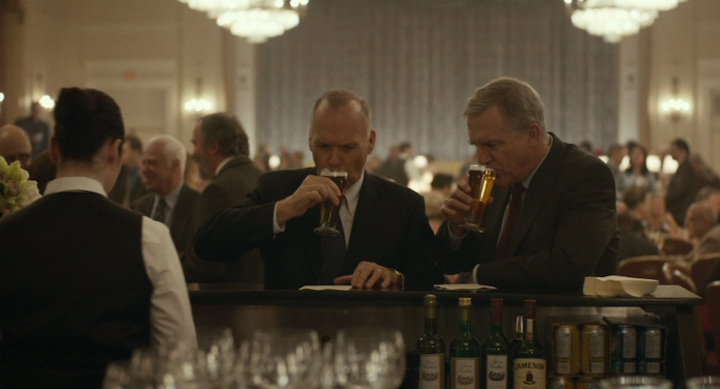
Another in our bi-weekly series in which we analyze movies currently in release. Why? To quote the writing mantra I coined over 5 years ago: Watch movies. Read scripts. Write pages. You will note which one comes first. Here are my reflections from that post about the importance of watching movies:
To be a good screenwriter, you need to have a broad exposure to the world of film. Every movie you see is a potential reference point for your writing, everything from story concepts you generate to characters you develop to scenes you construct. Moreover people who work in the movie business constantly reference existing movies when discussing stories you write; it’s a shorthand way of getting across what they mean or envision.
But most importantly, you need to watch movies in order to ‘get’ how movie stories work. If you immerse yourself in the world of film, it’s like a Gestalt experience where you begin to grasp intuitively scene composition, story structure, character functions, dialogue and subtext, transitions and pacing, and so on.
Let me add this: It’s important to see movies as they get released so that you stay on top of the business. Decisions get made in Hollywood in large part depending upon how movies perform, so watching movies as they come out puts you in the same head space as reps, producers, execs, and buyers.
This week’s movie: Spotlight which won the 2016 Academy Award for Best Picture, written by Josh Singer and Tom McCarthy. You may download. the script here.
Our schedule for discussion this week:
Monday: General Comments
Tuesday: Plot
Wednesday: Characters
Thursday: Themes
Friday: Dialogue
Saturday: Takeaways
For those of you who have not seen the movie, do not click MORE as we will be trafficking in major spoilers. If you have seen Spotlight, I invite you to join me in breaking down and analyzing the movie.
What can writers learn from Spotlight? To me, one of the biggest lessons is about something I would call tone. I’ve alluded to it before, how the narrative voice takes a reserved stance toward the characters. It’s almost as if that stance, that perspective is like a journalist itself, focused on reporting the facts. It provides insights into characters with occasional commentary, but it always keeps the story on an even keel, never straying too far into heightened emotions save with the victims themselves.
Now that I reflect on it, the narrative voice most resembles Marty Baron’s character whose voice never rises above a couple of decibels. And as I’ve suggested, I believe this reserved tone is a conscious choice by McCarthy and filtering down through the entire cast and crew, the better to allow the horror of the crimes to speak for themselves. It’s a delicate, delicate balance throughout the movie which could have easily slipped into melodrama.
But it doesn’t. And that is a great takeaway for anyone writing a drama. You don’t need to hammer the reader over the head. Give them room to breathe, quiet space to assimilate what’s going on, and bring their own feelings into the mix.
Spotlight is one deft piece of filmmaking.
How about you? What is your takeaway? Share your thoughts and add to the archival value of this series for writers and movie fans.
Comment Archive