Go Into The Story Interview: Jack Epps
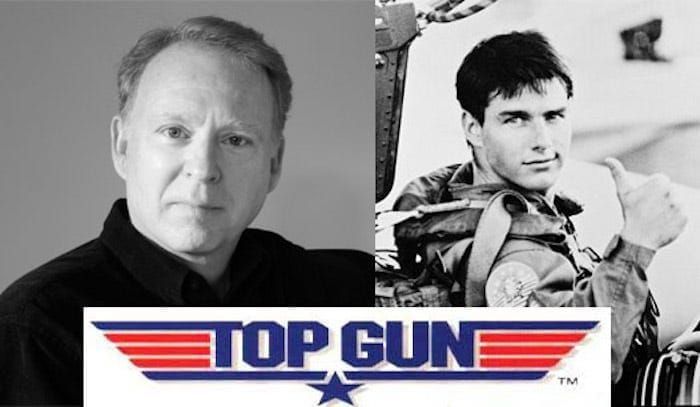
My talk with the co-writer of Top Gun, Legal Eagles, The Secret of My Success.
Back in the 1980s and 1990s, there was almost no one hotter in the world Hollywood screenwriting than Cash & Epps. Their writing credits include Top Gun, Legal Eagles, The Secret of My Success, Dick Tracy, Turner & Hooch among other notable films.
Transitioning into the field of academics, Jack Epps is currently chair of Writing for Screen & Television at the University of Southern California School of Cinematic Arts.
Here is my 2017 interview with Jack in its entirety.
Scott Myers: Jack, you’ve had a long and distinguished career in Hollywood as a professional screenwriter. You’ve co-written movies which have been nominated for 11 Academy Awards and won 4 Academy Awards.
You’ve moved on to become Professor and Chair of the John Wells Division of Writing for Screen and Television at the University of Southern California’s School of Cinematic Arts, and just last year, had your first book published by Bloomsbury Books, Screenwriting is Rewriting.
I’d like to hit on all those areas, but first, let’s get a sense of how you found your way into screenwriting as a career. In terms of how you went about learning the craft, I’ve read where you were a student at Michigan State, and Jim Cash was teaching the only screenwriting course there, and the class was full, and you had to talk your way in there, is that right?
Jack Epps: Yes, that is correct. I had made a short film during my junior year at Michigan State. At the time, I was an English major and I didn’t know what I wanted to do. I went to a student film festival, saw the films, came out and said, “Well, I can do better than that.” Took a film class, made a short movie and I found myself creatively. It became instantly clear that I wanted to make movies. If I was going to make movies, I had to learn how to write them.
MSU had one screenwriting class and it was taught by Jim Cash. The class was full and I had to talk my way into the class. A bit of fate on both of our parts. Luckily for both of us, Jim wasn’t a hard ass. We didn’t start working together for about 5 or 6 years after that class, but we stayed in touch.
Scott: We’re talking about Michigan State, the early ’70s at this point?
Jack: Yes, around 1971 or so.
Scott: This is even before Syd Field had put out “Screenplay, The Foundations of Screenwriting.”
Jack: Right, there were no screenwriting books either. They didn’t exist. And there were no screenplays to look at in Michigan. The only things were stage plays, so I was reading a lot of plays and trying to understand how to tell a story. It wasn’t until I came out to California that I was able to get my hands on scripts.
Scott: I remember having to sweet talk my agents’ assistants to get copies of scripts and meeting up with other screenwriters on street corners, slipping each other different scripts, like some sort of clandestine drug dealers.
Jack: Oh yeah. It was a trading game. You had to have something valuable to trade. When you got one you read it cover to cover many times over. I still have cases of them in my garage and I don’t want to throw them away. They were hard to get. When we first came out to California, my wife got a job at Paramount and she brought home scripts. She was working in the finance department, and so they got copies of scripts they didn’t care about and threw them into a closet. She brought home studio copies of The Godfather and Chinatown. I also did internships and read for producers.
Reading bad scripts are almost more informative than good scripts, because when you’re reading a bad script it’s really annoying and you realize, I’m bored to tears. There’s nothing happening here. Why do I want to keep reading? Those are simple craft lessons, but essential to have people get to the end of your screenplay. You have to give them a reason to keep reading.
Scott: How did Jim teach screenwriting?
Jack: He taught basic formatting and some dramatic fundaments. We did scene work. But one word Jim emphasized really stuck with me: “complications.” I ran with the importance of complications in character, relationships and storytelling throughout my career. It’s a great word for screenwriting.
Scott: You made your way after Michigan State out to Hollywood and you said you did some internships. Do you remember what those were?
Jack: I was very lucky. This was a very different time, not a lot of people wanted to get into the movies. It wasn’t like it was today. No one really knew what a screenwriter was at that time. Nobody had much interest in it. Everyone wanted to be a director, so the door to screenwriting was pretty wide open.
I learned that the American Film Institute had an internship program. I went by and said, “I’d like an internship.” They set up an internship at MGM on a movie called Hearts of the West with Tony Bill producing. Tony had just finished The Sting so it was like stepping into a fantasy. I wasn’t enrolled in the AFI, but they helped me and a lot of others.
I got a rare opportunity to spend about six months on the picture. It was a paid internship, half paid by the AFI and the other half by MGM at $100 a week which was enough to cover rent. I was on this picture for three months of pre‑production, three months of production. During production, I assisted the director, Howard Zieff, and then sat on the set for every take and every setup. It was a real epiphany. To watch a movie get made shot-by-shot is really insightful. It became very clear that all the attention was focused on the actors. Everything was about the actors and what they were playing.
It sounds simple, but it’s not, because you realize that as a writer and a storyteller you must give the actors something to play. They’re not just saying lines. These are stories. That was the inspiration that sent me on a path to really work to understand character ‑‑ to really dig deeper into character.
Scott: When you were out in Chicago in October for the DePaul University School of Cinematic Arts Courier 12 conference, we really connected on that point, about the importance and primacy of characters in screenwriting. You had an experience, seen at first hand, in that project where you were on set.
Jack: Absolutely. I had read the script by Rob Thompson, and it was a very well‑written script. Jeff Bridges was the star, and watching Jeff act and seeing the emotion that he was working on and getting there — it was magic.
I happen to like actors. I think they’re really creative people. Just watching how they create a character and a role, you realize, as a writer, you have to give them things to play. They want to dig deep and play some flawed damaged character. It’s not lines. It’s story. It’s emotion. It’s what’s coming from the inside of these actors. They don’t want to just stand in front of a camera and say lines. The really good ones want to get deep into a character, which means that to get a script made you’ve got create something actors want to play.
Scott: How did you segue into writing TV? Some of your early credits are episodes on TV series “Hawaii Five‑0” and “Kojak.” How did that happen?
Jack: I had a friend, Anderson House, who I met at Michigan State. Andy was from Southern California, so, when I came out to Los Angeles, I looked him up. We became fast friends, and we still are to this day. Andy’s father knew Phil Leacock, the executive producer of “Hawaii Five‑0” and said aid, “If we write a treatment, my dad can get it to the show.”
I think they were in the fifth season, which is when shows are hungry for ideas. Andy and I wrote a treatment, and we basically put every “Hawaii Five‑0” cliché we could think of in the treatment. His father got it to Phil Leacock. Leacock got it to the story editor, and within a day, the story editor called us and said, “You really know our show.” They bought the idea and I wrote a spec script just to practice, and they called again and said, “Hey, you don’t happen to have a script?” I said, “Yes, we do!” and got it got produced. Got to join the Writer’s Guild and was officially a writer.
Andy and I had run our course had pitched to a lot of shows, sold a Kojak, but ultimately, Andy went into production as a location scout and through a lot of hard work later became a very successful production executive at Sony Pictures. We pitched endlessly and I really learned how to tell a story.
Scott: That segues right into this famous Cash and Epps relationship. When I broke in, you guys were on a roll. How could you describe how that worked? Because he’s teaching at Michigan State, you’re living in Hollywood. How did you make it work back then? I think it was much different pre‑Internet, but how did that happen?
Jack: Jim and I invented the Internet.
[laughter]
Scott: It wasn’t Al Gore?
Jack: No, that was us. After taking Jim’s class at Michigan State, we stayed in touch. He would read my scripts and I would read his novels. Jim was a real wordsmith and it was always a pleasure to read his writing. I went out to California and when Jim heard I had written a Hawaii Five-O, he suggested we write together.
After Andy and I parted ways, Jim and I stated talking long distance, but nothing really happened. The distance seemed formidable. I went back to Michigan to pick up my motorcycle and drive it back to California. I drove up from Detroit to East Lansing to visit with Jim. We pitched eight ideas at the MSU Union Grill but none of them stuck. While I riding across the country on my motorcycle, one of Jim’s ideas clicked and when I got to California I called him and said let’s give it a try.
At the very beginning, we didn’t know how to work together. We had no money for long distance phone calls which were really expensive because of the AT&T monopoly. We sent cassette tapes and pages through the mails. At the same time, we both had to pay bills. I was doing a lot of crew work to pay my bills. Because I had made a lot of short movies, I was very good with cameras. I was cameraman and an assistant cameraman In fact, I was assistant cameraman for Orson Welles on his movie The Other Side of the Wind. So my crew work took me to interesting places. Jim was still in East Lansing, Michigan working as a writer/producer at a local PBS TV station.
It took us about two and a half years and five drafts, to finally figure out how this relationship worked. I like to say we had a “words and music” relationship. I wrote the music and Jim wrote the lyrics. We’d talk the script through over the phone so we agreed on what it was about. At first, we sent pages to each other through the mail and talked by phone. We broke down our responsibilities so we would do hand offs and then come together when each of us completed our work. We’d go away and work on our own and then come back together. Invariably, we would have the same solution time and time again. I think the key to our collaboration is that we had the same taste and the same instincts. We also did different functions so we didn’t compete with each other as a team. There was Cash, Epps, and Cash & Epps.
It wasn’t until much later, after Top Gun, that computers came in and we could link up our computers and work on the same page at the same time. That was a miracle and save a whole bunch of time.
Scott: What about those times when, say, you may have disagreed like on a particular story point? How did you go about resolving that?
Jack: We’d just hang up the phone.
[laughter]
Scott: Whoever hung up first wins.
Jack: I’ve worked with partners in the room, and one of the tough things about that is, it’s a lot of face time with somebody. The fact that Jim lived in East Lansing, and I lived in Santa Monica, meant that we didn’t have to have social lives together. On the weekends, we didn’t have to get together. It really allowed us to get away from each other and then come together to do the work. Usually, we’d come back and have the same solution to a story or character problem.
We agreed more than disagreed, and ultimately on a partnership, it became about passion. If one of us was so passionate about an idea and said, “No, I think this is the way it should be done,” we’d do it. We’d try it, and the worst was it didn’t work. Once we made a decision, it was “our” decision. If it didn’t work, we’d share it. We didn’t mind taking chances and running some things out, seeing how the story worked. We weren’t in a hurry. Let’s get it right. Best idea wins. We really learned quickly to bury the ego.
For instance, I wanted to do Top Gun. Jim had a fear of flying, so he really didn’t see it. His initial instinct was, “I don’t get the movie.” I had my private pilot’s license — I’m a pilot — I got the movie. I had the passion. He said, “All right, let’s do it.” Then on Turner and Hooch, Jim had three dogs, “Oh, I want to do a dog movie. I love dogs.” I’m going, “I don’t really want to do a dog movie,” but he was passionate, so I said, “All right. Let’s do it.” But once we committed, 100 percent in. We both owned it success or failure. No recriminations.
Scott: Let’s talk about this. I want to focus on five movies that you had in a string of five years. It was a great run. As I say, I broke into the business in1987, so I was able to watch this firsthand unfolding. Of course, Top Gun, which has become a cultural phenomenon, you really hit the floor running with that in 1986.
I think it’s like three‑quarters of a billion dollars in box office revenue if you figure the adjusted gross for today. The movie stars Tom Cruise, Val Kilmer, Kelly McGillis, director Tony Scott. I know you have an aviation background, so how did you intersect with that project?
Jack: I had a breakfast meeting with Jeffrey Katzenberg. At the time, we were working on Dick Tracy. Tracy was a co‑production between Universal and Paramount, so I got to know Katzenberg at Paramount, and Jeffrey liked the work that we had done on Tracy.
So we had one of those 8:00 AM breakfast meetings. He had 10 ideas that he threw out, and Top Gun looked interesting because I had my pilot’s license. We had six unproduced screen plays up to that point, and I sort of figured that if the movie didn’t get made, I get a Navy jet ride out of it. Very hard to get up in a Navy fighter jet. But we didn’t say yes immediately. I was very concerned about whether this would get made. We had six unproduced screenplays and needed to get a movie produced.
So we set come conditions. One of the concerns was that we felt that if we couldn’t get the Navy’s planes, if we couldn’t get the Navy’s cooperation, then the movie would never get made. The movie to be shot at 28,000 feet or it wouldn’t work. The producers, Don Simpson and Jerry Bruckheimer, agreed. So, we went to the Pentagon, we met the Assistant Secretary of the Navy, talked to admirals, pitched them this heroic movie about these pilots, and they said, “OK. Great. We’ll give you all the gear you want.” That was nice.
Then I was concerned about the movie, The Right Stuff, coming out. I had read the book and the Chuck Yeager story had a lot of the same fighter pilot elements. The producers got me the script and I read it, and said, “OK, this is a very different movie.”
At this time we had a lot of work, and were turning down offers virtually every week, so we said, “OK, we’ll write you this movie, but we’re not going to pitch it to you. We’re not going to show you pages. You’ve got to trust us and let us go and just figure out this movie.” We all agreed the movie was about “the best of the best,” “the highest level of competition” and it would end in a real fight. Those were the only working orders, and because we had said “no” so many times, they said, “OK, we’ll agree to it.” Then I went and did a ton of research. I went on the base and flew on navy jets several times.
That’s when the breakthrough happened. The pilots love to take you upside down or flip you around, and pull eight Gs, and do all sorts of crazy stuff. I mean, they were taking me for my first ride and they kept saying, “Oh, we’re not supposed to be doing this but…” and then they go do something crazy.
I was so exhausted when I got off from the G forces, all the upside‑down, and the physical exhaustion of it all. I immediately called Jim and said, “This is not what we thought this was. We’re not some guy sitting in a cockpit. This is a sport, and these guys are the world’s greatest athletes, and this is what this movie is about.”
That became our metaphor. So for me, Top Gun is a sports movie. It’s about these amazing athletes trying to figure out who’s the best athlete. It’s really a team movie. That’s sort of how we found the heart of that movie.
Scott: I don’t think I’ve ever heard that particular take on it, but it makes perfect sense. It is a sports movie, isn’t it?
Jack: It is. I was a goaltender at Michigan State. I was a walk on and made the freshman team and beat out the scholarship kid from Canada for the position. As a goal tender, you have to be the starter. There’s only one guy on the ice. Sitting on the bench is not an option.
[laughter]
Jack: Jim was a quarterback in high school, so he was that guy. To be a starter you have to be the last man standing. The script was really personal for us. We understood the psychology of it. That’s also why there was a lot of locker room scenes because as an athlete, things happen in the locker room. You put your game face on, and you get ready to play, or you have the consequences of a bad game.
Scott: Did you have any idea, when you were writing this, that it was going to become the phenomenon that it did?
Jack: No. Absolutely not. It was just a movie. No one was paying a lot of attention. That’s why Don and Jerry said, “Yeah, go off and write this thing.” No one really cared about it. It was another movie in development. When was the last time anyone had a hit aviation movie?
I think the best thing we did was not pitch the movie. If we had pitched the movie, it would have been an entirely different movie. I would have pitched a plot like saving the admiral or some mission driven plot. Instead, it really was about this extraordinary world and these amazing pilots, and all that came out of the research. It’s really about this man’s journey. “No man is an island” was our theme. But because we were left alone to discover the movie, we became absorbed with the pilots and found the story between them and not the action.
The Top Gun pilots were some of those most amazing, charismatic, crazy people I’d ever met in my life. And the stories they told were just remarkable. One of the other keys in doing the research was that when they talked about losing somebody, somebody they had lost on cruise, or who has been shot down over Vietnam, their countenance completely changed. They became silent. You could feel it still hurt and how deeply it affected them. I realized that my goal as a writer was to capture the emotion these guys felt and put that up on the screen. If I could get the audience to feel the sense of loss that these pilots felt, I would have achieved something.
Not only did I want to have Maverick’s heart broken, but I wanted to break the audience’s heart broken so they had a stake in it emotionally, too. Then when Maverick loses his confidence, and is overwhelmed by his guilt for Goose’s death, the audience feels it, too. We also broken one of the cardinal rules of motion pictures which is don’t kill off the most popular character in a movie.
Scott: You can tell the whole character-centric vibe that you and Jim brought to it just from hearing how you’re talking about it because the way that you focus on the characters, you think about Top Gun as a sports movie, these are these supreme athletes, the “no man is an island” as a theme, it gives the characters an arc, so you can see how somebody like Tom Cruise would attach himself to that project.
Jack: It’s the only movie I ever cast. I said to Jim when we wrote it, “Look, here’s this young actor by the name of Tom Cruise. He’s great. We should write this movie for Tom.” We wrote it with him in mind. When I gave the script to Jerry Bruckheimer, I said, “Think Tom Cruise.”
The producers loved it. Simpson called and said, “I will kill to get this movie made.” They agreed that Cruise was the guy, and so their brilliance was actually landing Tom. He initially didn’t want to do the movie and it took a while to get him to agree to do it.
The kicker was when we handed in the draft to the studio, they turned it down. They said, “There’s too many planes in the sky. Nobody wants to see all those planes.” They put it on the shelf. It did not get green‑lit. We were crushed. This was our seventh unproduced screenplay and it was dead. Fortunately, those executives left the studio and Frank Mancuso came in as head of Production. He looked in the cupboards and they were bare. Mancuso asked Simpson/Bruckheimer, “Guys, what have you got? We need to make a movie.” They handed him Top Gun and said they wanted to make it. Mancuso said, “Fine. Go ahead. Make it.”
Scott: That’s another little wonderful Hollywood trivia, man.
Jack: We did everything we possibly could to write a hit movie and then nothing. When the movie was initially put on the shelf, our agent put us in touch with the hottest director in town, which was Ivan Reitman, because he had just finished Ghostbusters. We were desperate to get a movie made, so it was like, “All right. Ivan makes movies, so whatever we’re going to do with Ivan, he’s going to make it.”
Scott: That’s Legal Eagles.
Jack: That’s Legal Eagles.
Scott: “A New York District attorney works and flirts with his adversary and her kooky artist client who’s on trial for a murder she didn’t commit.” You move from Tom Cruise to Robert Redford, and Debra Winger and Daryl Hannah, and working with Ivan Reitman, so that’s how you got involved in that. What do you remember from working on that project?
Jack: Ivan’s a wonderful guy. I really loved working with Ivan. Originally, he brought us on because he wanted to take the characters of Dustin Hoffman and Bill Murray from Tootsie, and create a movie around them. So our first draft was a story between the two guys, with Bill Murray being sort of a wacko ambulance chasing attorney and Hoffman being a very uptight neurotic district attorney.
We got half way through the script and Ivan decides, “We’ve got to get the script to Bill and Dustin.” We didn’t want to send out an unfinished first draft. Not the way we liked to work, but Ivan is in charge. Bill looks at the script and he goes, “I hate attorneys. I’ll never play one.” Dustin Hoffman gets pulled away by Warren Beatty to make Ishtar, and suddenly we have no movie. Then Ivan calls and said, “What about if we do this as a romantic comedy for Robert Redford? Could we do that?” I said, “Yeah, we can do that.”
Scott: At this point are you thinking maybe you’re cursed? Like you’re never going to get a movie made?
Jack: Pretty much. It’s that hard to get a movie made. Much harder than everyone thinks. As the saying goes, it’s amazing movies get made at all. But Ivan is a very determined individual, and of course having Ghostbusters, they would have greenlit the phone book for Ivan. He wanted to do something a little different than the improv stuff, and so he was interested in working with someone like Redford.
Scott: You had two movies come out in 1986. That must have been some heady times for you.
Jack: It absolutely was. We were working in obscurity, seven unproduced screenplays and suddenly we have two films released in one year. Our first film produced is Top Gun and it becomes the number one box office in the world.
Scott: That leads to one of my favorite ones that you did, The Secret of My Success, which I just though was a wonderful movie starring Michael J. Fox. I guess it was pretty much at the height of his stardom of the TV show and Back to the Future, directed by Herbert Ross. Such a fun film. Could you maybe talk a bit about your involvement with The Secret of My Success”?
Jack: It was very exciting to be able to write for Michael J. Fox. It was interesting, sometimes things fall your way. Usually, they don’t, so because we had been working on Dick Tracy, we were very well known at Universal, and knew the Head of Production, Frank Price, who I think was one of the best executives of all time.
Frank had a project called “Family Affair.” They had a script they didn’t especially like, but they were going into production in eight weeks come hell or high water. Michael J. Fox had a hiatus from his TV show, Family Ties. They had to start on a certain day in June and finish on a certain day in August. They were going to shoot whatever script they had.
Early, I had pitched Frank Price an idea about a young kid trying to be his first jobs but they didn’t pick it up. Then Frank thought, “We can take that idea and marry it with The Secret of My Success.” Being that I love Billy Wilder, I wanted to my sort of homage to Some Like it Hot, and have a character who’s playing dual identities.
We came on board and basically wrote a script in six weeks. It was reboot from beginning to end. The director was Herb Ross. Herb was fabulous. Every director is a little different. Herbert basically came from Broadway, and so he was very friendly and respectful of the script.
Because they had this short window, I think the film has the truest Cash and Epps dialogue and captures our tone and comedy. Right director, right actor, right script.
Scott: It’s such an interesting comment that you make, the Billy Wilder connection, because once you said that he’s my favorite writer-director. Great run, Some Like It Hot and The Apartment, but it has that sensibility. It’s kind of edgy, The Secret of My Success, and it’s got that conceit like Some Like It Hot, the dual role thing, so that’s very interesting that you made that comparison to Billy Wilder.
Jack: I hope young writers today know who Billy Wilder is and if they don’t, they should watch all of his work. For Jim and me, he was our go‑to person. We always asked: “What would Billy Wilder do?” Wilder had such an amazing career from drama to comedy. He could do anything and do it brilliantly, and move you in the process through character and wonderful stories. At the center of all his work was a character the audience could emotionally identify with.
With Secret of My Success, we had a director who could pull it off. There’s a farce scene at the end — a French farce where everyone’s changing bedrooms in this house. Very hard to write. Harder to direct. I was so pleased when I saw it in a premiere that Herbert just nailed this thing and made it work. You’ve got to have the right director to pull off something like that. It came together very well.
Scott: I’m so glad you mentioned that scene because I was going to mention it too. It’s like a classic farce. The director has a stage background and a play is like a classic farce, the whole thing. Everybody’s going from one room to the next. That’s great to hear.
Jack: It really was one of those things where it just happened, fell into our laps. We executed very quickly. We had clarity all the way though the writing and we were hitting on all cylinders. And we were writing for Michael J. Fox. What else can you say? We both really liked writing for specific actors. Really helped with the voice.
Scott: The Secret of My Success did huge business. $12 million budget, I think is what I read, and it grossed 110 million worldwide, which is a grand slam in terms of return on investment. Let’s jump to Turner & Hooch.
Jack: I’m in Hawaii with my kids, my family, we’re sitting there and Jim calls and says, “I want to do this dog movie.” I’m going, “Jim, no, I don’t want to do a dog movie. Let’s not do that.” He goes, “No, I love this, we can make this character a star.” And again, the passion. His passion was so deep. I said, “OK, you’re really into this. Let’s do it.” The original director in development was Henry Winkler. I met with Henry and Tom Hanks.
What’s great about Tom is that Tom came to all the story meetings. What a great benefit to have Tom Hanks sitting in story meetings throwing out dialog lines and talking about his character. He’s a very funny guy. Really generous. Most actors don’t jump into development — and you don’t want most actors in development, but Tom knows story. His ideas were really good.
When Tom said something about story and character, we paid attention because he’s really very insightful. Not about himself but in terms of the whole movie. One of Tom’s big concerns was the relationship between him and Hooch, which was thin.
We were brought it, as we were brought in on a lot of projects, to fix it and add character. This was, again, another re‑write. The film going into production and Tom had nothing to play as an actor. He really didn’t have any story. It was just him standing saying lines. What he surely doesn’t want to do is be second fiddle to a dog. That’s not going to happen. Our job was to find the role for Tom to play. What was he going to play?
We created the cleanest guy in the world. We said, “No, he’s really clean. He’s OCD almost,” and Tom said, “You mean, like, when he flosses his teeth, he uses a piece for every space between his tooth, a new piece?”
I said, “Yes, that’s exactly it.” That’s in the movie. We wrote that down. It’s simple things but that’s what movies are. You want contrast. We’re not trying to invent the wheel. We’re trying to give a very good relationship the audience can have fun with. You’ve got the neatest, most uptight guy in the world, which isn’t a story and we’ve got the messiest, dirtiest dog, which is a story. What does the most uptight guy need? He needs something to disrupt his life and turn it totally upside down.
What better than the messiest junkyard dog in the world? Our job on that script was really to jump into a work that just lacked story and character, and develop a world for Tom and a relationship for Tom, a love interest, as well as create scenes with him and Hooch so that we can draw his story out. Actually, Jim was right. We had a lot of fun writing it.
Scott: I sold the spec script for K‑9 in ’87. I remember on our bottled water tour, we met with David Hoberman over at Disney and he goes, “So you know, we’re thinking about suing you guys.” I said, “What are you talking about?”
“Well, we’ve got this project we’ve had in development over here,” because I’d never heard of it. Then, as I recall, there was a little bit of a race between the two projects. A strike was happening. We came out first but you won the box office.
Jack: You came about six months before us, but it affected our movie. In K-9, the dog doesn’t die so there was a pressure for us in Hooch to basically not have Hooch survive. Jim and I pushed back on that. We said, “Hey guys, really, you don’t want to do this. Audiences hate this stuff. Plus, you can make more of them.” The executives said, “Yeah, but what about Old Yeller?” I said, “Yeah, but no one went to see Old Yeller twice. You saw it once and never went back.”
But, having Hooch die at the end of the film was an interesting lesson for me. Tom really wanted the dog to die. I didn’t really understand why until I sat in the premier and watched it. If the dog survives, then everybody goes, “Yay, Hooch,” but if he doesn’t, there’s an emotional moment where Tom has loved this nasty, dirty, farting, slobbering animal and has become man’s best friend. At that moment, Tom has something emotional and deep to play. While the audience mourns the loss of Hooch, what we really feel Tom’s pain. That was a lesson to me. It created a much deeper moment the audience we could emotionally relate to.
I often get two questions. People come up to me and ask, “Did you have to kill Goose?” And, “Did you have to kill Hooch?” The answer is yes and yes.
[laughter]
Jack: Because without it, there’s no movie. You learn lessons when you see your films up on the screen. You think you know what you’ve got on the page. You think you know what you’ve written and then you go see it and you go, “Oh, that’s interesting. That works.” Or, “Wow, we really missed that boat. That didn’t work at all.”
Scott: Let’s round off this little retrospective of your movies here with Dick Tracy, which evidently you had started writing way back before it came out. It came out in 1990, starring Warren Beatty and Madonna, directed by Beatty. I imagine that that was quite a trick for you and Jim, that project.
Jack: It was. What was unique about that project was that as writers we stayed on the project and the directors kept falling off. That doesn’t happen. We started with John Landis. I would’ve liked the Landis version a lot. It would have had a lot of energy. But John had that terrible Twilight Zone accident and he exited the project.
Walter Hill came onboard with Joe Silver as producer. Walter taught me a lot. At that time, we had nothing produced and I was taken with all the Dick Tracy characters and it was all about the different faces and all the different people. Walter said, “No, the movie’s about Dick Tracy. He has to be in every scene because when you cast an actor, the actor wants to be in every scene. He does not want to play second fiddle.” That was a good lesson. Then Walter left the project for budgetary reasons. The project moved over to Paramount and Dick Benjamin came on board. We did a draft for Dick Benjamin that was like, “We’re going to do the low budget draft, guys.”
Tracy had a lot of stop and starts, so when Landis and then Hill left the project, we’d be writing other things. Our next project was Top Gun. We’d do some work on Top Gun and then we’d be pulled back to Tracy for a new director, and then jump back to Top Gun. We turned down Beverly Hills Cop because we wanted finish Top Gun. After Benjamin left the project to do City Heat with Clint Eastwood, the whole thing shut down, and it appeared to be dead. Then a few years later, Warren Beatty ended up with the rights and moved it from Paramount to Disney with our script.
We did a little bit of work with Warren but not a great deal. It pretty much came out as we wrote it, only we didn’t write a musical. We wrote it as an action adventure movie, but Steven Sondheim turned it into a musical, which is great but it wasn’t written for that. Had it been written for a musical, I would’ve done a lot of things differently.
Scott: It started off at Universal, went to Paramount and then to Disney. Is that right?
Jack: Yes.
Scott: And all those different directors. That was maybe like the four or five directors. I think. I was counting there.
Jack: Four directors. Warren was the last director.
Scott: Let’s jump into this other part of your life: Teaching. You started teaching at UCLA Extension. Did you continue when your career was zooming or did you take a break?
Jack: I taught for about two or three years and then my career started to take off. At that point, I just didn’t have the time, but I gained a lot from the experience. To know something, teach something. I think that’s really true. I had to teach people how to write screenplays so I had to dig deeper and really get to the bottom of how storytelling and screenwriting worked. I developed a lot of my own theories. And the writing improved greatly because of teaching.
Scott: Now you’re Chair of the John Wells Division of Writing for Screen and Television at the University of Southern California, School of Cinematic Arts, which is arguably the most prestigious institution of its type in the United States.
There’s really no better person to ask this question than you: Why film school? Given the long odds for financial success for someone working in the entertainment industry, particularly as a screenwriter or TV writer, what’s your pitch to students about considering film school?
Jack: I think it’s a really good question and it’s a question students should ask themselves before applying to film school. One of the first questions to ask is do you have to have passion to work in the motion picture industry? Just start from there. It’s not easy. There are easier jobs to get but if it’s something you have to do ‑‑ with me, it was something I had to do ‑‑ then go for it 100 percent.
Why film school? Because the majority of people who come out to Hollywood to work in the business, don’t. I don’t think it’s .001 percent find work in the business. It’s maybe even less than that, because to invent the wheel and figure out the craft of writing or directing by yourself is a huge task. You’ve got to figure how it works, how you break in and you have to do it on your own — without any connections. Very hard to do — but people do it. Just not a lot.
With screenwriting, it took me 15 years from the time I got the bug to getting a movie made. I’m very analytical, so it’s part of my DNA to take things apart and figure out how they work. And I’m still figuring stuff out. Or, you go to film school and study with professional screenwriters, to learn the art and craft of screenwriting. You get the advantage of their 20 or 30 years of experience in how to break a story and write a screenplay or a pilot. It’s still not going to be easy, but you’re at least got a fighting chance.
The percentage of people that go into the business from film school are appreciably higher and their success rate is appreciably higher because they are basically short‑cutting a very long process of figuring it out by yourself which doesn’t usually offer positive results.
Scott: That’s a very cogent answer to that question. I think you’re right. You didn’t even mention, with USC for example, the networking opportunities. The peer group that you have as they go up and ascend in the business. I’m sure that’s a benefit to students too.
Jack: Part of what you get in film school is a cohort a talented people taking classes together and creating material — screenplays, pilots, webseries. Whether it’s USC, whether it’s DePaul, you’re creating resources and a community. This gives you the opportunity to network with people who will succeed. As long as you’re not a jerk and you’re respectful and you’re helping, they will pull you along. There is a networking part of it. There’s no question about it. In addition, film schools have programs to help place students in internships. USC has a huge working alumni base which helps students get their start after graduation. It’s called the Trojan Mafia. So there is a lot of support in film school that is hard to do on your own.
So, it’s not just, “I’m going to learn a craft,” but you’re educating yourself too. You’re becoming more sophisticated. Your tastes are becoming more sophisticated. Your sense of what you’re thinking about and the levels that you’re working at are growing.
I had an interesting experience recently. I had a student in my office and the student was complaining because one teacher was saying to do something one way and the other teacher was saying to do the same thing a different way. My response was, “That’s fabulous. Think about it. You’re being told there is not just one way to do something. You’re getting two different approaches. So why don’t you try one, then try the other, or make up your own.” There’s no one way to this business. There’s no one way everything works. I think that’s why ultimately you have to pull together the knowledge and make it your own — how does it work for you?
Scott: Great advice and also a nice segue into your book, “Screenwriting is Rewriting: The Art and Craft of Professional Revision”. There probably is no other form of writing that is “writing is rewriting” than screenwriting. Those who work in the business are just constantly having to do that. What inspired you to write the book?
Jack: Several things. I believe the success of my career was partially due to the fact that Jim and I were rewriters. On our very first script, we did five drafts before we felt it was ready to send to town. Not good enough. We can do better. Do another draft.
Every project I’ve been on, I’ve done major rewrites. Multiple rewrites before we would send a draft to the producers or director. Rewriting is something that doesn’t get taught a lot. Everyone talks a lot about how to write a screenplay — the first draft. That’s nice, you’ve written a screenplay. Pat yourself on the back. What you have is basically a draft of something, but you don’t have a finished product. A lot of young writers think, “I’ve written a script. Let’s go make this. And don’t change a word!”
No — it’s not going to get made because it probably needs a lot of work. Scripts are complicated, complex and it’s hard to get everything right and focused on the first pass. There’s so many moving parts to a screenplay. Everything has to be perfectly aligned and working together. Each beat, each scene, each line of dialog, the relationships, the way that the structure is told, must enhance and focus on that main character’s story.
So, that’s a long way of saying that my inspiration for writing the book was to share my experience and approach to rewriting with young writers. I also created the Rewriting Class at USC, and wanted to try to capture that we do in my class in book form.
Scott: You start the book with a quote from Robert Towne, the renowned screenwriter, director, script doctor, “Writing is creating something out of nothing. Rewriting is creating something out of what is there.” The interesting thing that jumps out at me about that quote is the idea that rewriting is also creating. Could you maybe speak to that a bit?
Jack: What is really hard is that you have a draft and an intention of what you wanted to write when you started. Now, you’ve finished your draft. It may be what you intended or it may not be. A great deal about screenwriting is figuring out what you actually have instead of what you think you have. Rewriting is the process is of getting closer to your original intention. So, what Robert is saying is you have a something, but now you need to continue to bring new ideas and dimension to what is already there. As you dive into your rewrite, you’re continuing to create — taking this document to the next level and adding layers.
Scott: You divide your book “Screenwriting is Rewriting: The Art and Craft of Professional Revision” into two parts. One’s Foundations and Fundamentals, then Layering and Details. Could you talk a little bit about what you’re going for there?
Jack: My premise for the book is to approach rewrite through a series of focused passes instead of trying to do one huge all-encompassing rewrite. The first half of the book is about the core foundation elements such as character, structure, theme, story and plot. These are the deep, heavy elements of screenwriting that usually requires a lot of deconstruction and reconstruction. One of the reasons rewriting is so hard is become we all become emotionally attached to our scripts. You wrote it. You sweated every line and every page and it’s such a great accomplishment to get to the end. It really is. And now you’ve got to take it apart. You’ve got notes and notes are often confusing and contradictory. It’s usually not clear on where or how to start. “How do I do that?” You’ve got to now take this thing that your proud of and tear it apart. Who wants to do that?
The second part of the book is about layering as if you’re painting something with very thin coats one layer at a time. Each layer adds depth and dimension. Trying to enhance the story by creating more conflict, creating oppositional characters, using reveals and reversals and complication — elements throughout the long second act to raise tension and deepen relationships.
The book is a combination of rewriting passes and fundamental chapters. There are eleven separate passes where the writer can choose which passes fit their specific notes. There is the Foundation Pass, Character Pass, Story and Theme Pass to name a few. I strongly believe that organization and planning are essential to a successful rewrite. The book helps the writer gather notes, organize them and then plan their rewrite by creating a game plan. I also strongly believe it is essential to first find out what is working in your screenplay before everybody piles on what isn’t working. Often a writer only hears what is wrong with their script and ends up believing it’s all bad. They often throw it away and start all over again. There must be something good in your script worth saving. Protect what is working and revise what isn’t working.
Rewriting is really about application of fundamentals. Getting all the story and character elements aligned and working together takes a lot of time and practice. I strongly believe that rewriting makes you a better writer. You learn what you must have before you start writing. I always tell my students, before they start writing, “You will rewrite this. So relax. Just go ahead and try to find out what your movie is about — explore. Don’t worry about being perfect.” There is always a collective sigh of relief. And they tend to write better first drafts. The work is looser, more fluid, and not as precious. I like to call the first draft, the Discovery Draft. Because that’s what you should try to do with a first draft. Discover your character and your story, and then go about in your rewrites layering and deepening the work.
I like to think of rewriting like breaking concrete. It’s hard backbreaking blue collar work. You’ve got to break things and smash things and redo them. And it all comes back to fundamentals. You’ve got to make sure your core elements of character, story, structure, and theme are working together. While I was not necessarily a theme writer originally, I’ve really come to believe that theme is critical. Theme is the glue that holds all those elements together. And it doesn’t matter if the audience understand your theme as long as the writer understands his or her theme.
One area that’s really important in a rewrite is consistency. Are characters consistent? That’s the problem I see a lot in young writers. Their characters change over the course of the script. They have one character in the beginning and then they lose their personality and dialogue voice, and in many cases, the character’s purpose in the script. One of the passes in the book is The Consistency Pass to help make sure the characters, stories and dialogue are consistent throughout the entire screenplay.
Scott: Another part of the book is comprised of interviews you did with Robert Towne, the late great Frank Pierson, and Susannah Grant. Is there some universal truth or wisdom you may have heard from talking to these writers about the rewriting process?
Jack: One of the reason I wanted have interviews with other writers I greatly admire is because there’s no one way to rewrite. Robert, Frank, and Susannah each have their own way, but what they all have in common is the emphasis on character. I look at Robert Towne as the Dean of American Screenwriting, and I asked him, “Robert, does screenwriting ever get easier?” He said, “F no, it never gets easier.” [laughter] If screenwriting is still hard for Robert Towne, even with all his experience and success, it’s OK if it’s really hard for you.
Scott: That reminds me of that Stephen King quote. He was asked once, “What scares you?” He said, “I’m the most scared before I type the first word of a new story.” I tell my students, “Look, if Stephen King gets scared every time he starts a story and he’s written what 70 or 80 things then we have the right to be scared, too.”
Jack: Absolutely. We just had John Wells down to campus recently and John said the same thing. Here is a guy who has like 25 Emmys and I think around 50 Emmys nominations. He just said, “Look, every time I face a new script I’m terrified.” If John Wells is terrified of the blank page, it’s okay for the rest of us to break into a cold sweat every now and then. We all face the terror of the blank page. The thing that you have to do is dive in. Start working, start building out your characters.
Scott: You mentioned the importance of theme, the glue that holds the whole thing together. That seems like one of the more amorphous concepts in terms of screenwriting. How do you define theme?
Jack: Theme is central unifying idea that runs like DNA code throughout the screenplay. In Top Gun, my theme was simple, “No man is an island.” When I’m building scenes and developing characters and relationships, I look for ways to restate and reinforce my theme dramatically. Maverick is selfish and is out for his own personal glory. Meanwhile, the other fighter pilots work together as a team which further underscores the theme.
Theme is the constant — the unifying idea that we should return to again and again so that there continuity and support of the theme through scenes, characters, and dialogue. Without a unifying theme it’s easy for a script to become a series of disjoined scenes that really don’t add up to a cohesive movie. Theme helps bind the screenplay together to create unity and consistency. The theme doesn’t have to be brilliant. It just needs to be simple and clear to the writer. It doesn’t matter if the audience gets the theme — they will feel the theme. The writer must understand the theme so they know what they are writing about.
Scott: It’s interesting that Francis Ford Coppola was asked about this and he said, “I always try to reduce the theme down to one word like The Godfather was succession and The Conversation was privacy.” That’s important for writers and it sounds like you’re the same mindset like Top Gun — no man is an island. That’s a touchstone at every single point along the way.
Jack: Absolutely, and it’s essential. In my first rewrite class, I ask students, “Tell me what your movie is about.” They’ll go into this long explanation of what their movie is about and I stop them. “No, let’s tell me what it’s about in one word.” They struggle and struggle to put it into a single word. Now, they’ve already written an entire screenplay but can’t really put their finger on what it’s about. That’s a problem. If I know it that one word — redemption, regret, betrayal — then I know what I’m writing about and it will keep me from straying.
If I’m writing a story about betrayal, then I’ve got to create a story that shows how someone got betrayed, what are the effects of betrayal, what are the consequences of betrayal, how do you overcome betrayal. My characters, my scenes, my dialogue, my story are linked and focused around a single theme.
Scott: I’ve got a couple more questions for you. First thing, you have the benefit of four-plus decades of working in Hollywood. I’d like to ask you a two-part question about the state of Hollywood, in particular, the state of movie business right now. What about it concerns you and what about it excites you?
Jack: We’re in a real transition period and things are changing. One of the fears is the marketplace is now a global marketplace means which means big visual effects movies are where the studios are heading. 65% of the studio’s box office is foreign and only 35% is domestic. So if I’m a studio executive, which figure am I going to pay the most attention to? What market am I going to make movies for? And if it’s a global market, big effects driven action films seem to be where the box office is internationally.
I’m also concerned that as the movie moves toward these big visual effect movies, the attention to character and story will diminished. We see a lot of sequels and there is a sameness to them. Originality is disappearing from the movies. Originality is finding a home in television which is much bolder, original and more immediate than the movies. It sort of takes away the desire to travel to a theater and pay money to watch familiar uninspiring movies. How many times can Spiderman be remade?
In addition, there is a new generation of people who have been raised on their iPads and iPhones and they want their content now. They are also not used to paying for content. They expect it to be free and immediate. I n the long run, that really has huge repercussions for the motion picture industry.
What I get excited about in movies like Moonlight, La La Land, Manchester by the Sea, Get Out and seeing very powerful movies that are very well written and well-made. They may not be the huge mainstreams, but there is audience for them and there is a future for them. That future might shift to television. The very fact that Manchester By the Sea was produced by Amazon and won an Academy Award® is a huge shift in the way movies are produced and financed as well as how they will be distributed.
Moves are not going to go away, but they are going to change in some way, shape, or form over time. A few years back George Lucas predicted movies will become of a special event which means movies need to offer something that can’t be watched on a cell phone or in a home theater.
You can’t ignore the excitement of television today and how great original content is now found on television. The must-see event is the limited television series. A movie starts to feel short at two hours where you can have eight hours of television and really explore a story in depth and from multiple point of views.
Scott: Finally what advice can you offer to aspiring screenwriters about winning the craft and breaking into Hollywood?
Jack: You’ve got to understand this is going to take time. It’s a marathon, not a sprint. If you’re impatient this probably isn’t the business for you. You have to be in it for the long haul. There is the perspective that it takes seven screenplays before you learn how to write a script. Ten thousand pages is really true. It’s a pile of scripts and how high is your pile? Is your pile six inches? Is your pile a foot? Is your pile a foot‑and‑a‑half? Meaning that you’ve going to dig in, and you’ve got to write a lot of scripts, and keep learning. The learning never ends.
You’ve just got to realize that this is a life commitment. It’s not a commitment like, “Well, I give this a year.” No, you won’t. You have to believe in yourself that you can do this and have to dig in as hard as possible.
As we talked about earlier, you’ve also got to find a network. I talk to all my students about the importance of creating a writers group, because you need to have a community to help you stay in the game. One of the toughest things about writing is that sense of isolation. We do it alone and that’s hard to do. There’s writers wherever you are. I don’t care what city you are in, there are writers who are doing this. You need to find them and get together and basically create a little community so you can help each other moving forward.
Jack Epps, Jr. is an award winning writer and filmmaker who first became involved in making films while an undergraduate at Michigan State University. Inspired by a student film festival, Epps made his first film the following semester and has been making movies ever since. His student film The Pigs vs the Freaks, was purchased by NBC and made into a Movie of the Week, re-titled Off Sides. Epps produced and worked as second unit director on the film.
Upon arriving in California, Epps wrote an episode of Hawaii Five-O and Kojak. While continuing to pursue his writing, Epps also worked as a cinematographer and an assistant cameraman on various local productions. Epps had the good fortune to work for a period of time as a second unit cameraman and assistant cameraman for Orson Welles on Mr. Welles’ last film, The Other Side of the Wind.
Epps united with his screenwriting professor from Michigan State University, Jim Cash, and began writing screenplays together. After writing seven unproduced screenplays, their first produced screenplay was Top Gun which went on to become the #1 worldwide box office hit in 1986. Within eleven months, the writing team of Cash & Epps had three produced screenplays in the theaters: Top Gun, Legal Eagles, and The Secret of My Success. As a screenwriter, Mr. Epps co-authored over 25 screenplays and eight produced motion pictures including Dick Tracy, Turner & Hooch, and Anaconda. Epps also did extensive revisions on Sister Act and Die Hard III.
While Epps is primarily known for co-authoring big actions movies, Epps equally enjoyed writing romantic charm and chase comedies inspired by the films of Hitchcock, Wilder and Sturges. Films like The Secret of My Success, Legal Eagles, Turner & Hooch, Viva Rock Vegas, and Sister Act are examples of the comedy of Cash & Epps. Recently, Epps wrote the video game Top Gun for the Sony PlayStation network. Epps has also written video games for THQ.
Epps had the pleasure to write for some of the most successful actors in the motion picture industry including Robert Redford, Tom Cruise, Tom Hanks, Warren Beatty, Michael J. Fox, Debra Winger, Al Pacino, Anthony Edwards, Bruce Willis, Meg Ryan, and John Voight. He also worked with such motion picture giants as Ivan Reitman, Jerry Breckheimer, Joel Silver, Herb Ross, Tony Scott and Dick Donner.
Epps was honored as the recipient of the first Victoria and Jack Oakie Endowed Chair in Comedy at the School of Cinematic Arts. Epps was the fall 2008 commencement speaker at the Michigan State University graduation ceremonies and was awarded an honorary doctorate by Michigan State University. In addition, Epps is recipient of the Michigan State University Spartans in Hollywood Lifetime Achievement Award. In addition, the team of Cash & Epps was recently honored by the American Film Institute as one of the Top 100 Greatest Quotes in American Cinema for their line: “I feel the need… the need for speed.”
Epps is a thirty five year member of the Writer’s Guild of America, and a member of the Academy of Motion Picture Arts and Sciences.
For more Go Into The Story interviews with screenwriters, filmmakers, and Hollywood insiders, go here.