Go Into The Story Interview (Part 4): Katla Sólnes
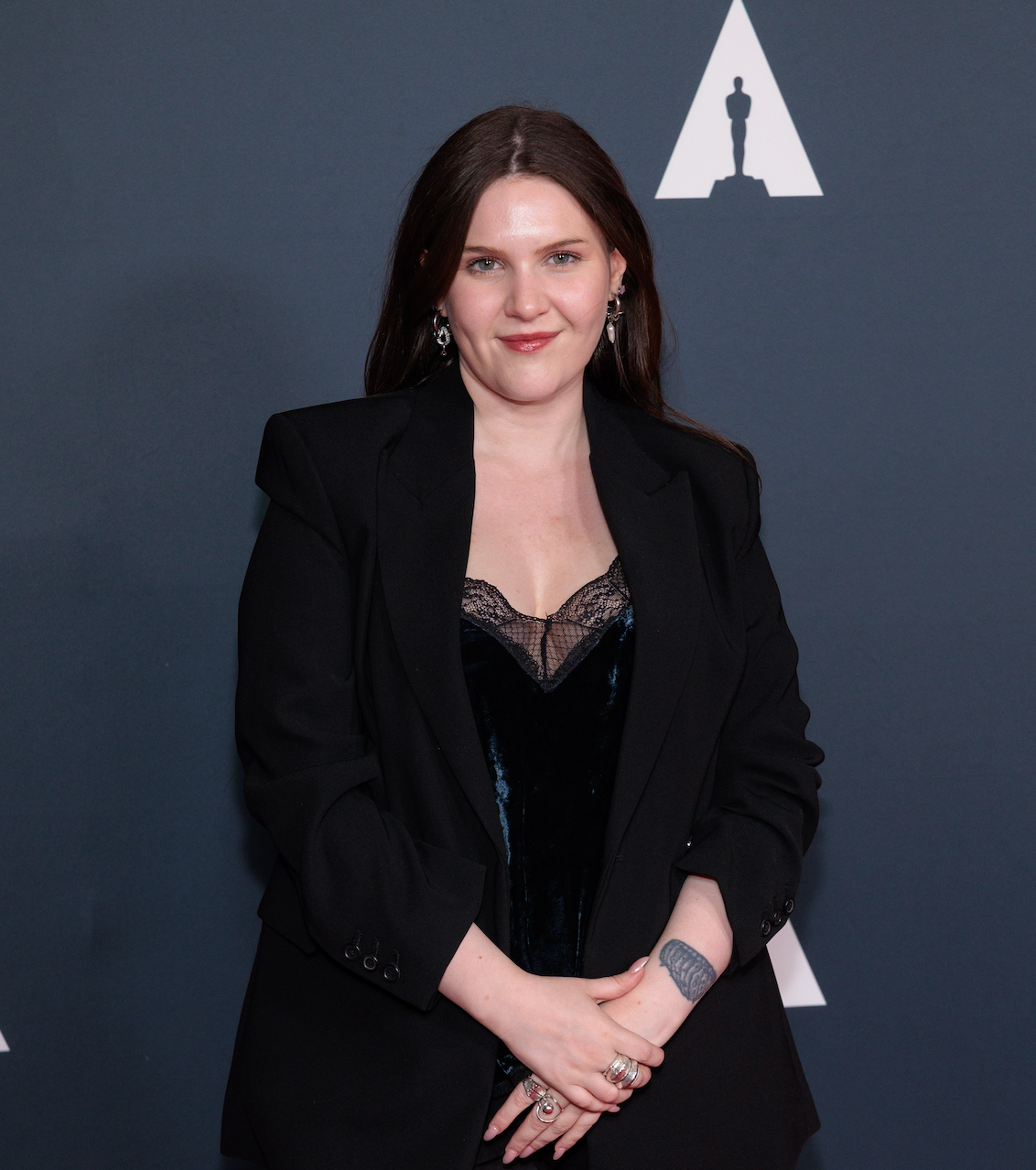
Katla Sólnes wrote the original screenplay Eruption which won a 2025-2026 Nicholl Fellowship in Screenwriting. I had an hour-long conversation with Katla exploring her creative background, analyzing her Nicholl-winning screenplay, and a discussion of key aspects of the screenwriting craft.
Today in Part 4, Katla talks about the sexual tension between the three lead characters and the "tectonic plates" shifting underneath the characters.
Scott: Okay, back to your story and these three characters. There's an incident that happens out on the road where Jane falls and an important piece of equipment breaks, and that really pisses off Kári, the husband. This represents a turn in his attitude because at first, he’s rather enamored of this attractive young woman who’s fawning over him. But after this incident, he’s like, “Why are we having her here?” But interestingly, by this point, Elín and Jane have had these little moments where they’re sort of scoping each other out. And that dual dynamic, the tension Kári and Elín have about Jane, and their shifting feelings toward the young woman plays out throughout Act Two.
Katla: Oh, yeah, definitely. The first act is simple, what we need to learn, what needs to occur … but the second act, once we're with the three of them on this journey, that's when you can really have fun with the characters and go deeper into them.
That was one of my notes I remember from Sundance. A mentor said to me, “We're on a road trip. What do you do on a road trip when you're stuck in a tent all day? You talk.” So, I followed the characters on their journey. First, I had outlined these tent poles and plot points, then when I followed them on this journey, and you find that the characters don’t want to go where you want them to go, you discover that when you're in the scene work.
And then my next step once that post-January Sundance Lab draft was in solid shape, that's when I really did a lot of soul searching for these characters. Kári's hubris became clearer and I wrote diaries from his point of view because it's very easy for a character like him to be two-dimensional. And with Elín, I was so with her, but it's still good to do that work. Do their wants and needs shift, what is it she's looking for? So, that very classic thing which actors do a lot, but also us screenwriters.
That kind of character work was crucial, and I spent a lot of effort on that, though that is when you do what Icelandic people struggle with, you have to use yourself: Your own fears and horrible things that you're not trying to think about yourself, and about your life, and all of that. That's when that comes into play, and that then completely changes the script.
Scott: There's an interesting little backstory with Jane. Early on, I think maybe the first night where she's staying with them, Elín hears Jane crying, so you establish this little mystery: Why is she crying? You don't pay that off until much later, where they're on the road, where the two women are talking, an interaction scene. And you get this backstory where Jane talks about her mother, how she wanted to be a professional, but buried that desire because she got married, a rather tragic end. It would be like if your mother hadn't been able to pursue her--
Katla: Exactly.
Scott: And I'm thinking, it's like the Ghost Of Christmas Future. Elín, if she doesn't take the steps on her journey that she needs to take could end up like Jane's mother. Does that make sense to you?
Katla: Yes, totally. And what you're getting at here, which is perfect, is exactly the kind of thing that deepened and strengthened the piece. Asking, “Why is this woman so ambitious? What is she running away from? What is it she doesn’t want to become?”
I remember there was one pass I took with the script following a later Sundance related event with a phenomenal mentor there, Reggie Rock Bythewood, where he and I were going into people's God shaped holes. What are they really after here? And while he was giving me these great things to ponder and great exercises, I came up with "What if I rewrote the script where Jane's objective is saving her mom?" But of course, by her mom, it's Elín. She's projecting. And then, it becomes very interesting because there are so many other elements at play in their relationship, but I think that's a very clear one. My meeting with Reggie was one of those pivotal ones I think of often.
Scott: Because it's not just a sexual attraction.
Katla: Not at all.
Scott: There is much more psychologically going on, and I think what you just hit there is quite interesting, that maybe what Jane subconsciously is thinking, “Maybe I could save my mother by having this relationship with Elín.” Metaphorically, psychologically.
Katla: Exactly. Because she doesn't want her to follow that path.
Scott: I have this theory about story which is that, specifically for the protagonist, it's about asking this question: “Who am I?” Self-identity. As Joseph Campbell says, the outer journey, what we call the plot, is really about the inner journey of the character to discover who they really are.
Katla: Oh, yes!
Scott: So, Elín on page 62, a little bit after the midpoint says, "I find myself gazing at the mirror, and I think, 'What have I become? Where am I headed?'" She is engaging that existential question: Who am I?
Katla: Yes. It's very much a baptism by fire for Elín and what's so wonderful to me when I found her, the wife, her story, I was so excited because women can disappear in relationships and not realize all the time that's passed. And while it is a period film and very much relevant to its period, I still believe it's a very universal thing that, people of all genders, you just get caught in a status quo. Elín, her life is comfortable, she has never once gone off the beaten path and done something for herself. And by just following his (Kári) life, she's eroding her sense of self without her realizing it. and I want, through this film, for her to very much find herself, a sense of self.
Scott: I must confess, as the story goes along, I got increasingly angry at the husband. He could have been supporting his wife and her academic interests--
Katla: Yeah.
Scott: But he's such a narcissist. His hubris, as you mentioned several times. It's like this guy is so caught up in himself.
Katla: Of course.
Scott: And I was feeling increasingly angry at this guy, so if that was your intention, congratulations.
Katla: Oh, yeah. When I'm writing, I can't cast moral judgment because I have to understand them all. But he is, I think, a classic narcissist. I don't think he operates on trying to be a bad guy, but it's just his life is all about who he is. And the fact that he's realizing he's becoming a relic, as you said, and that his wife is trying to find herself, it’s just terrible timing for him because he doesn't need any competition right now. In fact, what he would love is adoration, which he thinks he'll find in Jane but it doesn't quite go that way.
Scott: And this is where your choice of making it a period piece helped me. Because I was thinking, "You know what, he's a product of the time." It's a patriarchal world. You've got these microaggressions he exhibits, the type of thing women have been living with forever and have to put up with, and he is a product of that. It's like he wouldn't even necessarily even be conscious of it. He's just a guy in 1972 being a guy, as I said, a product of his time.
Katla: I think also the fact he is a product of his time becomes an obstacle for Elín in that I think she is accepting a lot of things that women accepted at the time, until they didn't, thank God. But Jane arriving sort of shatters her preconceptions of what women are allowed to do, and the strange thing is she still deals with her aggressions from Kári in her own way, but I think it rattles Elín that Kári isn't bothered by this young woman being a geologist. He's still a misogynist at his core, but he takes Jane seriously, and so do the other men at the conference.
I think that is also both a product of the times changing, but that's also part of the insecurity Elín feels, this fear that maybe the problem isn't the world she's in, the problem is herself, so it's a very complicated thing. That's also why this period is interesting to me, is just so many things shifted so fast, and how did the women left behind feel? If you're 20 years older than Gloria Steinem, how would you have felt when you saw these shifts occurring?
Scott: Tectonic plates.
Katla: Yeah, exactly. You don't want to fall into the crack.
For Part 1 of the interview series, go here.
Part 2, here.
Part 3, here.
I have interviewed every Nicholl winner since 2012. You may read those interviews here: LINK.