Go Into The Story Interview: Katla Sólnes
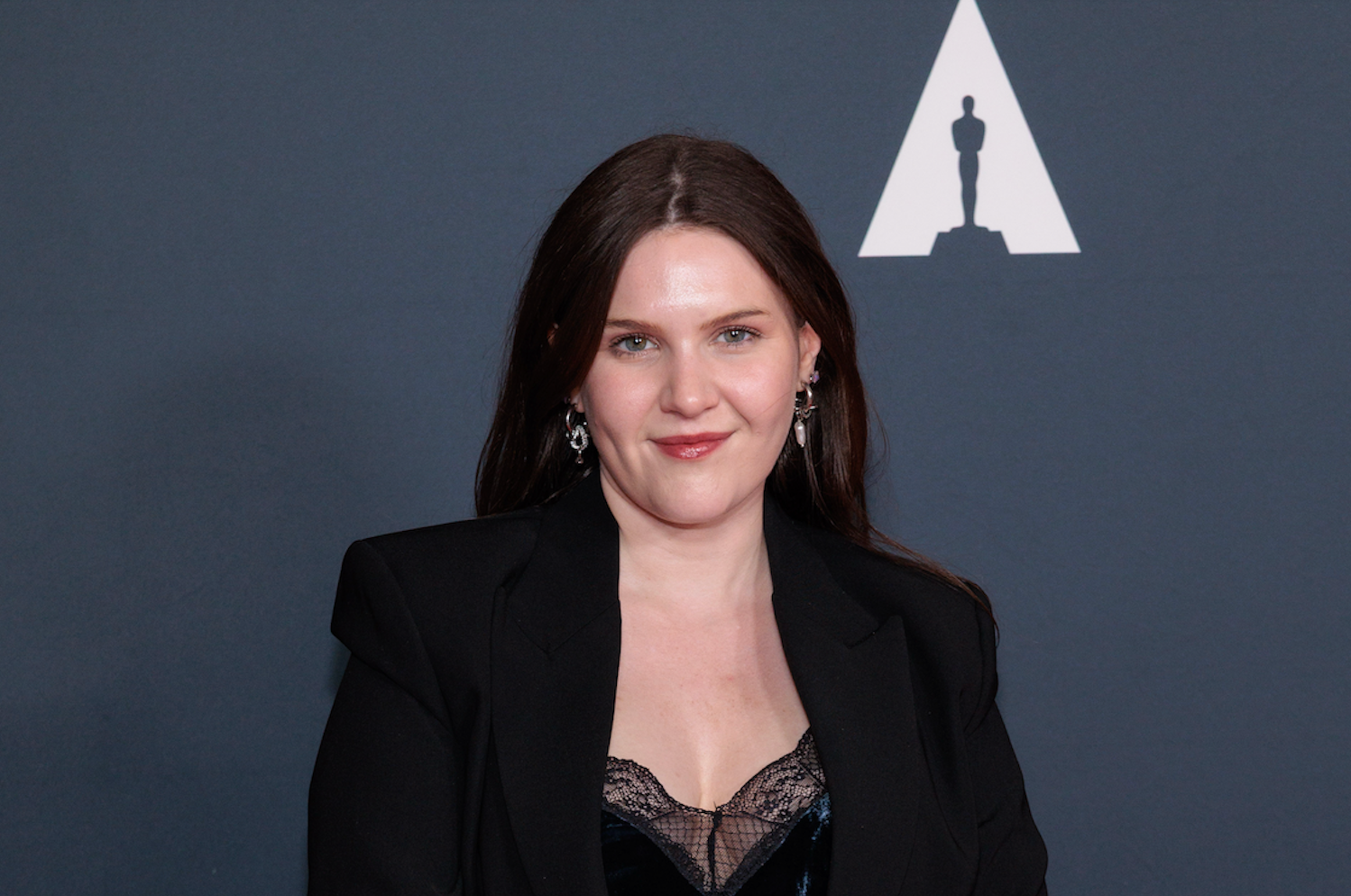
Katla Sólnes wrote the original screenplay Eruption which won a 2025-2026 Nicholl Fellowship in Screenwriting. I had an hour-long conversation with Katla exploring her creative background, analyzing her Nicholl-winning screenplay, and a discussion of key aspects of the screenwriting craft.
Here is my Go Into The Story interview in its entirety.
Scott Myers: You are from Iceland?
Katla Solnes: Correct. I'm Icelandic.
Scott: What's the film industry like there?
Katla: The Icelandic film industry inevitably is quite small because there's just shy of 400,000 people in our country, it's like a small American city. But it's a very fruitful and beautiful industry. We're very blessed with obviously having the most stunning nature one can find on Earth. As a result, we help foreign productions to film here, and that gives us a lot of legs in developing our own industry. Seeing the greats who have come to work here, just the most recent one was Nolan shooting….
Scott: The Odyssey.
Katla: Yes, all the stuff in Hades’ underworld was shot here in Iceland. These bigger productions coming here imbued our industry with a pretty strong understanding of especially technical elements. So, I'd say we're a strong industry, but the flip side is that while similar to everywhere in the world currently, but especially in Europe, governments are cutting funding for film.
So, I'd say it's a strong industry with beautiful work, like Hlynur Pálmason who did Godland, I think, is our shining star. We have great people involved, but unfortunately the government is just cutting, cutting and not allowing the industry to flourish.
Scott: Thanks for that. Let’s talk about your background. How did you get interested in film, TV, and cinematic storytelling?
Katla: My mom works in foreign affairs, so I grew up overseas, mostly in Belgium and Central Europe. Traversing back and forth my entire life gave me an outsider's perspective. That just makes you more of a watcher. I was also a very shy kid. I escaped to story most of my childhood, and also because I was going between places, I was just able to perceive things differently.
I started drawing, painting, and photography. Then photography turned into filmmaking. A huge part of the reason why I love filmmaking so much is because it marries together every artistic discipline. You can do photography, work with actors, you can write. you can geek out about music, costume, interior design. You're able to be in all the arts, which I love.
Scott: Because you're traveling around as a youth, were you mostly watching international movies or were you at all drawn toward what was going on coming out of Hollywood?
Katla: You know how Iceland is right in the middle of Europe and America? I'd say that's very much my sensibility, both as a kid and especially now as an actual filmmaker. I find myself drawn to classic story structure, classic script writing, classic storytelling. I love great Hollywood films where the plot unfurls in this traditional beautiful way. But then that European sensibility. I love the visuals of European cinema. Its pacing, grace and atmosphere.
Scott: Did you attend university in Iceland?
Katla: At first, I did engineering in the Netherlands and realized I was the world's worst engineer. I was trying to be very pragmatic about my choices basically, ‘’What can I do to own an apartment one day,” you know.
But in Iceland, we say, “When you're on the wrong shelf, nothing goes well.” So, I was clearly on the wrong shelf in engineering. After spending a magical weekend with my friend who was at film school in England, I had a sort of “come to Jesus moment” of, “What am I doing with my life?”
So, I ended up going back to Iceland for film school and I remember when I found out I had been accepted to that school. I was studying for exams and I got the call, and we were in a very advanced math class. I remember walking in after getting the call, looking at my friends waving, leaving, and never turning back to the engineering building.
Scott: It reminds me of Joseph Campbell who I first studied when I was an undergraduate student and have been inspired by. He has that saying, "How tragic it is to be climbing the ladder to success and discover that you've been on the wrong wall."
Katla: Oh, wow. That resonates. The universe doesn't want you to do things you hate. I think that's just not a good way of living your life. I remember thinking to myself, “If I really focus on school and put my all into this, all I'll end up is just being an engineer no one would hire because I was awful.”
Scott: You went to graduate school, got a master's at Columbia. How did that happen?
Katla: After film school, I worked for several years in the advertising industry as an editor, then later as a screenwriter. And then during COVID, I think many people, myself included, were looking at their life and considering what they're doing.
Again, I was very much not on the wrong shelf, but not quite the right shelf let's say, because it was creative work but I was never that big into advertisements. I loved watching movies, so then I made the choice to apply to a few graduate programs to force myself to get back on the horse, because it's very easy when you have a desk job that is fulfilling and fun to just stay there, and I challenged myself to leave Iceland again and get back into narrative work.
Columbia, which they call “the story school,” it's very much screenwriting driven, which was just the perfect choice for me. And I love New York also, so that was a plus.
Scott: You've been doing all sorts of things. Commercials, documentaries, you have a bunch of short narrative films, you've been writing scripts. Where does your primary interest lie?
Katla: My passion is this film Eruption. We're deep into development, we already cast the two Icelandic leads. And we've been doing location scouting, and we were hoping to film next year, but if not, at the latest, the year after that. Which is not, I guess, the classic path for the Nicholl fellowship because they tend to be more screenwriters, while I'm very much writer-director. Hopefully, I can make the movie here in Iceland, then go back to Hollywood and make not just Icelandic films, but global films. That would be my dream.
Scott: Your script Eruption won the Nicholl Fellowship in 2026, but you worked on it as a Sundance Screenwriter Lab Fellow in '25, Hampton Screenwriter Lab Fellow '26. Has it evolved through the various writer labs?
Katla: Yeah. The story for Eruption I'd had for years and years before I went to grad school. I love 19th and 20th century literature and often these sorts of stories are of just a few people out in some kind of adventure. I just find those very riveting.
So, I had the story tinkering around for a long while, and then I got a grant (The Alfred P. Sloan fellowship) my second year at Columbia. You send in a short treatment, and you have to write a script, then rewrite it. And, of course, like many overworked grad students. I didn't write it in time for the rewrite class and ended up writing the entire Eruption script over one weekend at the library. It was 168 pages long. It was feverish, it was regurgitating text without any kind of pause to think about what I was writing. That draft was a beast to read and thankfully not too many people had to delve into those very dark waters.
The first really huge step Eruption took was thanks to my mentor, a Professor at Columbia, Katherine Dieckman. Really got that script into shape. Then when I went to the Sundance lab, structurally I'd say it wasn't too different from the script that you've read, and the sort of big tent poles. There was a synergy there, but the character work was lacking, mostly due to the whirlwind of Grad School (and I usually had two or three jobs) and thus it was hard to find time to sit with the characters. At Sundance, where the mentors were just outrageously good, I was really challenged to delve deep into these characters. I, like all Nordic people, struggle with getting too emotional or personal, and of course when you're writing your characters, you have to be vulnerable. And the best way to access that vulnerability is to explore your own struggles through the characters.
Scott: This script is a character piece. It's fundamentally about three people.
Katla: Exactly.
Scott: Here's a logline as summarized by the Nicholl folks.
“In the highlands of 1970s Iceland, a geologist's wife finds her marriage tested when a wily American student arrives stirring tensions as volatile as the surrounding volcanic landscape.”
How did this assembly of characters emerge in your story-crafting process?
Katla: I remember struggling because I wanted the story to be period, and I had an idea what it was looking like, the physical environment, I had these vignettes in my mind. And I was thinking to myself, "I'd love for it to be a female protagonist." And at first, it was the student as the protagonist.
Scott: The American student.
Katla: Originally, it was just a straight love story between the professor and the student. And it was more something akin to Jane Eyre, and I just wasn't moved by either, or driven by it. I got a small grant from Iceland to go from idea to treatment. Which is a great grant that I don't think they do anymore. But it's very helpful for young screenwriters to get a tiny bit of money to spend time writing a treatment.
I remember I was thinking I'd love for it to be two women, but It would have been so historically inaccurate. It would have then almost verged on fantasy, this sort of great female professor of geology in Iceland, even though I love the image of that. And then it just came to me in a vision: “Obviously, we just have the professor married …" and thus it's the wife who’s the protagonist, the wife who is changed by the student, not the professor, and that's the central relationship.
That led to feverish treatment writing. It almost wrote itself. It suddenly made so much sense to me. I've always been super interested in these stories of women behind the scenes who do the work, part of the work, or the emotional work, or whatever that may be, who are then completely lost to time.
I all of a sudden felt like I knew them very well. I didn't want Kári, the professor, to just be this stone of a man. I wanted him to be human and have his own pathos and his own anxieties and of course with the wife's anxieties, Elín's, they were clear because you think, obviously, she's insecure towards a younger woman and the fact that the younger woman is more educated and possibly more intelligent than her. But then, once you delve deeper you find more and more about the characters. But I'd say that was that lightning flash and from that, the story really became what it is.
Scott: Let’s talk about the protagonist, Elín. She's mid-40s. Married to this famous professor. When we meet her at the beginning, how would you describe her?
Katla: She's very much a woman who is content and she doesn't dare dream for more. And this is a very intelligent, thoughtful, multi-talented woman who I think through her relationship with her husband actually feels that she's gotten to experience a lot of interesting things.
We find her ... and is she happy? No. But is she wanting more? I think she dares not yet when we meet her. She's reminiscent of many women of her era, but also especially in Iceland. Had she been born twenty years later (as Jane was) she’d have a completely different, freer, more exciting set of choices. Time has robbed her of something. What's very fascinating about Iceland is that currently, we rank number one in the gender index between men and women. So, she's emblematic of this sudden and miraculous change that happened just at around the point where the film is set.
Scott: In Hollywood, screenwriters are always asked, “Why are you doing this movie as a period piece?" In your story, it’s like second wave feminism… And I thought that was interesting because you've got this metaphor of volcanoes and tectonic plates. And when you say Elín's not happy, like she has tectonic plates grinding away psychologically, a volcano waiting to erupt.
Katla: Yeah, I'd say that’s a very apt characterization of her. And as you say, as we come to know her, it's clear that there's something bubbling underneath the surface. I don't think she's allowing, both metaphorically and, and then of course in the film, she's not allowing herself to consider change. She's very much living a life of quiet desperation.
Scott: Carl Jung talks about how the unconscious yearns to come into the light of consciousness. Elín has these tectonic plates, this lava she’s trying to bury…
Katla: Exactly. They're all, as we all do, burying things. And of course, we Nordics are world class at burying things. .
Scott: Elín’s married. She was like 19, I think, when she first started having this relationship with Kári. I thought this was interesting how you introduced this guy. From the script about the house the couple lives in:
“Each inch of the hallway wall is covered in a plethora of framed diplomas, images, newspaper articles, all emphasizing the successes and triumphs of a great man, renowned geologist Dr. Kári Carlson.”
So, this is a guy who’s in his 60s and lives on the laurels, yes?
Katla: So, where we meet Kári is he similarly has many things bubbling under and one of his primary anxieties is that he's realizing A, he's aging; B, he's recently injured himself, so the fact that they're even going into the field is not a wise choice for him to make. And this is a man who's always been this mountaineer scientist, so there's the physical ailment which impacts his sense of masculinity, his sense of mortality. But also, as we come to learn over the script, it's been a while since he released the book that people cared about. It's been a while since he's become a legend and not a man. Which is, I think, frightening.
That adds to his fear of death, fear of age, fear of irrelevancy, fear of emasculation. And they've been married for 20 years when we meet them, so the heat has left the relationship. Both of them in their own way are very much in need of a change.
Scott: As Joseph Campbell says, "The journey the hero or heroine," in this case, “takes is the journey they need to take." And that journey really begins when this third character shows up: Jane. Here’s how you describe her introduction in the script;
"A young woman with long blonde hair backlit by the hazy evening sun carefully steps out of the car. She wears jeans and a plunging V-neck sweater, aggressively '70s. This is Jane." And it says, " Elín stares at her stunned." They were expecting a guy.
Katla: Yes.
Scott: Let's talk about Jane.
Katla: Every year, they vet the people who apply and Elín chooses the best person for the job. And this year, the best person for the job very purposely hid the fact that they're a woman and this is a classic sort of story trope, let's say, but it's one that I love. I love the woman pretending to be a man. There's just something very magical about that. So, of course, her arrival is shocking not because she's young or beautiful or intelligent though all these things become big annoyances to Elín, but the first shock is just that she's a woman.
Jane is an interesting character because she's very ambitious, she's driven and she very much personifies the kind of go-getter women of that era. You need to play the game and so she does. She's a lot more brazen than women of Elín's age, even though it's only a generation between them. Those years count for a huge change in their ability to move through the world and their confidence in moving through the world.
Scott: To me, if you think in terms of a character archetype, Jane is a Trickster. Right off the bat, the way she submits her application with initials, and so we don't know she’s a woman. Trying to navigate a patriarchal, misogynist world of science, as a geologist, right?
Katla: Because we're so entrenched in Elín's point of view for the entirety of the film, I think the way she sees her is how we see her, which is a very unpredictable woman, almost frighteningly so. Jane has been in the science field for her short, but still relevant adult life. So, I think she's very well equipped at navigating these kinds of old farts, let's say, who don't believe in her, and she knows all the tricks to get them to like her whether she uses her feminine wiles as much as she uses her actual intelligence, enthusiasm and ambition.
And I think at first, she doesn't really know what to do with Elín because she's not really used to having to schmooze a woman in this way, so especially in the first act, the two women butt heads because they don't understand each other
Scott: Elín is a gatekeeper to her husband.
Katla: Yes, exactly.
Scott: And because Kári is injured, old, and his famous book came out a long time ago, he's concerned about being kind of a relic. There's a theme or dynamic of impotence at work in the beginning of the story. Every time he reaches out to Elín as an overture to sex…
Katla: Yeah.
Scott: She'll find some reason to say “no.” We get this idea that the couple is at sixes and sevens in terms of their intimacy. So, there's some sexual tension when Jane shows up. She's in the tradition of the femme fatale.
Katla: Totally.
Scott: But the thing that's so interesting about her is that every time she does something that feels like she’s using her sexuality, she has a reason that she explains her behavior.
Katla: Many of her, let's say more unsavory deeds, by virtue of her youth and her ambition, she's a little selfish … as one can be. But I think Jane truly tries to do the right thing and has her own sense of logic of why that is the right thing. I don't know how spoiler heavy we're allowed to go but, with the conference and with Elín's discovery in the third act, both of these things, Jane is trying to help herself, but also Elín in her own strange way.
Scott: I want to step outside the story for a bit and talk screenwriter to screenwriter. I’m reading your script and Jane shows up on page 16, the midpoint of Act One. Then later, Elín, who has declined to go with her husband, after Jane shows up and Elín becomes suspicious, even jealous, she declares she is going to accompany the pair on their expedition. That happens right at the end of Act One.
Katla: Definitely.
Scott: This is a character piece, yet the story structure reads like conventional Hollywood storytelling, three-act structure… and I’m not saying that’s a bad thing, just an observation. Could you talk about your approach to story structure?
Katla: I had an understanding of story prior to going to grad school, and also just by loving film, but Columbia is very much into what we call the eight sequences method. Based on how film reels were 12 minutes, thus generally two reels (or sequences) in the first act, four in the second and two in the third. And each sequence should have its own story, drive, force, climax. And you put that into the three-act structure. So, that's the method that we're taught, and a method I very much resonated with because even though I like, let's say, operatic landscapes and visuals and messy characters, I love a well-structured tale.
I'm a bit of a screenwriting nerd now, both coming from Columbia and also teaching screenwriting there and at a pre-college program at Northwestern. So, I teach my students the three-act structure.
It also helps me beat out the story because when I sat down and wrote that monstrous draft, it's not as if I was just going from instinct purely. For months, I’ll have been thinking about the story. For instance, I'm writing two scripts right now, and I'm more often thinking about them than writing them.
But once that reflection is done, usually the first step I do is an outline, and in that outline I will always make sure to beat out the inciting incident, the end of Act One, especially the midpoint, which is crucial, and so on. And then of course these things develop once you write the script and things are working differently than you anticipated, but I'm very much a structure nerd in, in my process and in how I engage with film.
Scott: The thing that I was interested to hear you say, that once you landed on those three characters and knocked out that 160 plus page script, you felt them, you saw them. You did a lot more work once you went to Sundance and so forth. That's the difference between that sort of outside-in approach, “Let's have these events happen on this page or that,” versus an inside-out approach where the characters drive the story-crafting process.
Katla: Exactly.
Scott: Okay, back to your story and these three characters. There's an incident that happens out on the road where Jane falls and an important piece of equipment breaks, and that really pisses off Kári, the husband. This represents a turn in his attitude because at first, he’s rather enamored of this attractive young woman who’s fawning over him. But after this incident, he’s like, “Why are we having her here?” But interestingly, by this point, Elín and Jane have had these little moments where they’re sort of scoping each other out. And that dual dynamic, the tension Kári and Elín have about Jane, and their shifting feelings toward the young woman plays out throughout Act Two.
Katla: Oh, yeah, definitely. The first act is simple, what we need to learn, what needs to occur … but the second act, once we're with the three of them on this journey, that's when you can really have fun with the characters and go deeper into them.
That was one of my notes I remember from Sundance. A mentor said to me, “We're on a road trip. What do you do on a road trip when you're stuck in a tent all day? You talk.” So, I followed the characters on their journey. First, I had outlined these tent poles and plot points, then when I followed them on this journey, and you find that the characters don’t want to go where you want them to go, you discover that when you're in the scene work.
And then my next step once that post-January Sundance Lab draft was in solid shape, that's when I really did a lot of soul searching for these characters. Kári's hubris became clearer and I wrote diaries from his point of view because it's very easy for a character like him to be two-dimensional. And with Elín, I was so with her, but it's still good to do that work. Do their wants and needs shift, what is it she's looking for? So, that very classic thing which actors do a lot, but also us screenwriters.
That kind of character work was crucial, and I spent a lot of effort on that, though that is when you do what Icelandic people struggle with, you have to use yourself: Your own fears and horrible things that you're not trying to think about yourself, and about your life, and all of that. That's when that comes into play, and that then completely changes the script.
Scott: There's an interesting little backstory with Jane. Early on, I think maybe the first night where she's staying with them, Elín hears Jane crying, so you establish this little mystery: Why is she crying? You don't pay that off until much later, where they're on the road, where the two women are talking, an interaction scene. And you get this backstory where Jane talks about her mother, how she wanted to be a professional, but buried that desire because she got married, a rather tragic end. It would be like if your mother hadn't been able to pursue her--
Katla: Exactly.
Scott: And I'm thinking, it's like the Ghost Of Christmas Future. Elín, if she doesn't take the steps on her journey that she needs to take could end up like Jane's mother. Does that make sense to you?
Katla: Yes, totally. And what you're getting at here, which is perfect, is exactly the kind of thing that deepened and strengthened the piece. Asking, “Why is this woman so ambitious? What is she running away from? What is it she doesn’t want to become?”
I remember there was one pass I took with the script following a later Sundance related event with a phenomenal mentor there, Reggie Rock Bythewood, where he and I were going into people's God shaped holes. What are they really after here? And while he was giving me these great things to ponder and great exercises, I came up with "What if I rewrote the script where Jane's objective is saving her mom?" But of course, by her mom, it's Elín. She's projecting. And then, it becomes very interesting because there are so many other elements at play in their relationship, but I think that's a very clear one. My meeting with Reggie was one of those pivotal ones I think of often.
Scott: Because it's not just a sexual attraction.
Katla: Not at all.
Scott: There is much more psychologically going on, and I think what you just hit there is quite interesting, that maybe what Jane subconsciously is thinking, “Maybe I could save my mother by having this relationship with Elín.” Metaphorically, psychologically.
Katla: Exactly. Because she doesn't want her to follow that path.
Scott: I have this theory about story which is that, specifically for the protagonist, it's about asking this question: “Who am I?” Self-identity. As Joseph Campbell says, the outer journey, what we call the plot, is really about the inner journey of the character to discover who they really are.
Katla: Oh, yes!
Scott: So, Elín on page 62, a little bit after the midpoint says, "I find myself gazing at the mirror, and I think, 'What have I become? Where am I headed?'" She is engaging that existential question: Who am I?
Katla: Yes. It's very much a baptism by fire for Elín and what's so wonderful to me when I found her, the wife, her story, I was so excited because women can disappear in relationships and not realize all the time that's passed. And while it is a period film and very much relevant to its period, I still believe it's a very universal thing that, people of all genders, you just get caught in a status quo. Elín, her life is comfortable, she has never once gone off the beaten path and done something for herself. And by just following his (Kári) life, she's eroding her sense of self without her realizing it. and I want, through this film, for her to very much find herself, a sense of self.
Scott: I must confess, as the story goes along, I got increasingly angry at the husband. He could have been supporting his wife and her academic interests--
Katla: Yeah.
Scott: But he's such a narcissist. His hubris, as you mentioned several times. It's like this guy is so caught up in himself.
Katla: Of course.
Scott: And I was feeling increasingly angry at this guy, so if that was your intention, congratulations.
Katla: Oh, yeah. When I'm writing, I can't cast moral judgment because I have to understand them all. But he is, I think, a classic narcissist. I don't think he operates on trying to be a bad guy, but it's just his life is all about who he is. And the fact that he's realizing he's becoming a relic, as you said, and that his wife is trying to find herself, it’s just terrible timing for him because he doesn't need any competition right now. In fact, what he would love is adoration, which he thinks he'll find in Jane but it doesn't quite go that way.
Scott: And this is where your choice of making it a period piece helped me. Because I was thinking, "You know what, he's a product of the time." It's a patriarchal world. You've got these microaggressions he exhibits, the type of thing women have been living with forever and have to put up with, and he is a product of that. It's like he wouldn't even necessarily even be conscious of it. He's just a guy in 1972 being a guy, as I said, a product of his time.
Katla: I think also the fact he is a product of his time becomes an obstacle for Elín in that I think she is accepting a lot of things that women accepted at the time, until they didn't, thank God. But Jane arriving sort of shatters her preconceptions of what women are allowed to do, and the strange thing is she still deals with her aggressions from Kári in her own way, but I think it rattles Elín that Kári isn't bothered by this young woman being a geologist. He's still a misogynist at his core, but he takes Jane seriously, and so do the other men at the conference.
I think that is also both a product of the times changing, but that's also part of the insecurity Elín feels, this fear that maybe the problem isn't the world she's in, the problem is herself, so it's a very complicated thing. That's also why this period is interesting to me, is just so many things shifted so fast, and how did the women left behind feel? If you're 20 years older than Gloria Steinem, how would you have felt when you saw these shifts occurring?
Scott: Tectonic plates.
Katla: Yeah, exactly. You don't want to fall into the crack.
Scott: The title of your script is Eruption. And there's a couple of moments between husband and wife where they do get at it in an explosive way.
Katla: Yeah.
Scott: That one that happens in Act Three, I couldn't help but recall that big blow up they do in flashback in Anatomy of a Fall.
Katla: Oh, yeah. I love that scene.
Scott: I watched that scene again last night, and the heightened level of anger and rage between the husband and wife reminded me of the scene in your script.
Katla: I'm floored by that because, I think, to write a confrontational scene… At our cores as writers, many of us are gentle people who struggle with yelling. But as with everything when you're writing core personality, I'm writing things I've said in arguments and things I wish I had said.
Scott: I don't want to give away the ending, but I think it's perfect the way it is, where the ending of the story is the beginning of the protagonist's new life.
Katla: Exactly.
Scott: Did you always have that in mind?
Katla: I would say so. I think in every draft, we've always left her there. When I pitched the idea my first ever time, eons ago, I always thought of the end, the Virginia Woolf novel “A Room of One's Own.” The importance of having a room of one's own, and that to me is the mood for the end.
Scott: Well, congratulations again. Well done with the script. And the Nicholl. What was that experience like?
Katla: It was incredibly magical and bewildering. I am grateful for Columbia for nominating me and I only have good things to say about my time there. I think the teachers are just world-class. And I remember when I got ‘’the’’ email, but it was a very sinister-feeling email from The Nicholl that almost felt that they were implying that I'd committed plagiarism or something.
I received this email while at a wedding in India, and which very much dimmed my exuberance that evening. Then I met with them on the day of my 30th birthday, where I thought it was going to be a tense conversation. I felt like I was getting ready for a jury or court or something. But instead they were all total sweethearts (clearly the email was a bit of a slight of hand to make the result not too obvious) and they let me know I'd been chosen, and I was just thrilled. I was also late, and I'm never late to anything because I miscalculated the time difference. So, it was an intense event, but the experience itself was absolutely wonderful. You're in LA, you get to see all these academy-related things and meet all these incredibly talented screenwriters, both my fellow fellows and then, fellows of years past and members of the Academy.
It was really galvanizing. It's just the rarest thing for people to read your work or care. I think it was in The Lost Daughter, the Maggie Gyllenhaal film where they talk about, "The rarest thing to give people is your attention."
So, it just feels really remarkable and lovely that someone cared to read it, and they liked it and through that to get to meet other people who write amazing things.
Scott: Okay, so let me ask you a few craft questions, to get into your screenwriting perspective on things. I'm curious about your prep-writing part of the process. You say you spend a lot of time thinking, it's like pre-writing, right?
Katla: Oh, yeah!
Scott: You mentioned the Eight Sequence Theory. So, at some point you've got to create something, a treatment, an outline? How do you go about wrangling your story?
Katla: I'd say the first step, which I said, is the thinking but very much crucial to thinking is walking. I try to walk 20,000 steps every day. I constantly walk … hours every day. Thankfully, I'm an editor, so I have my own hours because back at my advertising job, that would've been frowned upon if I kept leaving for hour-long walks. And every great philosopher and writer since the dawn of time talks about there's nothing more that activates the mind more than walking. So, I'd say that's the biggest writing tip. Go for a walk. But after that, I do just a very brief outline, and I try to think semi-structurally or, I just try to put on paper everything I've been thinking about. The major plot points, the turning points.
At that point, I'm probably already thinking ‘’this is probably what incites it, and this leads to Act One.’’ So, I kinda have a very skeletal, let's say, structure, and in that just my thoughts. And then through that, I'll write a treatment. I find the scene work the most fun, and structure and outline the most difficult. So, once I'm out of the skeletal outline into treatment form, that's when I start to have fun because then I can also bring in atmosphere, details, lines of dialogue that have been running through my mind … I'm a very visual thinker, and I love dialogue.
Then that stuff starts coming to fruition, which is my favorite part. So when I wrote that huge feverish thing, I don't think I had a long treatment, but I did have a two-page treatment which had an ambiance and in my mind, I already had some of the sentences the characters would say.
So, that's the process for me. Then, of course, doing scene work, writing, rewriting. I write chronologically starting at the top, and then if a scene is bumping me, I'll just write a quick, “This is where they fight,” and move on. I try to write the first draft quite speedily, not allowing too much reflection or doubt. That comes with the second draft.
Scott: I'm imagining while walking, it'd probably be motivational to be in Iceland where you're traipsing about amidst volcanoes.
Katla: I'm not a big hiking girl. I just like walking in the streets and seeing people. It's making me a much worse writer having left New York because that's the perfect place to walk around. I would always walk in Riverside Park on the Upper West Side and, and then you see people playing, smoking cigars, and reading the news and playing an instrument. I’m a flaneur at heart.
Here in Iceland, I'm in a city, but I usually go straight to the ocean and walk by the ocean, which is lovely because who can complain when they're listening to waves?
Scott: Let's talk about your character development process. You mentioned earlier doing biographies.
Katla: Yeah.
Scott: What do you do to find the characters? Any particular exercises you use?
Katla: I think when a story reveals itself, the characters reveal themselves. At least when I'm writing, I have a sense of the characters and they can come from anywhere. They can be amalgams of myself in some way (and they usually are) but they're also just archetypal people or people I know or combinations of people I know.
But I always just really see them in my mind and I feel like I can hear their voice. And I'd say that sort of deep character work is actually more what I do when I have a first draft or something because then it's about deepening the character. It's stuff I think you, the writer, you already know about them but … you just haven't excavated it yet, so that's when I find it very helpful, once I finish the first draft to dig deeper. It's like therapy. You get to know them in increments, then that's when I would do things, the classic biography. Just what have they done, bullet points in their life.
Relationships with their parents, siblings, you know just these kinds of questions you'd ask people on a second or third date. And then I find diary work very helpful and you can find prompts from, you know acting websites or writing websites. And I find that work very helpful because then you're going beneath the surface and it's creative fun work I find. It's a very stream of consciousness.
Scott: Where you let yourself go and these little gems emerge, right? And you’re like, “Where did that come from? It came from the characters.
Katla: Yeah, exactly. And that's the part where I think your lived experiences start tinting their voices with a very specific color that only you, the writer, can bring to the piece,
Scott: Let's talk about theme. The script is called Eruption. You've got the tectonic plates, lava. Was that a conscious thing up front in the process or did it emerge over time.
Katla: Because it would be Elín’s awakening story, I always knew that I wanted the climax to be at this historical volcano, because it just made sense with the time and it's an Icelandic film. It was this kind of hugely remarkable geological world event.
You have a woman who's awakening and you want it to end with an eruption, it just sort of wrote itself in that way, that thematic element of the Earth waking up and her waking up.
They laid dormant for a while, and then suddenly during COVID, you could go on hikes and see an active volcano. I think that inevitably just impacted my psyche and my own feelings of awakening. I'd say it was a very symbiotic thing that happened simultaneously.
Scott: Organic.
Katla: Yeah, organically.
Scott: One last question for you. What's the one single best piece of advice you could give to someone? Let's talk just about screenwriting. Someone says, "How do I become better, how do I learn this craft?" What's the single best piece of advice you have for this then?
Katla: It's just to let go of the fear to be a good writer because inevitably whatever scene you write, especially if you're writing an intense scene like a fight scene, you have to accept it's going to be terrible. I think it's a much healthier mindset to go into the script knowing that it's not going to work, and it's not going to work for a while. It's like people say “Writing is rewriting,” and that is just a factual thing. I think sitting down and realizing that the first draft, the second draft, whatever, whichever thing you're writing is inevitably going to be a bit (or very) bad, I think is a very freeing thought.
I actually think that was a boon to my own progress as a screenwriter because when I applied to Columbia as a screenwriter, I thought I was a terrible screenwriter. I felt more strongly in my directing than my writing, and I think that helped me in all my writing classes because I was always operating on the knowledge that I wasn't a screenwriter, I was a director.
Therefore, I wasn't too worried about notes and worried about drafts and whatever because I felt I was a bad screenwriter. That was a truth I knew. So, I actually think in this weird way that helped me become a much better screenwriter because I just wasn't so precious about everything. So my advice would be to relax, and not be too precious. Allow the work to be bad before it gets good.
I have interviewed every Nicholl winner since 2012. You may read those interviews here: LINK.