Go Into The Story Interview (Part 6): Katla Sólnes
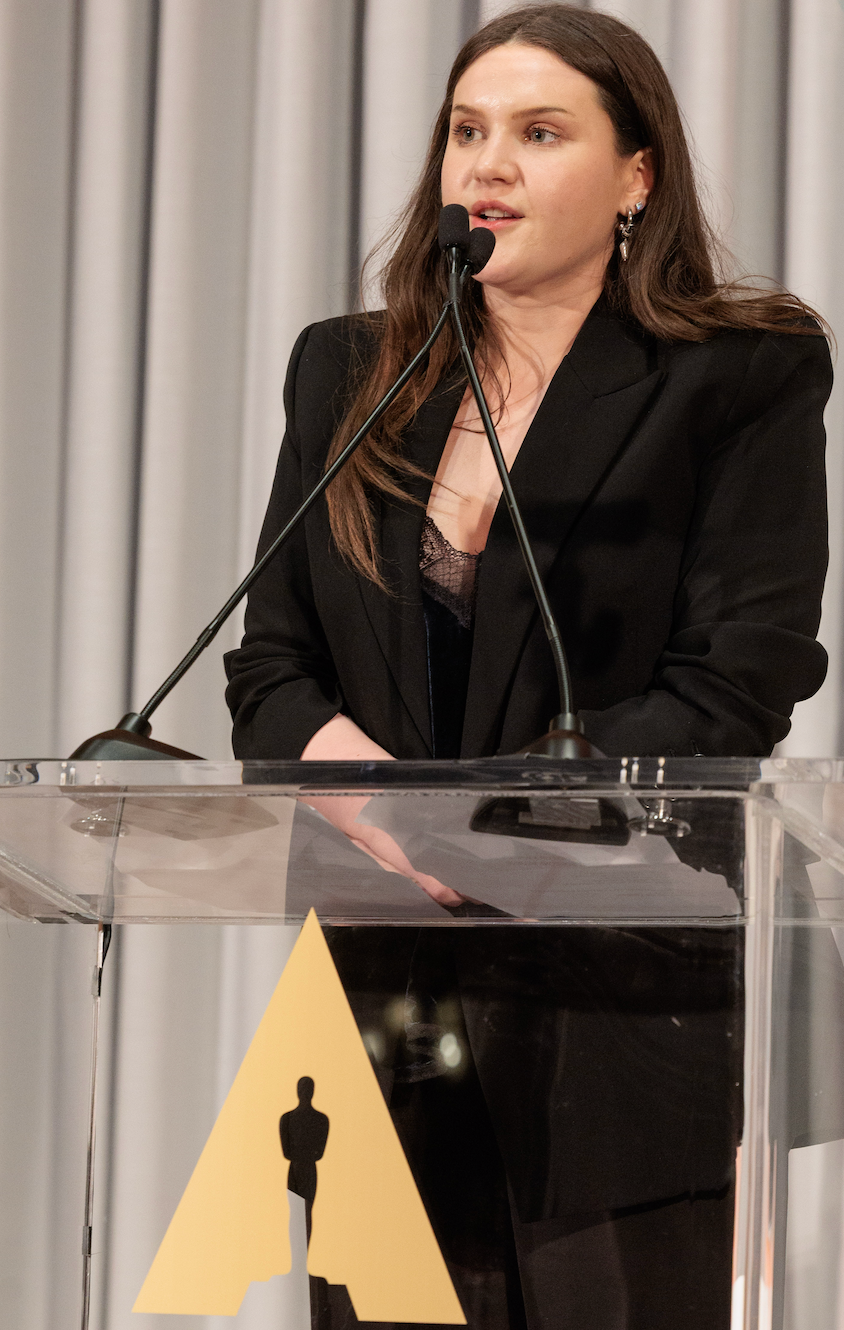
Katla Sólnes wrote the original screenplay Eruption which won a 2025-2026 Nicholl Fellowship in Screenwriting. I had an hour-long conversation with Katla exploring her creative background, analyzing her Nicholl-winning screenplay, and a discussion of key aspects of the screenwriting craft.
Today in Part 6, offers advice to aspiring screenwriters.
Scott: I'm imagining while walking, it'd probably be motivational to be in Iceland where you're traipsing about amidst volcanoes.
Katla: I'm not a big hiking girl. I just like walking in the streets and seeing people. It's making me a much worse writer having left New York because that's the perfect place to walk around. I would always walk in Riverside Park on the Upper West Side and, and then you see people playing, smoking cigars, and reading the news and playing an instrument. I’m a flaneur at heart.
Here in Iceland, I'm in a city, but I usually go straight to the ocean and walk by the ocean, which is lovely because who can complain when they're listening to waves?
Scott: Let's talk about your character development process. You mentioned earlier doing biographies.
Katla: Yeah.
Scott: What do you do to find the characters? Any particular exercises you use?
Katla: I think when a story reveals itself, the characters reveal themselves. At least when I'm writing, I have a sense of the characters and they can come from anywhere. They can be amalgams of myself in some way (and they usually are) but they're also just archetypal people or people I know or combinations of people I know.
But I always just really see them in my mind and I feel like I can hear their voice. And I'd say that sort of deep character work is actually more what I do when I have a first draft or something because then it's about deepening the character. It's stuff I think you, the writer, you already know about them but … you just haven't excavated it yet, so that's when I find it very helpful, once I finish the first draft to dig deeper. It's like therapy. You get to know them in increments, then that's when I would do things, the classic biography. Just what have they done, bullet points in their life.
Relationships with their parents, siblings, you know just these kinds of questions you'd ask people on a second or third date. And then I find diary work very helpful and you can find prompts from, you know acting websites or writing websites. And I find that work very helpful because then you're going beneath the surface and it's creative fun work I find. It's a very stream of consciousness.
Scott: Where you let yourself go and these little gems emerge, right? And you’re like, “Where did that come from? It came from the characters.
Katla: Yeah, exactly. And that's the part where I think your lived experiences start tinting their voices with a very specific color that only you, the writer, can bring to the piece,
Scott: Let's talk about theme. The script is called Eruption. You've got the tectonic plates, lava. Was that a conscious thing up front in the process or did it emerge over time.
Katla: Because it would be Elín’s awakening story, I always knew that I wanted the climax to be at this historical volcano, because it just made sense with the time and it's an Icelandic film. It was this kind of hugely remarkable geological world event.
You have a woman who's awakening and you want it to end with an eruption, it just sort of wrote itself in that way, that thematic element of the Earth waking up and her waking up.
They laid dormant for a while, and then suddenly during COVID, you could go on hikes and see an active volcano. I think that inevitably just impacted my psyche and my own feelings of awakening. I'd say it was a very symbiotic thing that happened simultaneously.
Scott: Organic.
Katla: Yeah, organically.
Scott: One last question for you. What's the one single best piece of advice you could give to someone? Let's talk just about screenwriting. Someone says, "How do I become better, how do I learn this craft?" What's the single best piece of advice you have for this then?
Katla: It's just to let go of the fear to be a good writer because inevitably whatever scene you write, especially if you're writing an intense scene like a fight scene, you have to accept it's going to be terrible. I think it's a much healthier mindset to go into the script knowing that it's not going to work, and it's not going to work for a while. It's like people say “Writing is rewriting,” and that is just a factual thing. I think sitting down and realizing that the first draft, the second draft, whatever, whichever thing you're writing is inevitably going to be a bit (or very) bad, I think is a very freeing thought.
I actually think that was a boon to my own progress as a screenwriter because when I applied to Columbia as a screenwriter, I thought I was a terrible screenwriter. I felt more strongly in my directing than my writing, and I think that helped me in all my writing classes because I was always operating on the knowledge that I wasn't a screenwriter, I was a director.
Therefore, I wasn't too worried about notes and worried about drafts and whatever because I felt I was a bad screenwriter. That was a truth I knew. So, I actually think in this weird way that helped me become a much better screenwriter because I just wasn't so precious about everything. So my advice would be to relax, and not be too precious. Allow the work to be bad before it gets good.
For Part 1 of the interview series, go here.
Part 2, here.
Part 3, here.
Part 4, here.
Part 5, here.
I have interviewed every Nicholl winner since 2012. You may read those interviews here: LINK.