Go Into The Story interview: Tze Chun
My conversation with the film and TV writer, director, producer, and showrunner.
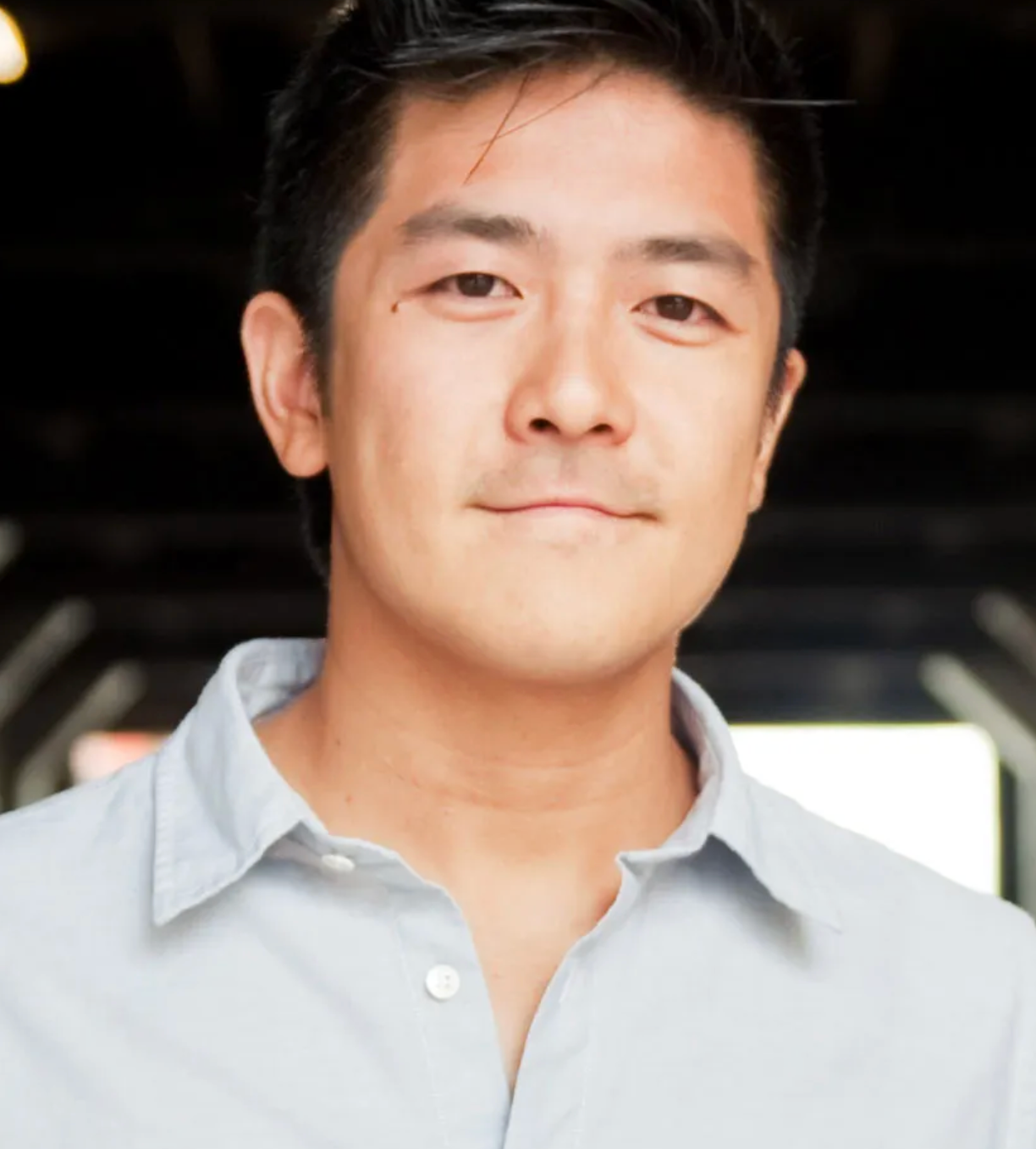
My conversation with the film and TV writer, director, producer, and showrunner.
In 2014, I interviewed Tze Chun who had written and directed two feature films: Children of Invention (2009) and Cold Comes the Night (2013). Subsequently, he has worked on several television series including Once Upon a Time and Gotham.
Here is our conversation from 2014.
Scott: You were born in Chicago and raised in Boston. Could you describe your background about how movies became a part of your life?
Chun: My mother always loved movies and we watched a lot of movies growing up. She was raised as an orphan in Singapore. There’s one story I look back on now. When she was a little girl, growing up in a house full of orphans, the only time an adult would hold her or show affection was when they would go to see a movie. This was Singapore in the 60’s, and the way movie theaters would work is that adults would basically pay for one seat and put the kids on their lap. So, I think my mom always thought of movies as happiness. She wanted us kids to feel the same way. A lot of our family time growing up was about getting lost in the movies.
Actually, though, I started off as an artist and wanted to be a comic book artist growing up. I always loved visual art. There was one time that our English teacher, a guy named Mr. Zilliax, in the ninth grade, showed us The Graduate on VHS. He would play The Graduate and pause it every few seconds and point out things like the writing, art direction, the editing, staging, the use of colors, the symbolism. Though I’d grown up watching a lot of movies, it was the first time I had actually seen all the potential to be creative within the medium. There was something very exciting about it.
From that point on, I borrowed a little Hi-8 camcorder and made movies with my friends. We would get together on weekends and I would stay up editing in the A/V department after hours. That was how I started. But the eye‑opening experience was that class.
Scott: You mention that in your background, you were first interested in painting and you worked as a visual artist? In fact, you did the original artwork for the poster for Half‑Nelson.
Chun: That’s right. Anna Boden (the co-writer and co-director of Half Nelson) and I were the same year at Columbia. Actually, I think she started ahead of me but then she took a year off. I had been doing portrait paintings for the first couple years out of school to make a living. You know, family portraits and portraits of people’s kids or whatever. Anna and Ryan (Fleck, co-writer and co-director of Half Nelson) had talked about doing a painted poster for Half Nelson. I told her I would do it if she would edit my short film Windowbreaker, which I was kind of struggling with. She did, and the short went to Sundance in ’07. So it was a good trade, for me at least [laughter].
Anna and Ryan thought there was no way Thinkfilm (their distributor) would use that painted poster in the actual marketing campaign since the distributor had used a painted poster for the first movie they released and it did really poorly. But, I guess that they liked that one. I still draw and paint every once in a while. Actually, I painted some alternate posters for Cold Comes the Night that you can find online.
Scott: You went to college at Columbia University. What was your major there?
Chun: I was film studies. Film studies at Columbia is all film history. There was only one production class. That was okay. I love film history, and as an undergrad, I just made my own projects with friends. I wrote and directed a couple short films and couple feature films while I was at Columbia, and it was good practice.
Scott: So, in a sense, you were just learning it on your own?
Chun: Yeah. I tend to create things better on my own, not within the framework of school. In high school I taught myself how to use cameras and how to do linear editing. And in college I met a couple other kids who taught me how to use Adobe Premiere and Final Cut. There was something attractive to the freedom of the DIY approach. No one’s looking over your shoulder and you’re not gonna get graded, so you get to take more chances.
Scott: Let’s talk about Windowbreaker, the 2006 short‑film you wrote and directed. That was an official selection in the 2007 Sundance Film Festival. The IMDB summary: “A string of break‑ins create a wave of paranoia in a small town suburbia.” Really, the focus is more on these two kids. What was the genesis of this project?
Chun: After college, I didn’t want to go to grad school, which was just so expensive. It’s really astronomical at this point. So, I just made a schedule for myself. While I was doing portrait commissions and DVD authoring for money, I also decided to make a no‑budget short film every six months and try to write a feature film every nine months. Windowbreaker was actually the eleventh film that I made during that period of time of about 3–4 years, when I was just constantly making short films.
Right before I made Windowbreaker, a theater company had committed to financing a short film I co-wrote and was going to direct called Cold Feet, Wet Dreams, and the Kitchen Sink. I was hoping Cold Feet was going to be my “calling‑card short film” meaning a slick, high production value short film. It had action and comedy and special effects, and we were shooting it on 35mm. It just took forever to put together because none of us knew what we were doing and we were worried about squandering the 12k or whatever the budget was, which was a lot of money for all of us at the time. After a couple months I started to get frustrated. Coming from painting, sometimes the logistical aspect of film can be maddening. When can we rent this or that and for how much, and when will the actors and crew be available, etc. When you’re a painter all you need is a canvas and a brush, and it’s a very personal, small experience, and so that’s what I wanted to get back to with Windowbreaker.
Scott: You were born in Chicago and raised in Boston. Could you describe your background about how movies became a part of your life?
Chun: My mother always loved movies and we watched a lot of movies growing up. She was raised as an orphan in Singapore. There’s one story I look back on now. When she was a little girl, growing up in a house full of orphans, the only time an adult would hold her or show affection was when they would go to see a movie. This was Singapore in the 60’s, and the way movie theaters would work is that adults would basically pay for one seat and put the kids on their lap. So, I think my mom always thought of movies as happiness. She wanted us kids to feel the same way. A lot of our family time growing up was about getting lost in the movies.
Actually, though, I started off as an artist and wanted to be a comic book artist growing up. I always loved visual art. There was one time that our English teacher, a guy named Mr. Zilliax, in the ninth grade, showed us The Graduate on VHS. He would play The Graduate and pause it every few seconds and point out things like the writing, art direction, the editing, staging, the use of colors, the symbolism. Though I’d grown up watching a lot of movies, it was the first time I had actually seen all the potential to be creative within the medium. There was something very exciting about it.
From that point on, I borrowed a little Hi-8 camcorder and made movies with my friends. We would get together on weekends and I would stay up editing in the A/V department after hours. That was how I started. But the eye‑opening experience was that class.
Scott: You mention that in your background, you were first interested in painting and you worked as a visual artist? In fact, you did the original artwork for the poster for Half‑Nelson.
Chun: That’s right. Anna Boden (the co-writer and co-director of Half Nelson) and I were the same year at Columbia. Actually, I think she started ahead of me but then she took a year off. I had been doing portrait paintings for the first couple years out of school to make a living. You know, family portraits and portraits of people’s kids or whatever. Anna and Ryan (Fleck, co-writer and co-director of Half Nelson) had talked about doing a painted poster for Half Nelson. I told her I would do it if she would edit my short film Windowbreaker, which I was kind of struggling with. She did, and the short went to Sundance in ’07. So it was a good trade, for me at least [laughter].
Anna and Ryan thought there was no way Thinkfilm (their distributor) would use that painted poster in the actual marketing campaign since the distributor had used a painted poster for the first movie they released and it did really poorly. But, I guess that they liked that one. I still draw and paint every once in a while. Actually, I painted some alternate posters for Cold Comes the Night that you can find online.
Scott: You went to college at Columbia University. What was your major there?
Chun: I was film studies. Film studies at Columbia is all film history. There was only one production class. That was okay. I love film history, and as an undergrad, I just made my own projects with friends. I wrote and directed a couple short films and couple feature films while I was at Columbia, and it was good practice.
Scott: So, in a sense, you were just learning it on your own?
Chun: Yeah. I tend to create things better on my own, not within the framework of school. In high school I taught myself how to use cameras and how to do linear editing. And in college I met a couple other kids who taught me how to use Adobe Premiere and Final Cut. There was something attractive to the freedom of the DIY approach. No one’s looking over your shoulder and you’re not gonna get graded, so you get to take more chances.
Scott: Let’s talk about Windowbreaker, the 2006 short‑film you wrote and directed. That was an official selection in the 2007 Sundance Film Festival. The IMDB summary: “A string of break‑ins create a wave of paranoia in a small town suburbia.” Really, the focus is more on these two kids. What was the genesis of this project?
Chun: After college, I didn’t want to go to grad school, which was just so expensive. It’s really astronomical at this point. So, I just made a schedule for myself. While I was doing portrait commissions and DVD authoring for money, I also decided to make a no‑budget short film every six months and try to write a feature film every nine months. Windowbreaker was actually the eleventh film that I made during that period of time of about 3–4 years, when I was just constantly making short films.
Right before I made Windowbreaker, a theater company had committed to financing a short film I co-wrote and was going to direct called Cold Feet, Wet Dreams, and the Kitchen Sink. I was hoping Cold Feet was going to be my “calling‑card short film” meaning a slick, high production value short film. It had action and comedy and special effects, and we were shooting it on 35mm. It just took forever to put together because none of us knew what we were doing and we were worried about squandering the 12k or whatever the budget was, which was a lot of money for all of us at the time. After a couple months I started to get frustrated. Coming from painting, sometimes the logistical aspect of film can be maddening. When can we rent this or that and for how much, and when will the actors and crew be available, etc. When you’re a painter all you need is a canvas and a brush, and it’s a very personal, small experience, and so that’s what I wanted to get back to with Windowbreaker.
With Windowbreaker, I decided that I was going to shoot a movie over two weekends in my childhood home. My mom and some neighborhood kids were going to be in the movie, and we would shoot from a script that was just a bunch of one paragraph scene descriptions. I wasn’t going to write dialogue, it was going to be completely improvised. The lighting kit was fifty dollars or seventy dollars or something for each weekend. I just wanted to make something small and personal. I thought, because of how small the budget was, it was never going to do anything for me. But, it ended up playing at Sundance, and that was the first time anyone ever paid attention to me.
Scott: At IMDbHere Pro, the budget is listed at all of 600 dollars.
Chun: Yeah, that’s right. Most of the cost was Chinatown bus tickets from NYC and pizza lunches. The crew was me operating camera, my producer Bryan Wilson, who both operated boom and acted in the movie, and then my wife’s little sister who was in high school at the time and her best friend, who were our PAs. The only big ticket item was we had to rent two disco lights that we put on top of a car to make it look like a cop car.
After we got into Sundance though, our budget tripled [laughter]. We had shot the movie on MiniDV and had to spend twelve-hundred bucks to step the movie up to HD so they could project it.
Scott: It speaks to the value of DIY filmmaking right?
Chun: You know, to be honest with you, it was just so much fun to shoot because there was nothing at stake. I was completely relaxed. It was educational for me to know that sometimes the best work comes when you have the least to work with and keep things as simple as possible.
Here is Tze’s short film Windowbreaker.
Scott: The short movie Windowbreaker became the basis of the 2009 feature film Children of Invention. Could you describe the process of how you went from that short film into the full length movie?
Chun: Well, between the short and the feature, I staffed on a TV show called “Cashmere Mafia”. I got a manager out of Sundance and he got my writing partner Mike Weiss and I the job and we moved out to LA. “Cashmere Mafia” was a Darren Star show for ABC, starring Lucy Liu. It still confuses people on my IMDB. It was a lot of fun to be in a writer’s room with other writers. I did that for six months and then the writer’s strike happened and everyone was out of work, so I came back to New York.
Back in New York, and I wanted to go back and make a feature that was on the scale of Windowbreaker. There’s a long history of filmmakers making feature films from their short films, but I didn’t believe that the plot of Windowbreaker would sustain a feature film. But I did like the idea of centering a feature on these two little kids who were left at home by themselves.
So, I started writing Children of Invention during that winter. The writer’s strike happened in November and I came back to New York in December 2007. I wrote it relatively quickly and in February, I showed it to Dan Cogan, who I met at IFP with another project. I’d actually just wanted him to recommend the project to the Sundance Labs, but he called and said his company Impact Partners would finance the movie. I immediately brought on Mynette Louie, I think in March, and we were shooting by July. It actually only ended up being a year between writing the script and our Sundance premiere.
Scott: Wow.
Chun: I’ll never have a movie come together that quickly again.
Scott: The plot for both movies involves two children, living illegally in a model apartment outside Boston, who are left to fend for themselves when their hard-working mother disappears. That’s the idea you had for Windowbreaker and that really is at the heart of Children of Invention. What appealed to you about that? What resonated with you so that you felt this should be a movie?
Chun: Windowbreaker is about the feeling of paranoia or xenophobia in American suburbs. It’s about the town I grew up in, and the two little kids in Windowbreaker are a window into that town. In Children of Invention, I wanted to expand the story, make it more about the immigrant mentality, about hard work and opportunity, but also the flip side of that, which is opportunism.
While the world of Windowbreaker is the American suburbs, the world of Children of Invention is the world of pyramid schemes and multi-level marketing companies. I grew up going to a lot of those seminars, and that world always stayed with me. What I thought was so interesting about those seminars was, the product they’re selling is almost irrelevant. What they’re really selling is the American dream or some short cut to achieving the American dream, which if you know anything about pyramid schemes, is almost always a false opportunity.
Scott: Yes, that whole pyramid scheme component the mother gets ensnared in and that leads to a point where she becomes separated from her kids. They have to take care of themselves. The performances in the movie are astonishing, the children are incredible. What were the keys for you in writing those characters? How did you approach writing children?
Chun: I think the two kids are very much based on being my little sister and me. Their relationship in the movie is very close to what it was in real life. My mom also moved from Hong Kong to the US not long before we were born, just like in the movie, and was struggling to find her place in the US. Our family was a very close family unit, so I think it was just easy to write those characters because I knew them.
When we were casting the movie, I think the biggest thing that surprised us was how mature Michael Chen and Crystal Chiu were for their age. They’re both very smart kids and they are capable of doing a lot. I think as adults we tend to forget how capable kids are and how much they actually understand about the world around them. I think part of the directing process was to force myself not to dumb things down for them, but to fully explain what their characters were going through at certain points in the script.
One of the challenges of directing child actors is that kids might know instinctively how to play a scene, but they may not know how to interpret the words on the page. So that’s the director’s job — to translate the script into something the kids will understand either on an intellectual or emotional level. What you don’t want to get into is a situation where you’re telling a kid “you should be sadder in this scene.” Because that never really works. I think what works best is if you spend the time to make the kids understand what’s going on in a particular scene and bring them into the process.
Scott: There’s an interesting dynamic. You mentioned this thing about the American dream. The point is getting caught up in this idea. Obviously, the mother’s struggling financially, but trying this one scheme to make her rich quick. So she has that journey. The kids have their own journey they go on…
Chun: Well, I think that part of the movie is about how values and pursuits get passed down through generations. Raymond’s plan when they go into Boston is not unlike one of his mother’s schemes.
The movie is structured atypically. The movie I watched the most when I was writing the movie, you’re going to laugh, but it was Full Metal Jacket.
Scott: Really?
Chun: Yes. Full Metal Jacket is divided into two equal parts. The first is the learning process where the Marines are going through the process of training. The second one is using their training in the real world, in war. The movie is split pretty much down the middle. In Children of Invention, I wanted the first half to be the kids living in the adult world and learning the skills they would eventually put into effect once they’re left alone.
Scott: Yes, in fact, I think the mom is separated right around midway through movie. It’s almost minute 44 or so. That’s interesting.
Chun: Yeah. There were some people that liked that structure and some people thought it was too long before the mother is separated from them. But, that was the structure that made the most sense for me.
Scott: I’d like to talk about the ending of Children of Innocence. I thought it was so poignant. You have a set‑up earlier where the mother, amidst the family’s financial struggle, she takes the kids to the mall. She calls it family day. I’m gathering you were conscious of this idea of the American dream. That, in some ways the mall represents the fantasy life of making it. But after the family is separated, when she returns in the end and they are reunited, she says it’s family day tomorrow, mommy will make everything better.
The last image is of Raymond’s face. It’s ambiguous. Does he really believe she’s learned a lesson? Does he really believe that his mother can make everything better? I’m curious about that ending. Was that always what you had in mind? What were you going for in terms of what you wanted to leave with us emotionally?
Chun: There was never really a different ending. I think the type of family problems portrayed in the film very rarely get resolved in a short period of time. The difficulties that the family is going through will probably follow them around for a good amount of time. I thought, that in order to say that, I wanted to make the ending more ambiguous. At least they are together again, and at least they’ve gained an understanding about themselves, at least they have each other, but it’s still going to be a longer struggle ahead. I didn’t want to tie the story off with a tidy ending, or as my producers liked to say “with a bow.”
There were some questions about the ending. Some people really liked it. Some people feel that they wanted something more. I don’t know if I was telling the story now, if I would end the movie the same way. But at the time it felt like the most emotionally honest way to tell the story.
Scott: Children of Invention debuted at the 2009 Sundance film festival. It has screened at over fifty other festivals. It has won seventeen festival awards. It received some great reviews from the New York Times, the L.A. Times, and especially a look at USA Today, who wrote, “I can’t remember when I loved a movie quite as much as this one. What’s your sense of why these hardened film critics responded so positively to Children of Invention?
Chun: It’s always tough to say why critics respond a certain way to certain movies. I have no idea really. I’m glad that they liked it, but I’m not sure why. I think so many great movies don’t even get reviewed. We were lucky that we got reviewed from these top critics, actually.
Scott: Let’s shift to Cold Comes to Night. That’s being released on January 10, 2014. A plot summary: “A struggling motel owner and her daughter are taken hostage by a nearly‑blind career criminal to be his eyes as he attempts to retrieve his cash package from a crooked cop.”
Children of Invention you could say is a straight ahead drama. Cold Comes to Night is a crime‑drama with a thriller dynamic. What was the genesis of this project, and how did it evolve?
Chun: As a filmmaker, I just want to be working as much as possible. I looked around and saw that, you know, with small dramas, there’s a limit to the number of them that get made. There’s a limit of size of the audience, even if it does get good reviews. It’s hard to get people to come and watch the movies and for the movies to be profitable and for the filmmakers to make a living. It’s sad, but there’s a glass ceiling for these smaller quiet indie movies that I always wanted to make. I’m sure there’s an American Kiaorostami making beautiful movies right at this moment, but I’m also sure that he’s working at a coffee shop to make ends meet.
So, I started thinking back to the movies I loved growing up. A lot of those were crime‑dramas. Movies like Mean Streets or The Godfather or Blood Simple. I decided that I wanted to make a crime‑drama next, and I wanted to make my version of it. To me, Children of Invention had a little bit of a crime angle. Both Children of Invention and Cold Comes the Night take place in a world where everyone is opportunistic, and where people are willing to skirt the law to get ahead. My manager put me in touch with these two guys, Osgood Perkins, and Nick Simon, who ended up being my co‑writers on Cold Comes the Night. I pitched them a few ideas, and they pitched me a few ideas. I think the one that spoke to all of us was the story of this woman, this single mother, who ran a motel and who has a bad man come into her life.
We knew from the very beginning that we wanted to do a thriller with an atypical protagonist. We wanted to turn the “woman in peril” genre-trope on its head. We introduce Chloe as a hard working single mom who is down on her luck, but by the end, as the adventure peels off layers, we come to find she’s also opportunistic and cunning and at times downright evil.
I wanted to create a female character where people would leave the theater with conflicting thoughts about her. I think that there are very few female characters that are given that chance to be morally ambiguous. It’s nice, actually. I’ve had a couple experiences where people have come up to me after a screening and one person will tell me “I really felt for Chloe. I was on her side the entire time. She was trying to do the best thing for her daughter…” and the person’s date will say “Whoa, how evil was that Chloe lady?”
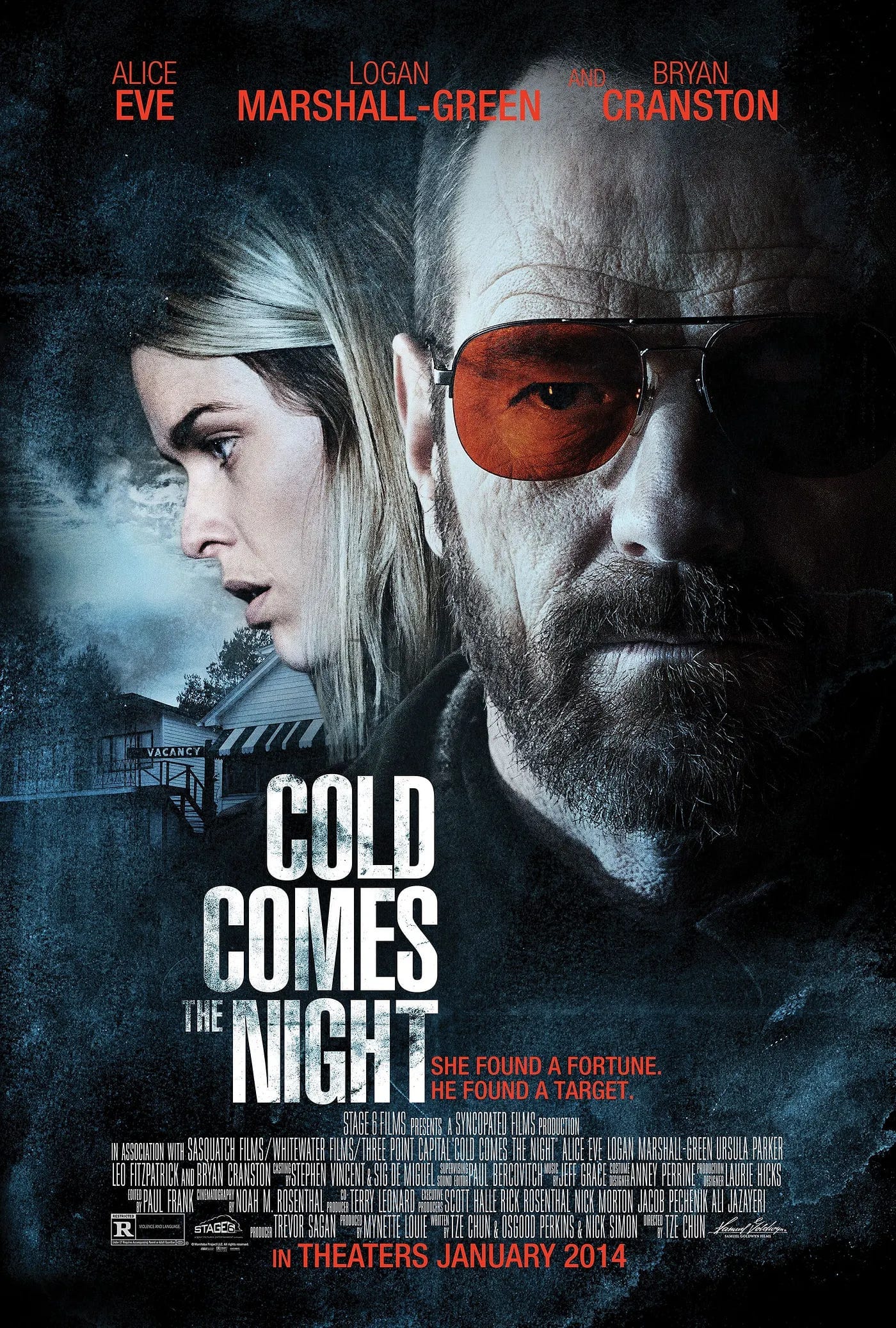
Scott: Let’s pick up on that. There are three main characters. Chloe, that’s the mother, and she’s played by Alice Eve. There’s her ostensible boyfriend Billy, and he’s a policeman, played by Logan Marshall Greene. She’s a manager of a motel, where there’s a prostitution thing going on, and he gets some kick‑backs on that.
Then we meet Topo, who is this criminal bag man, played by Brian Cranston from “Breaking Bad”. So, you’ve got these three characters at the center of the story. They’re all living on the fringes of the law in this morally ambiguous universe. What interested you to explore these three characters.
Chun: I think part of it is the world that I grew up. As you can probably tell from Children of Invention, my sister and I grew up working class, and the people that I would come into contact with, in my family life, were, to some degree or another, on the outskirts of society. There was something about the motel, about the world of all these people who are, like you said, on the outskirts of society, doing these things that are criminal, or on the gray line of criminality. That just kind of interested me.
Scott: It’s even to the extent of where you set it, in Greene County, New York. I did a little research on that, and found the per capital annual income there is less than $20,000 per family. And so it has a feel of that zero economic opportunity for locals, at least legally.
Chun: Yeah. We shot in Greene County, New York. We shot in a town of 1500 or 1600 to maybe 1800 people, and yeah, there are limited jobs, limited economic resources. There are towns that you drive through that are essentially dead, that only have money coming in a few months every year, for hunting season. But the people are tough and they’re survivors.
There is something interesting about being away from urban life. There’s not a lot of oversight, and for me, there’s this feeling that you could get away with illegal activity, and that if you were living there, illegal activity might be the only way to provide for the people that you love.
Scott: You mentioned Blood Simple as a reference point. Were you thinking at all of this being sort of like a modern film noir type thing, or maybe even an influence of some of those early movies by John Dahl in the nineties?
Chun: I don’t think I’ve seen any John Dahl movies except for Red Rock West, but I remember liking it a lot. Blood Simple will always be one of my favorite movies. But I see what you’re saying though — both movies have a modern film noir quality, but the other thing they have is a real sense of place.
When we were prepping Cold Comes the Night, in all my conversations with the department heads and actors, we kept on saying “yes, this is a genre movie, but we don’t want it to lose its link with reality. Yes, they’ll market this as a genre movie, and they’ll cut a trailer out of it that will look like a genre movie, but the questions we need to keep asking ourselves is, ‘does this feel real to us?’”
When you make a movie that has a genre, like a crime drama, you have to stop yourself from going onto autopilot, to adhere to genre conventions. Wherever possible, we tried to wake ourselves up out of that, and to create a movie that took place in our real world. Part of that was shooting on location and trying to take as much of that atmosphere, and getting that into to the movie.
Scott: Let’s talk about the Topo character. What was the inspiration for that character? What was the kernel that led to his emergence as a character in the story?
Chun: We talked a lot about trying to create an “out of the ordinary character” for our antagonist that was special enough to attract a name actor. We talked a lot about Anton Chigurh from No Country for Old Men. How specific his look and diction and world-view is, and how we’d never seen anything like that in any movie before. The amount of press just about his hair is remarkable.
So we just started throwing out ideas. How can we make this character as special as possible, and as a joke one of us said, “well what if he’s going blind?” And we all kind of moved on, but then we kept on talking about it, we kept on returning to it, and we thought about all the things that one detail would say about his character. The guy has this disability but is hanging on to the one thing he knows how to do.
Actually, when we were writing the script, the character of Topo was American. We almost thought of him as an old American cowboy out of touch with the world, like William Holden in Wild Bunch. But Bryan (Cranston) had an interesting point — if we made Topo an immigrant, he would feel that much more removed from everything around him. Topo is already kind of an island. He’s got his own set of morals, his own set of rules, and he isn’t really connected to anything. All he does is bring money from one place to another. So the Polish accent was Bryan’s idea. That’s how he turned into the character that he is now.
Scott: It’s an interesting instinct because it takes that idea of the other, the unknown character, and elevates it because of the fact that he is from a different continent.
Chun: Yeah. I wasn’t totally convinced about it until Bryan, in our private meetings, did the accent, and he terrified me. [laughter] So I decided that it was the way to go.
http://www.youtube.com/watch?v=2VnYNRWDF7E
Scott: That’s so interesting that you were sort of joking, you threw out this thing, well maybe he’s blind. That’s just such a cool dynamic for the character, for multiple reasons. Obviously, he’s desperate, because he’s toward the end of his career. But you explore something that’s interesting, there, where he compensates for his blindness, right? He can interpret people’s voices and their behavior, where he can read their minds, in a way. How did that evolve over the process of the writing and the working with that character?
Chun: I think part of it was, when you have a character have a trait like that, you want to keep emphasizing it, and to figure out all the ways it effects your character and how they can use it to their advantage. One of the things that my co-writer Oz (Osgood Perkins) and I did was to write out all the different ways that Topo’s blindness would affect his daily life and decisions making. That kind of screenwriting homework can be kind of a slog but it helps you live inside the character. We figured Topo could compensate for his blindness by being more attuned in his other senses. He could almost have some kind of sixth sense. The idea is to come up with a little arsenal for him, of things that he has created over his gradual loss of sight, that make him more powerful and dangerous than a normal adversary. It actually remember spending time walking around my apartment with my eyes closed, thinking about how that would make me feel, how powerless it made me feel. For Topo, in the work that he does, one sign of weakness can get you killed, so how does he pretend and how does he compensate?
Scott: It’s tempting to look at him, because he is such a scary character when you first meet him, as providing what we might call a Nemesis function. But as the story unfolds, it really feels like Billy takes on that role. In retrospect, Topo evolves from an enemy to Chloe to almost an ally. Could you talk about what the thought process was about how you handled Topo and Billy in relation to Chloe and her journey?
Chun: After Topo takes her hostage, there’s only so much you can do before you feel like you want to see the power dynamics change. Topo obviously has this vulnerability that he’s hidden from everyone around him as he was slowly going blind, and Chloe, this young single mom, is the one who spots it and pegs him and turns it to her advantage. We thought there was something interesting about that power shift.
Scott: Is this the first project you co‑wrote with somebody?
Chun: No, I’ve had a co‑writer for many years, my friend, Mike Weiss, who is currently a writer on The Mentalist. We have a couple of other projects together, and I have a new feature that Mynette is producing that Mike and I co‑wrote called High Ground.
Scott: OK. So the process from coming up with this idea that you co‑wrote with these two other writers, to the point of the first day of principal photography, how many drafts, and how long was that process?
Chun: It felt interminable, but we finished the first draft in maybe the summer of 2010, and we shot fall of 2012, so a year and a half? Which is actually not that long. And there were many, many drafts, as there always are. But it’s not that bad. I’m not one of these writers who is like, oh, the notes process is horrible, it’s the worst thing, why would they do this to me? I find the note process to be helpful. Even if you don’t agree with a note, sometimes just getting a note makes you think of a scene in a different way.
Bryan, Alice, and Logan were very, very helpful, actually, during the notes process. They came on board and they had a lot of suggestions for their characters. Alice is very very smart. Also, Bryan has worked on arguably the best television show in TV history. He’s very creatively involved in that show, and we would certainly be remiss if we didn’t consider his ideas.
Scott: So, here you are. You’ve got this movie coming out. What are your feelings about that process?
Tze: With Children of Invention, we went to Sundance and did a ton of festivals. We self‑distributed it. Self‑distribution doesn’t necessarily mean you do it all yourself. It just means you sell off the rights to different distributors, not just one distributor. It was a lot of work, but it was nice to interact with the audiences and in the end we certainly made more money than if we had just sold it off to whoever.
Cold Comes the Night is going to be distributed by Sony and Samuel Goldwyn. In some ways, it’s a little hands‑off for me and my producer compared to all the work we did with Children. I’ve been doing interviews, things like that. I try to get people to see the movie. But, it’s definitely a less intense experience than Children of Invention was. I’m trying to move onto the next project, I guess.
Scott: I’d love to ask you some craft questions. How do you come up with story ideas?
Tze: When I want to come up with a new project, I will sit down and I will try to write 25 ideas a day for a week or two. So that I have 100, 150, or 200 ideas. Some of them will be TV ideas, not all of them will be feature ideas. A lot of them will be bad ideas. I find that out of 100, there’s one that I can’t stop thinking about. Then I start taking more notes and find the story.
Scott: How about prep writing?
Tze: I always outline. Once I have the idea and I’m confident there’s a thing I want to go to script on, I fill out a spreadsheet that I’ve created that helps me brainstorm. 15 to 20 bullet‑points that I will fill out.
Some of those are character notes. Some of those are notes on the visual style of the movie. A lot of them are structural notes.
Then, once I’ve filled out that spreadsheet, that’s pretty much my brainstorming on the script. I’ll have 10 or 15 pages of notes, and then I will go in and start structuring the movie, writing out every scene.
Once I have a 15‑page beat sheet with pretty much every scene on the movie laid out, then I’ll start writing. Things change but I find it helpful for my confidence to start with a structure in place, then if you have to change it, you change it, no big deal.
When I was out of college I just wrote from page one. I’d just start writing a script, having a vague idea of where things were going. I’ve always been a fast writer but when I wrote scripts that way, the script might be done in two or three weeks, the rewriting process took vast amounts of time. Whereas now, because I structure stuff out in advance, the writing takes the same amount of time, but the rewriting process is a lot faster because at least I’ve worked from a road map.
Scott: You mentioned character development. Are there any specific tools or approaches you use to develop your characters?
Tze: Yeah, I do. I have a character file for everybody. When I work with a writing partner it’s different than working on my own. When I am working on my own, I’m used to writing everything out. With a writing partner, it’s more of a talking about a character as opposed to writing a bio for that character.
Scott: How about dialogue? How do you go about finding your characters’ voices?
Tze: I’ve heard so many different opinions on this. Some people say that dialogue is not the way people talk or shouldn’t be the way people talk. Some people say that they try to keep the movie dialogue very close to the way people talk in real life.
I just try to do what feel the most natural. I think it helps if you’re a writer who has traveled to a lot of places, talked to people from different backgrounds, thought about what their concerns were, and how, by talking, they went about getting what they wanted.
For me I think, Children of Invention and Windowbreaker were very observational and very much based on things that I remembered and I still think about, that’s how I wrote dialogue for those movies. It was more like channeling people I remembered.
Scott: How about this concept of theme? Do you consciously think “I want to explore these themes” or do they emerge as you’re writing this story?
Tze: I’ve done it both ways. Sometimes I think of the theme that I wanted to explore and start writing and the story stays as close pretty much to that theme. Windowbreaker and Children of Invention were that way.
Cold Comes the Night, I started writing the script, thinking first that I wanted to make a genre film with an out-of-the-ordinary protagonist at the center of it and then started talking to my co‑writers about the type of person that she is. Certain things interested me and certainly I found a lot of those things overlapped with Children of Invention kind of subconsciously. If you look at Children of Invention, it is to some extent about the fallout from opportunism and that is exactly what Cold Comes the Night ended up being about. A lot of the stuff that I am writing or have written about revolves around that theme. I certainly didn’t go in start writing the story in order examine that particular theme, it just happens sometimes.
Scott: How about when you write a scene? Are you conscience of certain goals you’re trying to accomplish or is it more of an organic type of thing?
Tze: Yeah, part of it you know what is going to happen in the scene because of the outline. After I’ve created the outline, I know generally what every single scene is there to do. And sometimes when you are writing a scene you realize that is not the truth of the character. Then you have to deviate your outline.
I find that it’s hard to write a scene without a goal. It’s not necessarily your goal. It’s the goal of the people you’re writing, your characters and you’re checking in on them for these two pages because they’re either going to get what they want or not.
Scott: You’ve written and directed a lot of movies including about a dozen shorts. Has there been anything that you’ve learned in that process that has impacted your writing?
Tze: Yeah. Actually it was so funny. When I wrote Children of Invention. I was very worried for whatever reasons that audiences wouldn’t know how characters got to a location, or where the characters were in a certain scenes, so the script had all these transition scenes with people entering and exiting buildings. I think there were 200 scenes for a 100 page script and when we edited it down, there were probably 20 or 30 scenes of people entering and exiting buildings on the cutting room floor. So yeah, you learn something every time you make a movie. A lot of it you don’t really learn until the movie is edited together, to see everybody’s reaction.
I am constantly learning. I certainly don’t know everything. In fact, every day on set is a reminder of how little I know. I’ve learned a ton about production from my DPs, from my ADs, my producers. Every production I do, and I think every production is different, I am constantly embarrassed by the feeling that I should of learned certain things 15 years ago.
Scott: What’s your actual writing process?
Tze: My writing typically involves long stretches. The brainstorming process happens in short bursts, like an hour or two and then a break. But going to script is usually 10am-6pm until it’s done.
When it comes to writing, I usually sit down with my outline and write the rough draft in about 10 days. Then you start the rewrite process, which takes a couple weeks before you get to the first draft you’d actually show anyone.
Scott: What is your single best excuse not to write?
Tze: Now I have an infant son, the best excuse is to play with him, make him food, take him for a walk. That’s pretty much it. Back before he was born, I tried not to make many excuses, I just tried to write as much as possible.
Scott: What do you love most about writing?
Tze: For that time, at least, there is no one really looking over your shoulder. Anything is a possibility and it’s fun to create something. I don’t know, it’s always has been like that for me. I don’t really have the feeling that writing is painful the way some other people do.
Scott: One last question. What advice could offer aspiring filmmakers about learning the craft and about breaking into the business?
Tze: Five years ago, 10 years ago, I would say just write everyday and make as many movies as you can. If you make some bad movies, some of them could be good. Now I have to say before you do any of that, have an honest conversation with yourself about what your pain threshold is for rejection and weigh it against your desire to make movies.
While you want to be a filmmaker, there’s a lot of rejection out there and there’s a lot of waiting and at times it can be really damaging to your psyche. If you have a low threshold for something like that, then you’re probably not going to make it.
That’s just the truth. It’s too difficult to do if you have issues there. It may be depressing advice, but it’s something I’ve learned by having a lot of rejection over the years. If your desire and love to make movies is higher than the pain that’s going to come with it, then yeah you should do it. Just know that that’s the case. Know it’s the case for the rest of your life.
I’m not far along in my career, but I’ve talked to people who are much further along than I am. It doesn’t stop, you know? It’s always rejection after rejection, it doesn’t matter if you’ve made movies that make millions of dollars at the box office.
I think if you’re a creative person, you want to do that next thing. You’re always pushing yourself to do something that’s harder or bigger, and when you do something that’s harder or bigger, you have to prove yourself to the people around you and to the industry over and over again.
But in the end, if you feel like the work is worth it, and the process of creating that work is something you love, all that is bearable.
Here is the trailer for Cold Comes the Night.
For 100s more Go Into The Story interviews, go here.