“Hitchcock’s Storyboards from 13 Classic Films”
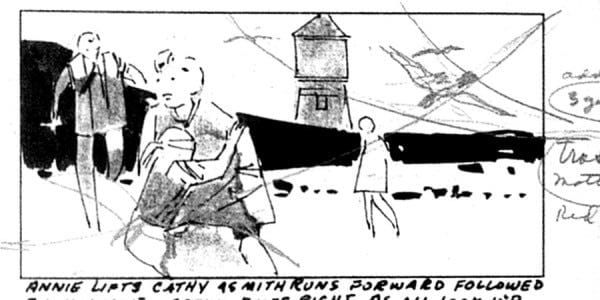
File this one under “Holy Crap!” From FilmmakerIQ:
Hitchcock was known for his extensive storyboarding down to the finest detail of production. He was reported to have never even bothered looking through the viewfinder, since he didn’t need to do so. Looking at his storyboards versus the finial film it’s safe to say that is a vast overstatement.
Hitchcock trained as a draughtsman and worked in advertising before his first job in the film industry; designing title cards for silent films. Perhaps this influenced his pre-visual style. While he was an experienced illustrator he always hired a storyboard artist. These included legendary artists as Saul Bass, Harold Michelson, among others.
This article is amazing. Here are just a few examples of what FilmmakerIQ has put together:
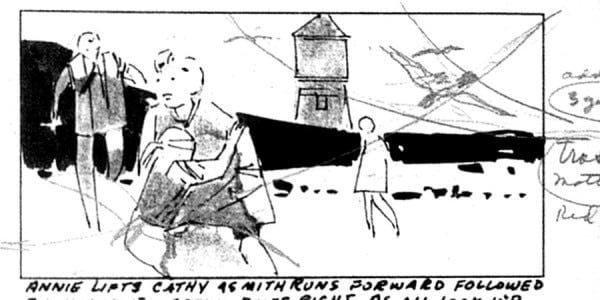
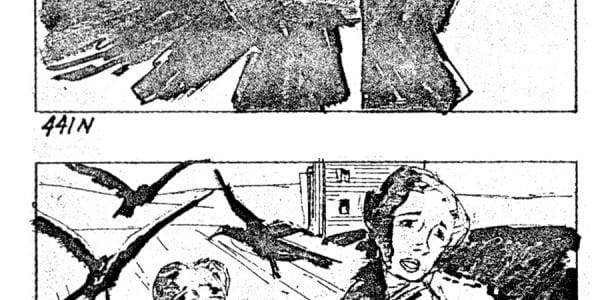
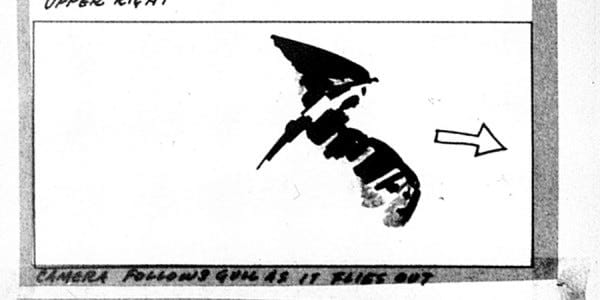
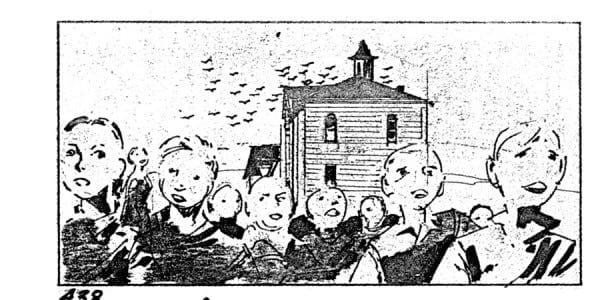
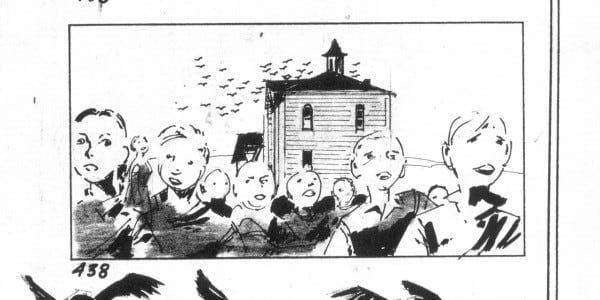
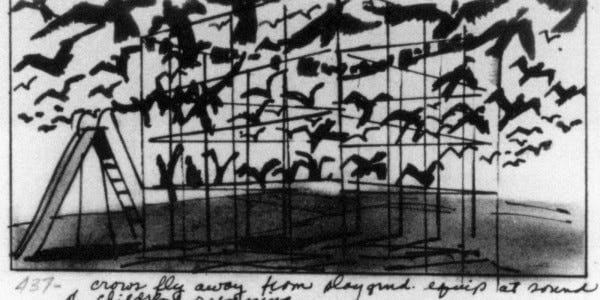
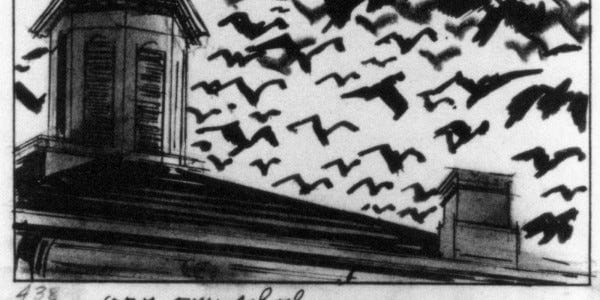
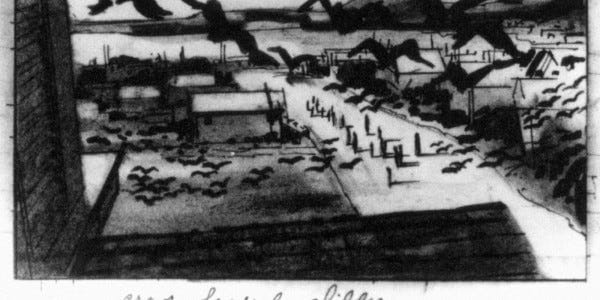
The Birds (1963)
Harold Michelson “The Birds” storyboard.
Psycho (1960)
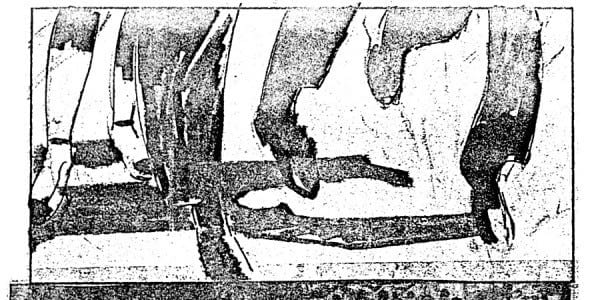
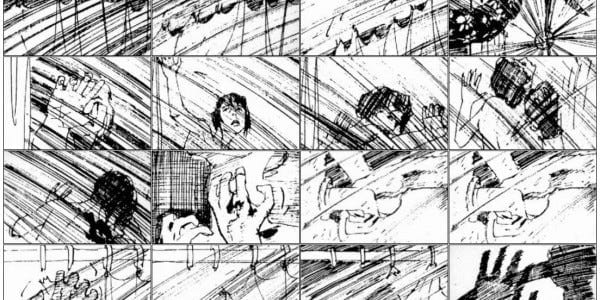
Saul Bass prepared storyboards for the shower scene, and was on the set during at least part of the filming. After Hitchcock’s death, Bass asserted that he had directed the scene at Hitchcock’s invitation–a claim definitively contradicted by both Janet Leigh and Assistant Director Hilton Green. Bass’s partisans have subsequently held that Hitchcock merely mechanically filmed shots already laid out by Bass. Comparing the storyboards to the filmed scene shows that to be untrue. On the other hand, the most crucial elements of the scene, such as the drain-eye matchcut and the tracking shot that follows it, are in the storyboards. That proves nothing about the author of the scene, however, since Bass drew the storyboards after extensive discussions with Hitchcock about the design of the scene.
This article is an incredible resource not just for Hitchcock fans, but also for screenwriters and TV writers. Movies and television are primarily a visual medium, so we need to think visually when we write. Hitchcock worked closely with screenwriters to map out the actions and visuals of key scenes. Here is an excerpt from this interview with screenwriter Ernest Lehman where he describes writing the script for North by Northwest:
Hitch and I acted out the entire crop-dusting sequence in his living room. Then I incorporated every move into the script, and that was the way he shot it.
Storyboarding is really an illustrator’s work for the director. A motion picture illustrator puts pictures on paper and puts them on boards. In story-boarding a script for a Hitchcock film, the illustrator is told what pictures to put on the boards by the script, which has benefited from my conferences with the director. Of course, I participate in what is going to appear on that storyboard, because even without the storyboard the script describes exactly what is going to be on the screen. Hitch would have it no other way. The script even describes the size of the shot, whether it’s a medium or a tight close-up, whether the camera pulls back and pans to the right as the character walks toward the door, whether it tilts slightly down and shoots through the open doorway, getting the helicopter as the lights go on outside. That’s why Hitch says it’s a bore for him to get the picture on the screen, because it has all been done already in his office.
Thinking visually is a dual challenge: First to come up the world of each scene in our minds and work out the action so it has a beginning, middle, and end, achieves the point of the scene, and so on. But the second challenge is to know what to include — and exclude — in scene description. In other words, how much is too much, how much is too little.
But let’s not lose the main point of this post: Think visually when you write. It’s a lesson we learn — and learn again — when studying the movies of Alfred Hitchcock.
For more of the amazing Filmmaker IQ article, go here.
Comment Archive