How to Write a Thrilling Horror, from ‘Silence of the Lambs’ Screenwriter and More
There was an excellent panel at the recent 2016 Lower East Side Film Festival featuring screenwriters Ted Tally (The Silence of the Lambs), Jeremy Saulnier (Green Room), Chris Sparling (Buried), and Ingrid Jungerman (Women Who Kill). The subject was horror and thriller movies, moderated by writer-director William Cusick, also on faculty at The New School. For those of us who missed the event, fortunately Jon Fusco was there and filed this post at No Film School. The filmmakers’ comments are insightful and worth reading. Some excerpts:
On Villains
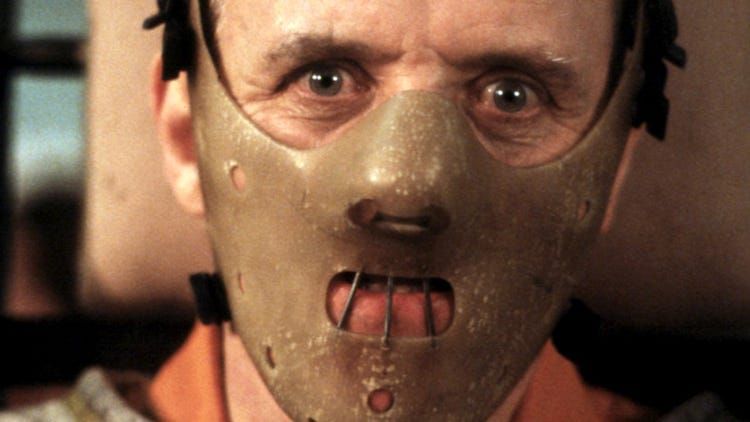
William Cusick: Hannibal Lecter has been voted the greatest villain of all time by AFI, but he’s only on screen for about 15 minutes. I’m interested in your approach to the “less is more” of having the villain on screen. The economy of how often we see the villain himself.
Ted Tally: He’s only on screen for 15–20 minutes, but the effect is as if he’s on for an hour because so many scenes are about him and he’s not there. The whole movie revolves around him, because he’s the key to the plot. The better the villain, the better the hero. The better the villain, the better the plot, because the villain is the one who’s usually driving the plot. I was very, very, very lucky to inherit that character. I could not invent him to save my life. He’s a great villain because he’s so unpredictable, because he’s so smart, and because he’s funny, because he’s witty. Hannibal Lecter like the Sherlock Holmes of evil.
On Humor
Ingrid Jungermann: The unseen can be much scarier than the seen. I think the audience filling in their own information is much more suspenseful than you feeding it to them.
Tally: It’s so important in a suspense film to have the audience complete the storytelling experience. There’s nothing you can make up [that’s] as good as what they can make up while they’re watching it. What’s going to happen? What’s going on right now offstage? You don’t want a passive audience; you want to actively engage their imagination.
On Victims
Jeremy Saulnier: I think it’s about them being human. If you want tension, there’s no recipe, but if the people aren’t human or relatable in a very direct way then you’ve got nothing. You’ve got a slasher flick. Some of them are great. But, oftentimes we get angry at them because we know that they’re doing things narratively just to lead to a cool kill and not something that we would do ourselves or that our friends would do. You need to put yourself in the perspective. You need to be the villain; you need to be the victim. It has to make sense. The challenge is to humanize the villains; the challenge is to make it seem like this could actually happen.
Chris Sparling: Very early on I used to write comedy, so that’s kind of what my focus was. When I made the shift to focusing more on thrillers, I struggled at first with incorporating comedy, because I wanted it to be completely relentless. Just so tense from start to finish. I learned pretty quickly that you need a little bit of the comedy; you need to give the audience at least some moments of release. If nothing else, it just gives some contrast. Give them a moment to breathe. And then when you grip them, there’s something more to it as opposed to being just a one-dimensional feeling the whole movie.
On Gore and Violence
Tally: To me, less is more with violence, especially gore. All I can think about is the makeup effects. I wonder, “How did they do that thing where the blood is shooting that way?” It pulls me out of the movie because I know that it’s a movie. It pulls me out of the story and into the filmmaking. I think it’s such a fine line. An audience gets turned off in a hurry by violence being too gratuitous, in my experience. It better be really, really earned and not done with a nod and a wink, like in a Hollywood action movie, where someone’s quipping one-liners. It better be real and ugly — what violence really is — or it’s fake.
Sparling: I think you can get away with a couple of gory moments, but it has to mean something. It’s like if you say “fuck” every three seconds, no one’s going to care you’re saying it. It’s just another line. Gore is just the same thing. If it’s just gore after gore after gore, you’re kind of just like, “Now this person gets shot. Now this person lost a leg. So what?” Not only do you have to earn it, but it has to mean something in terms of the narrative.
Advice for a Screenwriter Writing Their First Horror or Thriller Script
Jungermann: Understand that a lot is going to be depressing and accept that the process is really challenging. But try not to forget that its supposed to be fun. Take the pressure off yourself and recognize that the process itself is never going to change. And if you can accept the process, I think it’ll be a little easier.
Sparling: Don’t be afraid to write shit. That’s it. Seriously. People are only going to read what you show them. So, if you sit at your computer and write absolute garbage, who cares? No one’s going to see it. Early on for a lot of writers, what’s holding them back is this fear of writing poorly, so as a result you feel crippled.
Tally: When I was in drama school, I started out in theater, we were always being told, “write what you know.” I don’t know anything. I think that’s paralyzing advice, because what I know is pretty boring. I get up in the morning, I brush my teeth. It’s not a good story. I would say a better challenge would be, “write what you want to learn about.” Write about something you don’t know. And figure out how to get there. Then you might have an interesting journey.
Saulnier: It’s all about failure. Keep going. Just stick together. Make movies. See what happens.
Great stuff. For the rest of the No Film School article, go here.