Interview (Part 1): Spencer Harvey and Lloyd Harvey (2016 Nicholl Winners)
My conversation with the brother and sister writing duo from Australia.
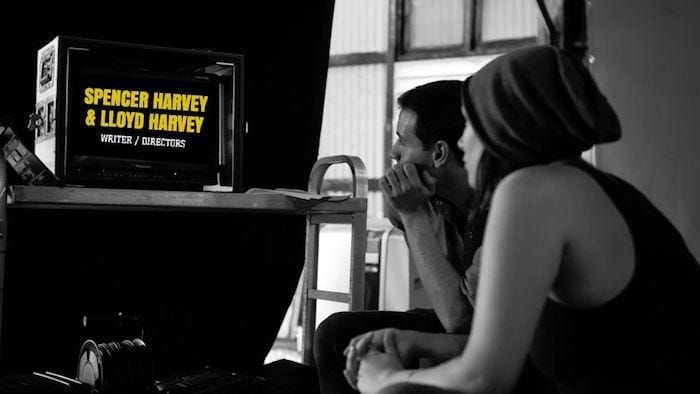
My conversation with the brother and sister writing duo from Australia.
Spencer and Lloyd Harvey wrote the original screenplay “Photo Booth” which won a 2016 Nicholl Fellowship in Screenwriting. Recently I had the opportunity to chat with the pair about their background as writers and filmmaker, and their award-winning screenplay.
Today in Part 1, we discuss their backgrounds, growing up around an art gallery, their training in filmmaking and law, and the importance of reading scripts as part of learning the craft:
Scott Myers: You’re a brother and sister writing and directing team. You have your own video company, Harvey House Productions. You’ve made award‑winning short films. I saw “Sorry Baby,” which I thought was great. Now your script, “Photo Booth” is a 2016 Nicholl Fellowship Screenwriting winner and just recently, you’ve gotten back from LA, where you celebrated that achievement. Basically, things are going pretty well for you at this point.
Lloyd Harvey: I really think it’s been an interesting year. It really has been.
Spencer Harvey: Highs and lows, but we certainly are grateful for this high point.
Scott: Let’s jump back and learn more about how you got here. You’re working together as a brother and sister team, especially on creative projects where every scene, you have dozens of choices you can make. I’ve worked with writing partners before. Did you always get along when you were young, or is this something which has evolved over time?
Lloyd: We’ve been pretty good sharers for a good long while now. Even starting up our video business together, we learned to work together, share and collaborate…
Spencer: Our 10‑year anniversary is this year actually. It’s just the two of us who work here so we were wondering if we should throw ourselves a 10‑year party anniversary party? [laughs]
Lloyd: Would we invite anyone else?
Spencer: I think we’ve thought of this too late. We could take ourselves out for a nice dinner. But we digress. To your question; we’ve always been good sharers, even as kids. We used to live upstairs from our parents’ art gallery. They worked long, long hours and we would entertain each other.
Lloyd: They were a husband‑and‑wife business partnership, which we learned from, in terms of the do’s and don’ts of business from an early age, what really works particularly in a partnership, and what can be worked on.
That was a big lesson for us. It also showed us from an early age that collaboration can be key and you can really achieve a lot when you find someone that you have a synchronicity with.
Scott: You just have the two of you as far as siblings go?
Spencer: Yes.
Lloyd: No extra brothers or sisters.
Scott: I did find that your father and your mother, Trevor and Skii, they are directors of the Harvey Gallery. That goes a long way in explaining the setting of your script “Photo Booth”, which is in the art world. Did growing up in and around art like that, did that directly influence your path in the filmmaking? If so, how?
Spencer: Almost unconsciously, I’d have to say yes, but we didn’t realize it until much later. I think the obvious influence is that it opened our minds to visual storytelling, paintings, photographs…
Lloyd: Especially photography, we actually started out as photographers when we opened our production company. Our first collaboration was as photographers.
Spencer: So clearly we’re very much inspired by the visual arts. We realized, I think, very quickly that artists come in all different shapes and sizes too. I think that was a nice bonus, coming from that art world understanding.
We knew immediately that we could be our own type of artist, that everyone has their own path. In a lot of ways, I think being around artists, being around art helped us want to be artists ourselves.
Lloyd: I also think it helped us understand that it’s a business too. I think that was interesting from an early age, to see art as a viable career.
I think for us, we saw the dos and the don’ts and the pros and cons of the art world up close and personal. Yeah, maybe it helped us open our mind to the possibility of what that would be for us.
Scott: One thing’s certainly clear. When you read your script, you really do think visually. It has a very cinematic feel to it. Dozens of moments where it really feels like you’ve got this nice combination of writer and director, writer and cinematographer, going on. Does that feel natural to you when you’re writing that way?
Spencer: Absolutely. You obviously know and most writers do know, that screenwriting is writing for a visual medium. I think that is such a gift that as writers we get to receive, because for us, it’s not just our words that are going to be telling the whole story.
We’ve got this entire palate of other people’s skills ‑‑ cinematographers, composers, the actors themselves that are going to bring so much more to it. We always feel that if we can allow for as much of that collaboration as possible on the page, then we open up our door to the possibilities. It can only infuse the story with so much more richness.
Scott: Lloyd, I believe you’ve studied filmmaking.
Lloyd: I did. I did a film degree at the University of Technology Sydney. It’s a Media Arts and Production degree, which was one of our premiere film degrees available at the time in Australia.
We got to do a lot of practical work, touching film, feeding cameras, and being forced to shoot and explore in areas that probably wouldn’t have been our first choice. Forcing us to know all the facets of filmmaking.
Scott: More of a production‑based type of a program.
Lloyd: It definitely was. It was technically a communications degree, so we had that part of it too, but it was very hands‑on with film.
Scott: Spencer, as I understand it, you’ve taken some writing courses.
Spencer: Yes. I went to law school and finished a Law and Psychology degree, but I was writing for myself, for my own joy. I did a playwriting course at NIDA, which is our National Institute of Dramatic Arts. I was a part of their Playwrights Studio.
I can’t even remember the year now, but I did do that. I always feel though, as most writers, particularly ones that live remotely, who aren’t in the hub of screenwriting culture, you learn predominantly from reading.
Scott: I was going to go right into my next question, which was what were some of the resources you used to learn the actual craft of screenwriting?
Spencer: Your blog is a great resource for writers. We are fans…We also have access to podcasts, Scriptnotes, obviously. John and Craig are very popular here in Sydney. But when I’m asked, “What should I do to learn my craft…” I always say, “If you want to write, you need to read.” That’s the main thing for me.
We would read everything we can get our hands on and we found ourselves getting into the habit of reading the “For your consideration” screenplays…
Lloyd: When they would be available for download, yes.
Spencer: …as film releases are often delayed in Australia, we’d often get the script first and then go see the film. That can obviously ruin the movie for you, so we’d pick and choose which ones we did that for. [laughs] But it was always a really interesting exercise to see how that craft was translated.
Scott: It heartens me to hear you say that. As you know from my blog, I keep hammering people to read scripts. I have that little mantra, you know, “Watch movies, read scripts, write pages.” I think people do a pretty good job of watching the movies. If they’re diligent, they’re writing their pages, but the reading scripts part of it, there’s nothing that can possibly replace that if you want to know how to transmit what you see in your head onto the page. Would you agree with that?
Lloyd: 100 percent. Just like language, you learn from listening to the way people talk, and that expands your vocabulary. You learn tricks, tools, and turns of phrases that I think are so important to see on the page.
Spencer: I also think that reading a script in and of itself is a joy. It’s an hour to two hours, depending on how fast you read and you can get a mind’s eye movie experience. You imagine the film and that is such a delight.
A beautifully crafted screenplay, anything the Nolan’s write for instance, is something that I can enjoy in and of itself…I don’t have to see the movie. The way they write is so compelling that I can be content reading the film on paper.
Here is video of Spencer and Lloyd accepting their 2016 Nicholl Award in December of last year:
Tomorrow in Part 2, Spencer and Lloyd reveal what their inspiration was for their script “Photo Booth”, and we dive into some of the script’s key characters.
Spencer and Lloyd are repped by UTA and The Gotham Group.
Twitter: @SpencerandLloyd.