Interview (Part 2): Geeta Malik (2016 Nicholl Winner)
My 6-part chat with the writer of the winning script “Dinner With Friends”.
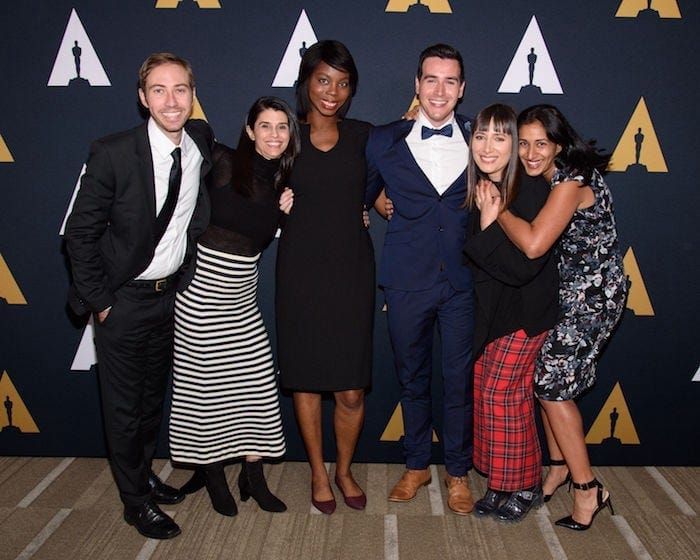
My 6-part chat with the writer of the winning script “Dinner With Friends”.
Geeta Malik wrote the original screenplay “Dinner With Friends” which won a 2016 Nicholl Fellowship in Screenwriting. Recently I had the opportunity to chat with Geeta about her background, her award-winning script, the craft of screenwriting, and what winning the Nicholl has meant to her.
Today in Part 2 of a 6 part series to run each day through Saturday, Geeta and I dig into her script Nicholl Award winning script “Dinner With Friends”:
Scott: Let’s move to your script, “Dinner with Friends”, one of five screenplays selected for the 2016 Nicholl Fellowship and Screenwriting Award. A plot summary drawn from the Nicholl website:
“When a spoiled teenager uncovers her mother’s feminist past, she’s driven to turn her world of privilege upside down.”
Would you describe it as a drama with comedy, a comedy with drama, or it’s just a movie and you don’t even think in terms of genres.
Geeta: No, I do, and I tend to call all my films comedies! I just feel like that’s where I’m most comfortable. If I say I’m writing a drama, it feels like something heavy and scary, whereas if I call it a comedy, I feel like I can be a little bit looser.
I think of “Dinner With Friends” as a comedy with dramatic elements. A lot of comedy actually comes out of the drama. You’ve read the script — towards the end, there’s this big cathartic scene, and that comes from a very serious place, but then it’s just this crazy free-for-all, and then it returns to being serious again.
Scott: There’s such an authenticity to the characters, the situations, the story world, the dialogue, the whole immigrant Indian in America experience. I’m not sure that I’ve seen quite that angle of the more upper class type of experience.
I have to believe this must be, at least in part, autobiographical or at least you’ve got considerable familiarity with this type of cultural familial experience. How much of the story does arise from your personal background?
Geeta: There are definitely autobiographical elements to it. My family was one of maybe 30 or 40 Indian families at the time in Aurora. Aurora has since become incredibly diverse, but when we were growing up, my sister and I were the only Indians at our high school.
We were in this community where you’d go to dinner parties every couple of weeks, or every week, at someone’s house. The adults loved them and needed them because they were immigrants and wanted a way to hold onto their culture — eat their own food, wear their own clothes, speak their own language. And they wanted to share that culture with us kids and make sure we understood our backgrounds, but what often ended up happening was what happens in the script. It was like living in a small town, where everyone knows everyone else’s business, for better or for worse! It’s inevitable in any insular community. There’s wonderful support, and then there’s plenty of shit-talking.
Alia is a rich, privileged character in the script, and I certainly grew up seeing girls like that, but I relate more to Varun’s character — my family was more like his family. They’re involved in the community but they’re not part of that real inner clique, which is how I felt growing up.
I feel like “Dinner With Friends” is showing a side of the Indian community that’s rarely seen. Indians in mainstream media tend to be the comic relief, or the slum-dwellers, or we’re dancing at big weddings, or we’re the kitchiness of Bollywood. Things are changing, of course, but I never saw anything really reflect my own experience growing up as an Indian-American.
Some people have wondered why I’d write a film with only Indian characters set in America, but my experience was exactly that — you go to school, and you have a diverse group of friends in your life, but then you go to these parties and it’s all Indians. It’s a cultural immersion and many of those dynamics are at odds with the other parts of your life.
Scott: The community in the script is Ruby Hill. Is that fictional?
Geeta: Yeah, that’s fictional. There is a town out here called Diamond Bar. I didn’t grow up in Southern California, but I always thought of Diamond Bar as a sort of Indian enclave — lots of Indian people, Indian stores — so I based it a bit on that geography.
Scott: Alia has got some voiceover narration throughout the story. At one point she describes Ruby Hill as, “An incestuous little Indian enclave.”
Geeta: Yeah. I don’t know if that’s accurate for Diamond Bar, so I had to change the name!
Scott: Alia, 19 years old, you’ve already tried to touch on a little bit that she does share that kind of sensibility you have, where you felt like an outsider. How else would you describe her in terms of her state of life when we first meet her?
Geeta: One of my favorite films is Clueless and I was thinking a lot about that movie when I started writing this film, especially in the earliest drafts. I wanted Alia to be this naive, happy-go-lucky, spoiled, rich girl who didn’t really understand her privilege, and took her position for granted.
After a million drafts, Alia evolved from this Cher-like character to being more of a know-it-all. She’s been through her first year at college, you see, so she clearly knows more than her parents, and is very worldly. She’s smoked pot and read Howard Zinn, and she really feels like she’s way ahead of her parents in terms of being progressive. The reality is, she hasn’t actually opened her eyes yet. She’s still driving her fancy SUV, paid for by her cardiologist father. She’s still participating in the same games as her parents, but over the course of the film, she makes some discoveries that lead her to truly understanding more about herself and her family.
Scott: You mentioned Clueless. Wonderful movie. I found myself thinking, while I was reading, of the script of The Graduate.
Geeta: Yes, and there’s definitely shades of that in there as well, especially the pool scenes!
Scott: I was going to say, there’s all the pool scenes.
Geeta: Yeah, definitely.
Scott: This affected you, who doesn’t share the values of those around her, the backyard gatherings, the neighborhood get-togethers, the swimming pools, adultery. Not, in this case, with her with adult people.
In the end, that question floating around is pretty obvious subtext in The Graduate. I think it worked here What’s the purpose of life? Were you at all thinking of The Graduate, or was there ever an association that resonates with you?
Geeta: Yes, absolutely. That was such a metaphor, being adrift, and that’s how I felt at that age, and that’s how Alia feels as she’s figuring out her identity. And you’re right, this idea of differing values becomes even more stark as the film progresses. Also, when you’re young, you don’t realize that your parents had this entire life before you were even born. It’s just too hard to imagine them not being Mom and Dad. I thought about that a lot with this film, and thinking about my own children and how to reconcile those two identities: pre-kids, and post-kids.
Tomorrow in Part 3, Geeta and I explore some of the key characters in “Dinner With Friends”, those who surround and interface with the script’s Protagonist figure, Alia.
For Part 1 of the interview, go here.
Geeta is repped by Paradigm and Luber Roklin.