Interview (Part 2): Jon Boyer
A conversation with writer whose script made the 2013 Black List.
A conversation with writer whose script made the 2013 Black List.
From professional snowboarder to commercial director to Hollywood screenwriter, Jon Boyer has had an interesting journey taking him from Canada to Los Angeles. Recently I had the opportunity to talk with Jon about his background, his script “Free Byrd” which landed on the 2013 Black List, and his approach to the craft of screenwriting.
Today in Part 2, Jon and I delve into his Black List script “Free Byrd”:
Scott: You were reading scripts. Were you doing anything else to learn the craft?
Jon: At the time, no. That’s what I mean. I would start these scripts and I had a bunch of good beginnings, but I didn’t really know the craft. I went and looked at some [screenwriting] books but It just didn’t feel right to me. Also I hate how-to books. I was always that guy who built models without using the instructions. Then a friend told me of this program called Writer’s Bootcamp that this guy named Jeff Gordon was doing in Santa Monica.
I went and looked into it. It seemed really cool. It was more like a really intense workshop. I have a hard time with art and academia and didn’t think film school at this point in my life was n option. I just didn’t want to spend four years going to school. So I did the Writers Bootcamp program and I’ll tell you it was like the lights suddenly were turned on.
Finally, for the first time there was something that made sense to me. I learned about components of screenplays I wasn’t really aware of. Like, “What is a story beat? What are beats in a movie?” I learned things like that and just mostly how to economize my writing so I’m not just meandering all over the place.
The process they taught there worked very well with my thinking patterns of condensing everything. I have this whole thing now where I write when I’m developing a new story or a new script. I try to whittle it down so that I have this one sheet, a onepage thing of these very simple sequence statements. It’s basically the whole movie on one page.
If I can’t get across what this movie is on one page, I’m not going to be able to do it in 120. I’m going to go all over the place. If I can get it down to that one page where you read these 12 major sequence statements and it projects the character forward in every 10 pages. It finally clarified everything I didn’t understand and then it all clicked.
I know it’s not for everybody, but it really works for me.
Scott: Were you working on “Free Byrd” in the Writers Bootcamp, or was that after?
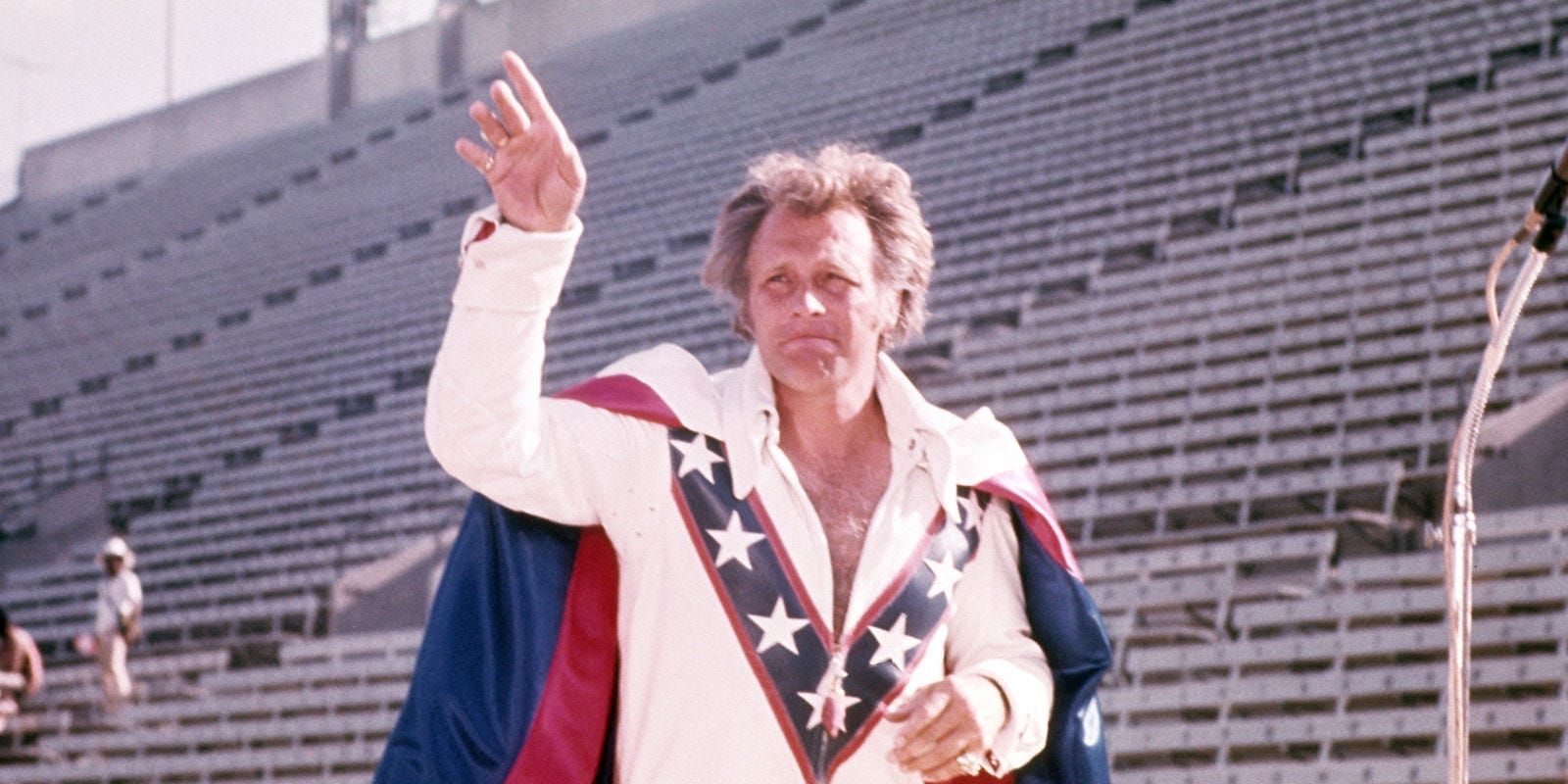
Jon: It was just at the end I came up with the idea. I was writing a bunch of really shitty ones, like I said, [laughs] One day I was meandering through the internet, blogs, some shit like that, and I landed on this photograph of a guy on a motorcycle. I actually have it on my banner on my Twitter page, but it was a photograph of some guy on a desert road standing up on a motorcycle seat in a Jesus Christ pose. This thought of this character kind of struck me then, what if Evel Knievel never existed? And over the course of coming up with the story I started to think: What is the footprint that we leave behind when we’re gone? I’ve always loved that. What are these things? What is that defining thing you do in your life that is remembered by more than just your family? Not everybody pulls that off.
I don’t know, a light came on in my head and I thought of Evel Knievel. But I didn’t want to write a biopic. So I just composited this character that went through many different iterations until it landed where it is.
Scott: Both of those themes are in “Free Byrd”. You’ve even got an image of a character, at one point, on the highway in the Jesus Christ pose. Right?
Jon: I do. It’s funny how an idea can come from anywhere and then you can keep at it until something very real is born from it. That one just clicked with me and I thought, “Oh, my God. This is the story that I’m going to finish, that I’m really going to work on.” It just came out so naturally out of anything I’ve ever written. It came out, just flowed out of me so effortlessly at times. I actually remember realizing the ending in the middle of the night and went to my desk and blasted out the ending, the last 20 pages, so fast. All the ingredients just fell into place.
Scott: I’d like to dig into the story, if we can, first, just so people can understand what we’re talking about. A plot summary for the movie Free Byrd. The protagonist’s name is Billy Byrd. It’s a riff off the old song, “Free Bird.”
Jon: Yeah. Yeah. I mean, that song alone makes you wish you were alone on a highway.
Scott: The plot summary “After being diagnosed with dementia, a retired 50something stunt motorcyclist sets out to perform one last jump.” The script was a semifinalist in the 2012 Nicholl, is that right?
Jon: Yes.
Scott: Then made the Black List in 2013.
Jon: Scraped onto it, yeah.
Scott: You’ve already talked a bit about your inspiration for “Free Byrd”. In part, this idea of legacy, footprint, and then that idea of the motorcycle guy. It would seem like there’s a personal connection there. Snowboarding would be speed and danger, so…
Jon: Yeah, yeah. Like I said, my life, I honestly didn’t think I would live through a lot of the things I did. When I was a snowboarder it was different than it is now. Now it’s this professional, Olympic thing. People can make a real living at it.
I was really interested in the fact that everybody is really good at everything now. There’s these flying wingsuit guys. There’s the X Games, there’s the Motocross guys, there’s the skateboarders. There’s just so many people that are so calculated and so good at everything, but nobody will achieve what Evel Knievel achieved ever again. There will never be another guy like him. Ever.
That really stuck with me. I love that kind of character. He’s remarkable but he’s kind of an everyman. He didn’t do it necessarily to be famous, even though he kind of did. He got into that whole thing and he had this massive ego, but I just love the idea of a character who just did something because he couldn’t NOT do it. He was the only one. We don’t see that anymore.
But I needed an offset. There is that modern day X Games-style sport aspect with the other character, Cole Cash. I just liked the idea of there being these two worlds coming together, and with this very father/son type theme, which I love. I love stories of fathers and sons or even mothers and daughters. I like that passing the torch moment.
Scott: To set the stage for this character, Billy Byrd was this very famous motorcycle adventurist doing these crazy Evel Knievel type of things but had a horrific jump that he basically had died four times on the operating table, and his whole body was broken. Since that time this is many, many years ago has not done any more of this type of thing.
Jon: Right. He finally came to the point where he just gave up. It just beat him down. I like to think that his backstory is that it never really sat well with him, but physical circumstances prevented him from doing anything, so 20-some years go by and he’s turned into this grouchy, cantankerous asshole.
In the process he’s fallen in love with a younger woman and the world has gone on. I didn’t really want to say whether it was present day or not, because it could be almost like the inception of the X Games, but now there’s these young hot rods and hot shots that are doing things above and beyond what he ever did, but they still idolized him.
I just liked that idea of this younger character and him meeting, and there being this moment of just awe in this young character’s eyes of this man that he grew up looking up to.
In Part 3, Jon discusses other key characters in his script “Free Byrd”.
For Part 1 of the interview, go here.
Jon is repped by WME and Zero Gravity Management.
Twitter: @jonboyer.