Interview (Part 2): Justin Piasecki (2016 Nicholl Winner)
My conversation with the writer of the winning script “Death of an Ortolan”.
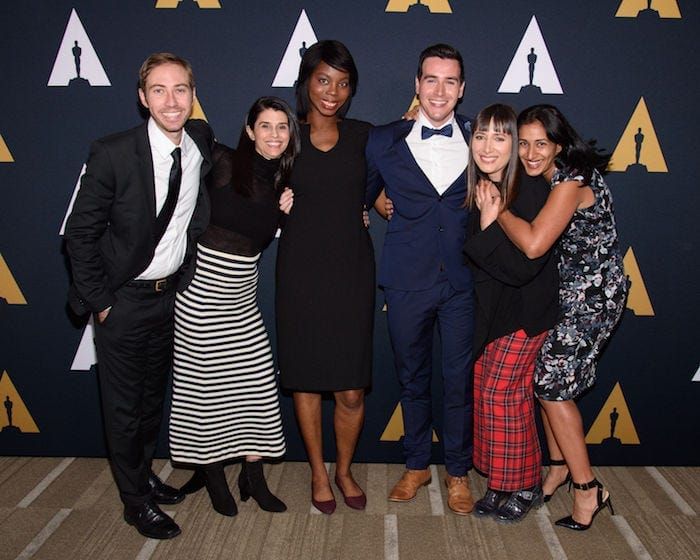
My conversation with the writer of the winning script “Death of an Ortolan”.
Justin Piasecki wrote the original screenplay “Death of an Ortolan” which won a 2016 Nicholl Fellowship in Screenwriting. Recently I had the opportunity to chat with Justin about his background, his award-winning script, the craft of screenwriting, and what winning the Nicholl has meant to him.
Today in Part 2, Justin and I dig into the Protagonist in his script “Death of an Ortolan”, a disgraced, isolated soul named Walter:
Scott: Speaking of scripts, let’s talk about the, “Death of an Ortolan,” which won the 2016 Nicholl Fellowship in Screenwriting. Here’s a story summary.
“A disgraced White House chef is discovered decades later preparing meals for prisoners on death row, but he risks a chance at redemption when he befriends an inmate whose guilt appears doubtful.”
The script, which as I said, is excellent, has these echoes, positive associations with movies. When I’m reading it, films like Dead Man Walking or The Green Mile come to mind, or these resurrection type stories where someone has lost touch with their creativity, but they get back in touch with it. Then, of course, there’s food and culinary arts, and the closest thing I could think of there was Babette’s Feast. Were there movies that inspired you in writing this script?
Justin: There are movies that, once I knew the story, that I looked at for form. Dead Man Walking certainly was one. In fact, that is a great script to read. There is a published bound version of it, and what’s cool is it has Tim Robbins’s directorial notes throughout so you can see: “This scene we ended up cutting for this reason,” it’s a great post writing exercise.
I really like Frank Darabont, I love the The Conversation…I like Steve Zissou’s arc in Life Aquatic. I am attracted to those characters that are not necessarily has‑beens, but could‑be‑agains.
Scott: That hits on that universal theme of regret which everybody has something that they’ve regretted in their life, and so you can tap into that to help create that connection with the reader or an audience. I’d like to unpack in terms of what inspired you to write this story. Where did you start?
Did you start with White House chef? Did you start with prison? Did you start with that idea of preparing a death row prisoner’s last meal? I mean, as soon as the story went that way, I was like, “Wow. I never would have thought of that.” What an incredible sort of thing. Where did you start? What was your inspiration for the story?
Justin: I always thought last meals were inherently conflicting: “Here’s a refined symbol of our humanity on a plate before a blunt, unrefined inhumanity.” Whether you support the death penalty or not, those ideologies butt heads.
Separately I was reading about how White House chefs really do end up in these non‑visible places. If I asked you to name a White House chef, and if you asked me to name a White House chef a year‑and‑a‑half ago, I wouldn’t have been able to name one. Why? Because historically they’ve gone on to sell cooking utensils in malls, and teaching Home Ec in community colleges, and I thought, “That’s insane. They’re at the top of their game. If they could end up there, then where else?”
Those two worlds together I just realized were kind of meant for each other in a lot of ways. They had a lot to say about each other.
Scott: So that’s the root of the protagonist character, Walter Karrat? Have I pronounced that right, “Karrat?”
Justin: If you buy really cheap coffee, ‘Karat’ is the plastic lid manufacturer of crap coffee cups. That was one of the days where I decided not to procrastinate on “Maybe thematically his name could have German roots or…what if it’s an anagram of ‘Justice” or something and instead just saw the lid and added an R.
Scott: How would you describe Walter, his personality, his station in life when we first meet him in the story’s first act?
Justin: He’s a guy that we’ve seen just a real flash in pan — wunderkind Executive Chef of the White House. And then we jump to two decades later where he is working as the chief kitchen officer in a medium security prison.
Scott: You’ve been to the mountaintop.
Justin: Right.
Scott: You had this idea of Walter’s fall from grace if you will, but did you not have the specifics of the whole ortalon dining thing until later?
Justin: I didn’t have the dish when I started the script. I always imagined it’d be some -Kobayashi Maru of dishes. What’s something that’s impossible to make? I’ll just say he got screwed over by that.
Then I found that dish, the ortolan bird. The parallels to the steps in preparing that bird, and preparing an inmate for executions were too serendipitous to deny.
Scott: It’s perfect for your story. For people who don’t know about it, I had to Google it. I thought you’d made it up.
Justin: Most people did.
Scott: Some of the descriptors if you Google “Ortolan dining,” these are some of the descriptors in articles: “sadistic, cruel, repulsive, disgusting.” Walter makes a choice to not do a few key things in preparation for this White House meal that in effect shows a bit of empathy for these birds.
Now this is a guy, I’m assuming he deals with meat in food preparation, but in this particular case, something struck him as just being pretty savage in nature. Is that a fair assessment of how he responded to that particular request to make that meal?
Justin: Sure. There was a choice put on the table in front of him that says this is what it takes to be where you’re at. On page one he makes the choice not to. And then we cut to the fallout of that.
Tomorrow in Part 3, Justin details his creative process in coming up with a key character in the Protagonist’s Walter’s life — a death row prisoner named Reed. It is an intersection that will change both men’s lives.
For Part 1, go here.
Justin is repped by CAA and Zero Gravity Management.