Interview (Part 2): Rachael Prior — Big Talk Productions
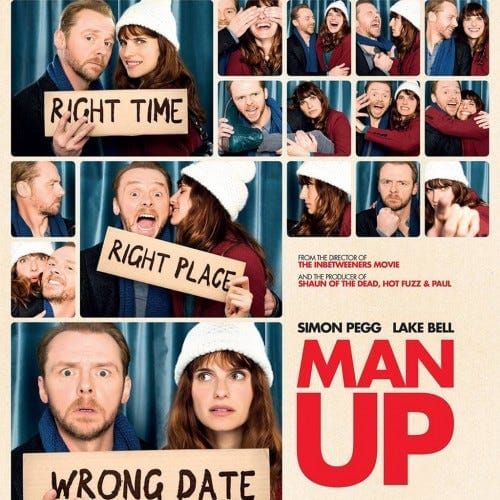
One of the delights about spending time on Twitter is having met and gotten to know Rachael Prior. Whip smart and passionate about movies and storytelling, Rachael is the Head of Film at Big Talk Pictures, a U.K.-based film company overseeing movies such as Attack the Block, Cuban Fury, and the excellent romantic comedy Man Up (2015), written by Tess Morris, directed by Ben Palmer, and starring Lake Bell and Simon Pegg. Previously Rachael worked in development at Working Title where she was involved numerous movies including Edgar Wright’s ‘Blood & Ice-Cream Trilogy’ — Shaun of the Dead, Hot Fuzz, and The World’s End.
Recently I had a wide-ranging hour-long transatlantic conversation with Rachael. Today in Part 2, Rachael provides her take on producer as “facilitator” and how she intersected with the spec script Man Up:
Rachael: Then I was at Working Title for 12 years and I worked my way up through the ranks. I’d worked there a couple of years as an assistant when they decided to set up WT2, which was a low‑budget new talent division. I moved across to work there as a Story Editor.
That was a tremendously exciting time for me, because the first film that went out through that division was Billy Elliott. It was serendipitous that I had worked with Stephen previously, then ended up with my first movie credit on his film. Billy is one of my favorite films I’ve ever worked on. It means a lot to me, because my uncle was a miner during the strike and, as I was growing up, that point in British history affected me and my family very directly.
Scott: It is one of those “you make your own luck” things, it sounds like.
Rachael: Yeah, it’s exactly that. Obviously you’ve got to have the right qualifications and interests, but beyond that it’s about being tenacious and ultimately getting yourself in a room and representing yourself in a way that is appealing [laughs] to the people that are interviewing you.
I always say that so much of the job that I do is about being able to communicate face to face with other people. That is so key. Also, being able to help a writer make their script better is quite an important [laughs] bit.
But if you’re not somebody that is at ease and able to be a good reader of people, to be able to adjust the way that you work to fit the personality that you’re in a room with, then you can end up finding the job quite tricky, or find that writers don’t necessarily respond to you in the way that you want them to.
I always felt like, even though I didn’t exactly know that this job existed when I set out to work in a creative industry, it’s absolutely… it’s the perfect job for me. I get to be part of a creative process, and I do think my job is… I see myself as a facilitator, but it’s also really creatively satisfying.
Scott: Yeah, I want to definitely talk to you about that, because following your Twitter feeds and your Twitter rants and all that, it does feel like in some respects being a producer, a significant part of it is being a psychologist.
Rachael: Yeah, I think so. Being able to support a writer in the right way, knowing when writers want or need tough love, knowing when they need support, it is all part of the job. Absolutely.
It’s interesting, ’cause obviously Tess and I are incredibly good friends. But she’s one of the few writers that I’ve ever really let into my social life, not because I haven’t liked writers that I’ve worked with, but because I’ve always felt I needed to draw a line so that I can do my best job for them. I am not someone that loves confrontation, so it becomes more emotionally difficult for me to be tough with writers if I care too much about them as mates. I’ve got better at this though, as I’ve got older, the same way I suppose writers get better at separating their work from who they are as a person.
The difference with Tess was that… I don’t know, she found the process of getting notes, hearing notes… I’m sure at times it was tough for her, particularly when we were grinding very close to production there were some hairy few days, but her attitude towards the process made it much easier for me with her socially, as well as having a good friendly relationship professionally.
Scott: Yeah, as long as we’re here, let’s discuss Tess Morris, who wrote the script for Man Up. I’ve interviewed her. She had some wonderful things to say, which I’m going to embarrass you with in a bit.
Man Up is such a smart script and a well‑made movie. As I understand it, Tess writes this script on spec. Her agent responds positively to it, and she says send it to Big Talk. That’s her dream thing. At this point, you’ve segued from Working Title to Big Talk.
Let’s pick up the story from there. The script comes into the company. Do you remember when you first read it?
Rachael: Yeah, I absolutely do. It’s worth saying the outset that… the way in which Man Up came in to us is relatively unusual for the UK. We receive screenplay submissions all the time, but it’s rare to get sent one in a “Here’s a spec and it’s also out to these other people” way. We don’t have such a competitive buying climate, there aren’t enough of us, so bidding wars, or creative fights to home projects, happen rarely.
I remember it coming in. I was quite new to Big Talk at the time. Tess had a relationship with an exec that was already at the company who is now a full‑time produced feature writer herself.
It had originally come in to her office. I remember sitting at my desk and one of our brilliant assistants was sat outside my office reading the script, which is often the process when things come in. We get a lot of scripts and sometimes an assistant will be the first internal read.
I remember watching her reading the script, and she was laughing out loud, and that’s really unusual [laughs]. She kept chuckling away to herself. I eventually asked her, “What are you reading?” She said, “Oh, it’s this script called ‘Man Up.’
I see it’s by this writer Tess Morris, who I’ve never met and never heard of. “I was like, “Oh, let me know when you get to the end. If you still think it’s good, I’ll have a read of it.” She read it very quickly and handed to me straightaway. I had read… it couldn’t have been more than about ten or fifteen pages. I knew.
I knew that it was going to be a script we were going to try and option because there was something so unique, contemporary, exceptionally funny and characterful about it. That felt like a rare thing, especially for comedy, and even more unusual to get a script like that from a female writer in the UK.
The timing of it was so weird. Tess had worked away on that script herself, in a really smart way, with a friend of hers who was a script editor and gave her some support and feedback, he’s acknowledged in the credits. I don’t know how long they worked exactly, you’d have to… she probably told you.
It was a very polished spec by the time we got it. I remember finishing it and being like, “This is brilliant and also so achievable,” and taking it straight to Nira saying we have to do this movie. Yeah, it was quite swift really. We’d all been to see Bridesmaids and were like, “Oh, please let’s make a great girls movie like that for the UK. Where are all those writers?” and I’m literally… Yeah, it was only a couple of weeks after that that we were reading Man Up and getting excited about it.
Tomorrow in Part 3, Rachael drills down into the process of working with Tess Morris as they went at the process of rewriting the script Man Up.
For Part 1 of the interview, go here.
To download a PDF version of the script for Man Up, go here.
Twitter: @ORachaelO.
For the Big Talk Pictures website, go here.
For my June 2015 interview with Man Up screenwriter Tess Morris, go here.