Interview (Part 2): Writer-Director Tze Chun (“Cold Comes the Night”)
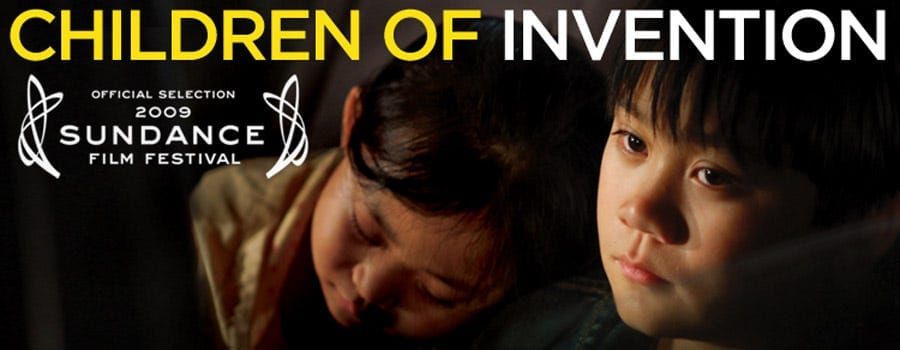
Tze Chun is a talented young filmmaker who first gained attention with his indie drama Children of Invention. Indiewire describes his latest movie Cold Comes the Night, starring Alice Eve and Bryan Cranston, as a “tightly wound noir thriller.” Having screened the movie myself, I concur wholeheartedly. It opens in theaters and on VOD on January 10.
I caught up with Tze as he was driving from LA to San Diego for a screening of Cold Comes the Night. We had a great conversation covering how he wound his way into filmmaking, three of his movies, and his thoughts on the craft of screenwriting.
In Part 2 of our interview, Tze talks about how Windowbreaker served as the inspiration for his first full-length feature film Children of Invention:
Scott: The short movie Windowbreaker became the basis of the 2009 feature film Children of Invention. Could you describe the process of how you went from that short film into the full length movie?
Chun: Well, between the short and the feature, I staffed on a TV show called “Cashmere Mafia”. I got a manager out of Sundance and he got my writing partner Mike Weiss and I the job and we moved out to LA. “Cashmere Mafia” was a Darren Star show for ABC, starring Lucy Liu. It still confuses people on my IMDB. It was a lot of fun to be in a writer’s room with other writers. I did that for six months and then the writer’s strike happened and everyone was out of work, so I came back to New York.
Back in New York, and I wanted to go back and make a feature that was on the scale of Windowbreaker. There’s a long history of filmmakers making feature films from their short films, but I didn’t believe that the plot of Windowbreaker would sustain a feature film. But I did like the idea of centering a feature on these two little kids who were left at home by themselves.
So, I started writing Children of Invention during that winter. The writer’s strike happened in November and I came back to New York in December 2007. I wrote it relatively quickly and in February, I showed it to Dan Cogan, who I met at IFP with another project. I’d actually just wanted him to recommend the project to the Sundance Labs, but he called and said his company Impact Partners would finance the movie. I immediately brought on Mynette Louie, I think in March, and we were shooting by July. It actually only ended up being a year between writing the script and our Sundance premiere.
Scott: Wow.
Chun: I’ll never have a movie come together that quickly again.
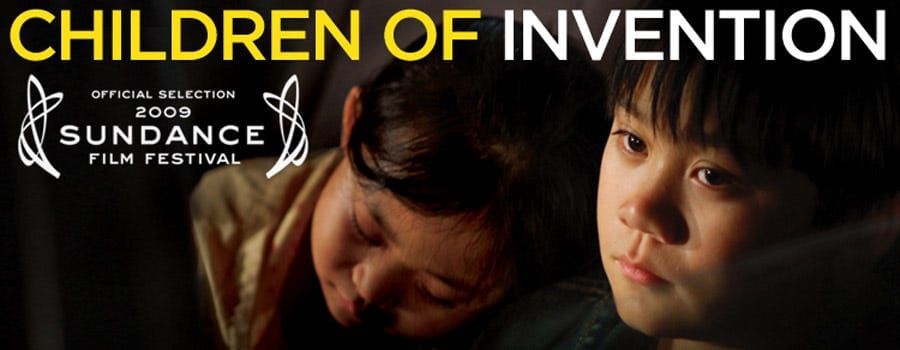
Scott: The plot for both movies involves two children, living illegally in a model apartment outside Boston, who are left to fend for themselves when their hard-working mother disappears. That’s the idea you had for Windowbreaker and that really is at the heart of Children of Invention. What appealed to you about that? What resonated with you so that you felt this should be a movie?
Chun: Windowbreaker is about the feeling of paranoia or xenophobia in American suburbs. It’s about the town I grew up in, and the two little kids in Windowbreaker are a window into that town. In Children of Invention, I wanted to expand the story, make it more about the immigrant mentality, about hard work and opportunity, but also the flip side of that, which is opportunism.
While the world of Windowbreaker is the American suburbs, the world of Children of Invention is the world of pyramid schemes and multi-level marketing companies. I grew up going to a lot of those seminars, and that world always stayed with me. What I thought was so interesting about those seminars was, the product they’re selling is almost irrelevant. What they’re really selling is the American dream or some short cut to achieving the American dream, which if you know anything about pyramid schemes, is almost always a false opportunity.
Scott: Yes, that whole pyramid scheme component the mother gets ensnared in and that leads to a point where she becomes separated from her kids. They have to take care of themselves. The performances in the movie are astonishing, the children are incredible. What were the keys for you in writing those characters? How did you approach writing children?
Chun: I think the two kids are very much based on being my little sister and me. Their relationship in the movie is very close to what it was in real life. My mom also moved from Hong Kong to the US not long before we were born, just like in the movie, and was struggling to find her place in the US. Our family was a very close family unit, so I think it was just easy to write those characters because I knew them.
When we were casting the movie, I think the biggest thing that surprised us was how mature Michael Chen and Crystal Chiu were for their age. They’re both very smart kids and they are capable of doing a lot. I think as adults we tend to forget how capable kids are and how much they actually understand about the world around them. I think part of the directing process was to force myself not to dumb things down for them, but to fully explain what their characters were going through at certain points in the script.
One of the challenges of directing child actors is that kids might know instinctively how to play a scene, but they may not know how to interpret the words on the page. So that’s the director’s job — to translate the script into something the kids will understand either on an intellectual or emotional level. What you don’t want to get into is a situation where you’re telling a kid “you should be sadder in this scene.” Because that never really works. I think what works best is if you spend the time to make the kids understand what’s going on in a particular scene and bring them into the process.
Scott: There’s an interesting dynamic. You mentioned this thing about the American dream. The point is getting caught up in this idea. Obviously, the mother’s struggling financially, but trying this one scheme to make her rich quick. So she has that journey. The kids have their own journey they go on…
Chun: Well, I think that part of the movie is about how values and pursuits get passed down through generations. Raymond’s plan when they go into Boston is not unlike one of his mother’s schemes.
The movie is structured atypically. The movie I watched the most when I was writing the movie, you’re going to laugh, but it was Full Metal Jacket.
Scott: Really?
Chun: Yes. Full Metal Jacket is divided into two equal parts. The first is the learning process where the Marines are going through the process of training. The second one is using their training in the real world, in war. The movie is split pretty much down the middle. In Children of Invention, I wanted the first half to be the kids living in the adult world and learning the skills they would eventually put into effect once they’re left alone.
Scott: Yes, in fact, I think the mom is separated right around midway through movie. It’s almost minute 44 or so. That’s interesting.
Chun: Yeah. There were some people that liked that structure and some people thought it was too long before the mother is separated from them. But, that was the structure that made the most sense for me.
You can watch Children of Invention on Hulu here.
Tomorrow in Part 3, we dig into Tze’s new movie Cold Comes the Night which opens in theaters and VOD on January 10.
For Part 1, go here.
Tze is represented by WME.
You may check out the Facebook page for Cold Comes the Night here.
Comment Archive