Interview (Part 3): Amy Koppelman and Paige Dylan
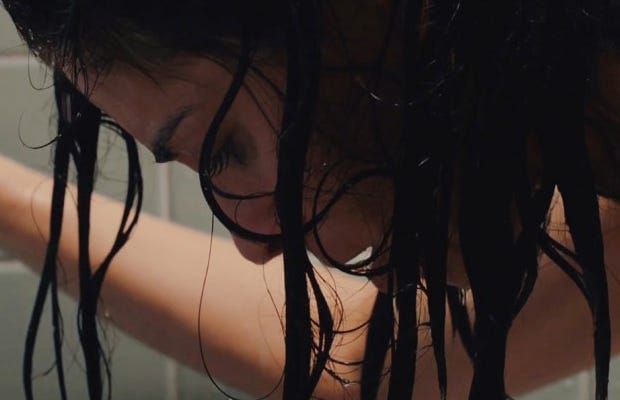
The movie I Smile Back is rolling out in select theaters this week. Starring Sarah Silverman in a breakout dramatic starring role, I had the opportunity to talk with Amy Koppelman, who wrote the novel upon which the movie is based, and co-writer of the screenplay adaptation along with Paige Dylan.
Today in Part 3, Amy and Paige dive deep into the some of the key themes and dynamics in I Smile Back:
Scott: The story goes into much deeper, darker places. There’s a moment where it’s almost like Laney attempts a suicide by driving through a red light. She goes on a drug binge, and has a bizarre sort of self pleasuring experience while her daughter’s asleep, Laney exploring some really dark stuff a la Carl Jung, her shadow.
Amy: I always thought that the alcoholism, drug addiction, sleeping with other men I always thought of them as symptoms of a larger illness, symptoms of manic behavior. I think Laney worked hard to create this perfect world. You look at Laney’s house, and everything’s perfect, and yet it terrorizes her for some reason. What if this all disappears. And her mind ricochets between- “How am I going to be able to stop myself from fucking this up and hurting everybody?” and “How are they going to hurt me?” Laney’s not bored of the mundaneness — she loves the mundaness-she’s petrified of losing it.
Scott: I’d like to talk to that because there feels like there’s an existential element to the story. Laney’s got several lines like, “I’ve spent so much time running away from my problems because I didn’t want to feel any pain, and I fucked up everything in my life, good things.”
In another place she says, “And I thought to myself, he’ll never know. Neither of them will ever know how hard I tried not to hurt them.” This is about the kids. Then she says, “Am I going to fuck this up? I really don’t want to fuck this up.” At the root of the story, it’s like almost her deepest, darkest fear is she doesn’t want to screw up her kids, and this life. I was thinking that as a parent we probably all have that kind of dark voice inside our heads.
Paige: I don’t even think that’s such a dark voice, or thought. I think that’s everybody’s or most people’s persistent fear. Of course, if you have kids it’s a terrifying thought to do something that is going to damage them in any way.
I think there are a few things going on there. Partly she feels completely undeserving of these beautiful children, and this life, and Bruce, and partly I don’t think that her thought pattern is necessarily normal, or where she takes her thoughts is normal.
She takes them to extremes, and she does that because she’s terrified, but she doesn’t process things the way you do. The way you can put these fears in a certain box, and carry on. They consume her.
Amy: I think the real turning point for her is when she sees Eli start twitching, and she sees that she has already hurt him, like her fear of ruining him, of him becoming like her, she sees it manifest. And then she goes to see him play the piano and I think when she hears the music it’s just so beautiful to her, and it’s all just so fragile- she just can’t deal with those emotions so she resorts to what she knows is going to make her feel better, and she goes to her little buried stash of blow, and then it all ensues.
I do think, or rather what I realized in retrospect, which is why I can’t really answer the first question you asked me in a sound bite- is that when I look at what the story is about, now, so many years later, I realize that the Laney character is a lot like my father. My father didn’t do drugs but he was bound to destroy. I must’ve been writing to the fear of what if I fuck this all up? Because I loved decorating my kids’ lunch bags. But what if-what do we inherit besides our hair color, and eye color? What else do we get from our parents that we can’t defy? Laney is desperate to be a good mom and yet her fear of being a bad mother-of being hurt by her family or hurting them-it’s almost like the only place she can exist is within that fear.
It was really important to Paige and I, that the audience leave the theater knowing that Laney loves her children, and in a way, as crazy as it sounds, what she does in the end, in leaving them, that, that’s her way of trying to protect them. It’s a little late, and her kids are already have issues, but maybe one of them will get out OK, and be able to break the pattern of destruction.
Scott: Did you at all consider changing the ending at all, or is this something you were just completely committed to keeping?
Amy: We’ve come to expect redemption in books and in film. After 90 minutes the riddle gets solved and people can leave the theatre feeling better. But lifes not like that. It’s one of the the reasons Laney gets so upset after she sees her father. He was able to start over, and she can never start over again.
Scott: You mentioned the word ‘redemption’. Of course there’s that moment where her son does play the piano, and it is so beautiful. It’s almost like a moment of grace.
The Hollywood ending would be all the keys sort of click for Laney, and now she returns to this family, happy and whole, but in fact the concert performance is overwhelming to her, and it really exacerbates her fears, and drives her into this other direction.
Amy: The ending did change a bit. Sarah [Silverman] said, “Can Laney go back home one last time and do one last thing for her kids?”, so the penultimate scene -when she goes back, and she makes the peanut butter and jelly sandwiches, that’s not in the book.
In the book Laney goes to the hospital and after she’s released she takes a taxi home. The taxi pulls up to her house and she sees the light on in Eli’s room, and she looks at the door and then tells the cab to keep driving. It ends Regret is vivid and whole. Brazen. In the film Laney goes home and makes them their lunches one last time.That’s the biggest difference between the movie and the book. But the essence of the two scenes are the same.
A couple weeks ago someone asked our amazing producer Mike Harrop a question about the ending and he said,” We always knew what the ending was, what this movie was, so we made it on a budget that would support the content.”
We were so lucky to have Josh Charles play Bruce, because he was able to show how you can love somebody like Laney. Seeing Laney through his eyes, well it makes her much more sympathetic. The children do this too, they get a kick out of her-when she’s eating the corn for instance they laugh. The kids find her magical.
Josh said to us, we only had one read‑through and we went out for soup and he said, “I only have one problem with the ending. Bruce doesn’t go down the stairs, and what kind of man, if he loves his wife, wouldn’t go down the stairs and help his wife if he saw her like that?” And Josh was right-what kind of many would do that?
- a man that’s exhausted every other option. By the end of the movie Bruce realizes that he has to accept that he can’t fix this.
I think that any of us who have loved, or have been loved by, a person like Laney understand that there comes a moment… where you have to walk away. Bruce had to walk away in order to mitigate the collateral damage to his children.
Paige: Right. That’s true and in a way I think they were both sort of doing the same thing. She was leaving to save her kids, in a way, like Amy said, and Bruce doesn’t walk down those stairs because he has to save them too. If he just keeps perpetuating this cycle that they have gone through many times, they’ll eventually sacrifice their kids. They are both sort of making the same decision in the end there.
Scott: After this journey you two have had, and the movie’s coming out, I’m curious what sort of feelings you have about the experience.
Paige: Speaking for myself, I think that first of all, the project, I feel so lucky to have been not only a part of it, but to have been a part of it from the inception.
Even the novel, in terms of knowing Amy, and knowing what she was doing, and reading the novel and being completely blown away, to us writing the script, and seeing this get made, and then being able to be there every day and watch it all the way to editing until now, to Sundance, which was mind blowing.
I think the movie turned out beautifully, and Sarah and Josh were just completely remarkable and for me, I couldn’t be happier. I think we learned a lot. I think we’re really fortunate to have been in a position where we could see it through from the beginning to the end.
Amy: I was so lucky, my husband Brian [Koppelman] helped us throughout the process. He gave us notes, found Adam, helped with casting, music, editing. But his biggest contribution was introducing us to Mike [Harrop). Mike is an amazing producer. He figured out how to do the film for under a half a million dollars and then he figured out how to get the money. So in case I haven’t said thank you enough: Thank you Brian! And thank you Mike.
Whether people like the movie or don’t like the movie, whether they want to look at Laney as being spoiled or just another alcoholic or not, the thing that’s so rewarding to both of us is that no one questions Sarah’s performance. She did an unbelievable job.
It was very, very hard to get the movie made also, because people didn’t believe that Sarah could do it. To know that she did it and that she’s getting praise for doing it, that makes us very happy too. We’re just really grateful.
Here is a clip from the movie I Smile Back, screenplay by Amy Koppelman & Paige Dylan, starring Sarah Silverman and Josh Charles, directed by Adam Salky:
Tomorrow in Part 4, Paige and Amy talk about the craft of writing.
For Part 1 of the interview, go here.
Part 2, here.
The I Smile Back website is here.
An excellent thought-piece in Elle on the movie.
Amy and Paige are repped by the Arlook Group.
Amy’s third novel “Hesitation Wounds” debuts November 3rd and you may learn more about that here.