Interview — Part 4: Sean Hartofilis (“Beach Pillows”)
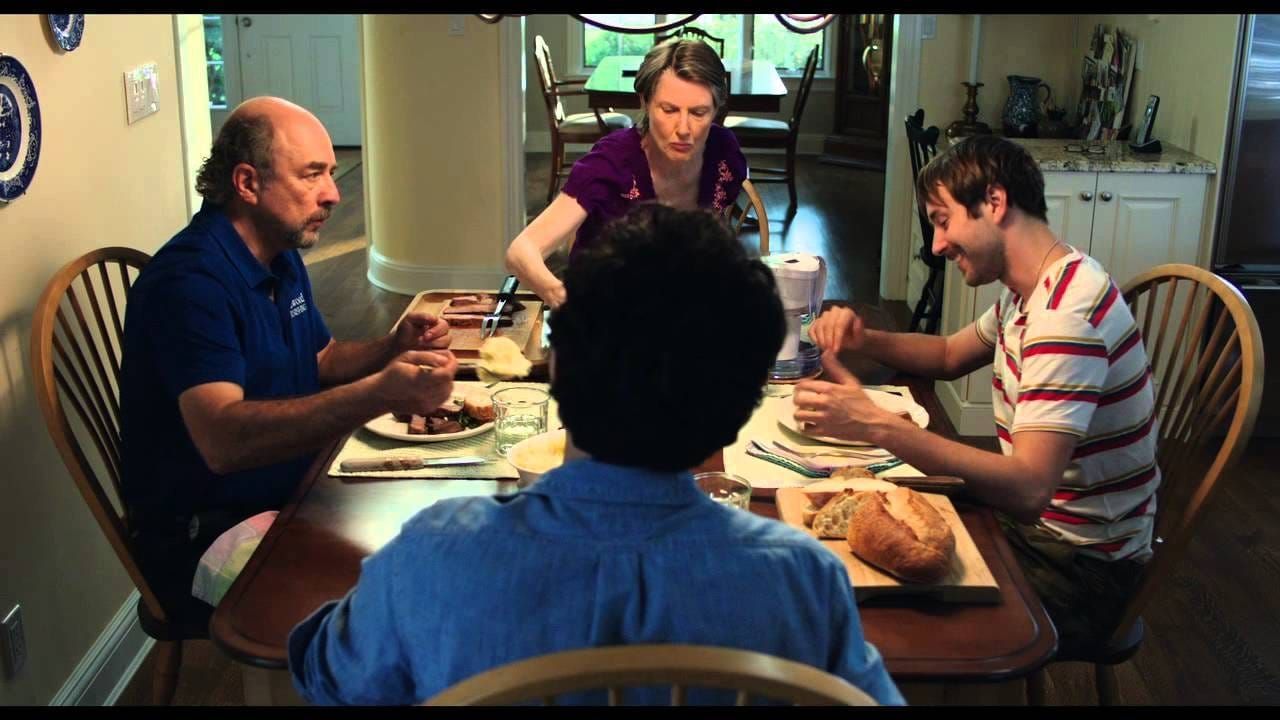
From Ivy League lacrosse star to writer-director of the new indie film Beach Pillows starring Geoffrey Arend, Vincent Kartheiser, Annette O’Toole, and Richard Schiff, the career path of Sean Hartofilis has been an interesting one. Recently I spoke with Sean about life as an indie filmmaker and Beach Pillows which has just been released on iTunes, Amazon and other digital platforms.
In Part 4, Sean reveals some of the details about the actual production of the movie:
Scott: That brings me up to the next thing, which is there’s an interesting bit of business whereby Morgan moves back home and he goes into his old bedroom. There’s a poster on the wall and this character’s a track star, and I’m assuming it’s a fictional character. It reminded me of Steve Prefontaine.
There’s a saying on this poster, “I’d rather have my heart explode racing to win than live in the middle of the pack.” What I hear you saying is that that inspiration, that motivation was always there in Morgan, but over time it got worn away. Now because of all the stuff that he’s gone through he can now reconnect with that a little bit. Is that right?
Sean: Yep. I think you’re exactly right. I think he had this ambition sapped from him via the sadness of life that everyone faces: heartbreak, opportunities not manifesting, whatever. The poster, specifically, was definitely inspired by a Prefontaine poster.
Prefontaine’s got some funny quotes. They’re very inspirational but also kind of funny. The deal there was it was prohibitive to license anything from Prefontaine, so I wrote that quote. That’s actually me on the poster. My DP and I went to a local track after shooting one day and got that shot. I almost pulled a quad.
Scott: Really?
Sean: Yeah. Emma Rose Mead, my Set Designer who made a bunch of great things in the movie, made that. I always wonder, with text on screen, if I’m giving people enough time to read it, so I’m glad it came across. It’s a little bit of a callback to Nick’s line earlier in the film in the bedroom about, “What we could use is a motivational poster right here. That could really turn things around.”
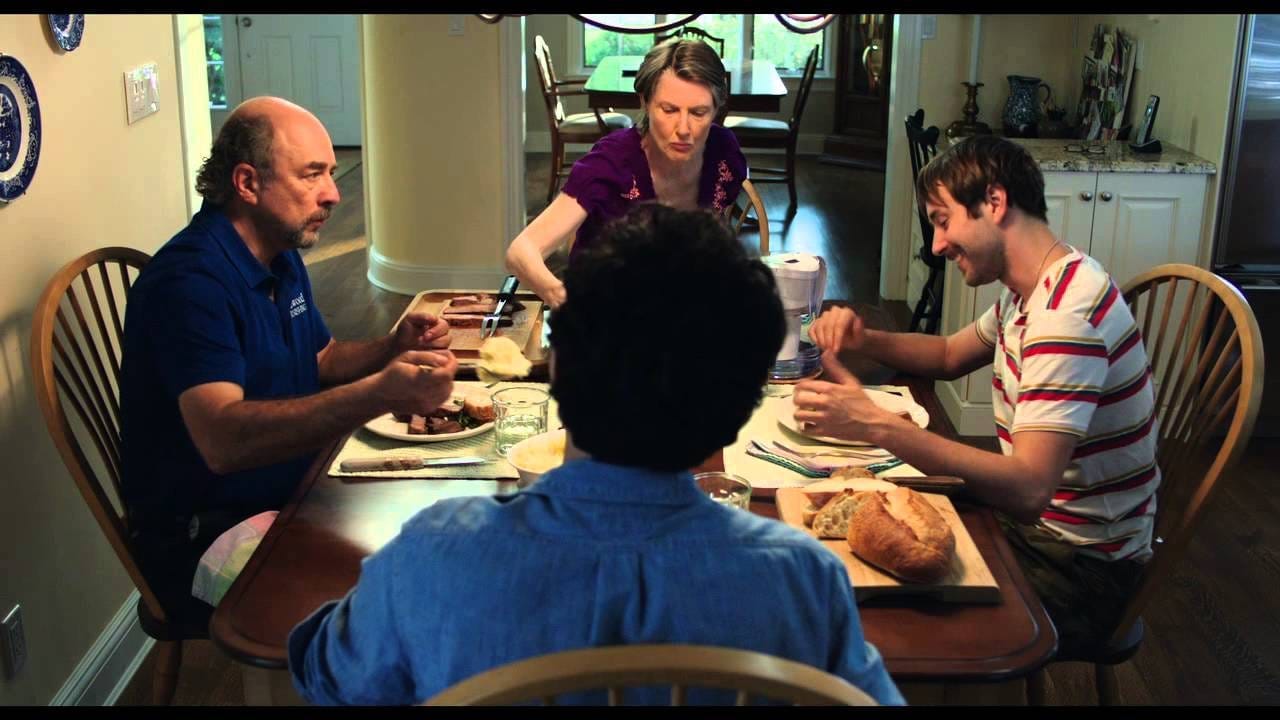
Scott: That brought to mind this other line, which really puts Nick’s character in perspective: “Sometimes it takes a human hand to get you moving.”
Nick, who basically is a classic fuck‑up, probably a genius. But at the end of the day, it really is Nick not only motivating and punching through Morgan’s comfort level, but he comes through and provides a hand in helping Morgan move on.
Sean: One hundred percent. I don’t think Morgan could grow the way he does over the course of the film, and hopefully after the titles roll, without Nick. Nick inspires him.
And going back to the two sides of personality, a lot of people can be afraid to project the more reckless or childlike aspects of their personality. But I think for an artist, especially, those are important to embrace in order to tell stories, but also to experience life and be able to grow from your experience, and hopefully communicate that to the world, which is what Nick represents.
That line, literally, is Nick talking about the birds flying off the telephone wire. But it could apply to Nick helping Morgan. What it also refers to is Nick being beaten to a pulp and that maybe knocking some sense into him. And it’s foreshadowing Morgan’s eventual shot of cold water from his mother. I think that’s something that maybe surprises people a little bit. Up until that point, his mom is a very nurturing character in the story and Morgan’s life. But it’s very right of her to do what she does, I think.
I don’t want to give away too much here.
But like any hero he’s a little bit put upon by his circumstances or events in the early going, and he realizes he needs to do something about it in order to achieve a result. Then from doing these things, he learns something he never expected or prepared for and achieves a different result entirely. What was the question again? I’m sorry.
Scott: You answered it, basically, you were responding to, “Sometimes it takes a human hand to get you moving,” and that insight about his mom is really point on.
Let me ask you a question about the production of the movie, because in spite of a limited budget, it has a very, very professional look to it, which is impressive for a first‑time writer‑director.
I’m curious, was it all scripted beforehand and did you have a full shot list or did you do much in the way of improvising during production?
Sean: We shot this movie with a few hundred thousand dollars. Just a few, in 20 days. So that’s four weeks. Thank you so much for saying that it looks good.
I don’t think it looks like a movie that was made for a few hundred thousand dollars; I think it looks like a movie that was made for at least a few million dollars. I’m sure you could spend twenty million dollars and make a movie that looks worse. That’s because of the sacrifice and investment of my crew, and these actors, and basically everybody that had a part in it was working for less than their going rate, owning some equity in the movie and just hustling and caring.
What I had to do, only having 20 days to make the film — and this is just the way I think I’ll make all my movies should I have the opportunity to make more — is that it was all planned. I storyboarded the shots, except for maybe the fair because I wanted to shoot that more verite with a long lens, but that was only because I knew we’d have to. We shot in a live fair so I wanted the guys to be able to experience it and not get close to them with the camera and attract a lot of attention. We also couldn’t control that set, so we had to move quickly. But I still very much planned the lens for that and designed the Mexican standoff sequence at the end and the transition to the bar.
Anyway, it was important to plan, because you need to know what you want to get on a certain day in order to tell your story. But also because I’m a big fan of movies that connect footage and build coverage in a very specific way, where the compositions and blocking change and evolve, and you feel the hand of the storyteller throughout.
I think a lot of movies now…there are movies where it feels like a random potpourri of coverage and then they just put it in a blender in post. For me it was more about specific shots, things connecting and building, and everything having a very specific point of view, and more or less knowing how I intended to cut it beforehand.
The story is told from Morgan’s perspective, so I wanted you to feel that in the filmmaking. For me that takes planning. I drew the shots. I had a great DP, Joe Arcidiacono. This was also his first feature, but he’s just a great person and a wonderful artist. I got really lucky with him and look forward to our next one.
Everything’s a collaboration. I don’t want to say that I drew the movie and we got it in the can precisely as envisioned. Everything that I drew or conceived I feel was enhanced by our great crew and the performances within the frame.
In terms of improvising dialogue, what you see is more or less the script. There were a few gems, from Richard specifically, and some great things from Geoffrey and Vinnie that were developed in rehearsal. I’m all about best idea wins. Of course, as the director I get to decide what the best idea is. But I’m not precious about the words I’ve written other than in the sense that I’m precious about making a great film. If the actors are more comfortable wording something a little differently, I’m usually fine with that, and on set I’m generally focusing on the emotions and ideas they’re communicating, as opposed to making sure everyone’s word perfect.
But with such a limited time and budget, you need to know what you have to get. I’m happy to say that I got everything that I wanted.
Tomorrow in Part 5, Sean reflects on what some of what he learned in making an indie film and what advice he has for aspiring filmmakers.
For Part 1, go here.
Part 2, here.
Part 3, here.
Beach Pillows is available on iTunes here and on Amazon here.
Comment Archive