Interview (Part 5): Sam Regnier (2015 Nicholl Winner)
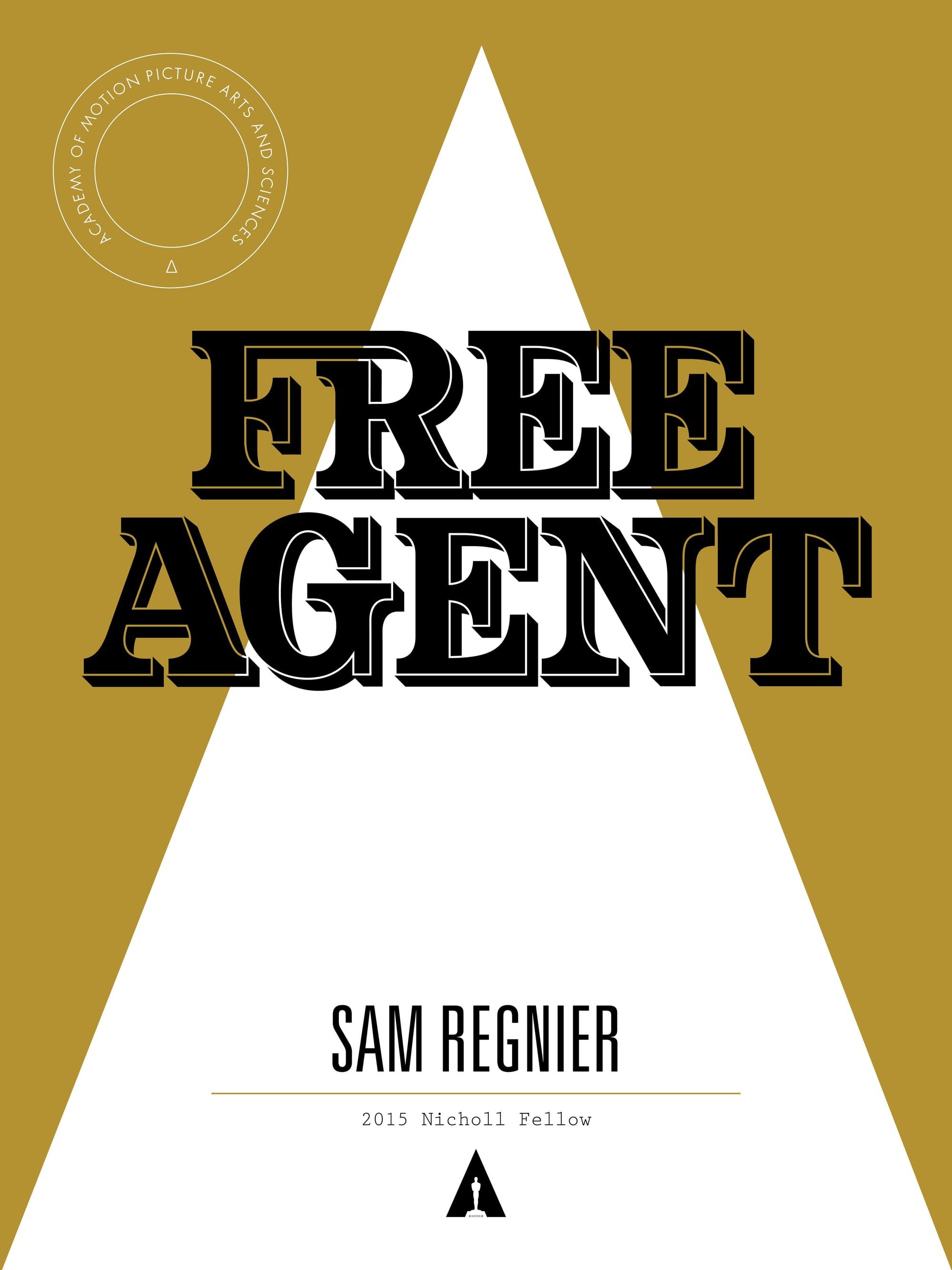
Sam Regnier wrote the original screenplay “Free Agent” which won a 2015 Nicholl Fellowship in Screenwriting and has been set up at CBS Films. Recently Sam and I had an excellent phone conversation in which we covered a lot of territory, his background and how he got into writing, a deep analysis of “Free Agent”, and a discussion about the writing craft.
Today in Part 5, Sam talks about winning the Nicholl Fellowship, selling “Free Agent” to CBS Films, and a tall tale about a special bottle of champagne:
Scott: Let’s jump to the Nicholl. What was that process like? You remember where you were when you got the call?
Sam: I do remember. There’s 7,000 scripts. Then you learn that you’re in the top 2,000, the top 1,000, you’re in the top 50. Those are exciting moments, and but the first call you get is when you find out that you’re a finalist.
I was sitting, working on a data request at my job, a spreadsheet full of numbers. My phone rang, and he said “Hey, this is Greg from the Nicholl. Do you have a second?” Immediately, my world went white.
I had tried to be as pessimistic as possible on every stage of it. I thought, “I’d done well, but it’s not going to make top 50. It made top 50, it’s not going to be a finalist. I made finalist, it’s not going to win.”
I was driving home from work when I got the call. The script had sold four hours earlier, so I was in this really crazy, emotional place already, and that was the icing on the cake of an unbelievable nature of a day.
Scott: You’ve got to remember that date, right?
Sam: It was a Friday. September 25th.
Scott: Talk about a Red Letter Day. You sell the script to CBS Films and get the Nicholl award?
Sam: Exactly. My wife knew about the sale, but not about the Nicholl. She came home, and it was a fun moment to spring it on her.
Scott: This brings up, which I’m sure will become the stuff of legend, assuming that your career goes the way that I suspect it will, the bottle of champagne. The seven year saga of this bottle of champagne, or however long it is. You want to share a little bit about that?
Sam: Sure. Soon after I left Paramount, I was excited about my career. I knew I wasn’t there yet, but I felt like I was close. We came across this bottle of champagne, and I thought “This is a symbol — it’s come to me for reason. I’m going to hang on to this bottle, and this is the bottle I’m going to drink when I sell my script.” And then it sat in my fridge for seven years. Four different fridges, actually, one apartment to another.
It was this white elephant of a burden that I was carrying. I couldn’t throw it away, because I was too stubborn.
Scott: Literally every time you open up to get a glass of milk, or a head of lettuce or some cheese or whatnot, there’s this bottle of champagne staring at you.
Sam: Exactly. It’s on it’s side. I can see it in my head, in every fridge I’ve ever had. I pick up the milk, and there it is. “When am I going to get to drink that bottle of champagne?”
My wife and roommates had to live with it, too. Sometimes, the fridge is full and they’re looking at me like, “When are you going to throw the bottle out?” [laughs]
Scott: This begs the question, have you finally drunk it?
Sam: We drank it that night.
Scott: September 25th?
Sam: We drank it that night, September 25th. We got some good food, my wife and I put the two kids to bed and we popped it. I had Googled it, and I had thought, “This is going to be flat and disgusting, because champagne doesn’t really last that long, but we’re going to drink it anyway.” I thought the cork might not even pop off. Then I opened it, and I swear it ricocheted off all four walls.
It was so metaphorical, the amount of pressure that was built up inside that bottle. It was perfect. It was like the day it was bottled. We drank it, and we toasted, and it was a real moment that you remember.
Scott: No matter what bottle of expensive Veuve Clicquot or Dom Perignon down the road for you, probably nothing will taste as good as that.
Sam: A bottle of the cheapest possible champagne that I found on the floor of our apartment after a party. That was its provenance.
[laughter]
Scott: Oh, man. That’s so great. Well, congratulations. That’s wonderful. Let’s jump from that to some craft questions. You mentioned character as a starting point. In this one interview, summing up like an advice to writers, you mentioned patience not only about learning the writing process, but I was really struck by patience about finding that right idea to write, not jumping in on the first thing.
I always like to start off asking people, how do you come up with story ideas? So how do you come up with your story ideas?
Sam: There’s no short answer. Ideas are so slippery, you have to try and find them wherever you can. It can start with a character, and you start with, “What’s a character that I would love to write, that an audience would love to see?”
Then you work backwards by saying, “OK, what are the logistical characteristics that shaped this person?” Then backwards from there to say, “What is the situation that this person would be in that would activate their worst fears or their most difficult journey?”
You can get to it that way, and that’s how “Free Agent” started. You can scour the listserves of news stories, sometimes that works. But I would say listening is probably the best but also the most ethereal, hardest to pin down.
You have to talk to people in your every day life, really listen to them, and wait for anything that makes your ears perk up, something that’s strange or interesting or different. Then you have to think immediately, how do I build a story around that?
Scott: Let’s talk about prep writing, like brainstorming, character development, plotting, research, outlining. Which of the aspects of prep do you tend to devote the most time and focus to?
Sam: I would say brainstorming and character development. Character development is a necessity because you can’t start writing the story unless you know who the characters are. At the same time, I can’t create a character in a vacuum. It needs to be a conversation between character and story, built brick by brick, because each informs the other.
When I’m brainstorming or outlining, I have a very specific and basic process. I open a blank Word document, and I start writing an internal monologue. It’s an extended conversation with myself about everything related to the script.
I write down all the problems I’m having with the story, and I ask myself how to fix them, and then I shoot down my own ideas and come up with new ones, and somewhere in that process hopefully I find some answers. I’ve got these long 20 page Word documents that are just me talking to myself.
It’s not like Scene A, Scene B, Scene C. It’s not like Clark is this character, and Greg is this character. It’s me saying, “Hey, but at the middle of the story, then the story falls apart. Why does the story fall apart?” Then I’ll say, “Maybe I need another character?” Then I’ll say, “Well, I already have three workplace characters, so maybe there’s a personal character.”
Any time I get stuck on a script, then I find the best thing to do is to shut everything down except that one page, and I can almost always find the answers in there.
Tomorrow in Part 6, Sam offers some thoughts on the craft of screenwriting and advice to aspiring screenwriters.
For Part 1 of the interview, go here.
Part 2, here.
Part 3, here.
Part 4, here.
Sam is repped by Paradigm and Management SGC.
Twitter: @dadbasic.