Interview (Written): Angela Workman
A Q&A with the screenwriter who adapted “The Zookeeper’s Wife”.
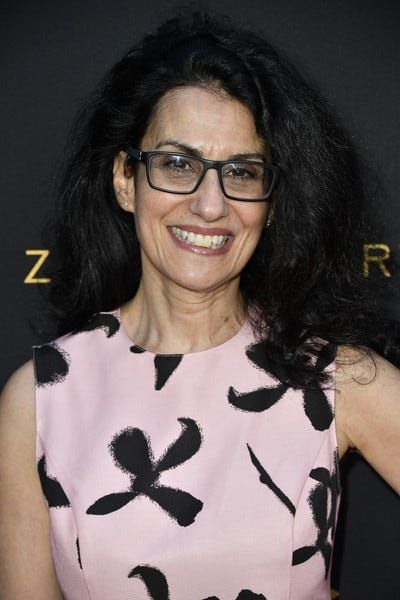
A Q&A with the screenwriter who adapted “The Zookeeper’s Wife”.
A WGA interview with playwright and screenwriter Angela Workman whose movie credits include War Bride, Snow Flower and the Secret Fan, and the current film The Zookeeper’s Wife.
A zoo provides the poetically impactful frame for the new Niki Caro-helmed Holocaust drama, The Zookeeper’s Wife, adapted for the screen by Angela Workman from the non-fiction book by acclaimed poet and naturalist Diane Ackerman. Ackerman’s tome is sourced from the unpublished diary of gentile Pole Antonina Żabińska, recounting how she and her husband, Jan Żabiński, director of the Warsaw Zoo, saved 300 Jews from extermination after the Nazi invasion of Poland in World War II by hiding them in the below-ground chambers of their zoo, and releasing them with forged papers.
While films and stories about the saving of Jewish lives during the Holocaust are well known, few bring the horror into relief in the way this one does — with human savagery and slaughter wordlessly observed by captive animals — beasts whose purity of nature renders the human capacity for evil even more incomprehensible.
You’ve done a ton of this historical stuff — what’s your procedure, from reading the source material in this case, Ackerman’s book. What’s your process, if you have one?
Some of it’s instinctive. I read it. A film story either jumps out to me or it doesn’t. There needs to be a beginning, a middle, and an end. I have to be able to see an arc, and that’s why I do so many historical pieces. It’s cheating a little bit, but there usually is a beginning, a middle, and an end, and I don’t have to worry about plot. I don’t think of myself ever as a plot writer. I write everything out of character — history provides plot, especially in these high dramatic stories. If you have an antagonist, all the better, and Diane does talk about Lutz Heck. So I realized, ah, we have everything I need, and the setting. I always respond to setting first. I am very detailed about how I write narrative, so, if I can see it, I can write it. Then I try to work out a three-act structure. Most of the time I write a very detailed treatment — it’s more for me because I need to know where the major beats are and I need to know where the act breaks come because those beat changes are so important to move the story forward and move it over that arc line. I actually diagram an arc line, and I hit page 30, page 60, 75, 90, and then I start scribbling in what I think needs to happen within those parameters. That will change, but I give myself a skeleton in a way.
So, with history providing you the plot and often the setting, which you then hone, you’re able to concentrate on sculpting the characters?
Yes. When I choose to write something it’s because I can see the environment, the setting. So that comes naturally to me. As the characters pop out to me as whole human beings — so in some ways, some of the work is already done because, if I choose to write the thing, the characters are already vivid to me and the setting is vivid to me. I can sculpt characters then once I have a structure. I feel as a screenwriter that structure is the most important thing, absolutely. I have to say that I almost never have to touch structure after a first draft. My structures are so tight. That’s where I do the majority of the work first. I kill myself over first drafts. My first drafts, most people say, are like other people’s second or third drafts. I get a really solid structure down. The storyline is clear, clear, clear, and then I sculpt characters onto it and usually it takes a few drafts to fully sculpture those characters. First, foremost always is structure.
Here is a trailer for The Zookeeper’s Wife:
Go here for the rest of the WGA interview.