Interview (Written): Byron Howard and Rich Moore (“Zootopia”)
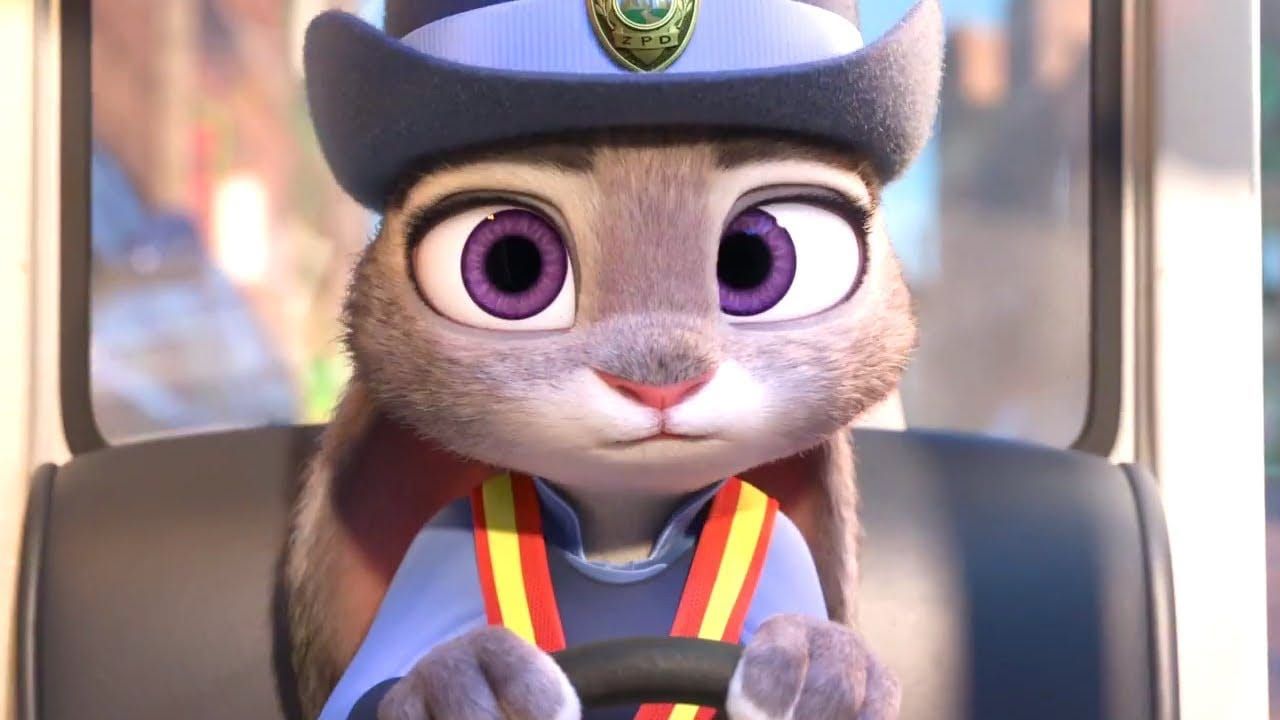
A Creative Screenwriting interview with Byron Howard (co-director and story by), Rich Moore (co-director and screenplay by), and Clark Spencer (producer) about their involvement with the hit animation movie Zootopia:
Where did the idea for Zootopia come from?
Byron Howard: I pitched the idea to John Lasseter (Toy Story, Cars) about five years ago, right after I finished directing Tangled with Nathan Greno. When John asks you to pitch an idea, he asks you to come in with multiple ideas.
At the time, Nathan and I were pitching together and we came in with six different concepts and while there wasn’t one that John felt was the complete package, three of the ideas had one thing in common, which was animals that walked upright and wore clothing. John said, “I will do anything to support a movie that has animals running around in little clothes.”
He was very excited about doing an anamorphic animal movie, which Disney had not done in a long time. I grew up loving Robin Hood — the 1970s Disney film. I was a big fan of that type of animated film. We had done animalistic films like The Lion King and Bolt, where the animals are on four legs, this was something we thought that we could revisit and give new life through the updates in our film technology.
Nathan stepped away to do another film, but I continued to work on the project, which was called Savage Seas at the time. It was a spy movie with animals. It was an all-animal world where humans never existed, but it did have that James Bond feel to it.
As I pitched it, I got the same response over and over: “Well, we’ve seen the spy thing a lot — like in The Incredibles and Cars 2 — but you have a really unique first act where these animals live in an all-animal city.” The suggestion there came from John and the “Story Trust,” where we decided to make the first act the entire movie.
That’s the story you see today.
— —
Rich Moore: I got involved as part of the Story Trust, which is made up of all of the directors here at the studio, along with some of the writers and story artists. We’re always there to support our fellow directors when they are creating a new project or making a film.
— —
How many drafts went into those collaborations of story ideas and what is the most important aspect to hold it all together?
Byron: Someone asked our screenwriter on Tangled, whose name is Dan Fogelman (Bolt, Crazy, Stupid, Love), “When is the screenplay was done for an animated film?” It’s really never done.
We constantly rewrite, even up until the last couple weeks of production on the film. I would imagine we did over one hundred drafts of the script, over the years, and that would be small and large rewrites and overturns. It’s so constant that it would be ridiculous to actually count, because it’s constantly in motion.
Another writer at Disney once said it’s like “…trying to paint a moving train.” It just goes and goes and goes — especially once it goes into production. Animation is also so expensive that we really try to work out the story as much as possible before we dive into production, but that doesn’t always work out that way.
To answer the second part of your question, the story itself is the most important thing. If the story doesn’t work as a film, then all of the most beautiful animation in the world won’t bring it together. So it really comes down to story and finding that emotional core that is going to make your audience invest in the character who is driving the movie.
Not only do you want for them to like the character, but you also want for the audience to find something in common with the protagonist. In this case, Judy Hopps is driving the story, so that’s who we’re following throughout the film.
It’s critical to find that balance of emotion, humor, and that classic Disney pathos so everyone can have a complete experience with the film. With a Disney film, I think people want more than just entertainment; they want to experience a deep, emotional reaction. It’s tough to make it fire on all cylinders, but that’s why we spend so much time reiterating and reinventing it.
Rich mentioned a “big left turn.” It would seem extremely difficult to backtrack once the animation process begins. What changed within the story?
Clark Spencer: The original version of this film centered around Nick Wilde (Jason Bateman) as the protagonist. We built that version of the film until about a year before the movie came out when we realized that people would not be rooting for Nick as a character. Your audience has to root for your main character and he was too cynical to root for, so we decided to make Judy (Ginnifer Goodwin) the protagonist. That was a massive change for the story and we had created many things that had already been animated that then needed to be taken out of the movie.
But John Lasseter has a strong feeling that the story has to be great, so we do not release a film because of the release date, we release a film because it’s great. The release date didn’t change, but we went in and re-tooled the story and the animation team had to work that much harder so we could make Judy our main character and as that version came together, we could feel just how right that idea was.
For the rest of the interview, go here.