Interview (Written): Christopher Nolan
An in-depth conversation with the writer-director of Dunkirk.
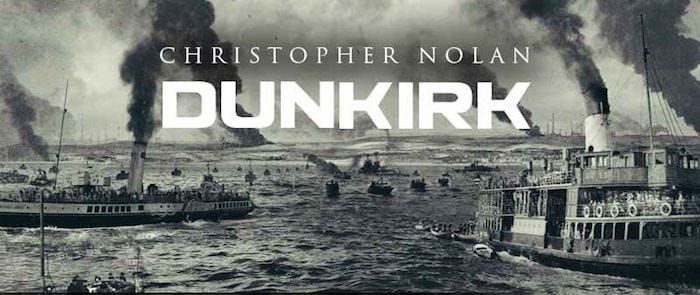
An in-depth conversation with the writer-director of Dunkirk.
A Little White Lies interview with Christopher Nolan who writing-directing movie credits include Memento, Batman Begins, The Dark Knight, The Dark Knight Rises, The Prestige, Inception, Interstellar, and his newest project Dunkirk.
LWLies: Dunkirk is your first film about a real event. In the creation process, did you ever feel beholden to documented reality?
Nolan: It was very different for me to be dealing with documented reality. The closest I’ve ever come to it in the past was probably Interstellar, as the jumping off point for a lot of what we did in the film was established science. But this was an entirely new thing in that we were looking at real-life experiences and real events. And these events were described from a lot of different points of view. For me, the process of writing the script was very much one of reading, re-reading and absorbing a lot of the history and a lot of eye witness accounts. I just wanted to get a good grounding of the overall event — the shape of the evacuation. Also, I wanted to know how it looked and how it felt. And this was all done before I started to get my story into place.
Were books the central pillar of your research?
One of my first points of inspiration was reading the primary source accounts. There is something about listening to someone’s words as they’re describing what they saw — it has a real immediacy to it. When you look at newsreel footage, you’re interposing a camera between the audience and the subject. The essence of the experience is diluted. There’s something very direct about words on a page. The archival footage was mainly used to flesh those accounts out.
In the accounts you read, did you find people describing their feelings?
There are a lot of different voices. It’s a very well documented event and you do find a bit of everything in there. The thing that you’re constantly reminded of is that you’re dealing with almost 400,000 people, which is the population of a small city. You find all sorts of contrasting feelings about what’s going on, and all sorts of different observations too. You find people who speak about the great order and efficiency. You find people who talk about absolute chaos. Having gone and walked on and then filmed on those beaches, you realize that the beach itself is miles and miles long. It’s massively wide. It’s not one location, which was something that was key to point out to my crew in the planning stages.
How do you capture that vast setting in the script?
On the page, you tend to write a moment as an event that takes place ‘on the beach’, but it’s not one beach — it’s this massive expanse of sand. There are all sorts of localized events occurring at the same time. There’s a myriad of impressions and stories, and I’ve got to try and be inspired by that myriad nature. I want the film to give people an insight into the evacuation, but also feel what it was like to be part of it. I want them to be there. But, at the same time, I want there to be a constant reminder that there’s a guy in the corner of the frame who has his own story that we’re not getting to hear.
A trailer for the movie Dunkirk:
For the rest of the interview, go here.
Twitter: @LWLies.