Interview (Written): Erin Cressida Wilson (“The Girl on the Train”)
A Script magazine interview with The Girl on the Train screenwriter Erin Cressida Wilson.
Script: The three female characters, Rachel, Anna and Megan, each carry unique baggage. How difficult was it to jockey between their three perspectives?
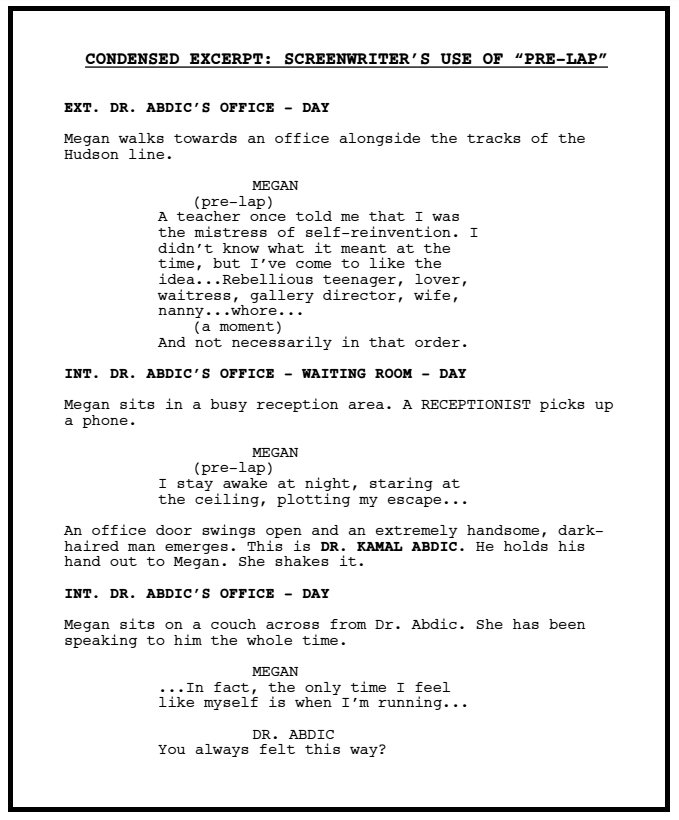
ECW: I come from a theater background and I’ve written plenty of non-linear work, so I wasn’t scared of the fractured narrative, and so the idea of multiple points of view didn’t seem strange to me at all. And even though it’s mainly Rachel’s story, I always knew I would widen the POVs to include all three women. But it would be pretty tedious to jockey between three different voice-overs, so I opened with Rachel’s voice over, then in order to avoid a second voice-over, I tricked in Megan’s voice-over with a pre-lap, which at first glance looked like a voice-over, but then we see that Megan’s actually in a shrink session, talking to her therapist. To some degree, I got this idea from the book, but I was also influenced by the opening scene in Sex, Lies, and Videotape. I then also tricked in Anna’s voice-over in pre-lap, where it turns out she’s actually talking to her baby. So by establishing the three POVs from the beginning, it’s easy to come back to their points of view, but I always really wanted to prefer Rachel and give her the only true voice-over, because the film is very much about her fantasy.
Script: Can you define “pre-lap”?
ECW: Pre-lap just means hearing the dialogue or monologue from the next scene in the current scene, indicated on the page with a parenthetical. It’s an important device because screenplays are very much about transitions and puzzle building; about organization and reorganization, and if your transitions don’t work, you have a dead document.
For the rest of the interview, go here.